
| DESCRIPTION | HISTORY |
Please Click On Any Picture for a Larger Version
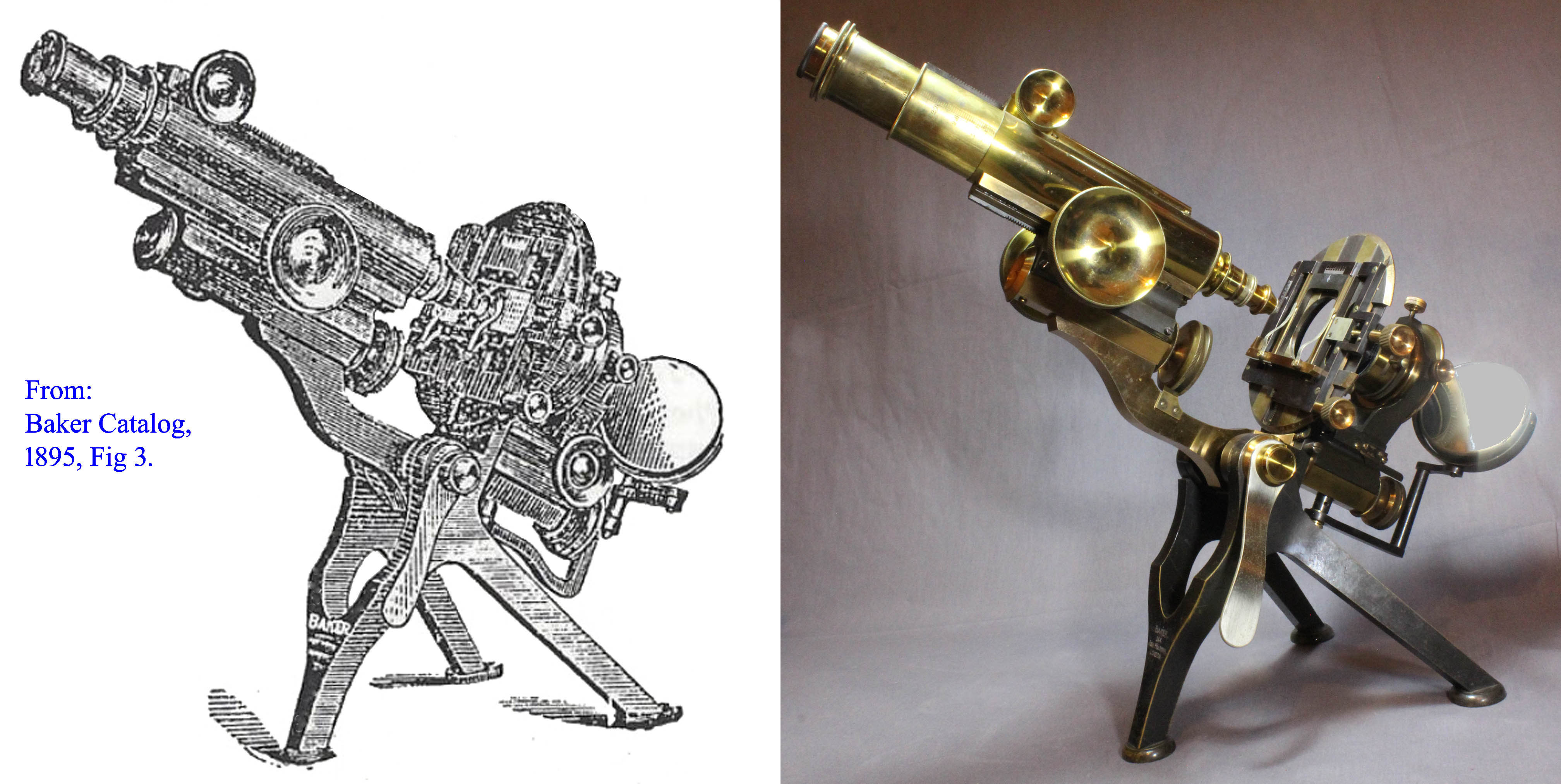
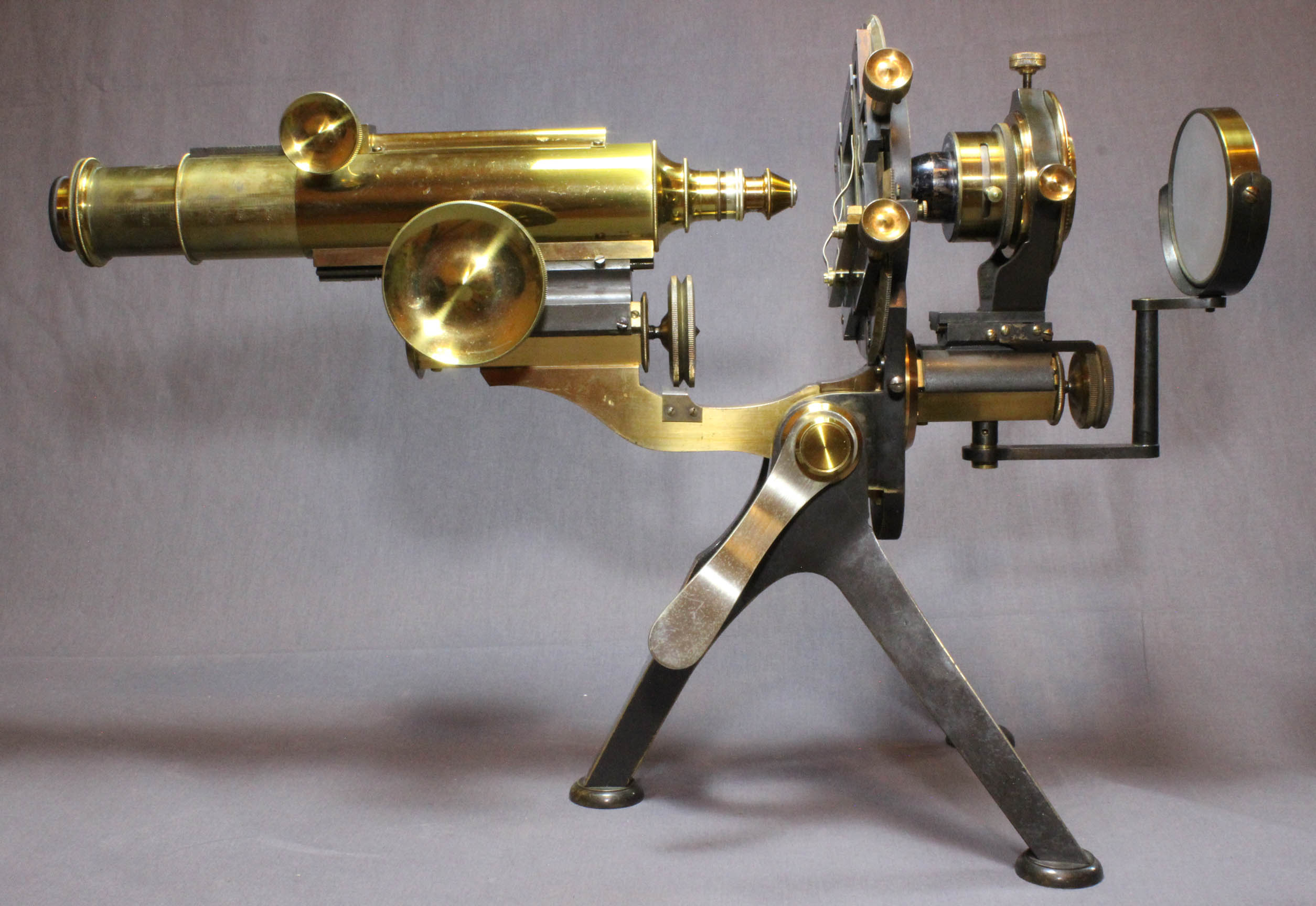
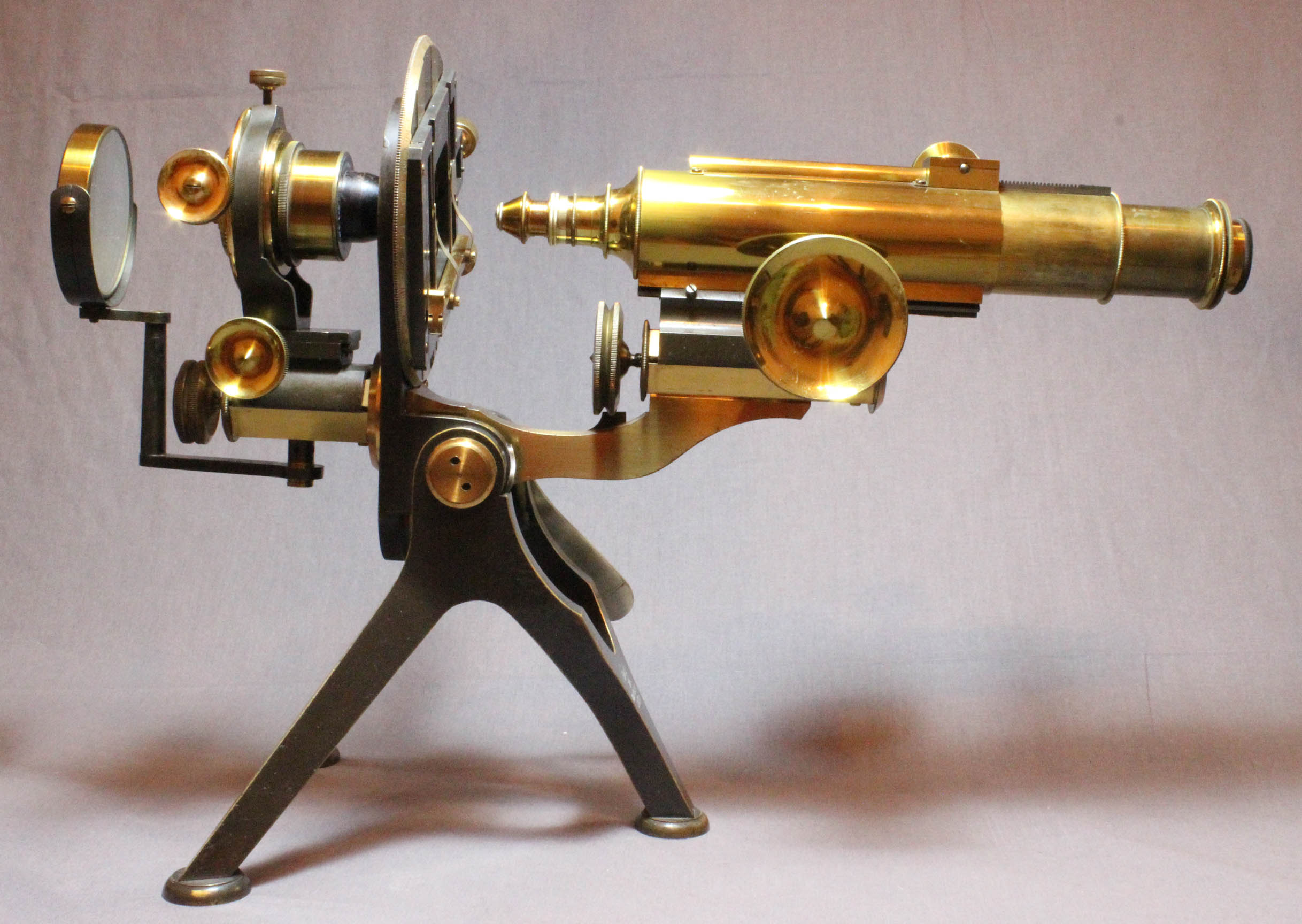
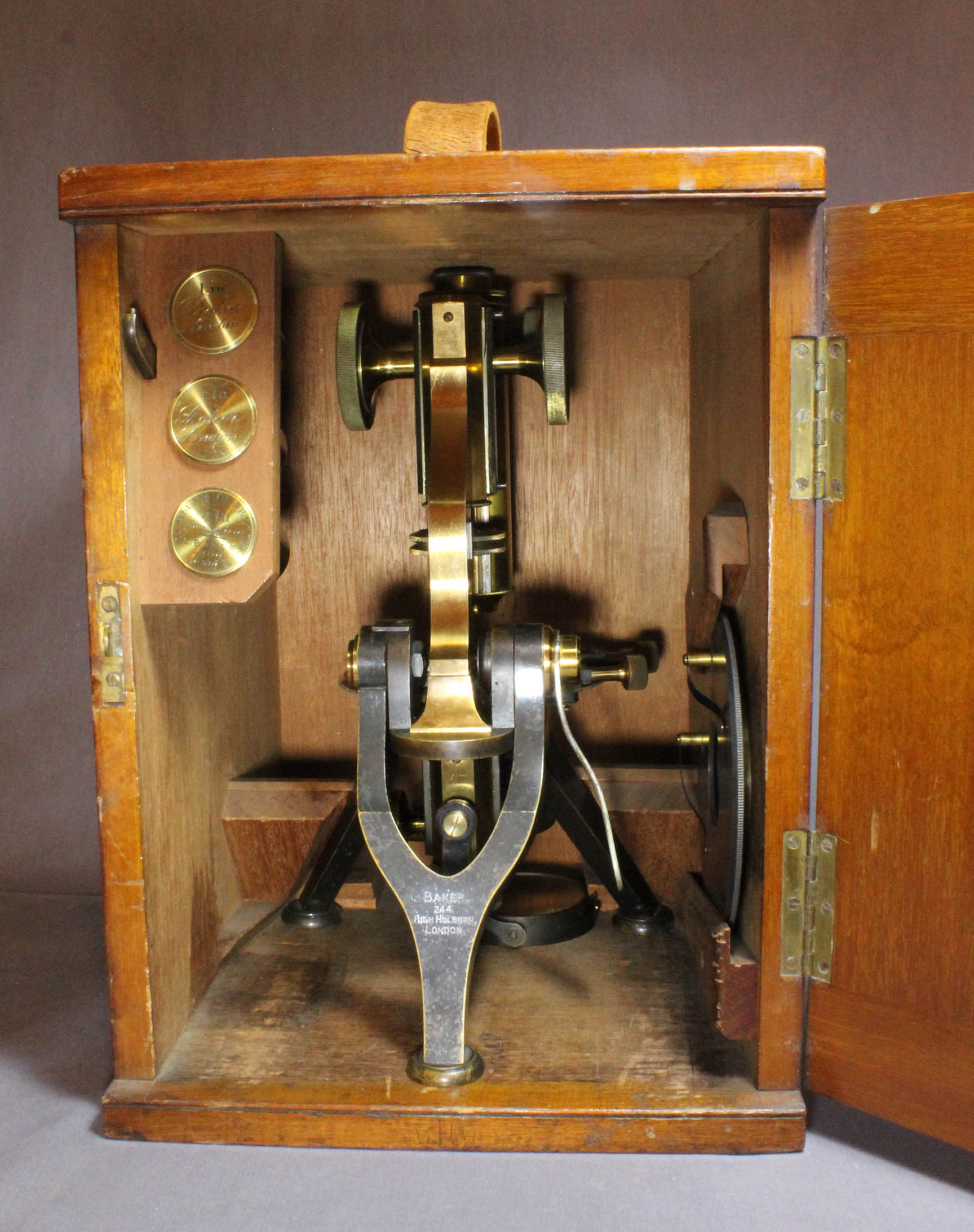
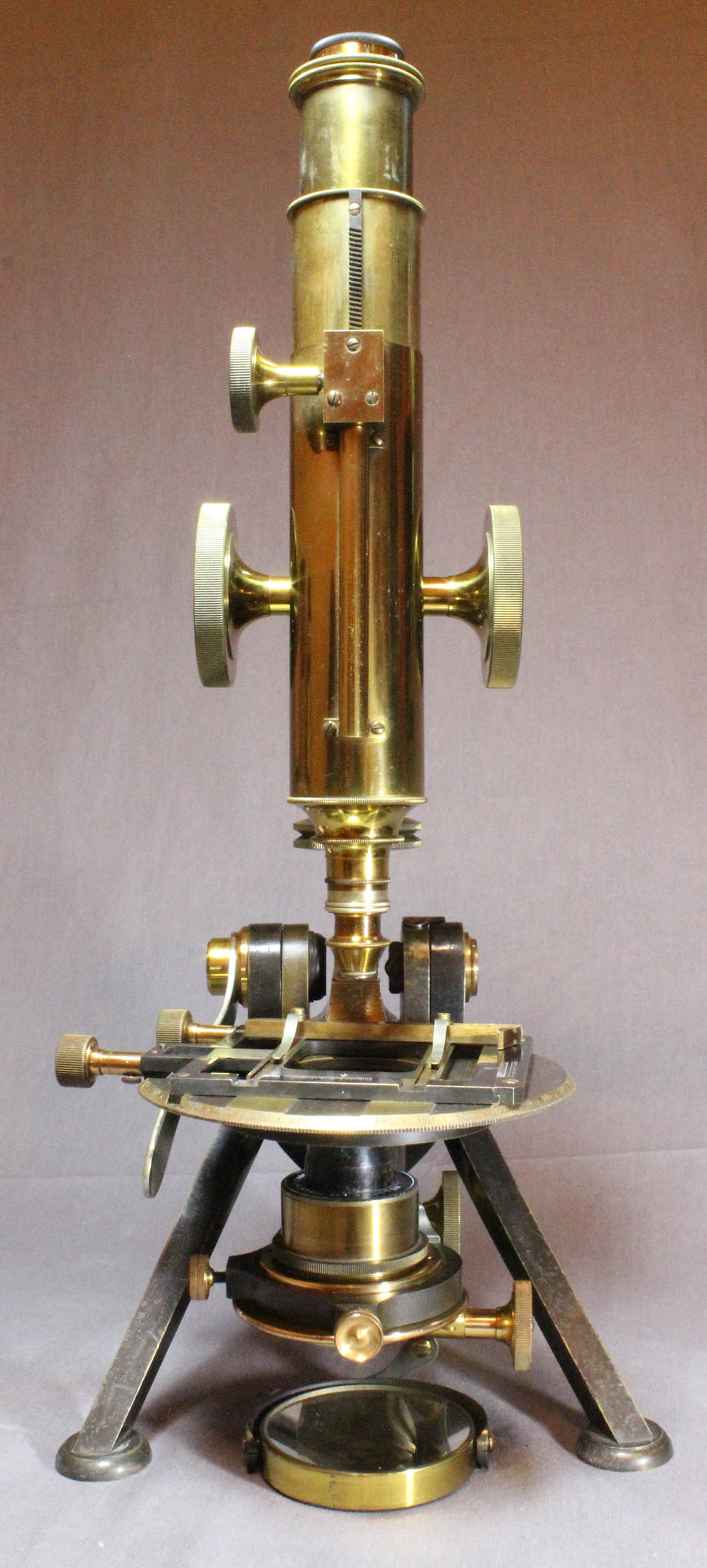
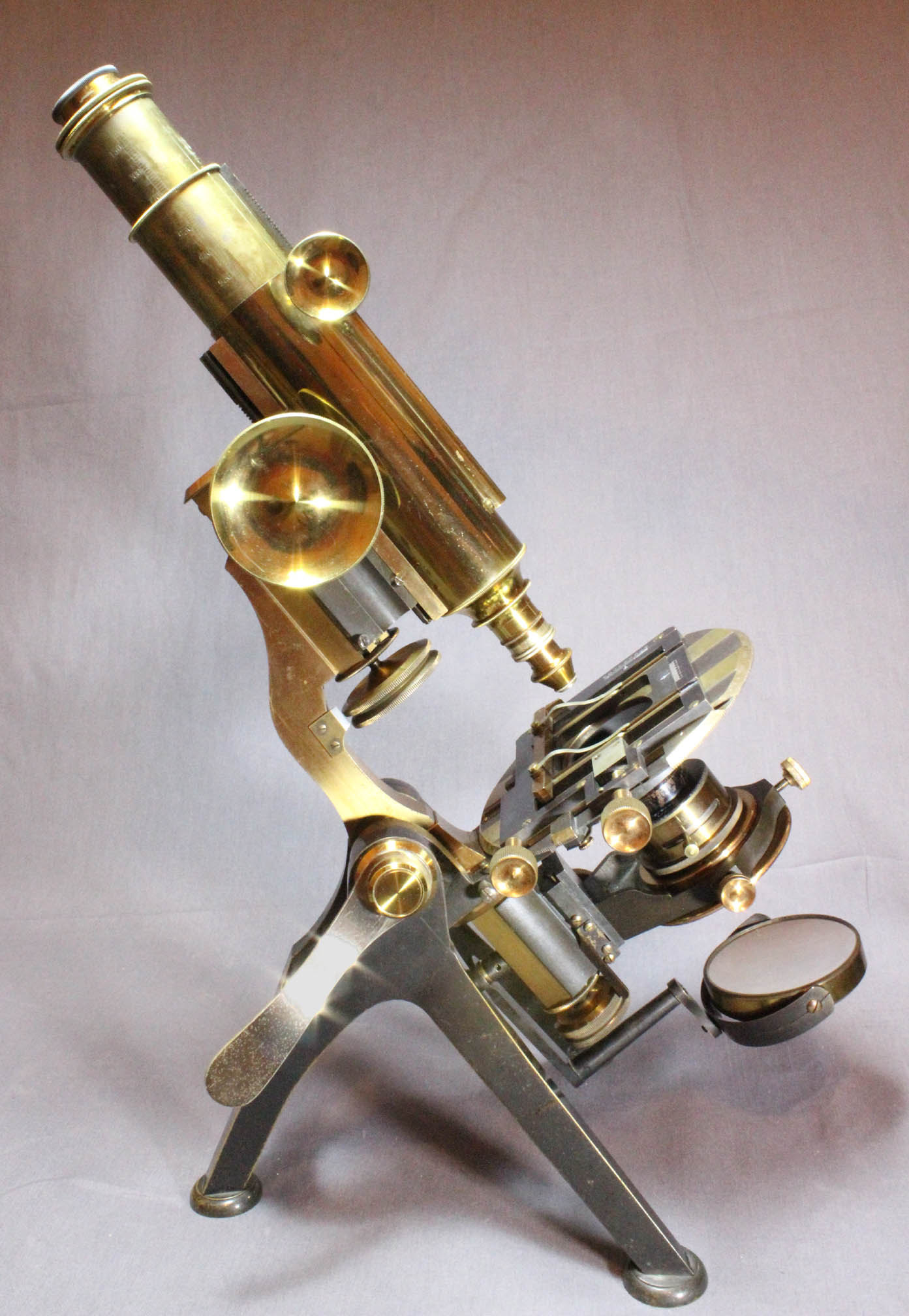
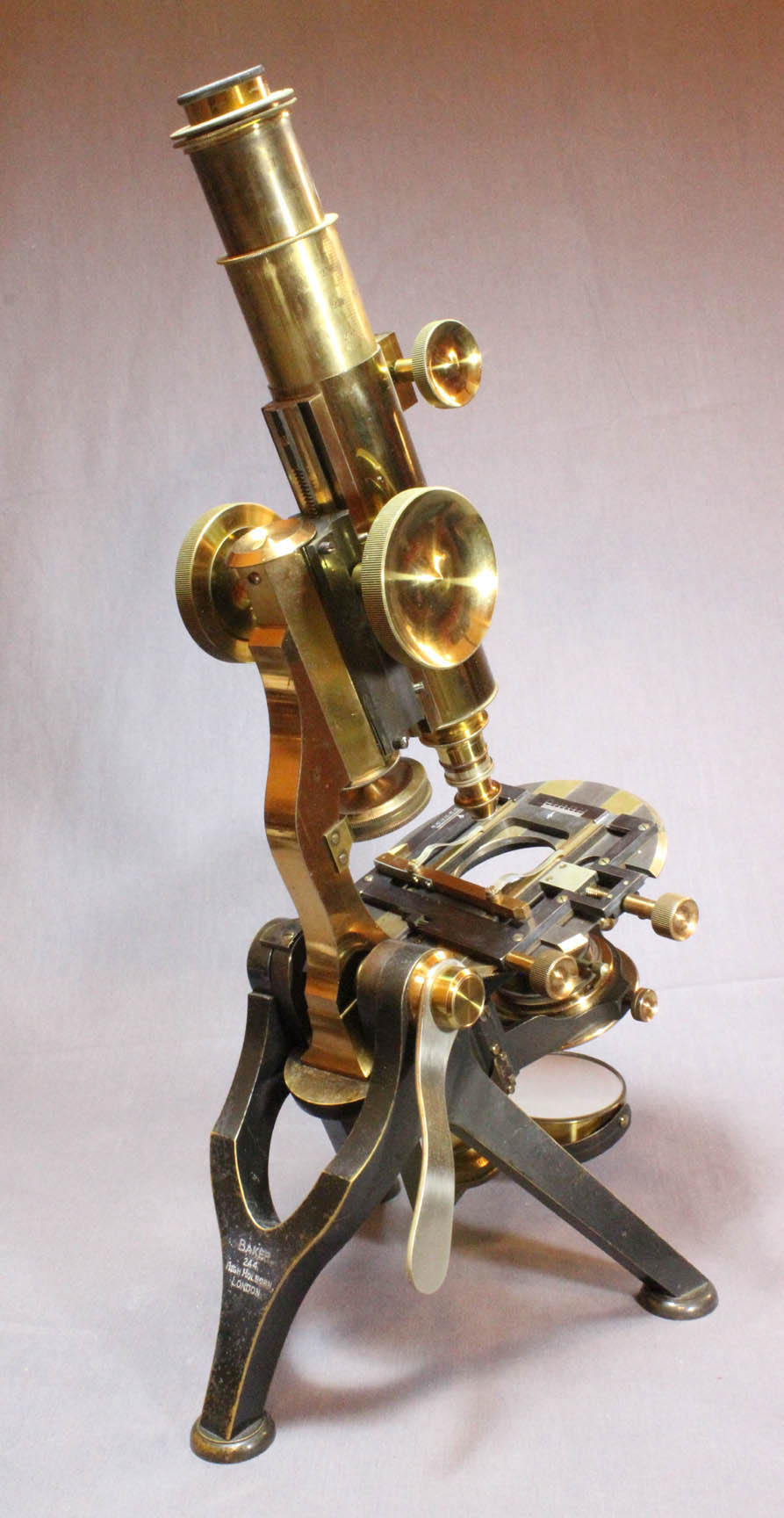
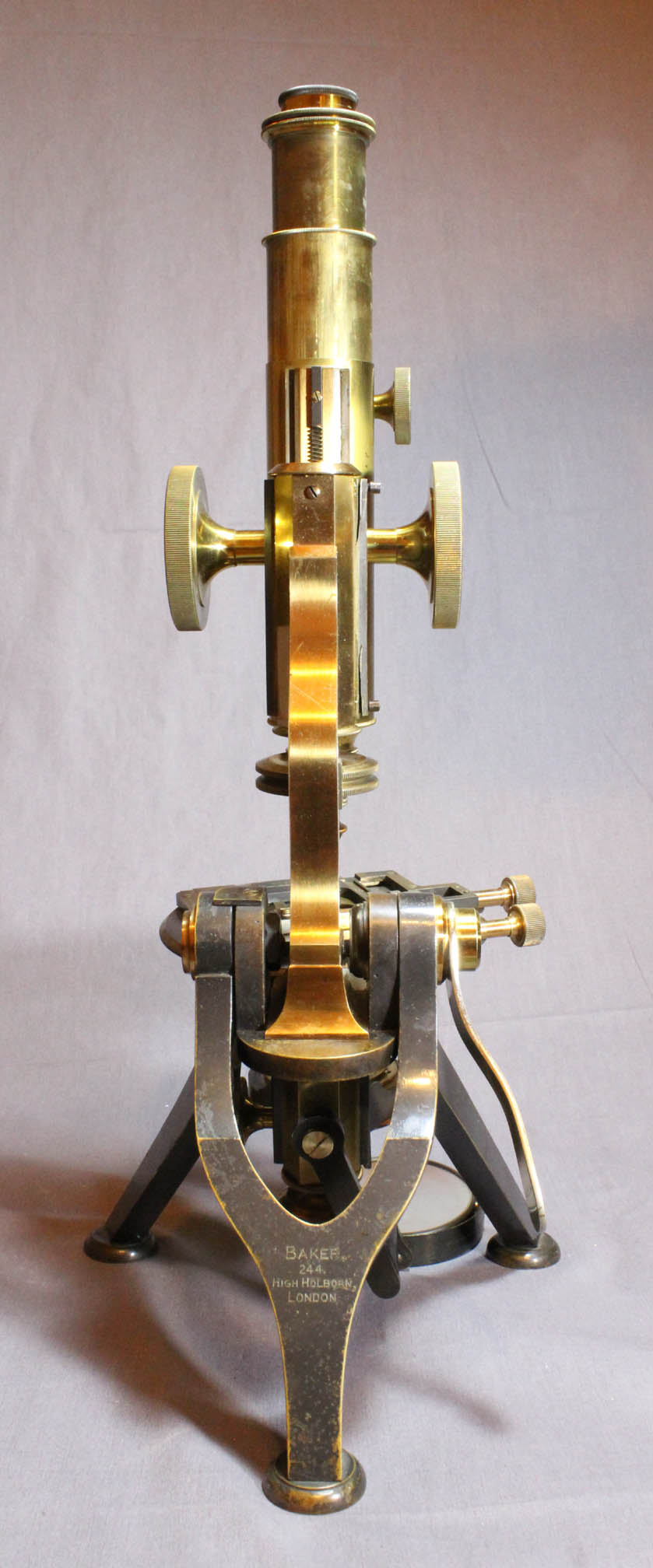
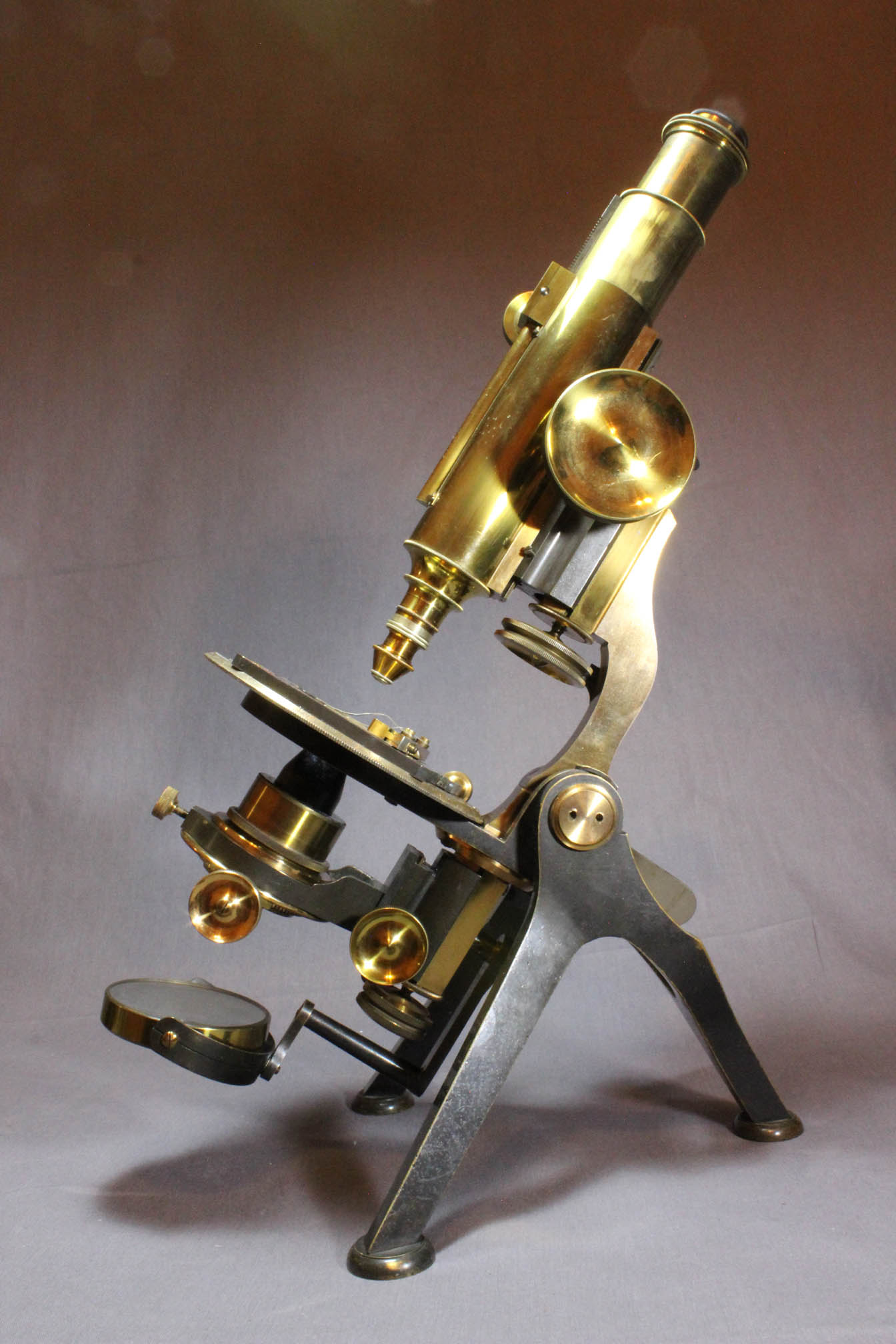
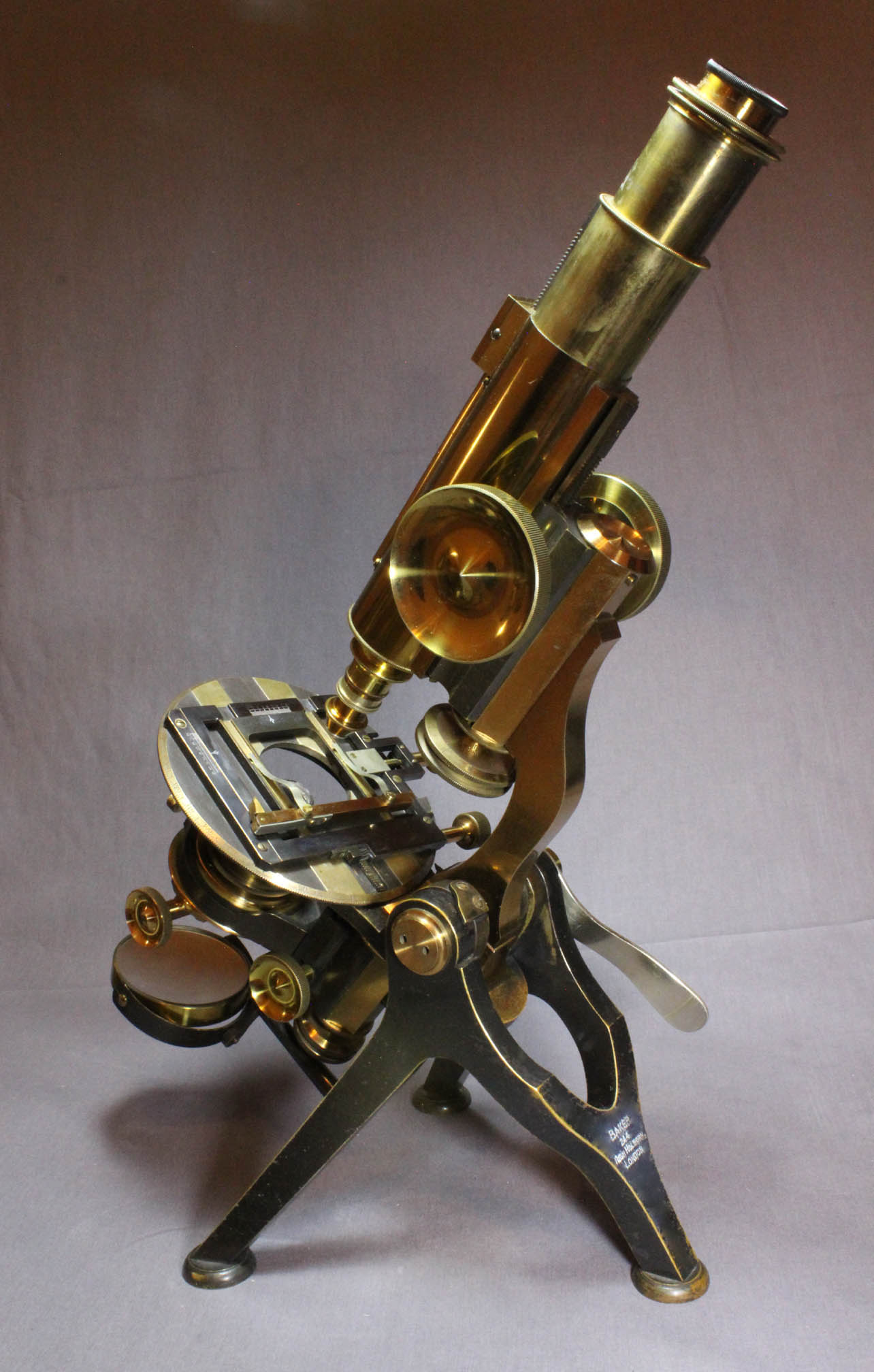
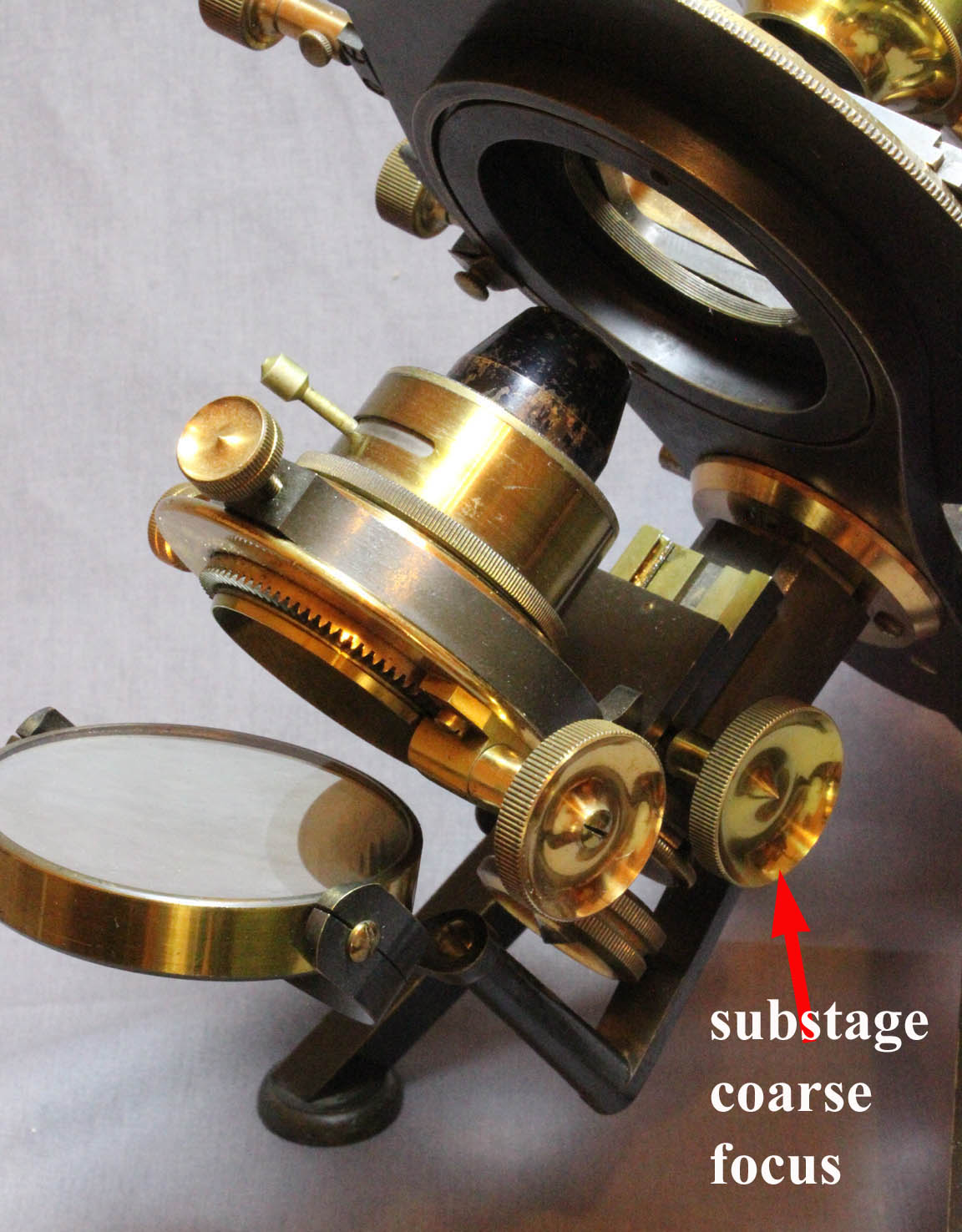
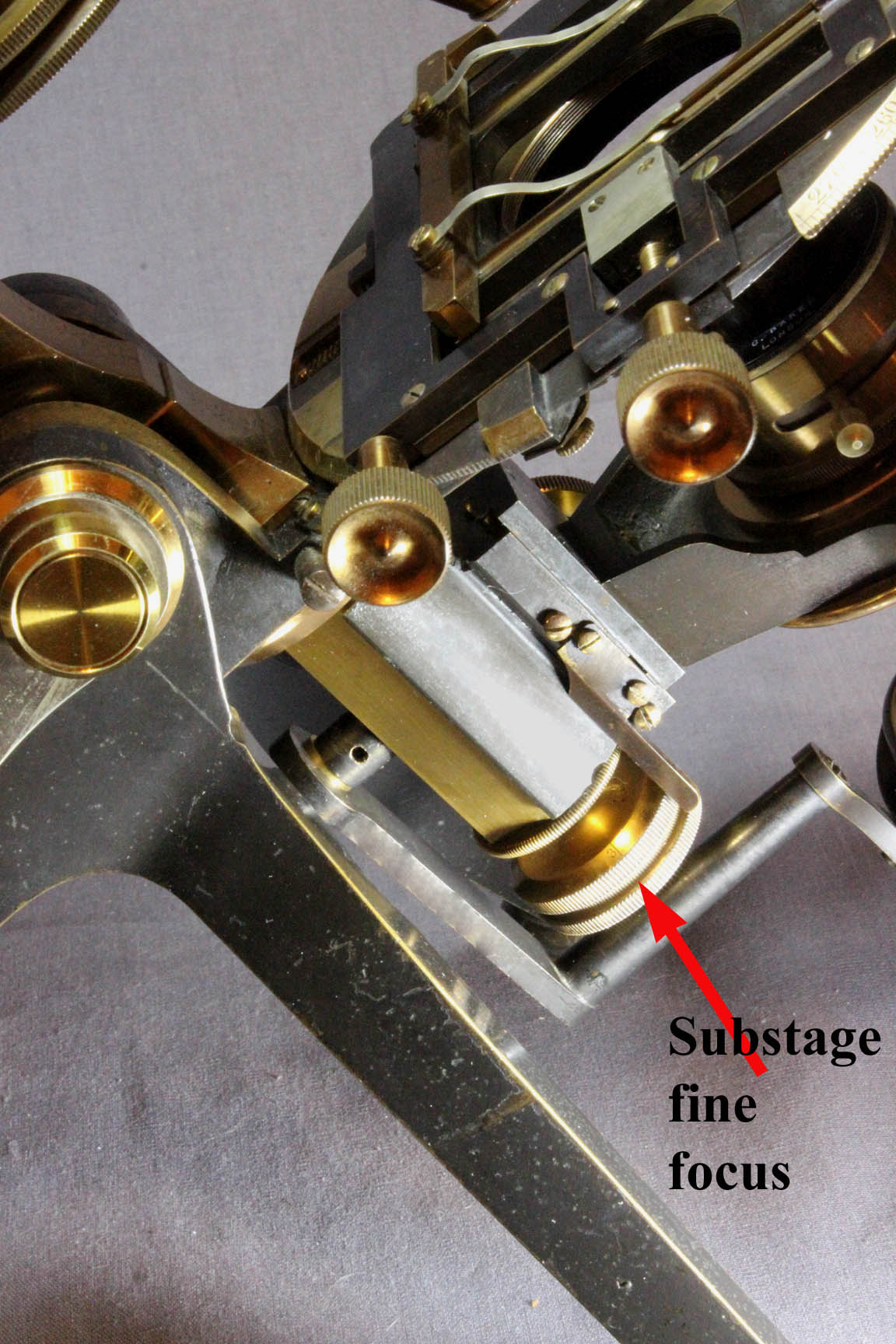 The substage carries its condenser in a centerable mount and focuses by diagonal rack and pinion controlled on the left side of the microscope, though some examples have the knob on the right side. There is a 'Campbell' Differential screw fine focus to the substage, controlled at the bottom of the tailpiece. There is rack and pinion rotation to the substage, a feature no longer offered in the catalog on the Nelson No 2 as of 1898.
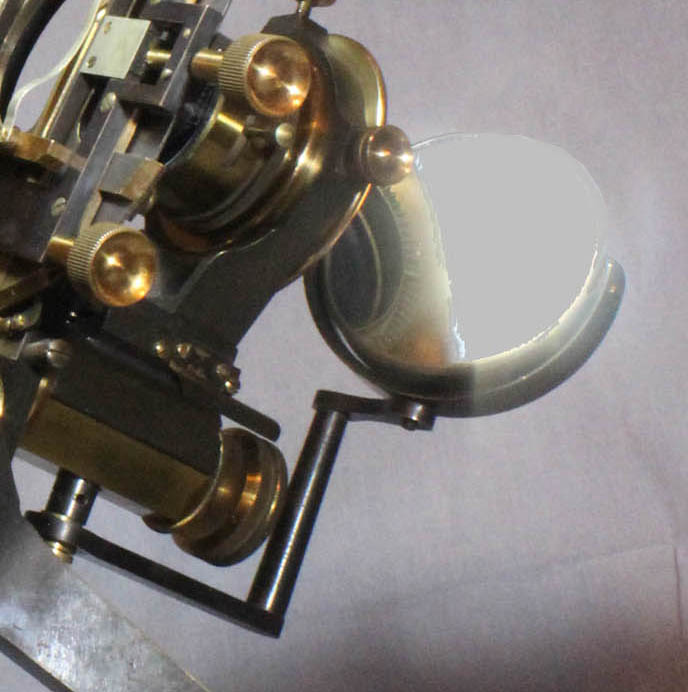 The gimballed mirror is plano-concave and on a swinging arm which is in turn, attached to the back of the tailpiece which also holds the substage. Although it can swing right to left, its anchor point is fixed; this differs from the later model without the substage fine focus where there is a separate tailpiece for the mirror, which attaches to the dedicated tailpiece by a collar which can move up, down and rotate right or left. In this model there is an extra small arm on the end of the stem to allow some flexibility in positioning. (On the Nelson No 1, and on some earlier versions of the Nelson No 2, the extra small arm is double jointed.)
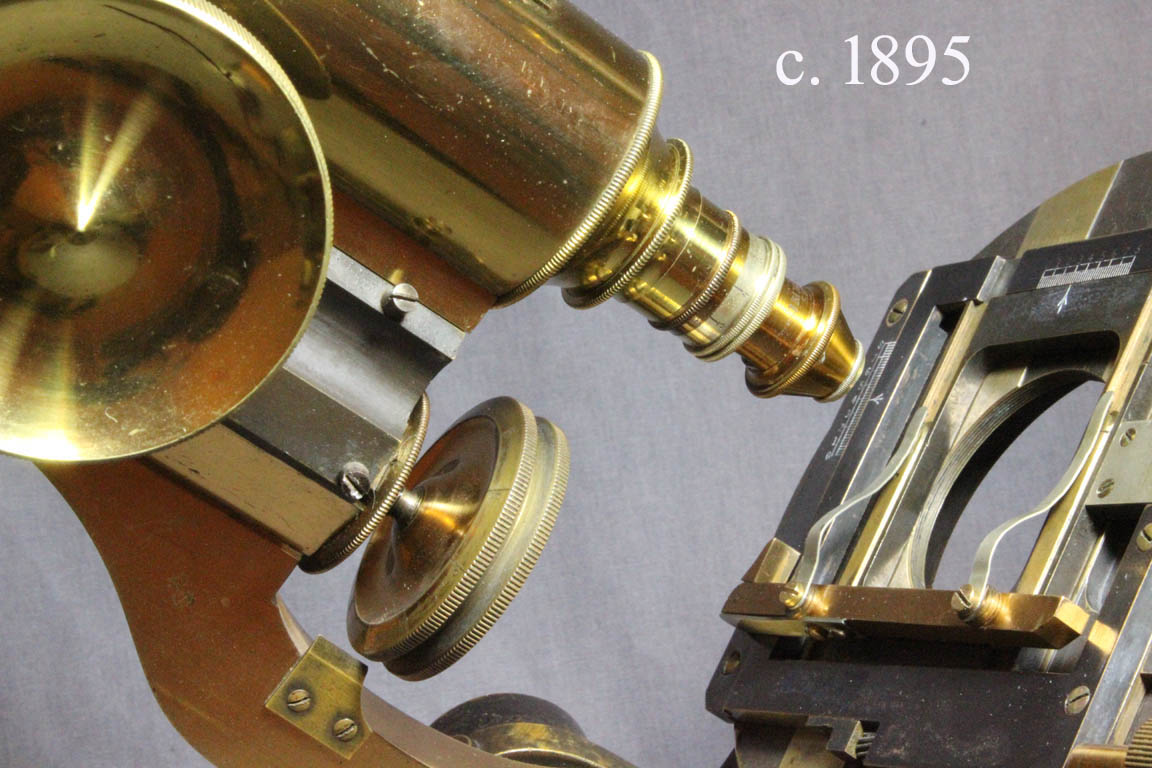 The main optical tube coarse focus is by diagonal rack and pinion, fine is by 'Campbell' differential screw controlled from the underside of the arm. The fine focus control is calibrated and has a groove for allowing its control by a cord and pulley system during photography. There are indicator fins over both the main fine focus knob and the substage fine focus knob.
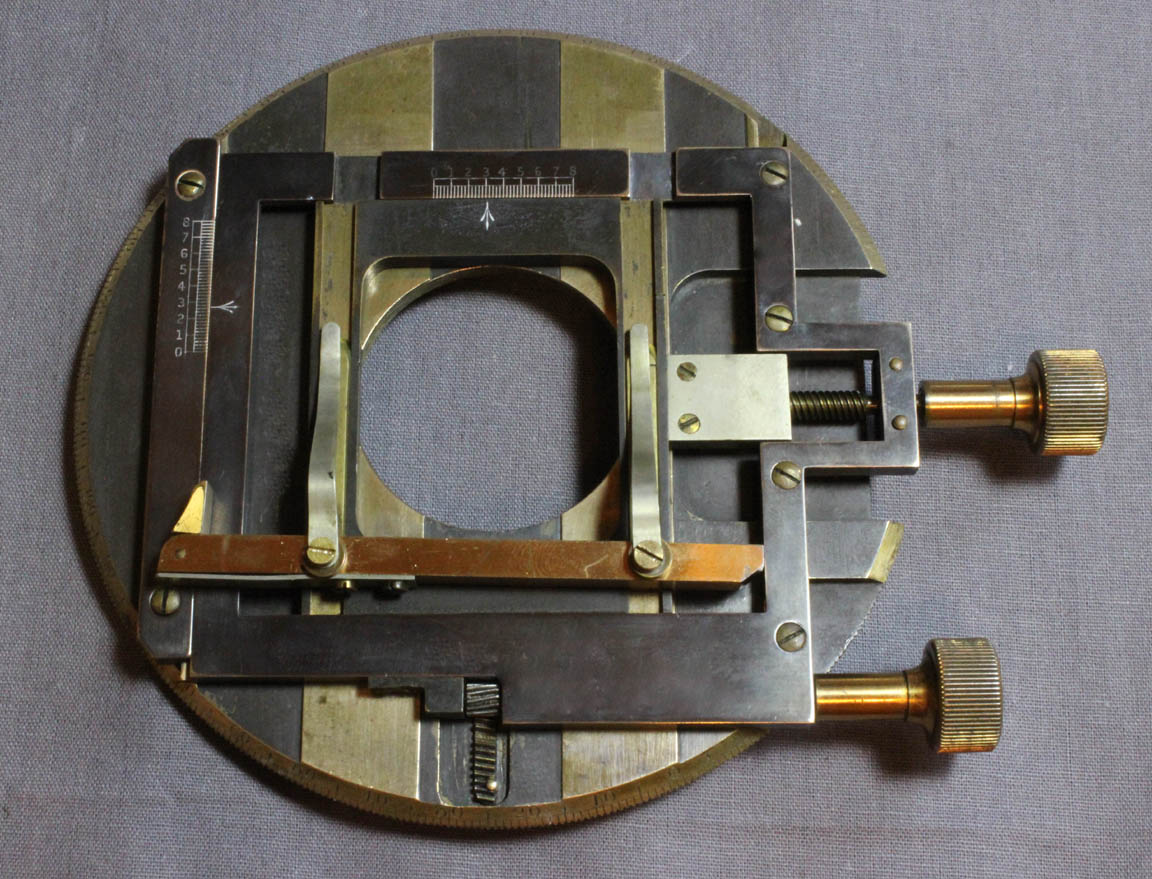
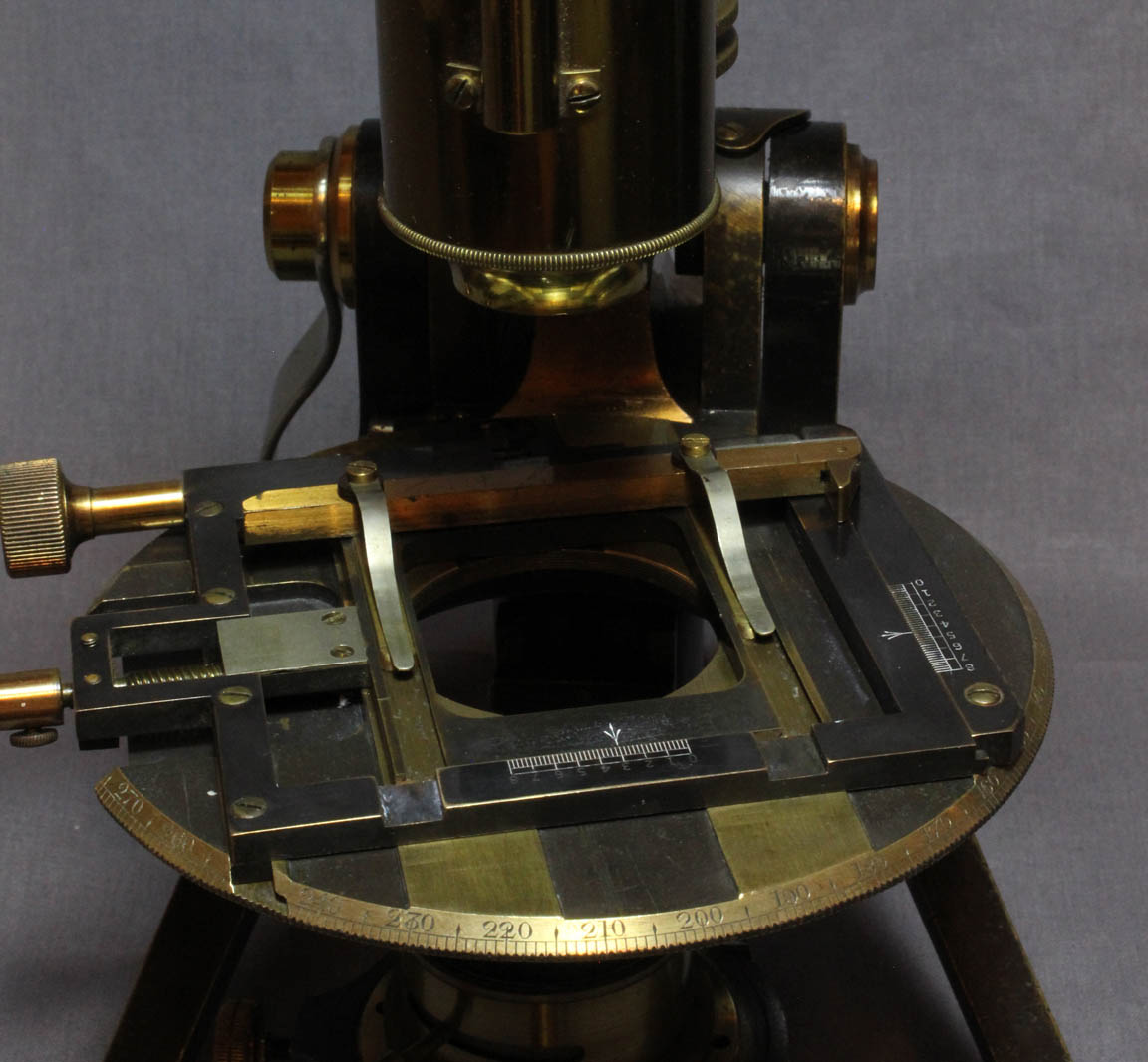 There are two stages with this example. The mechanical stage, a variation on the Mayall stage of 1885, has separate controls for the X and Y direction, and an oxidized brass finish with the slide locator scales white. It differs from the Mayall version in that only one axis does not use a plate, the other axis moves the framework holding the slide. The entire mechanical stage rotates manually, and the edge of the circular stage support is silvered and calibrated, numbered 0 to 270 degrees, marked each degree. A pointer on the right rear part of the stages registers on the calibrations. The calibrations also go 10 degrees counterclockwise to indicate minus 10 degrees from the zero. The stage cannot rotate more than 270 degrees, the controls protruding beyond the limb when the mechanical stage is rotated to its extremes. There is no provision for centering the stage. Unlike the later example in this collection which has holds the slide with moveable bars, front and back, this stage has two stage clips and lacks the front bar, just as in the engraving in the 1895 catalog showing this fancier version of the No 2. On the left side* of the bar(the right side of the image to the left), is a stop to locate the edge of a slide. This stop can be turned out of the way and has a sprung catch to locate it in either position.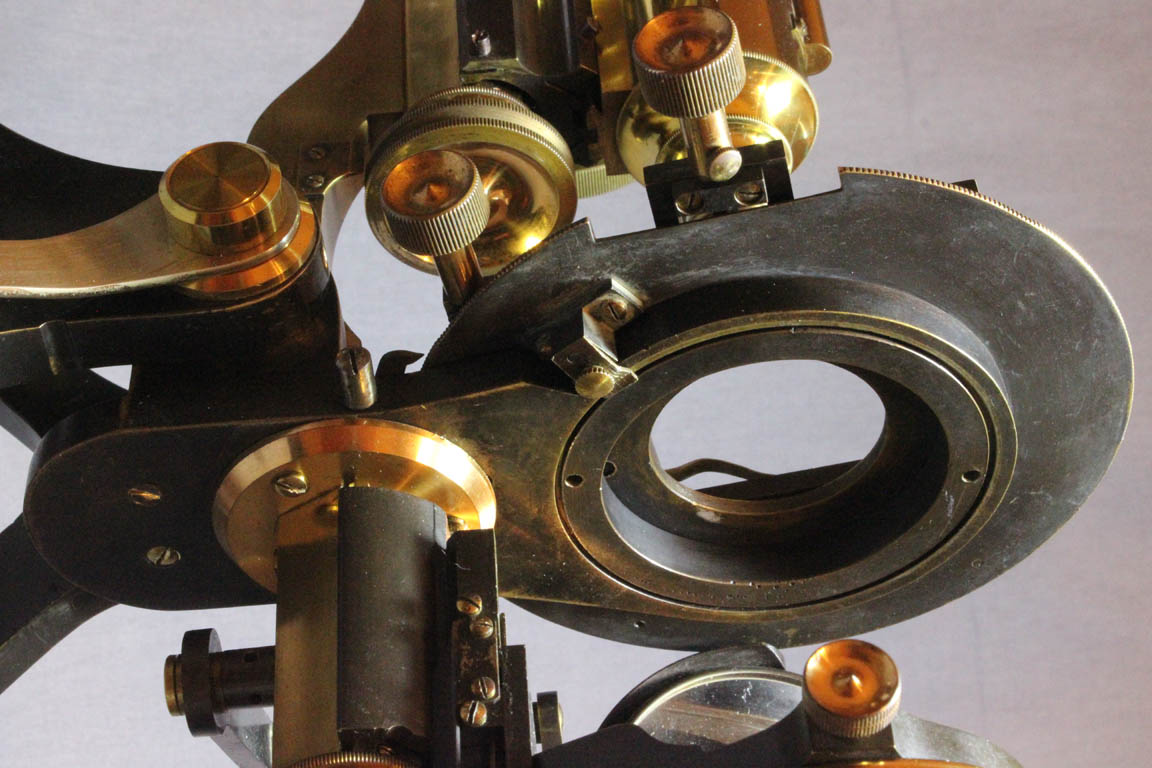
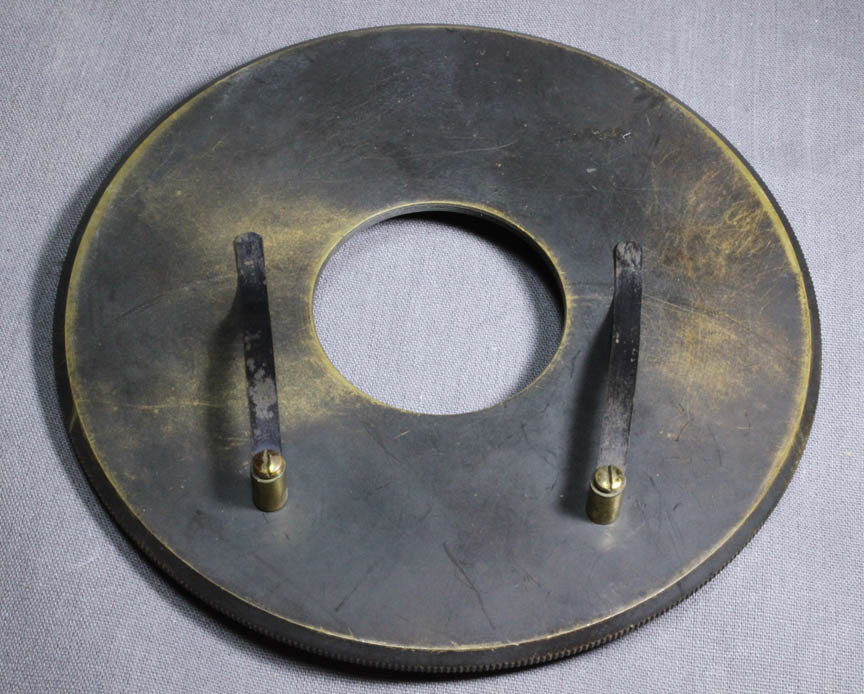 The stage is held in place from below the stage support with a large threaded ring; a special tool is supplied with pins to fit this ring to enable it to removed. The second plain stage has two stage clips, and can be secured in the same manner as the mechanical stage, with the threaded ring from below. This plain stage provides a large surface for the slide and makes working on a specimen while on the stage, easier.
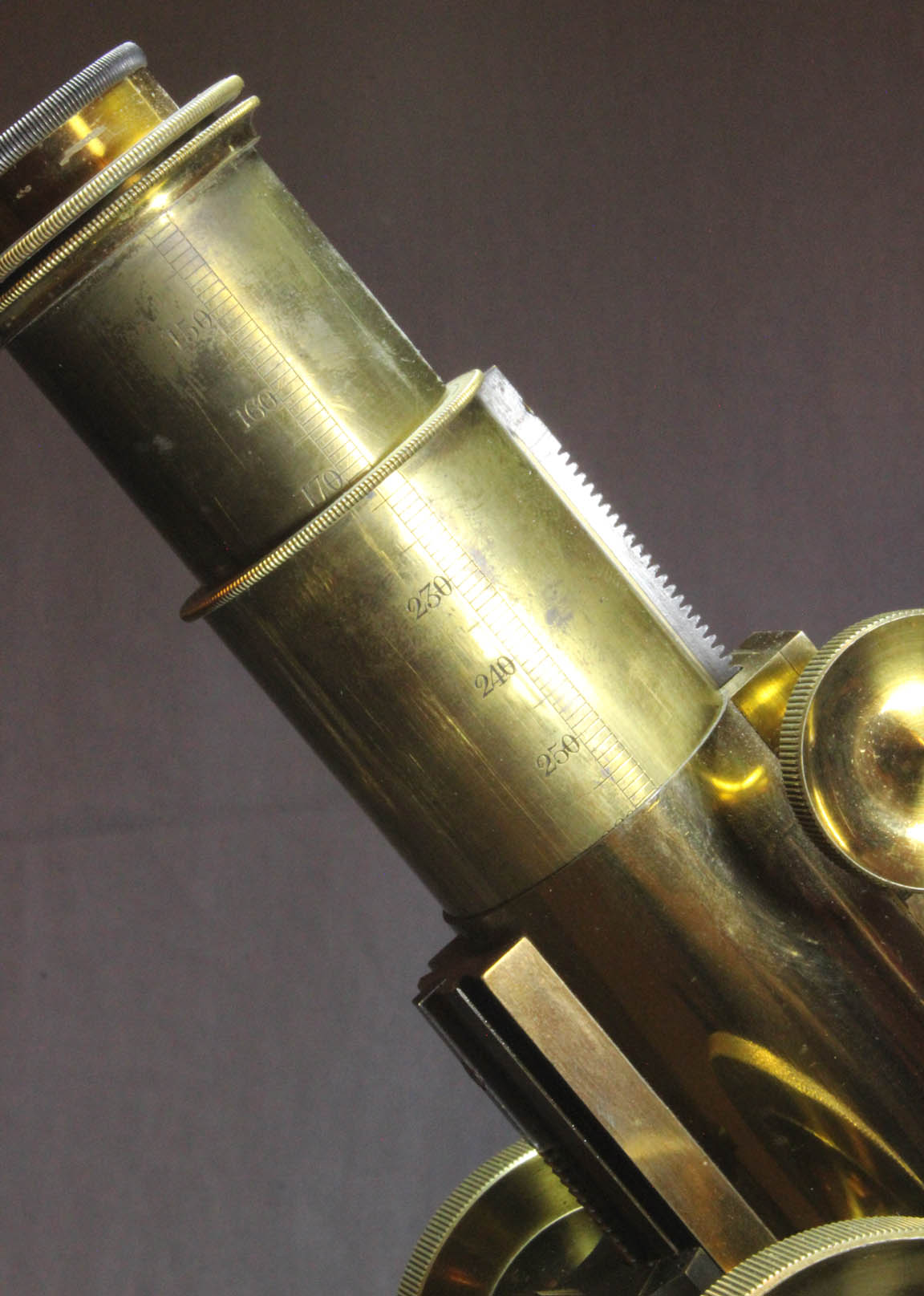 There are two draw tubes. The outer draw-tube has rack and pinion adjustment with the knob on the right; examples exist with this adjustment on the other side as well. There is an additional inner drawtube, the same kind of arrangement as Watson's Van Heurk and Royal models. The drawtubes are both calibrated.
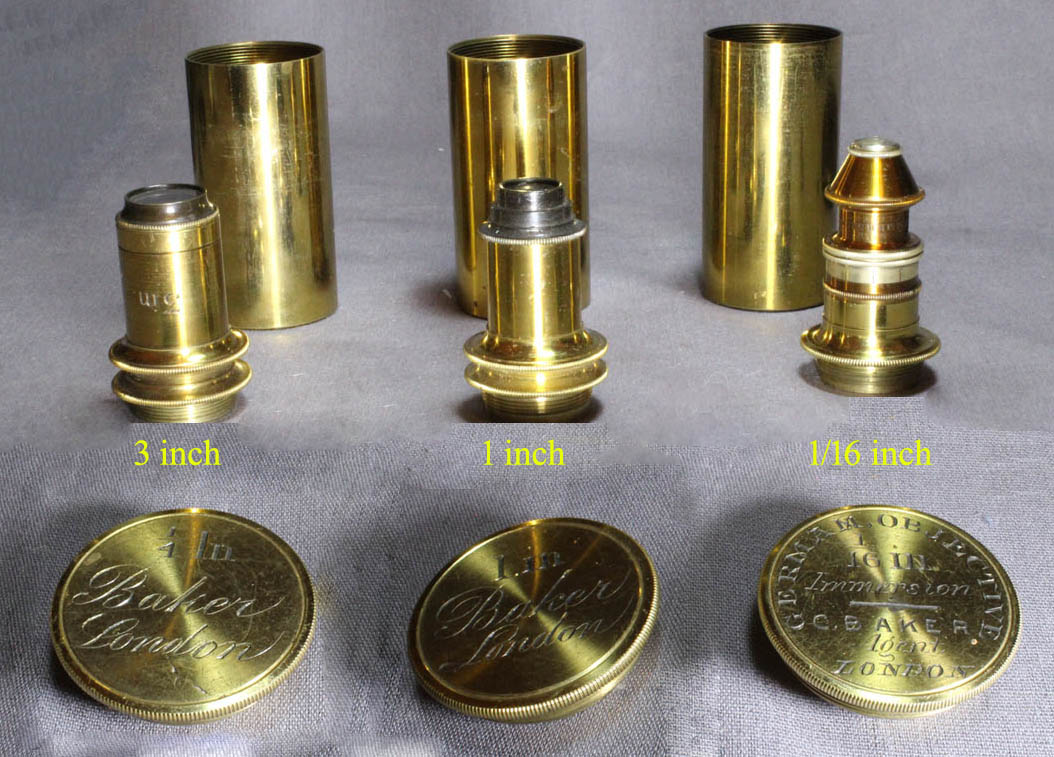
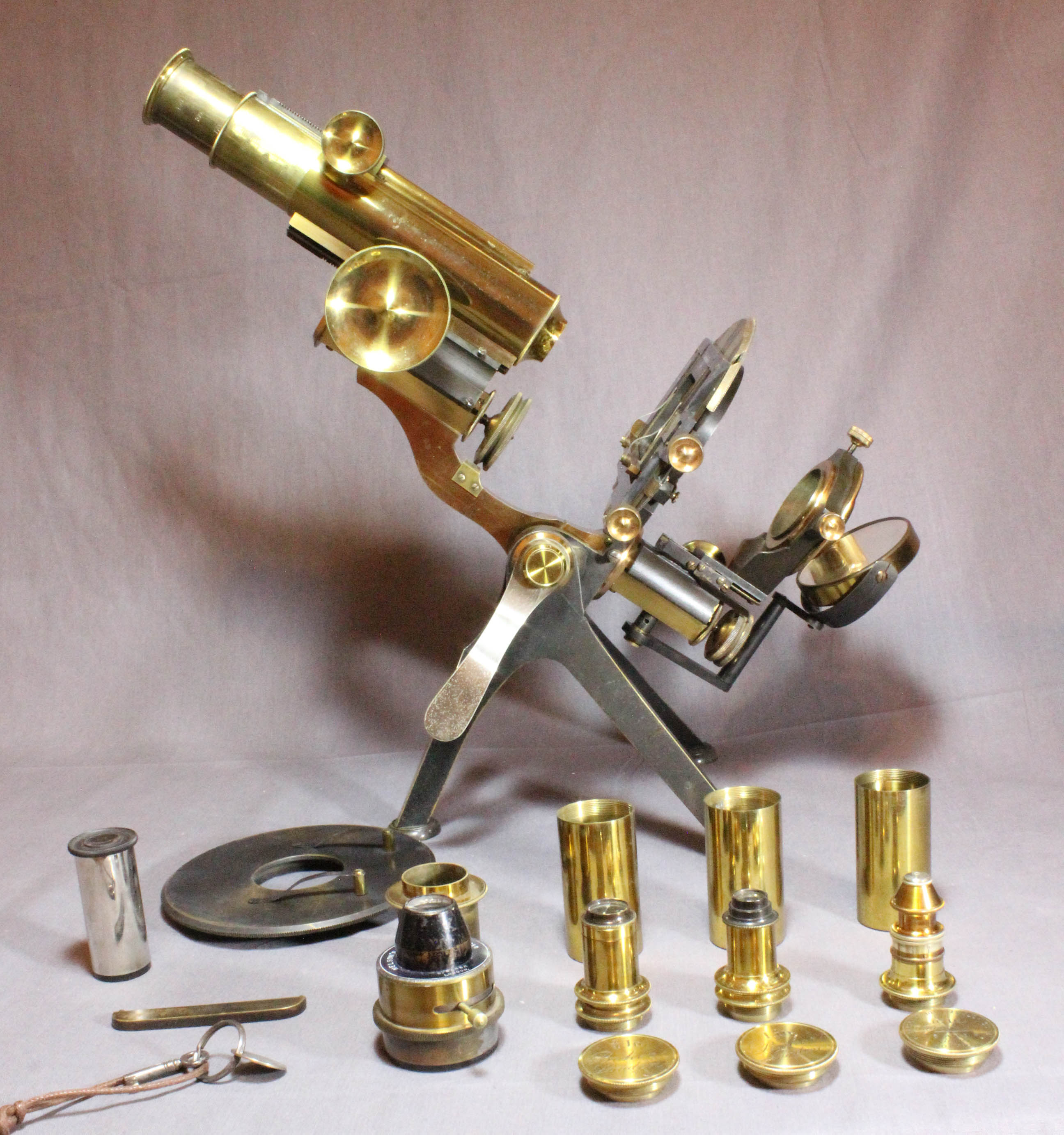
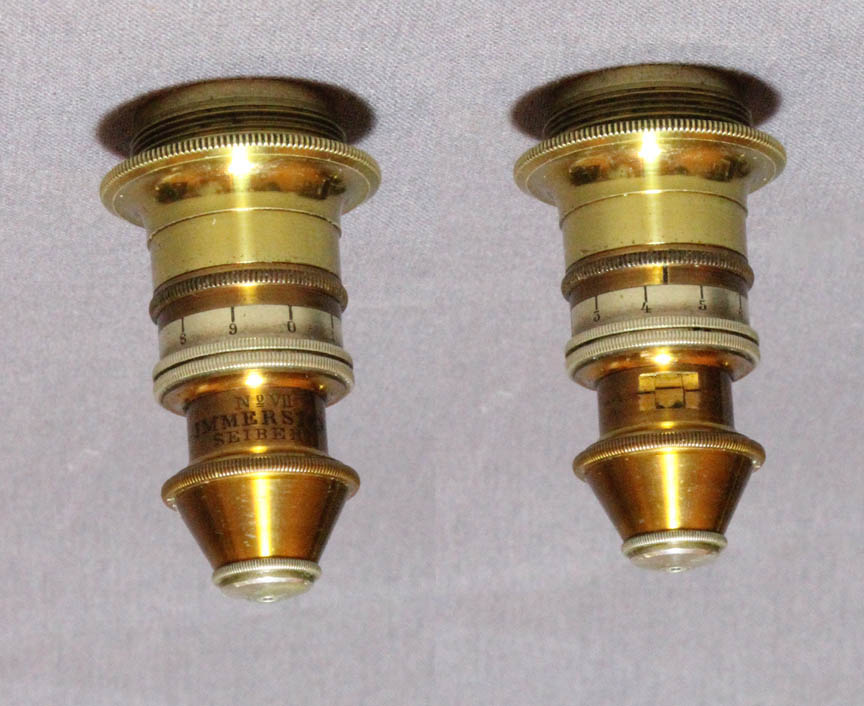 There are also three objectives. They are housed in three original Baker cans, though one does not match the power of the objective within.
 1/4 In, Baker, London.and 1/4 on the bottom of the can.
1 In Baker, London.The bottom of its can is signed
1.
No VII, IMMERSION, SEIBERT. This objective has a nickeled correction collar calibrated 0-9; below this, towards the distal end of the objective, there is a flattened area with an indicator line to show if the correction is set above or below the baseline. This correction collar functions very nicely. The top of the can is signed
GERMAN OBJECTIVE, 1/16 In, Immersion, ____, C. Baker, Agent, LONDON.On the bottom the can is signed:
1/16.This objective, according to the 1895 Baker catalog, is designed for water immersion, and the correction collar was an extra charge.
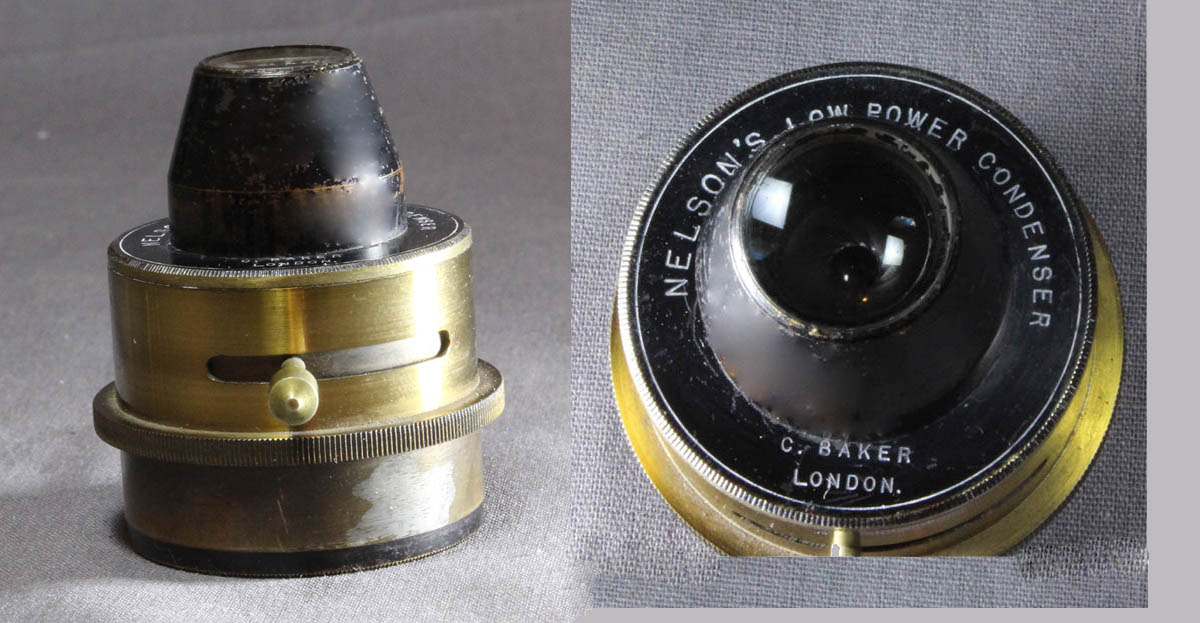 There is a Baker condenser with iris diaphragm, which is signed on top:
 Nelson's Low Power Condenser', C. Baker, LONDON.