
Dissecting Microscope
| DESCRIPTION | HISTORY | CONDITION |
Please Click On Any Picture for a Larger Version

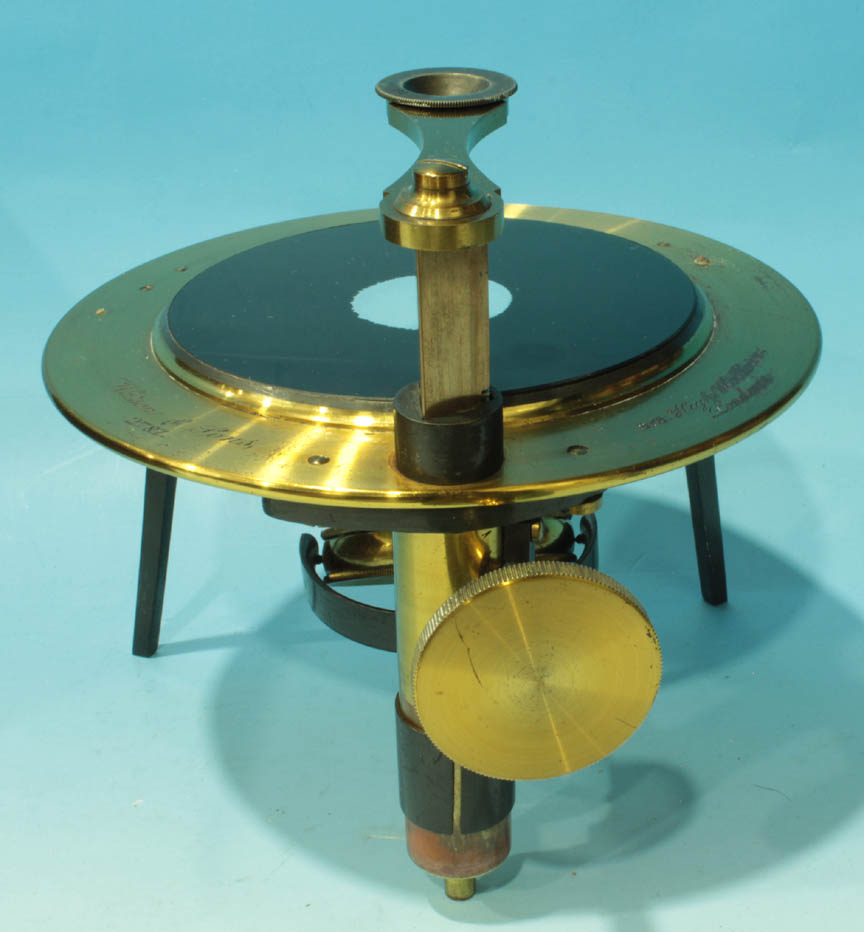
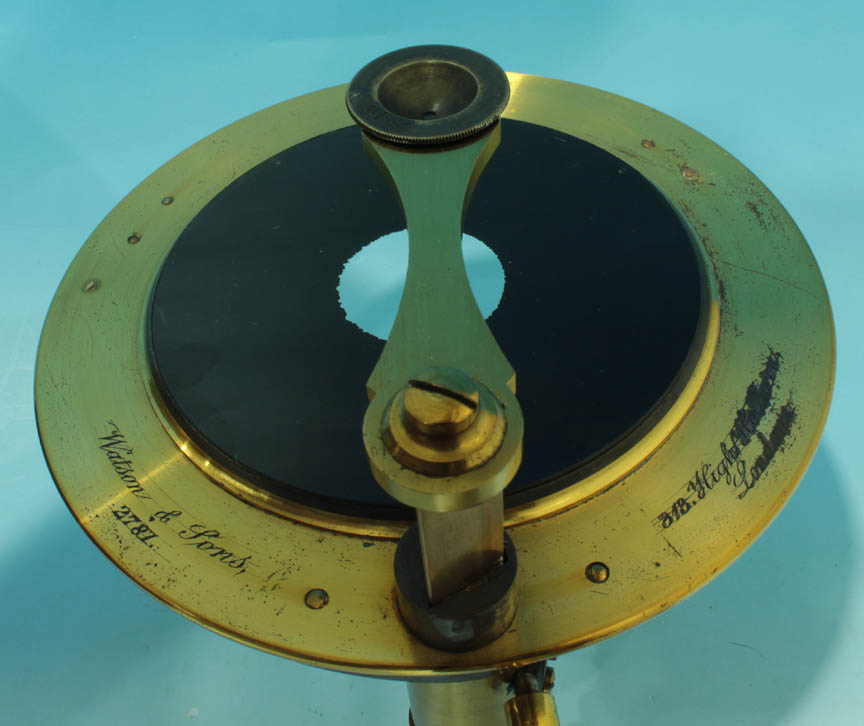
Watson & Sons, 2781on the left side, and on the right side
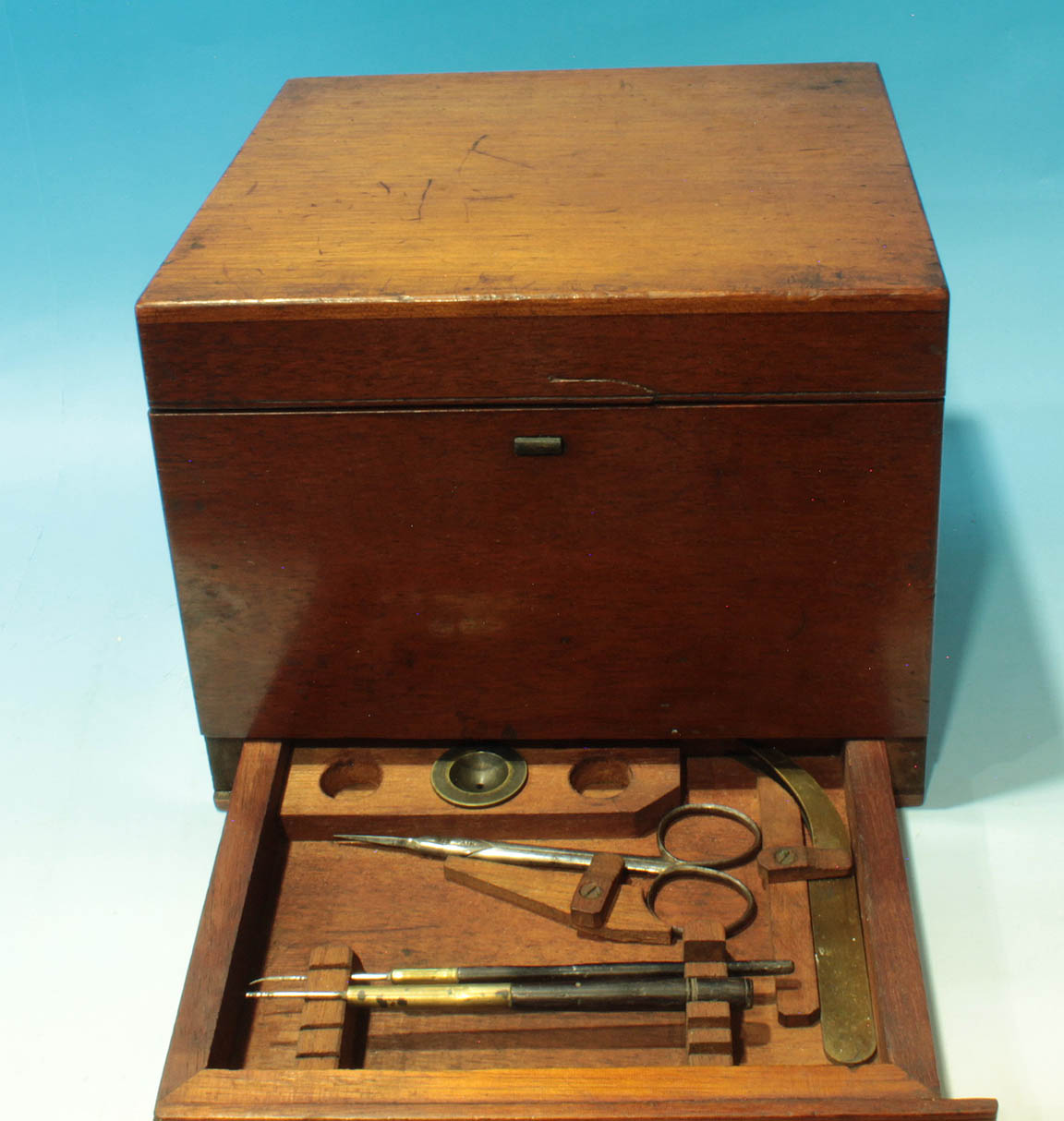
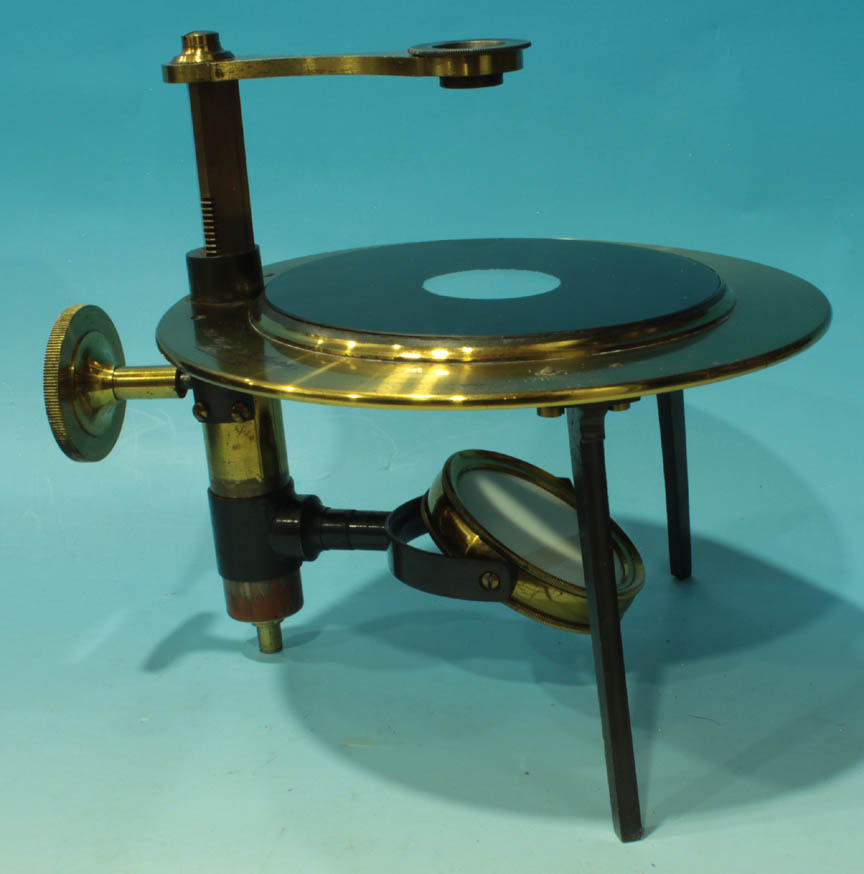
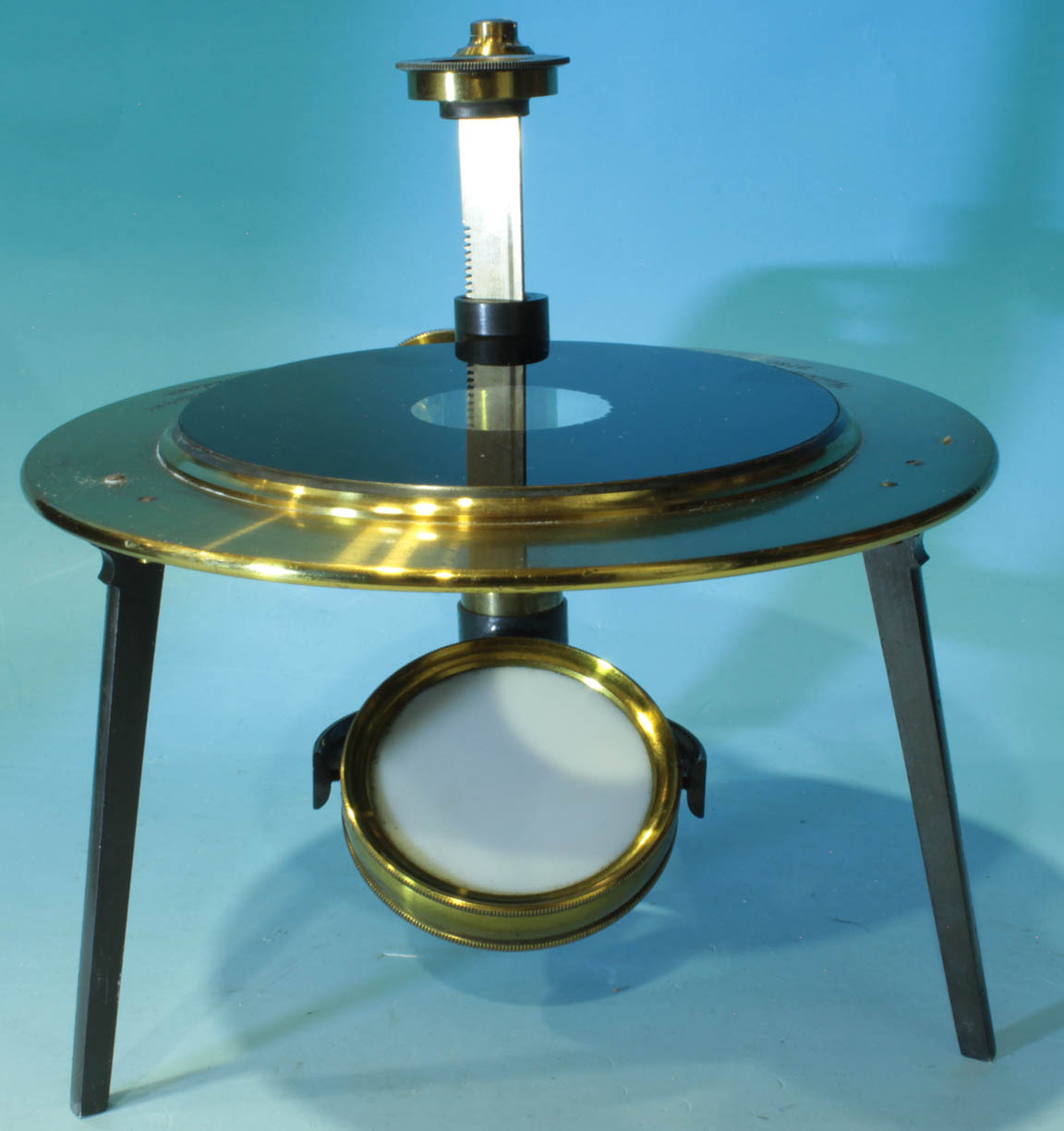
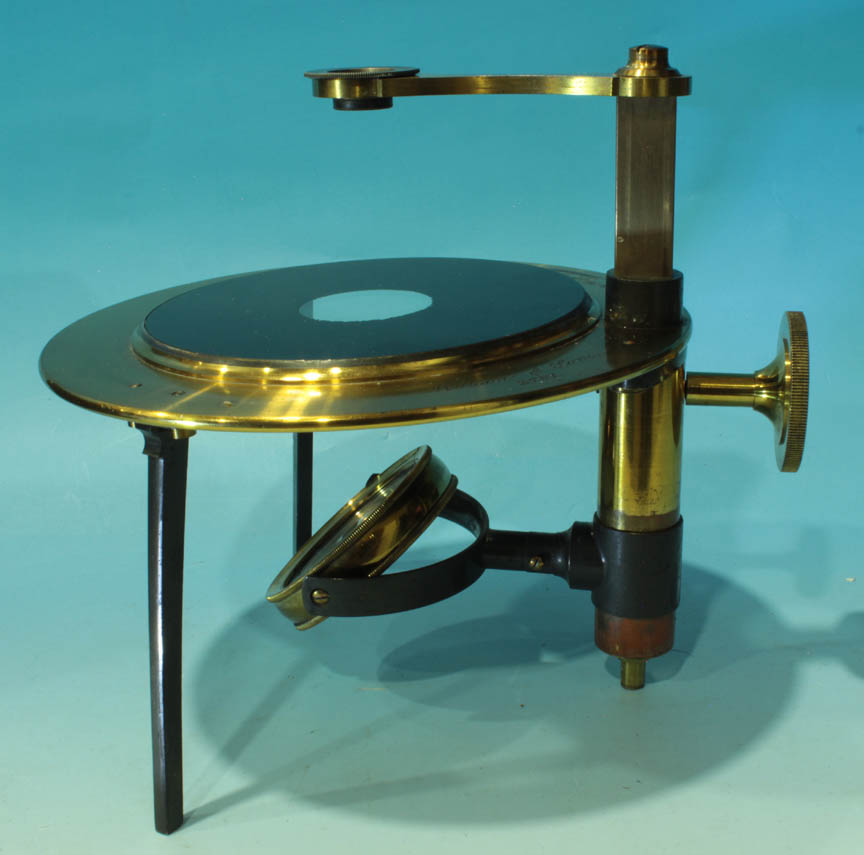
313 High Holborn, London. The stage is roughly 5 1/2 inches in outer diameter, the glass part about 4 inches. The stage site 3 1/2 inches high. The mirror casing is 2 inches in outer diameter. It sits on three legs with the front two angled, and the larger rear one straight, and containing the rack and pinion focusing mechanism. The roughly square profile legs tapers slightly. The bar supporting the arm is triangular in profile with the teeth on apex of the triangle which faces to the right. The stage has a raised glass center surrounded by a lacquered brass ring. The glass is painted black on its underside except for a 1 1/2 inch clear area in the center. The arm can swivel. There is a single labeled 1/2 inch lens with the instrument, though originally there were likely three. The substage mirror is concave on one side and is a flat white-cloud illuminator on the other side. It is gimbaled, can swivel, and the ring supporting it can slide up or down on the rear leg. The case contains a fitted drawer containing the original dissecting scissors with fine tips (signed
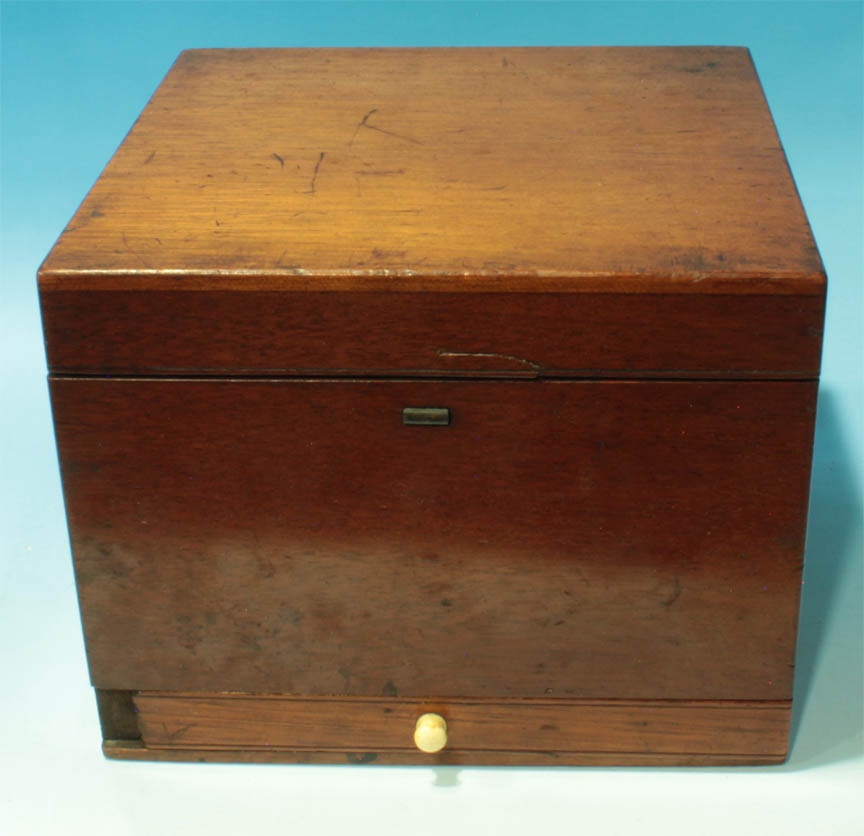
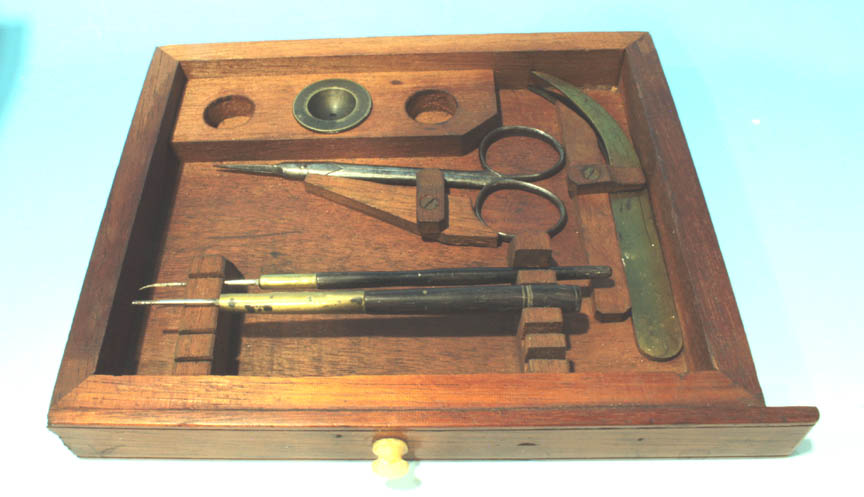
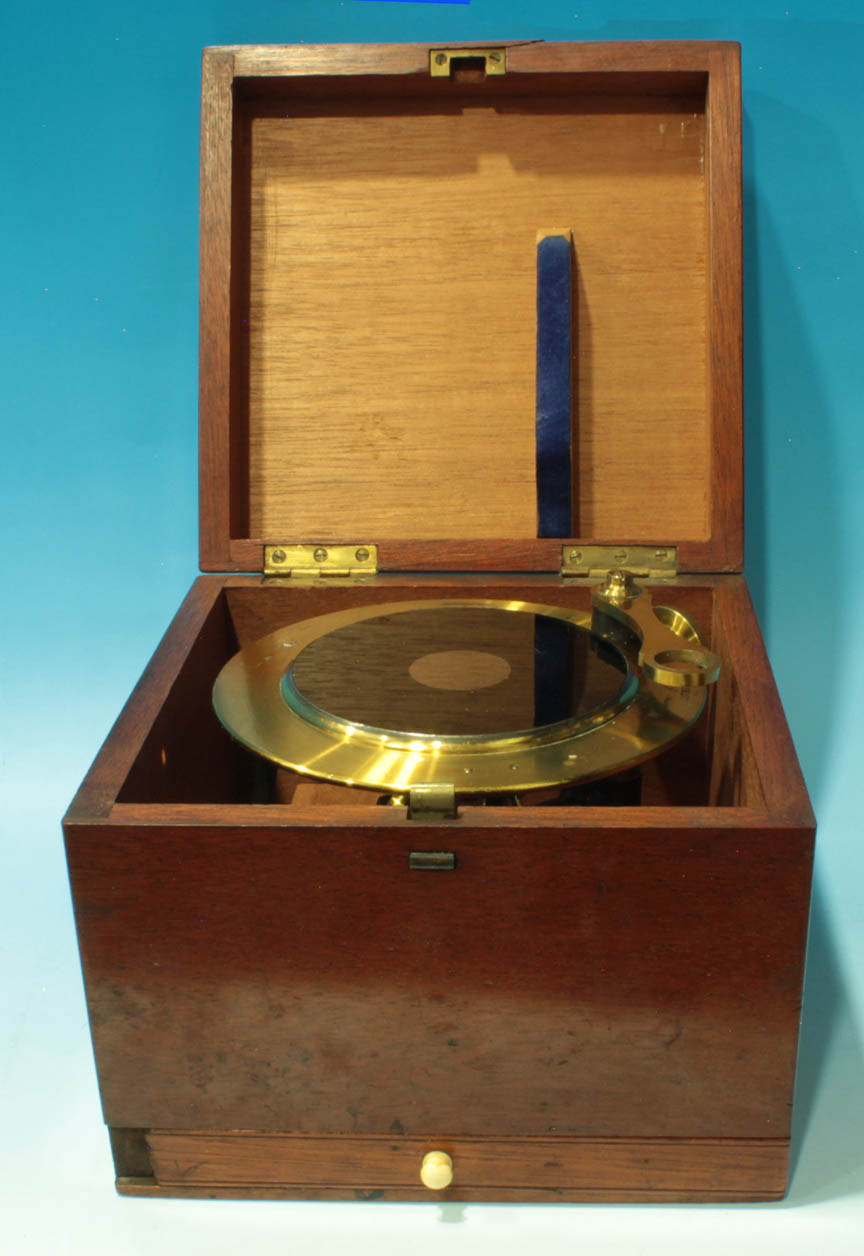
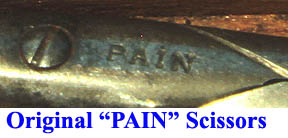
PAIN), the original curved forceps, 3 fittings for lenses, and fittings for dissecting instruments. There are two dark-handled dissecting instruments in those fittings which are from the same period, but not original to this instrument. Unlike some other examples of this model, this example does not have holes in the brass part of the stage to support a bullseye condenser, nor is there provision for one in the case. The mahogany case, measures 7 1/8 inches in front to back outer dimension, and 7 1/4 inches wide. It is 5 3/4 inches high.
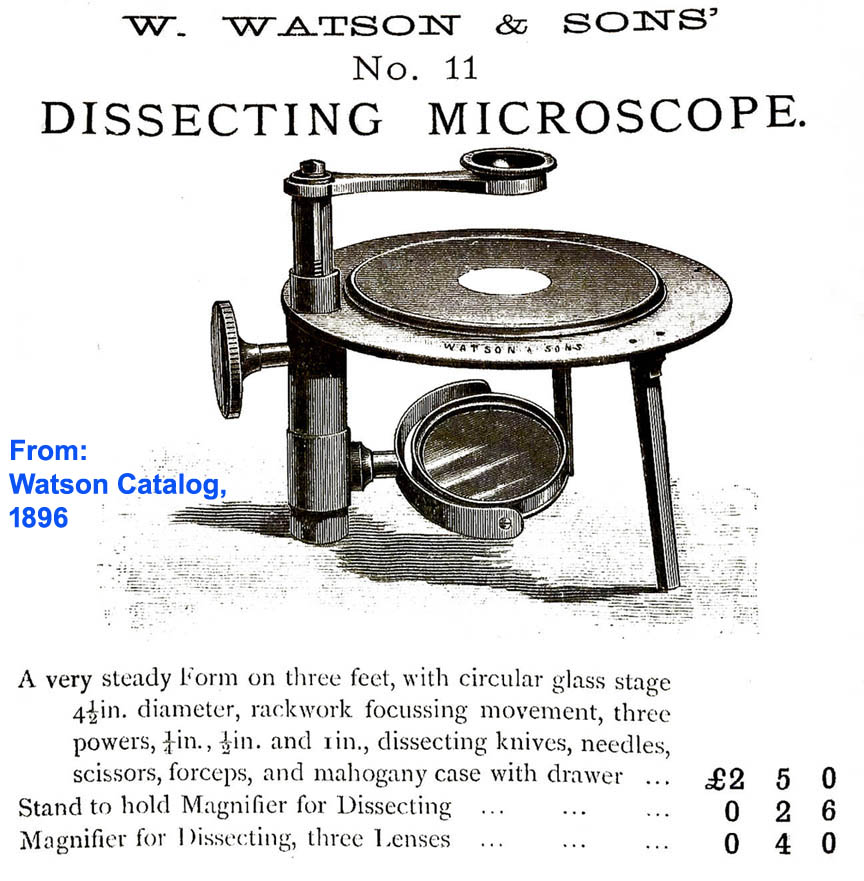
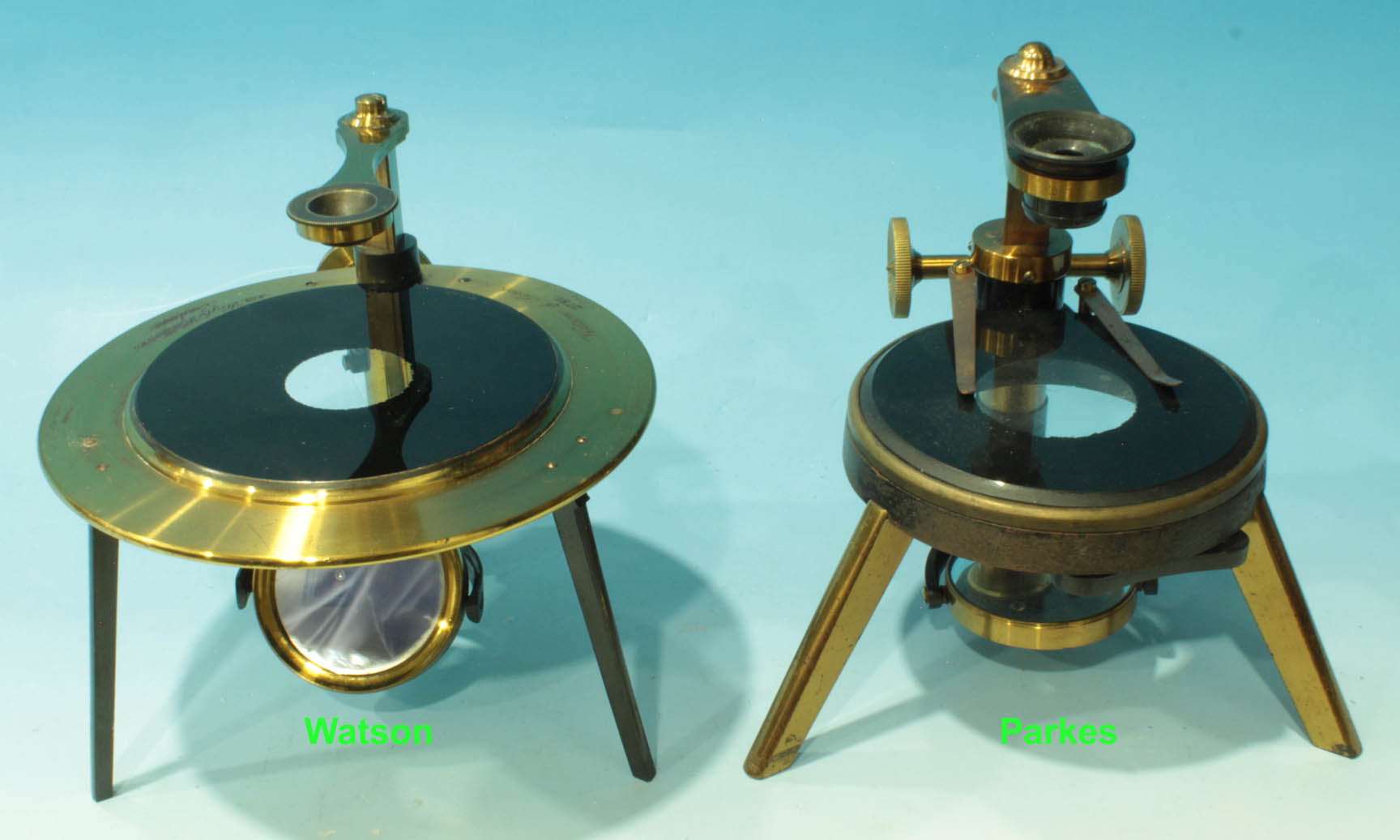

Dissecting Microscopeclosely resembles the 1860s
Improved Dissecting Microscopein this collection by Parkes & Son. The differences include:
Huxleymodel. But Watson kept the older and simpler arrangement on their Dissecting Microscope, likely to keep the cost down.
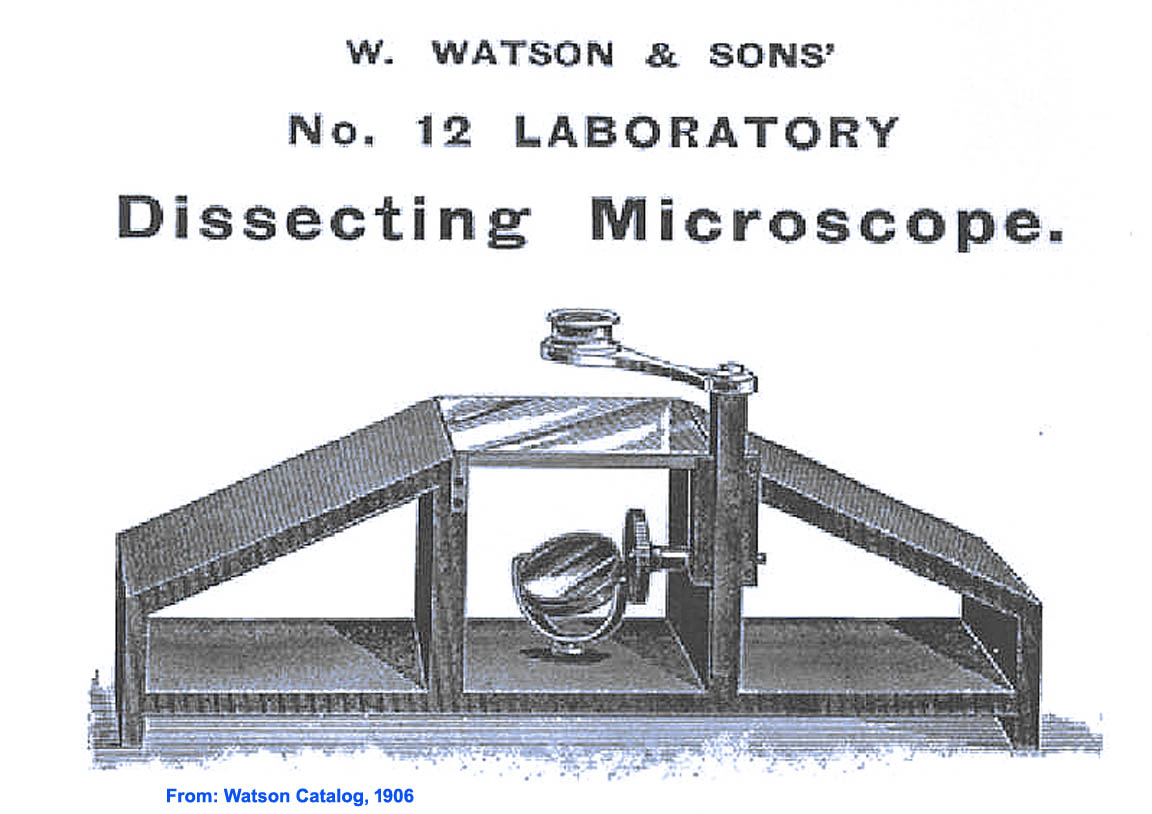
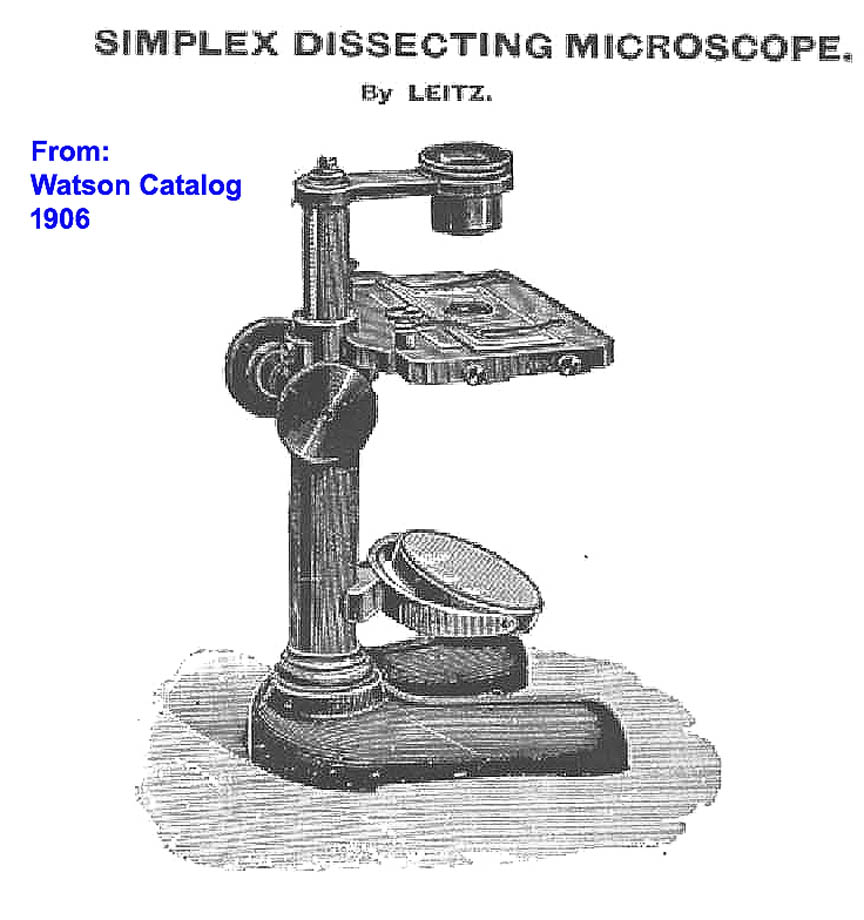 Watson also sold a
 Laboratory Dissecting Microscopeand a
Simplex Dissecting Microscope(by Leitz), as well as articulated stands just to hold a dissecting eyepiece.
Dissecting Microscopemodel was also sold, was quite similar to those made by Bausch & Lomb. Like the B & L model, it is made primarily of wood with slanting sides to serve as hand rests. As early as 1893, B & L referred to theirs as designed by Professor C.R.Barnes of the U of Wisconsin.
Simplexmodel listed in the Watson catalogs was made by Leitz and sold later than the other models mentioned above; similar models were made by most of the major makers, indeed they are still made today in the 21st century, though now mostly made in China and India. This type was often made with attachable hand rests of either metal (Leitz) or wood (Bausch & Lomb). An example of this type with wooden hand rests from about 1906 and made by Bausch & Lomb is in this collection and shown on this site.
 Another more basic Watson model, the
 Table Stagewas also sold.