
| DESCRIPTION | HISTORY |
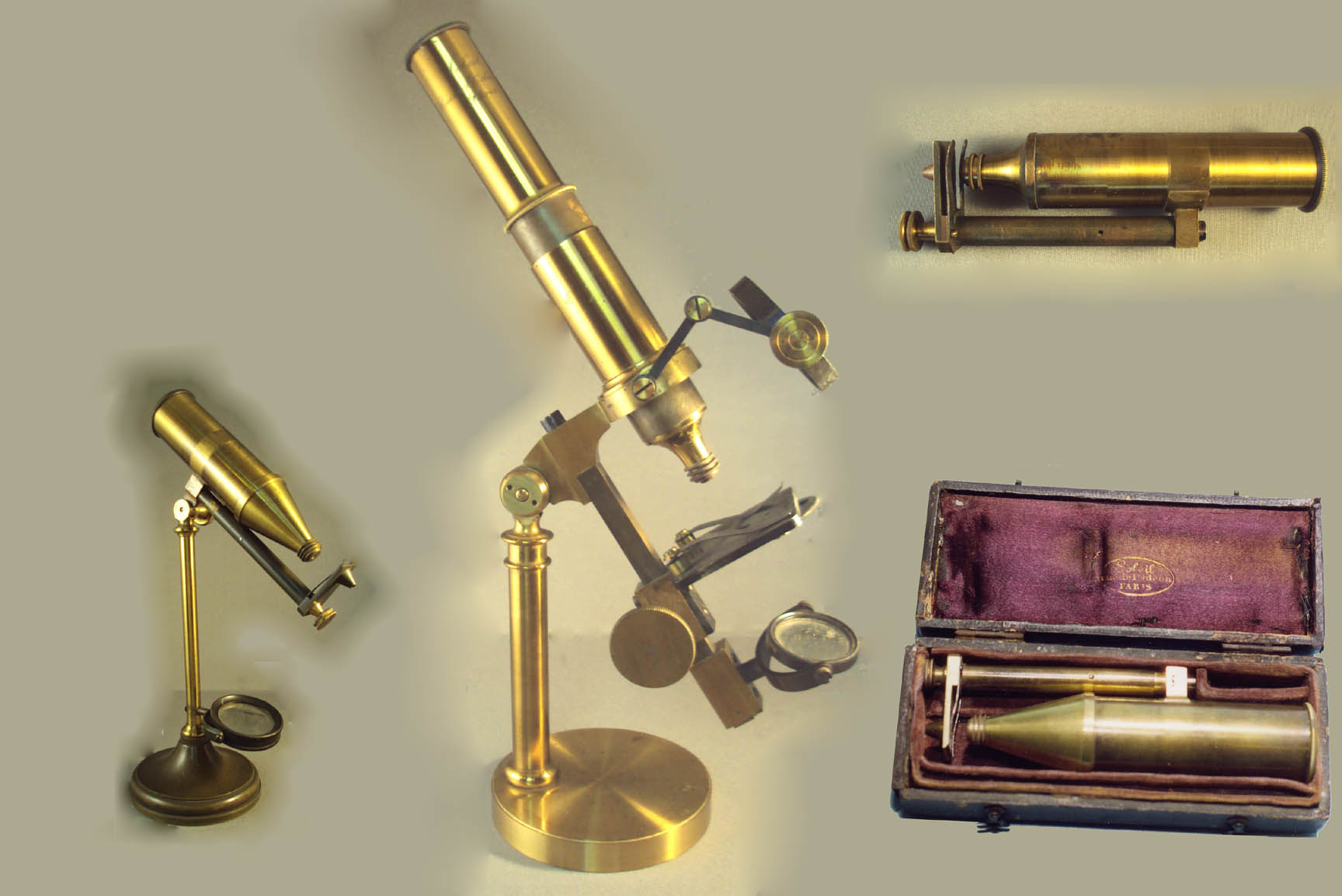
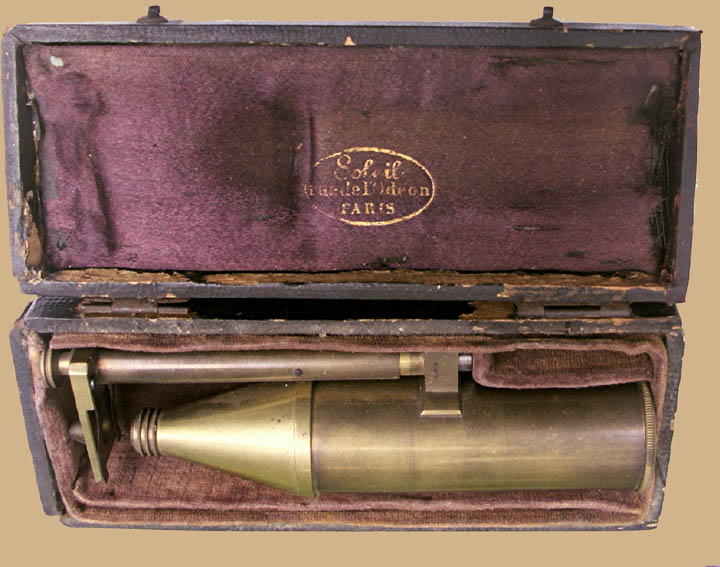 The first instrument, no longer in this collection, is all brass, and has three stacking lenses. The optical tube is a
cylinder
with a cone-shaped taper at the end. It has only a fine focus
mechanism, the adjustment knob at the bottom of the stage, acting on the stage through the limb. Focusing is achieved via a brass tube over another, and a screw through the outer tube rides on a slot in the inner tube to maintain alignment during adjustment. The focusing knob at the bottom acts to raise or lower the stage acting on a sprung fitting to keep the mechanism tight. There is a conical aperture diaphragm
built into the stage.
It is signed by a crude stamping to the arm in block letters: 'SOLEIL.' The skin-covered box measures about 4 3/4 inches long x 2 inches wide x 1 inch high(closed).
It is lined with cushioned reddish-purple silk on the inside lid and on that lid is a gold stamp reading: 'Soleil
rue de l'Odéon PARIS.' It has a small stage with two stage clips. There is a small compartment in the case which
would accomodate slides of narrow width, and another shorter compartment for an unknown accessory, possibly cover slips
or a magnifier. Another identical example of this microscope and its case, is part of the Whipple Collection at Cambridge, England. It seems clear that this instrument was being produced by Jean Baptiste Soleil by 1841 (see below).
The first instrument, no longer in this collection, is all brass, and has three stacking lenses. The optical tube is a
cylinder
with a cone-shaped taper at the end. It has only a fine focus
mechanism, the adjustment knob at the bottom of the stage, acting on the stage through the limb. Focusing is achieved via a brass tube over another, and a screw through the outer tube rides on a slot in the inner tube to maintain alignment during adjustment. The focusing knob at the bottom acts to raise or lower the stage acting on a sprung fitting to keep the mechanism tight. There is a conical aperture diaphragm
built into the stage.
It is signed by a crude stamping to the arm in block letters: 'SOLEIL.' The skin-covered box measures about 4 3/4 inches long x 2 inches wide x 1 inch high(closed).
It is lined with cushioned reddish-purple silk on the inside lid and on that lid is a gold stamp reading: 'Soleil
rue de l'Odéon PARIS.' It has a small stage with two stage clips. There is a small compartment in the case which
would accomodate slides of narrow width, and another shorter compartment for an unknown accessory, possibly cover slips
or a magnifier. Another identical example of this microscope and its case, is part of the Whipple Collection at Cambridge, England. It seems clear that this instrument was being produced by Jean Baptiste Soleil by 1841 (see below).
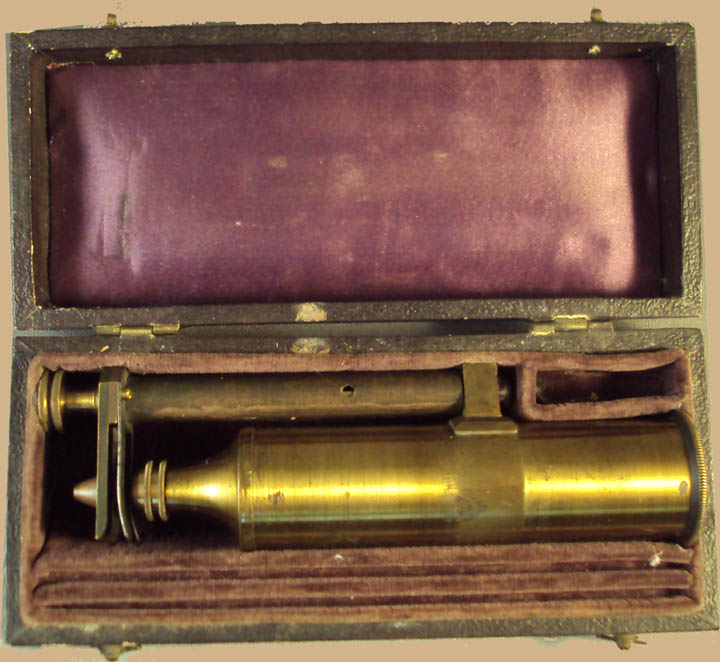 The second instrument, still in the collection, is strikingly similar, except the case has no name imprinted on the inside lid, the instrument is unsigned,
and the nose of the optical tube is a tapering curve instead of a cone-shape. The other features are all virtually identical to the first, including the focusing mechanism and dimensions.
The second instrument, still in the collection, is strikingly similar, except the case has no name imprinted on the inside lid, the instrument is unsigned,
and the nose of the optical tube is a tapering curve instead of a cone-shape. The other features are all virtually identical to the first, including the focusing mechanism and dimensions.
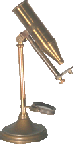
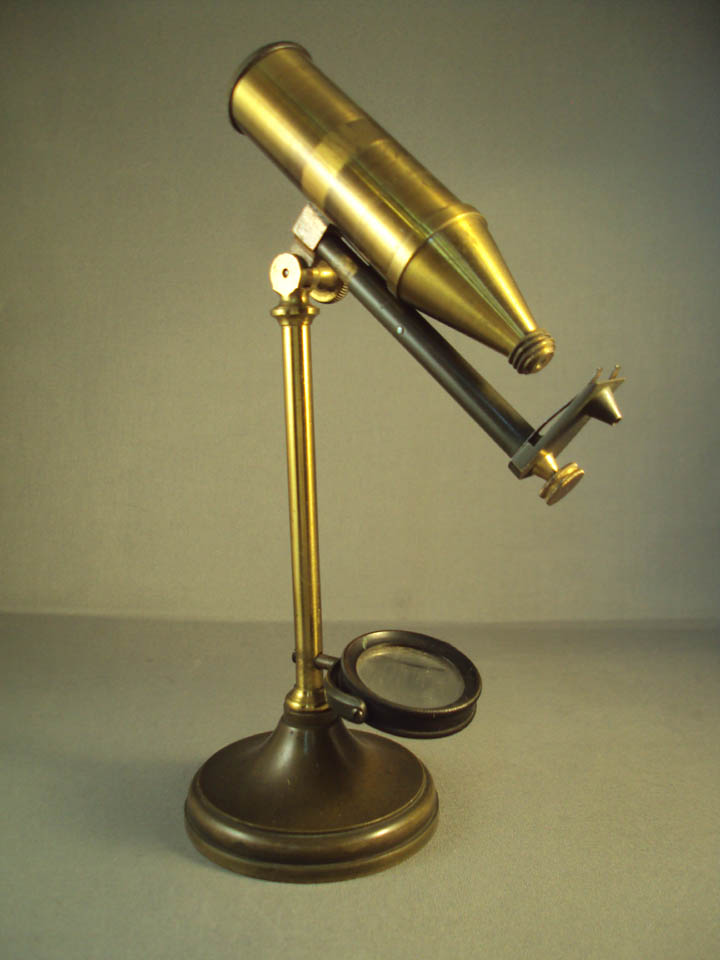 The third example, dating to before 1851, is nearly identical to the first, but is signed on the optical tube: 'Soleil, RUE DE L'ODÉON, 35, À PARIS.' and in addition, is attached to a stand with an oxidized brass lead-filled base, and mirror. The word Soleil is larger and is in script, the address is in capital block letters, and À PARIS is in italic. This was the address from 1825 until 1851 when the address changed to number 21. The microscope
inclines but the mirror remains fixed on the stand below, allowing the microscope to use another light source directly. The mirror can be used
only if the microscope is in the fully vertical position. There are three divisible button objectives.
The focusing mechanism is again the same as the examples of pocket models which are not fixed to a stand. This is likely
the exact model referred to in the quote below.
The third example, dating to before 1851, is nearly identical to the first, but is signed on the optical tube: 'Soleil, RUE DE L'ODÉON, 35, À PARIS.' and in addition, is attached to a stand with an oxidized brass lead-filled base, and mirror. The word Soleil is larger and is in script, the address is in capital block letters, and À PARIS is in italic. This was the address from 1825 until 1851 when the address changed to number 21. The microscope
inclines but the mirror remains fixed on the stand below, allowing the microscope to use another light source directly. The mirror can be used
only if the microscope is in the fully vertical position. There are three divisible button objectives.
The focusing mechanism is again the same as the examples of pocket models which are not fixed to a stand. This is likely
the exact model referred to in the quote below.
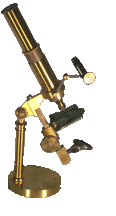
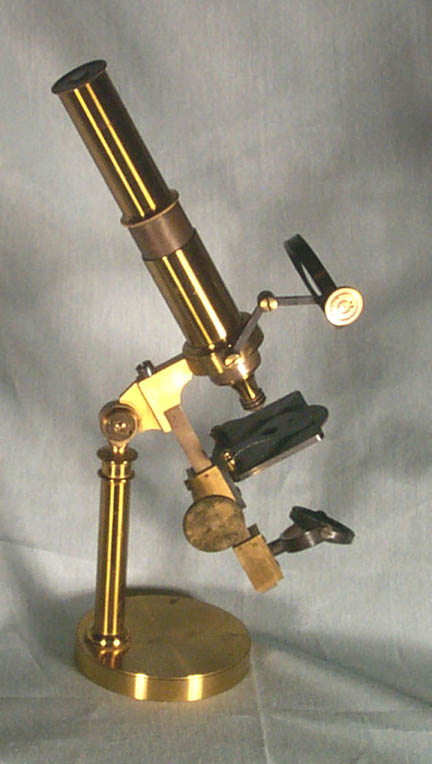 The fourth Soleil microscope shown here is a table model dating to after 1850. The tube has a
slightly different signature to the pocket example on
stand: 'Soleil, Rue de l'Odéon, 21 Paris.' In this case, the entire engraved
signature is in script, and in the same font, but with the first letter of each of the words
capitalized (except for de of 'de l'Odéon'). This is the later address, and Soleil was
first here in 1851. Note that the À before Paris is also not part of this signature.
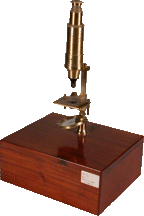
The fine case with lock has no markings. The optical tube-supports in the case are attached to the
cover of a small compartment for additional accessories (none extant).
The case also has provisions for additional accessories including an additional eyepiece and
dissecting instruments, but none are currently with the microscope. The microscope, which can
incline on its supporting pillar, has both a substage mirror, and a bullseye condenser on a swinging arm,
mounted to the ring on the arm encasing the optical tube. Focusing is by rack and pinion acting on the stage,
although coarser rapid focusing could also be accomplished by sliding the optical tube up or down
in the arm. There is a wheel of stops attached to the underside of the stage via a lacquered brass
screw.
The fourth Soleil microscope shown here is a table model dating to after 1850. The tube has a
slightly different signature to the pocket example on
stand: 'Soleil, Rue de l'Odéon, 21 Paris.' In this case, the entire engraved
signature is in script, and in the same font, but with the first letter of each of the words
capitalized (except for de of 'de l'Odéon'). This is the later address, and Soleil was
first here in 1851. Note that the À before Paris is also not part of this signature.
The fine case with lock has no markings. The optical tube-supports in the case are attached to the
cover of a small compartment for additional accessories (none extant).
The case also has provisions for additional accessories including an additional eyepiece and
dissecting instruments, but none are currently with the microscope. The microscope, which can
incline on its supporting pillar, has both a substage mirror, and a bullseye condenser on a swinging arm,
mounted to the ring on the arm encasing the optical tube. Focusing is by rack and pinion acting on the stage,
although coarser rapid focusing could also be accomplished by sliding the optical tube up or down
in the arm. There is a wheel of stops attached to the underside of the stage via a lacquered brass
screw. This portable Soleil microscope is in Brian Stevenson's collection and I am grateful for his kindness in sharing images with us. It has a pillar and arm and optical tube very similar to the previous entry. Differences include the fact that the pillar on this microscope is centered on the foot, and there is a tilting stage fine focus controlled from below the stage. It is signed: $$$$$$$$$$$$$$$$$$$
 This soleil microscope is a simpler form which is fixed in vertical position with a round green painted base and black stage.
  Soleil also made a 'drum" microscope as shown here. This example has an Oberhauser-type camera lucida with it.
 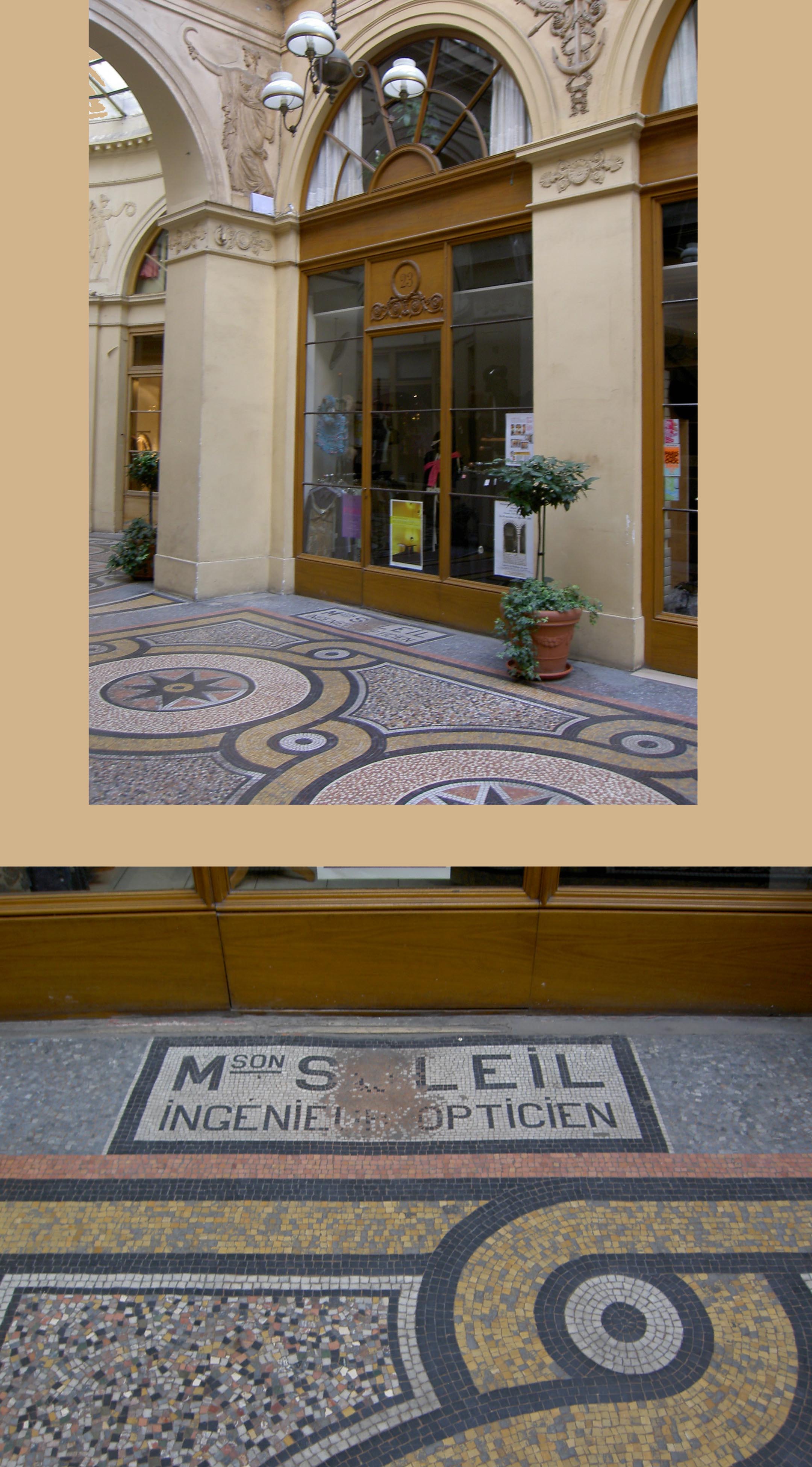 All the known Soleil
microscopes are signed either with 'H. Soleil', 'Soleil Fils', or simply 'Soleil.' The pocket microscope was apparently
being made by Jean Baptiste as mentioned by Dr Donné (reported to the French Academy of Science) in 1840.
It was also mentioned in the 1842 edition of the 'Yearbook of Facts in Science and Art' quoted below.
See the table below for a summary of names, signatures, years working and locations.
The 1867 catalog of Henri Soleil lists 'various achromatic microscopes' ranging in price from 25 to 200 fr but does not
elaborate further on any particular model. In this catalog polarizing instruments including polarizing microscopes are
listed individually, and from this and other sources it appears that polarization apparatus and non-microscopical optical
equipment such as opthalmoscopes, laryngescopes, etc.
were more important facets of the Soleil Business by that point in time. The Soleil firm was famous for optical instruments and
accessories especially those having to do with polarized light, including the 'Soleil Compensator,' and other devices using polarized light
like the Sacharimeter, polariscope, etc. A photographic exposure timing device, then referred to as an actinometer was invented by Soleil about 1842 and
variations of this instrument are still used today to measure intensity of various kinds of radiation.
All the known Soleil
microscopes are signed either with 'H. Soleil', 'Soleil Fils', or simply 'Soleil.' The pocket microscope was apparently
being made by Jean Baptiste as mentioned by Dr Donné (reported to the French Academy of Science) in 1840.
It was also mentioned in the 1842 edition of the 'Yearbook of Facts in Science and Art' quoted below.
See the table below for a summary of names, signatures, years working and locations.
The 1867 catalog of Henri Soleil lists 'various achromatic microscopes' ranging in price from 25 to 200 fr but does not
elaborate further on any particular model. In this catalog polarizing instruments including polarizing microscopes are
listed individually, and from this and other sources it appears that polarization apparatus and non-microscopical optical
equipment such as opthalmoscopes, laryngescopes, etc.
were more important facets of the Soleil Business by that point in time. The Soleil firm was famous for optical instruments and
accessories especially those having to do with polarized light, including the 'Soleil Compensator,' and other devices using polarized light
like the Sacharimeter, polariscope, etc. A photographic exposure timing device, then referred to as an actinometer was invented by Soleil about 1842 and
variations of this instrument are still used today to measure intensity of various kinds of radiation.
Soleilsome with an address either on the instrument or in the lid of the case, but none have a first name or initial. The polariscope in the Golub Collection has the initial 'H' for Henri. The solar has the signature 'Soleil fils' (which translates to 'Soleil Son') and gives the earlier 35 rue de l'Odéon address, dating that instrument to before 1851 since Soleil was at 21 rue de l'Odéon by 1851. In the case of the pocket microscopes without stand, two of the three known examples are simply stamped in block letters
SOLEILand have a seal with the address 'rue de l'Odéon' (without a number) stamped in gold on the silk of the inside of the lid of the case. Based on the literature mentioning Soleil Pocket Microscopes starting in about 1840, these examples of the Pocket Microscope date to between about 1840-1851, perhaps even later, but based on the known signatures used by Henri, it is my opinion they date to the time period before Henri was alone. The third example, of almost identical construction and with an almost identical case, has no signature on the microscope and no seal in the case, presumably to allow retail sales by others. The following table summarizes all the Soleil microscopes familiar to this writer.
| MICROSCOPE | SIGNATURE | LOCATION | IMAGES |
|---|---|---|---|
| Pocket Microscope | 'SOLEIL' | Private Collection |
 |
| Pocket Microscope | 'SOLEIL' | Whipple Museum, Cambridge |  |
| Pocket Microscope | none | Here | 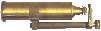 |
| Pocket Microscope on Stand | 'Soleil, RUE DE L'ODÉON, 35, À PARIS | Here |
 |
| Table Microscope | 'Soleil, Rue de l'Odéon, 21, Paris | Here |
 |
| Case-Mounted Microscope | 'Soleil, Rue de l'Odéon, Paris | www.aseiste.org This instrument is part of the collection of the 'lyc e Guez de Balzac Angoul me, France' |
 |
| Polarizing Microscope | 'H. Soleil, Rue de l'Odéon, 21, Paris' | Golub Collection |
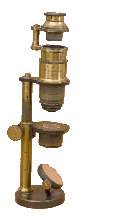 |
| Polarizing Microscope | 'SOLEIL à Paris' | Harvard U Collection |
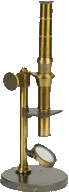 |
| Solar Microscope | 'Soleil Fils, Opticien, Rue de l'Odéon No 35, à Paris | Private Collection | 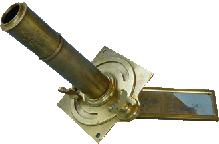 |
| Solar Microscope | 'Soleil opticien rue de l'Odéon 35, Paris | www.aseiste.org This instrument is part of the collection of the: 'lyc e Guez de Balzac Angoul me, France' |
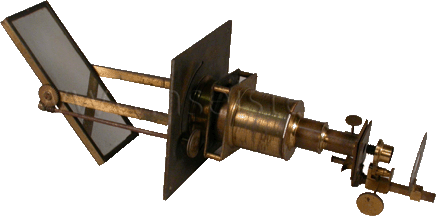
|
| MAKER |
SIGNATURES |
YEARS ACTIVE |
LOCATIONS |
|---|---|---|---|
| Francois Soleil | ? | 1812-1846 | 1799: 14 rue du Cimitierre, Paris
1800-1802: rue de Filles Thomas, Paris 1802-1812: 1 rue de Filles Saint Thomas, Paris 1812-: 21 Passage Feydeau, Paris |
| Jean Baptiste Soleil | 'Soleil Pere,' 'Soleil'(?) | 1823-1849 | 1823-1825: 7 rue de Nazareth, Paris 1825-1851: 35 rue de l'Odéon, Paris 1851-: 21 rue de l'Odéon, Paris |
| Henri Soleil | 'H. Soleil', 'Soleil Fils', 'Soleil'(?) | 1849-1879 | 1849-1851: 35 rue de l'Odéon, Paris 1851-1879: 21 rue de l'Odéon, Paris |