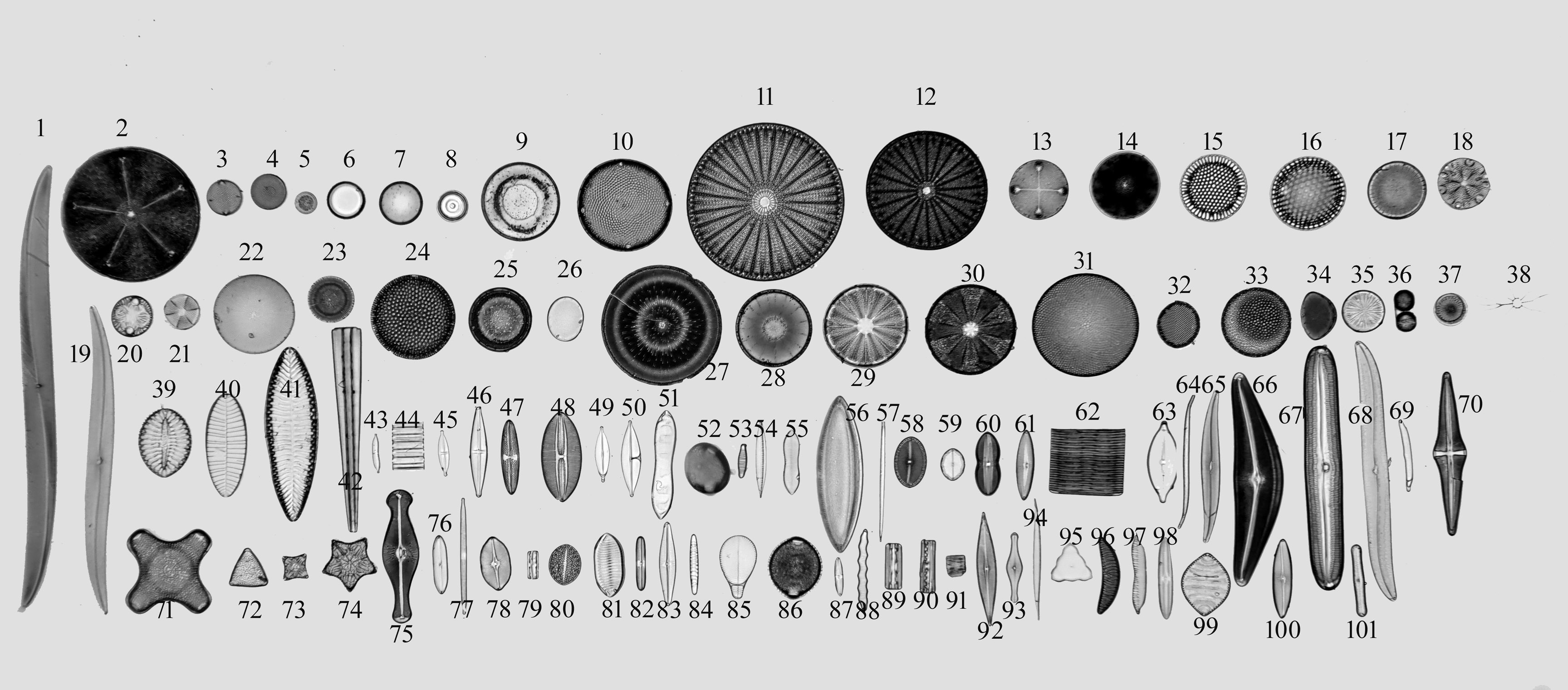
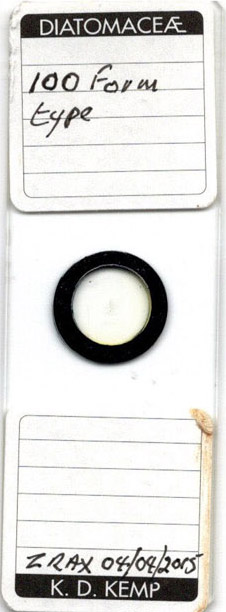
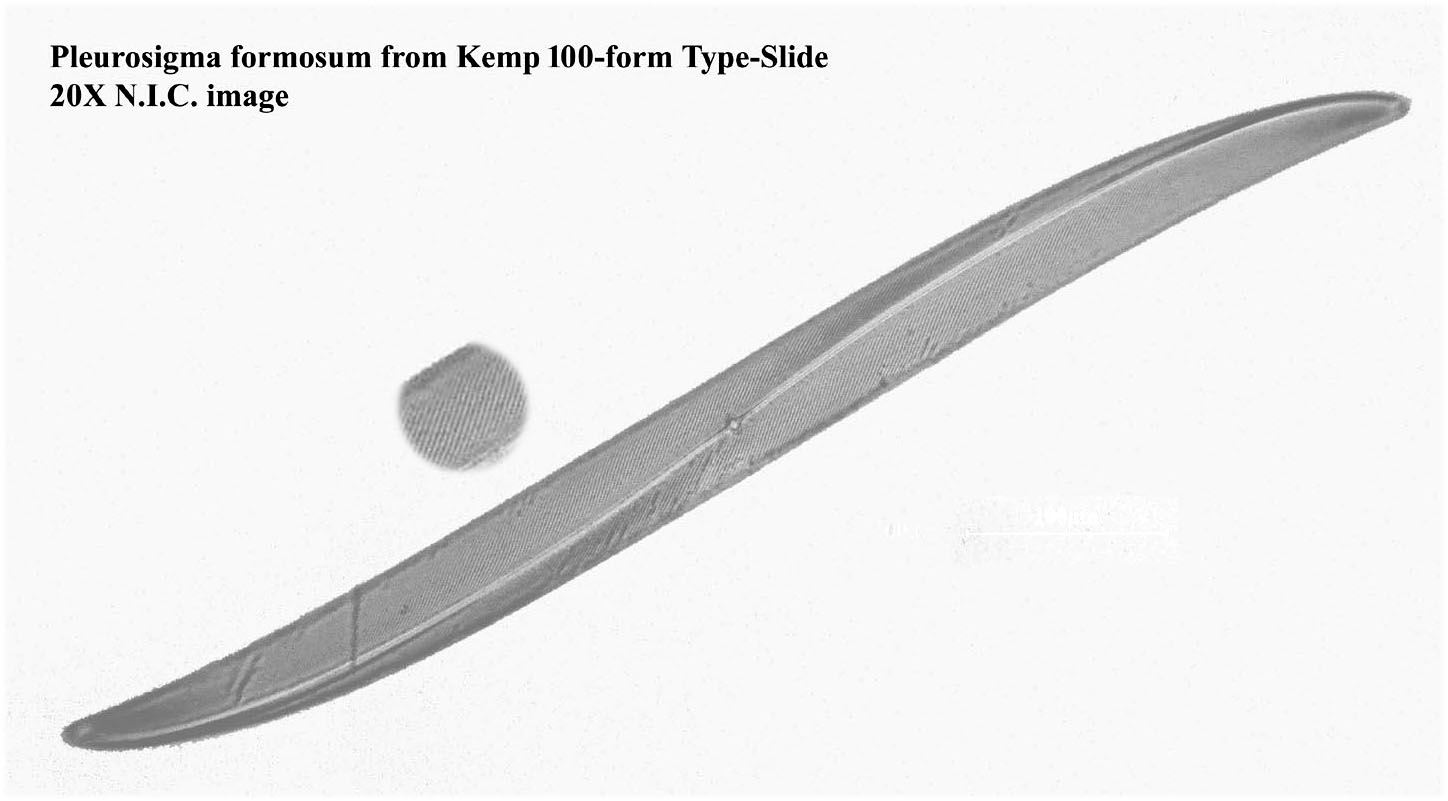
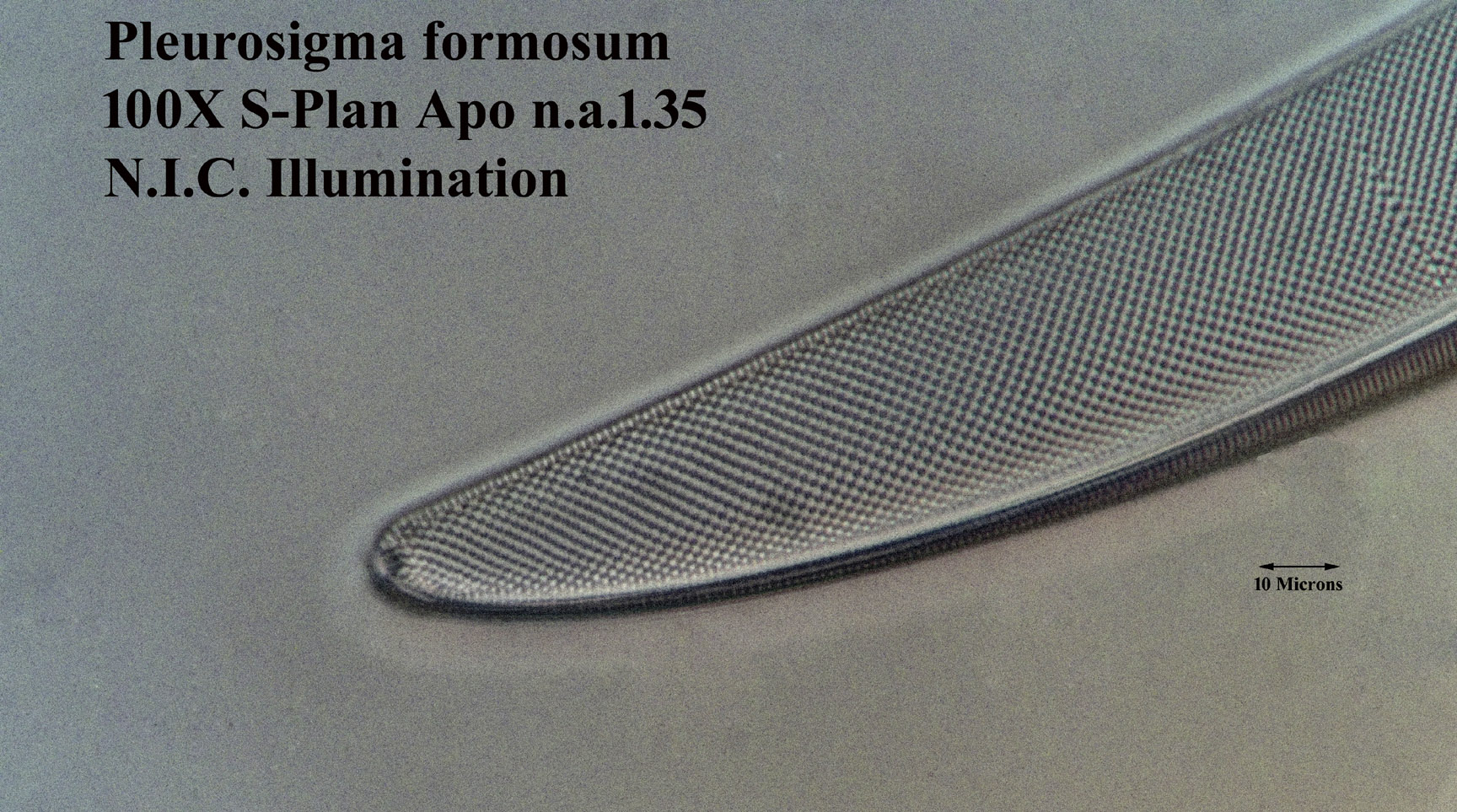
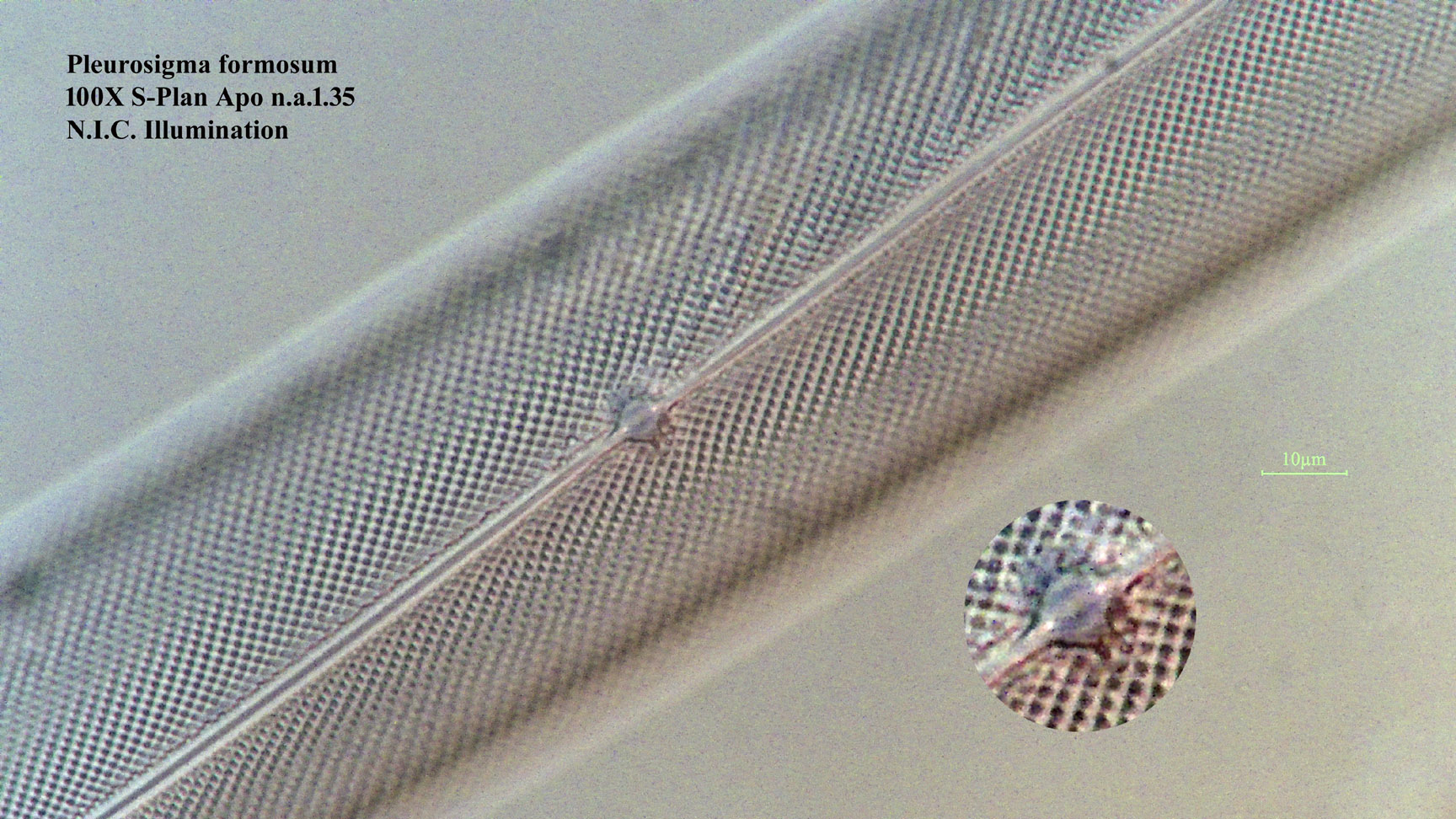
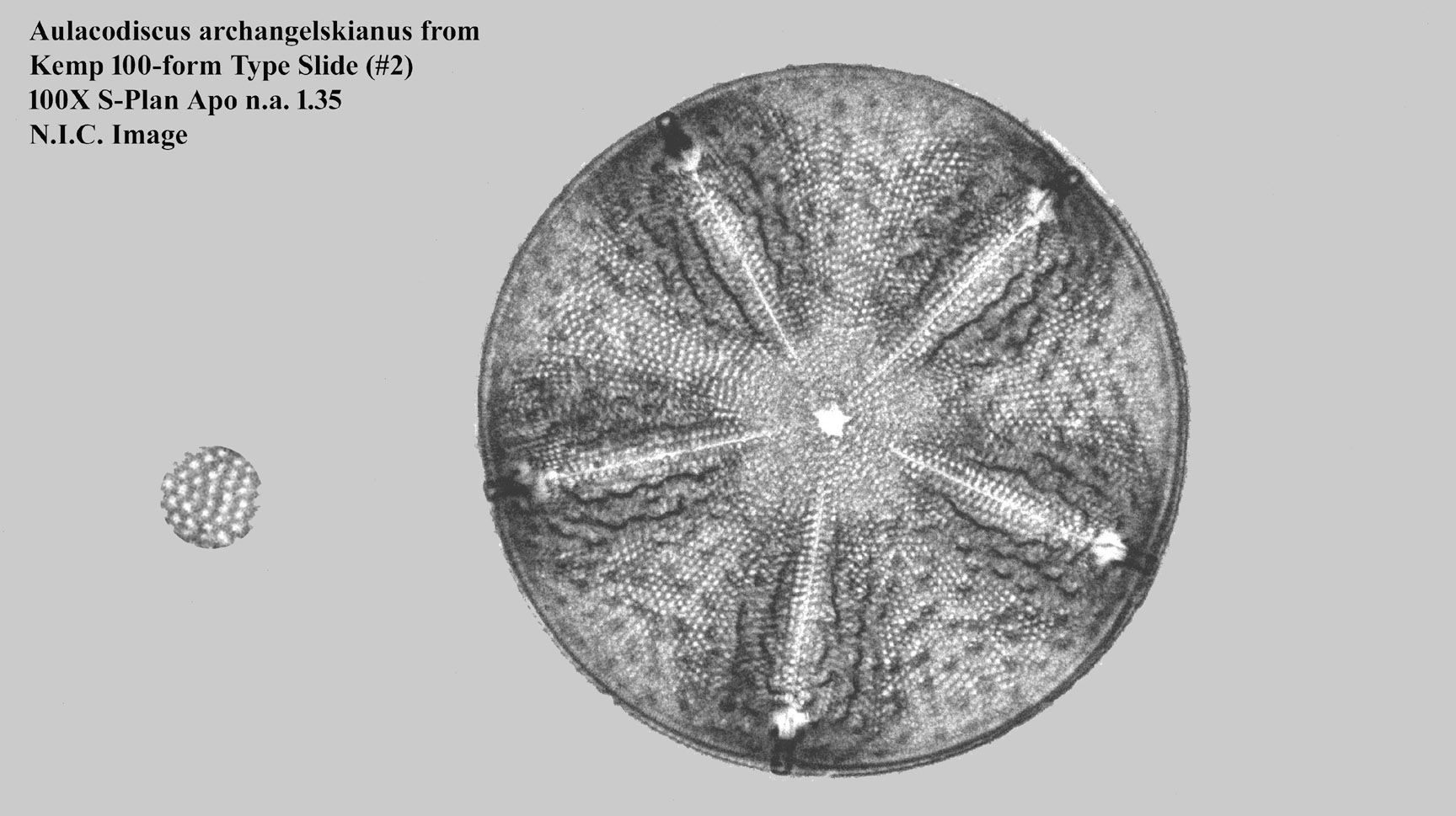
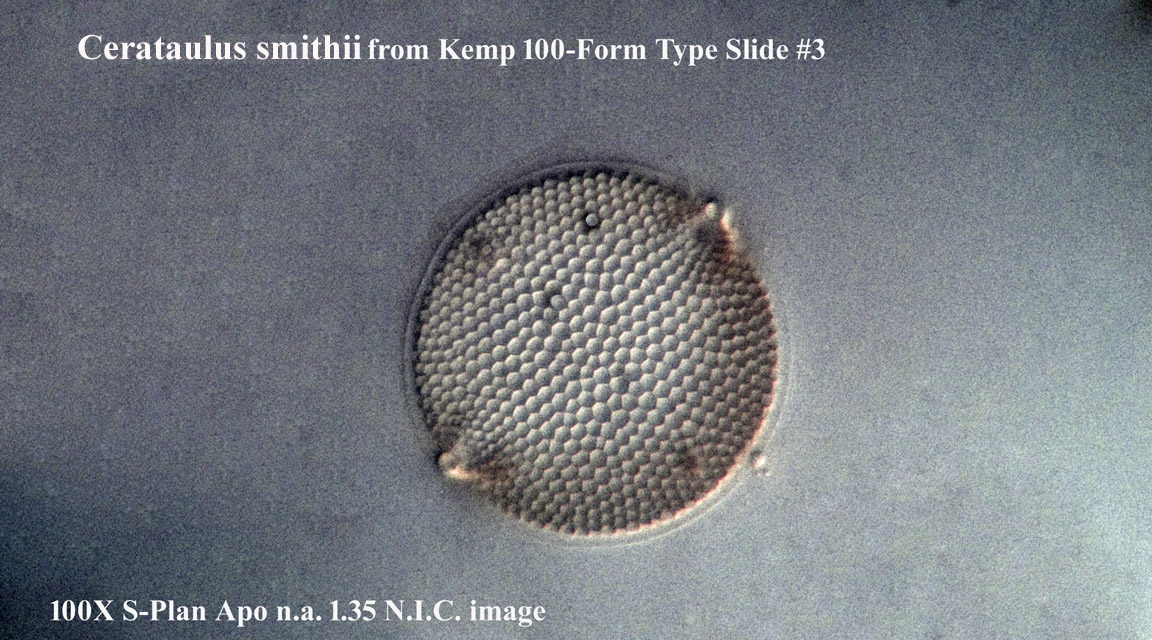
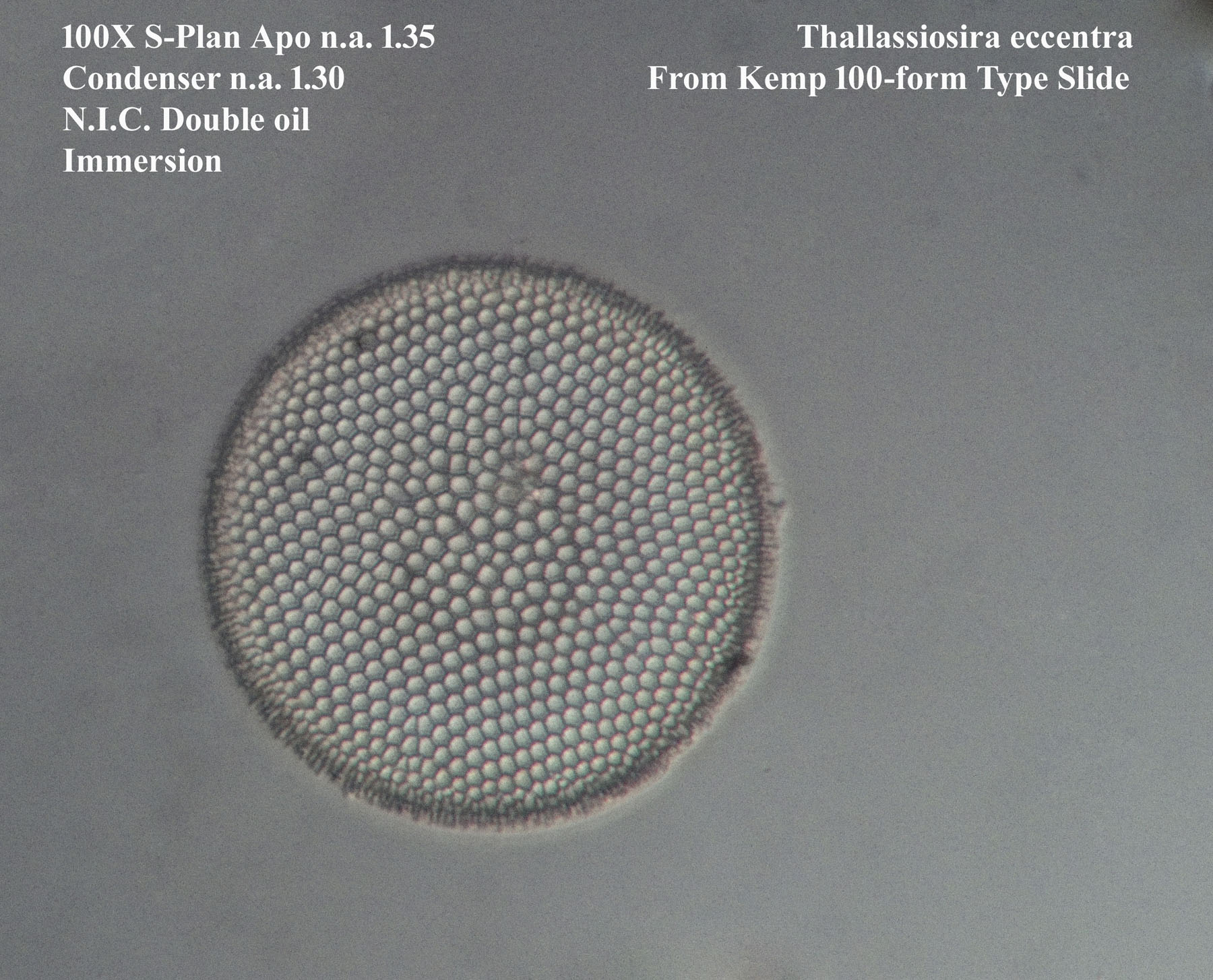
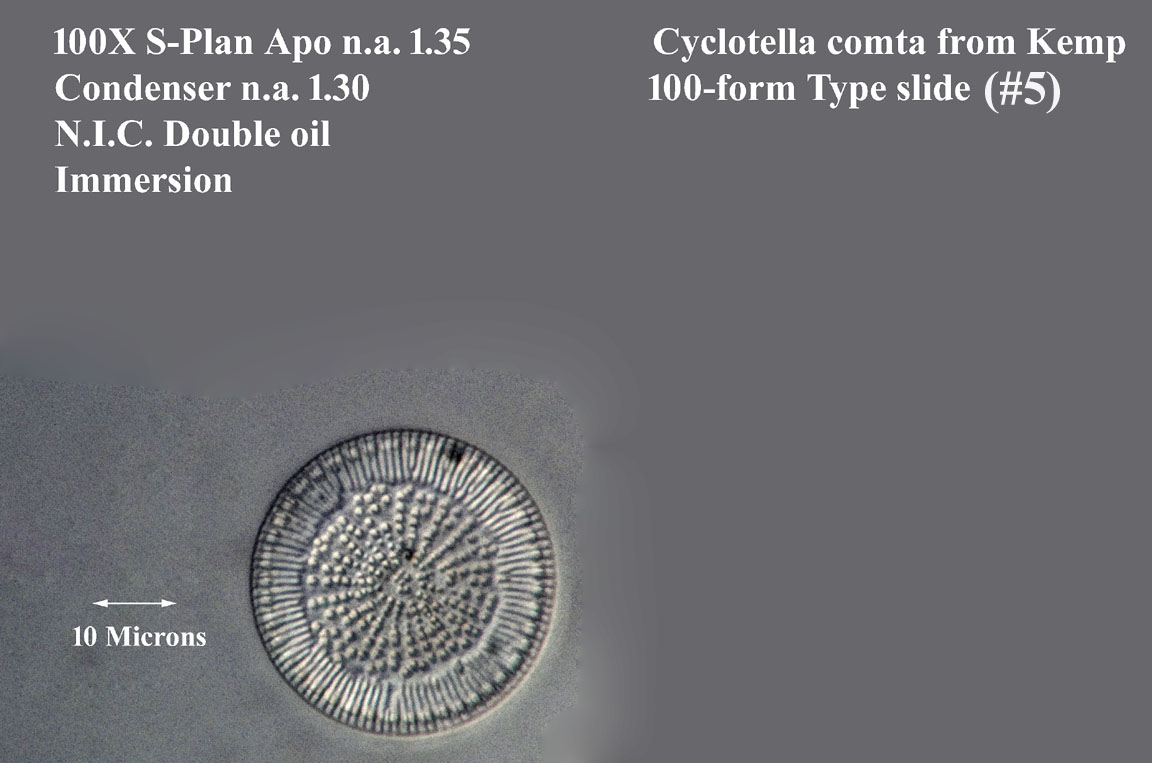
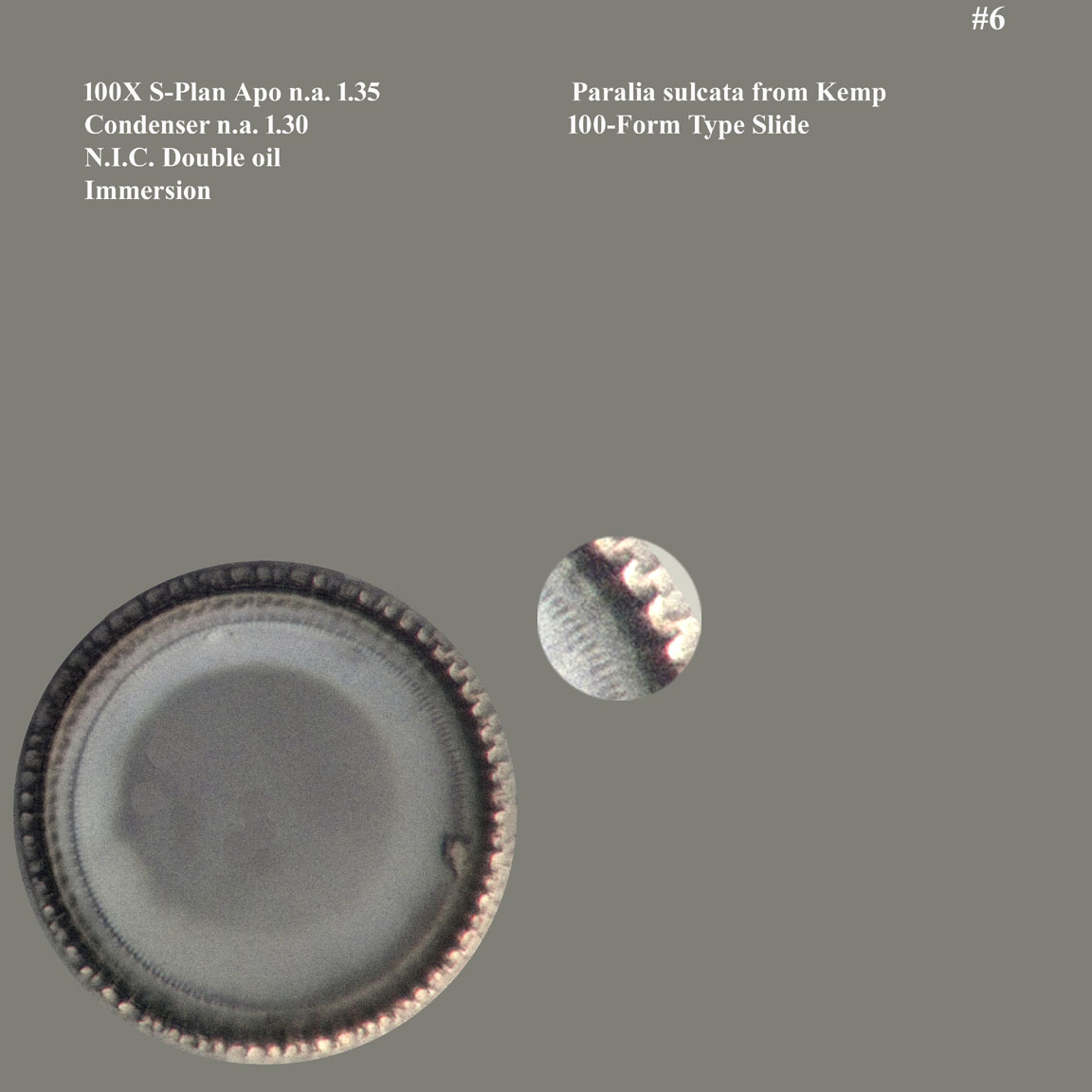
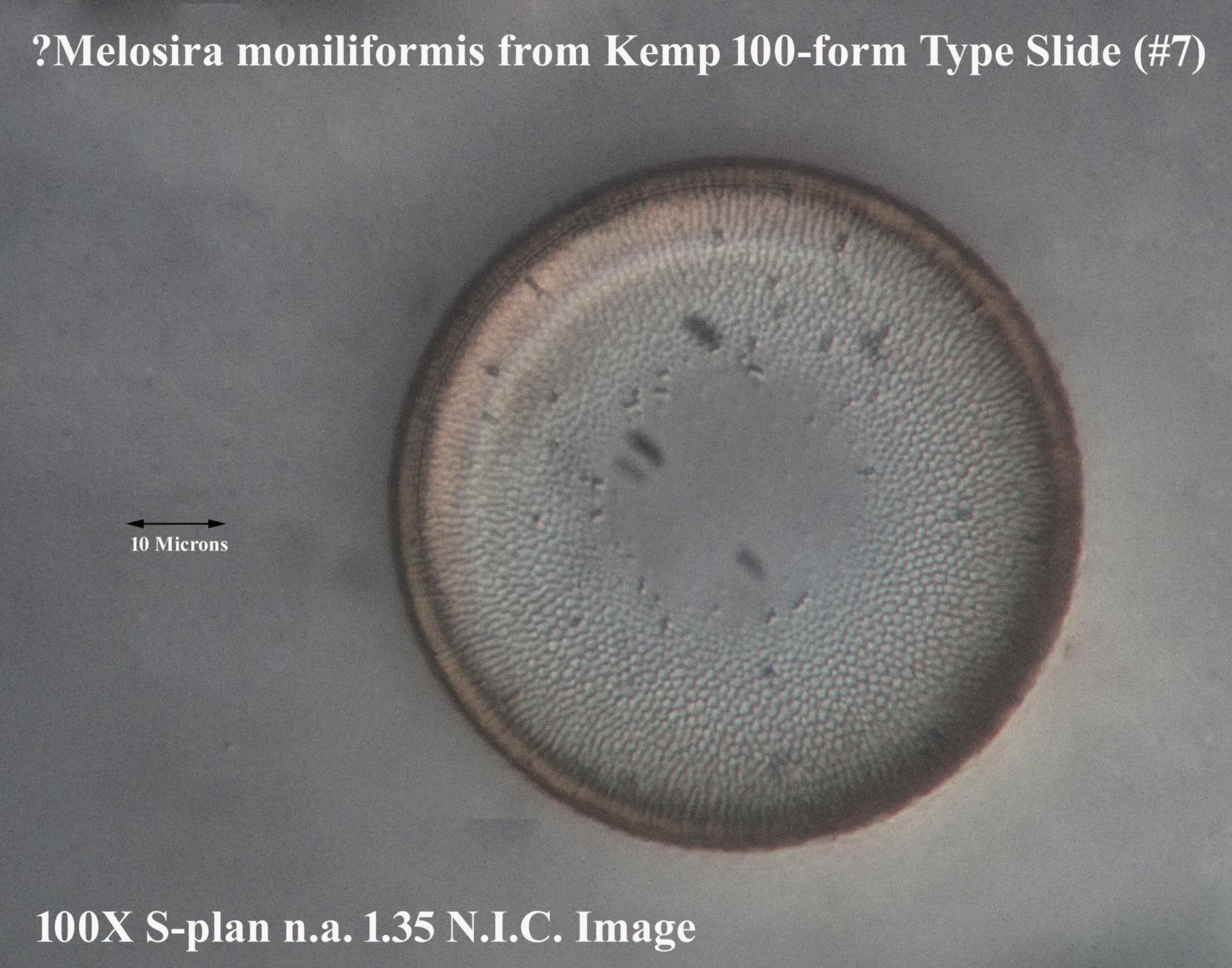
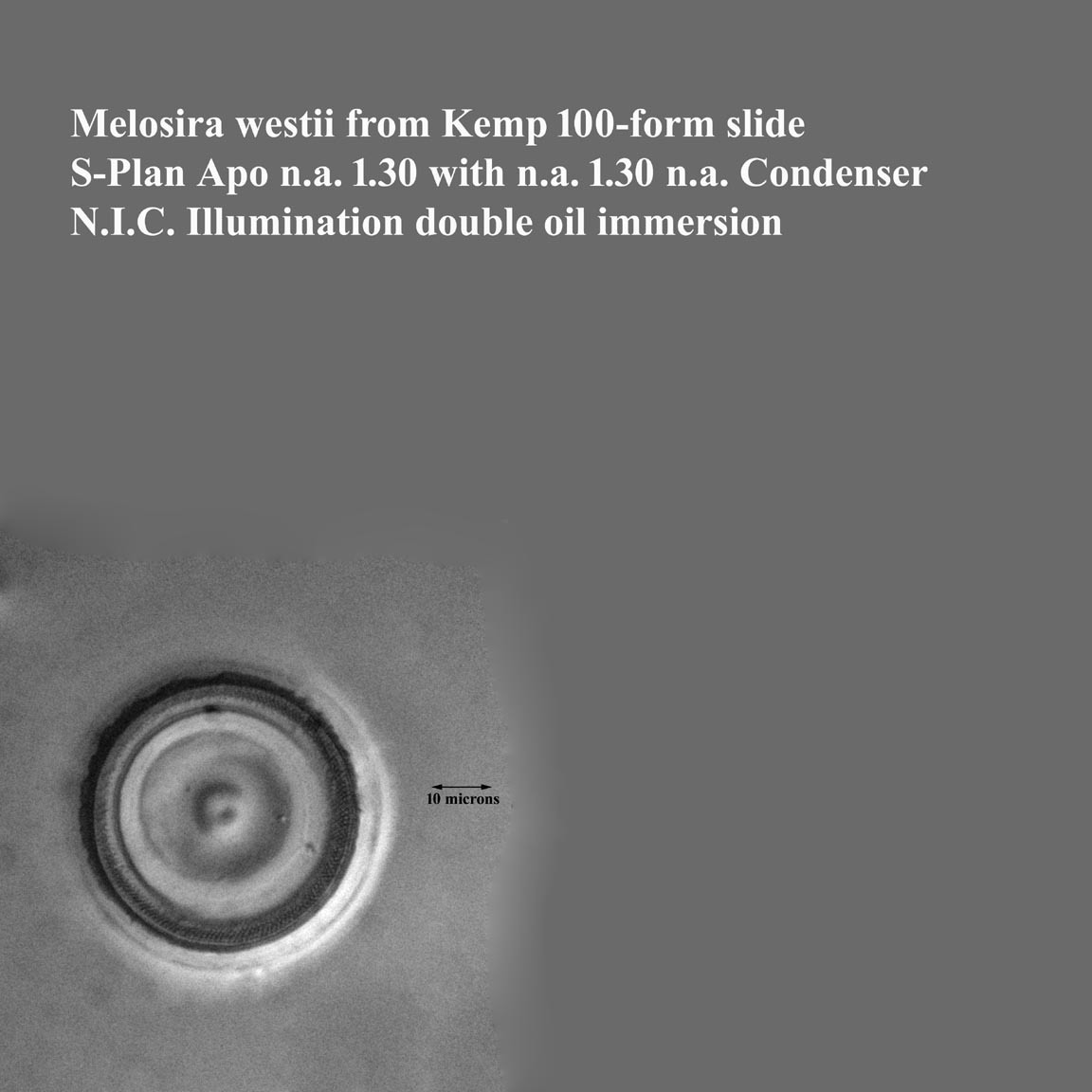
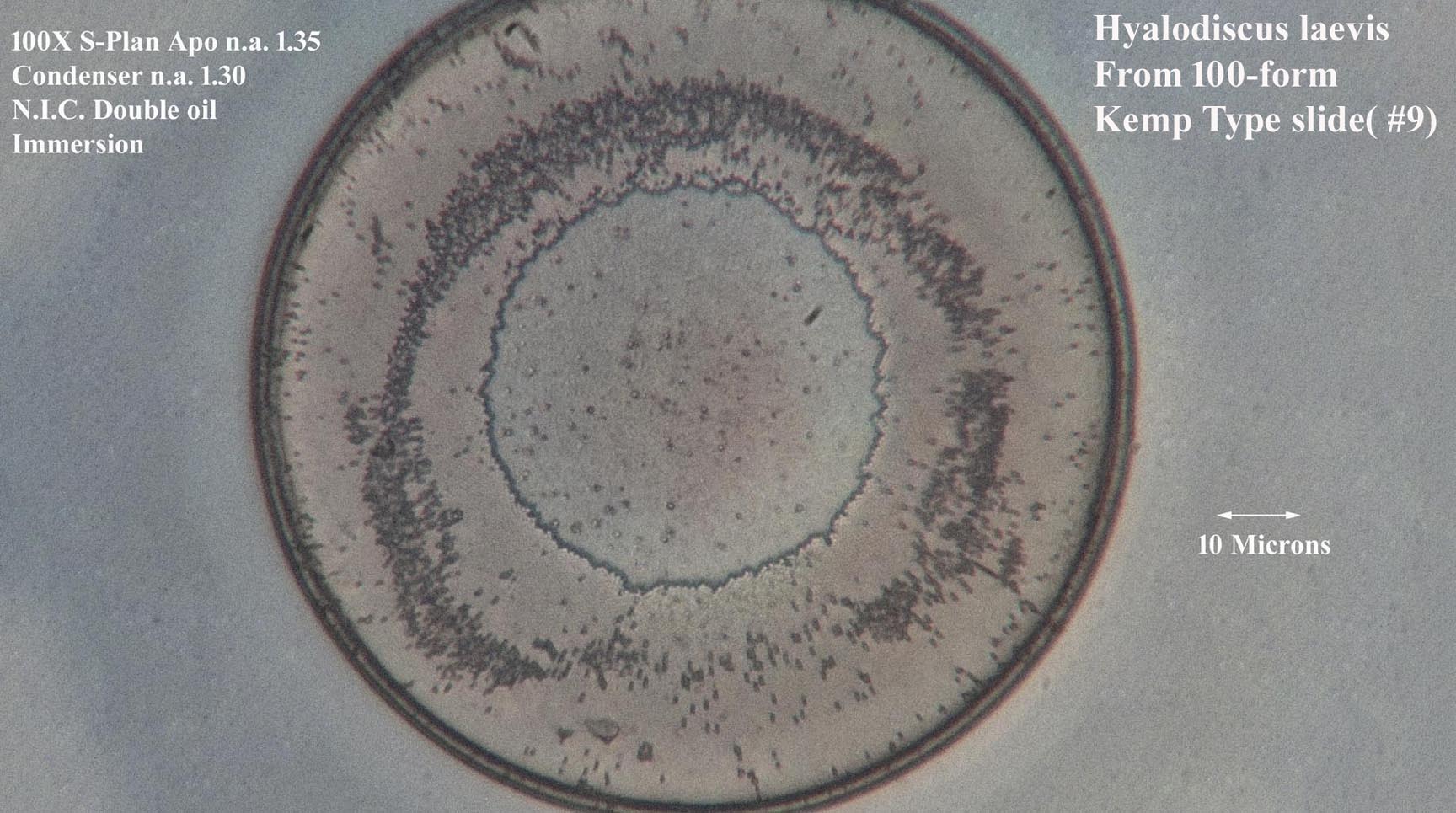
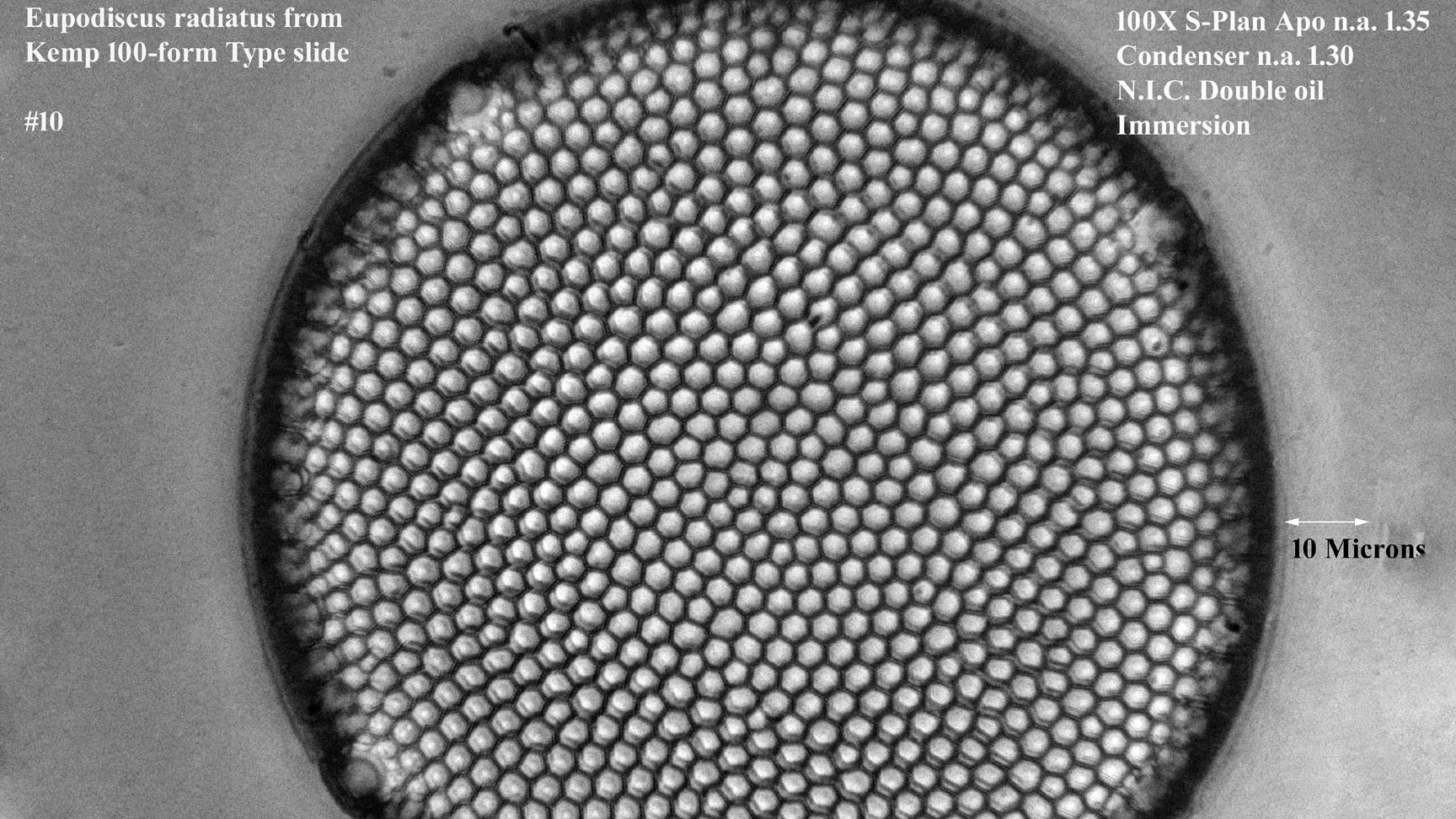
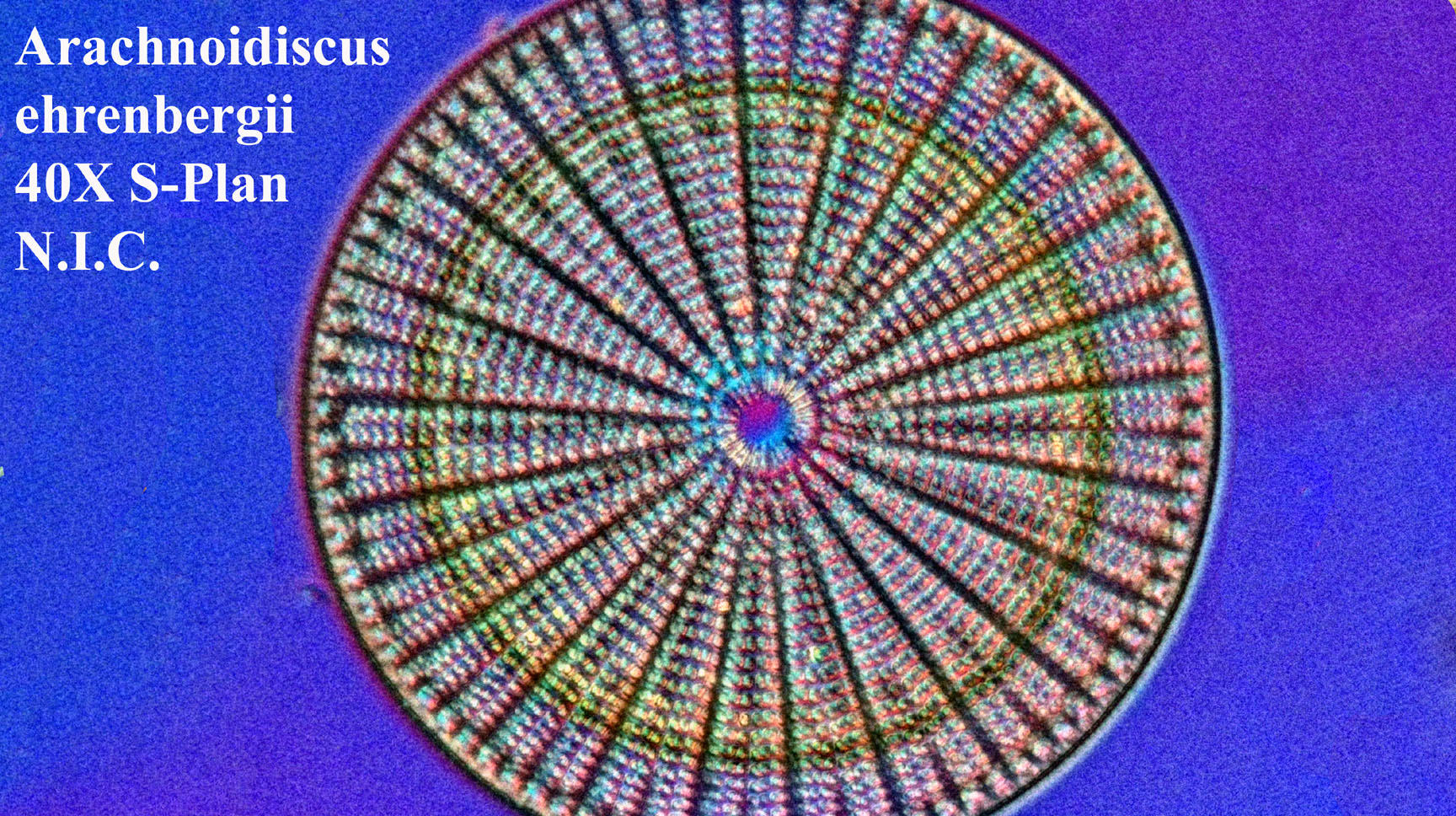
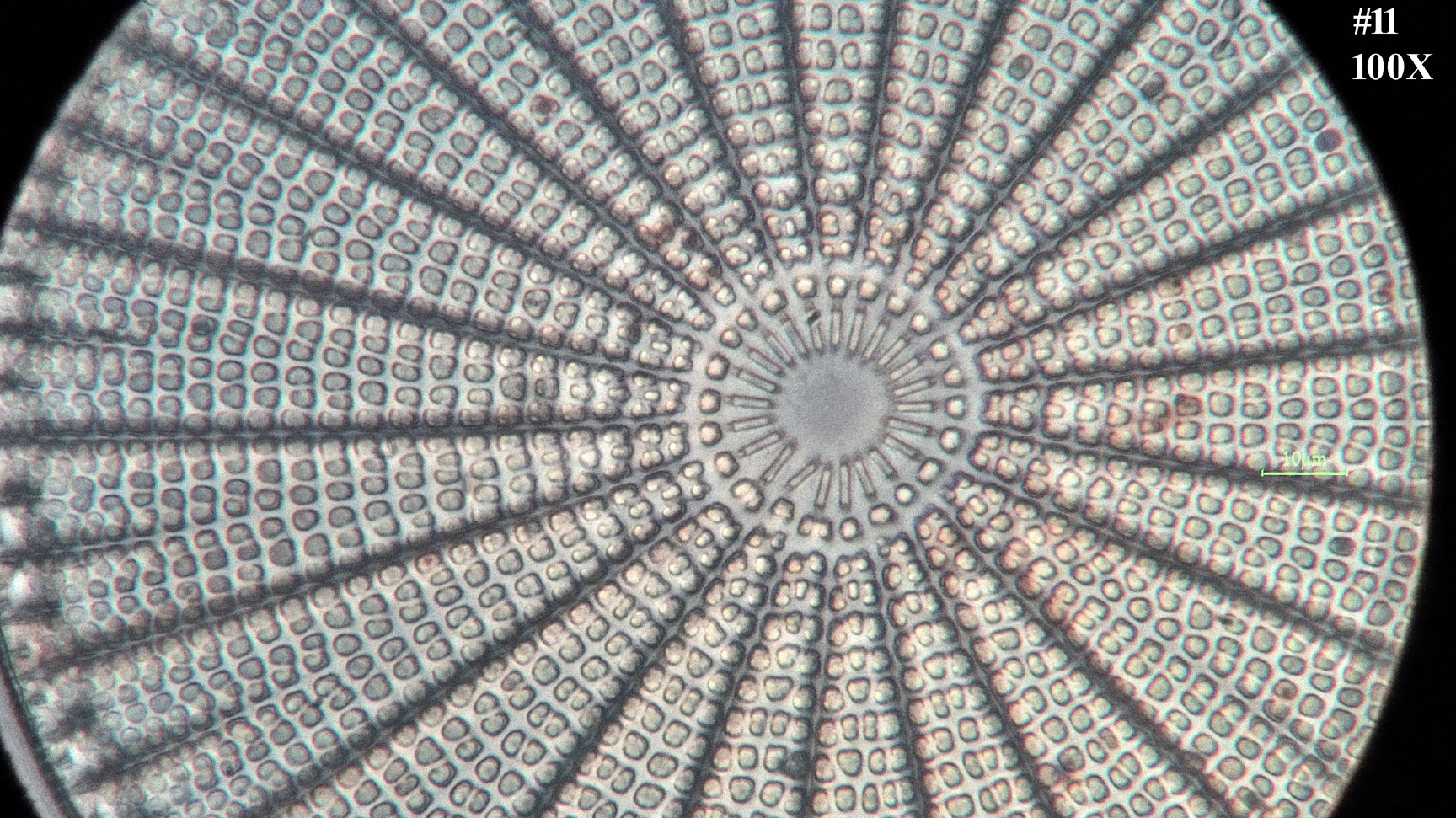
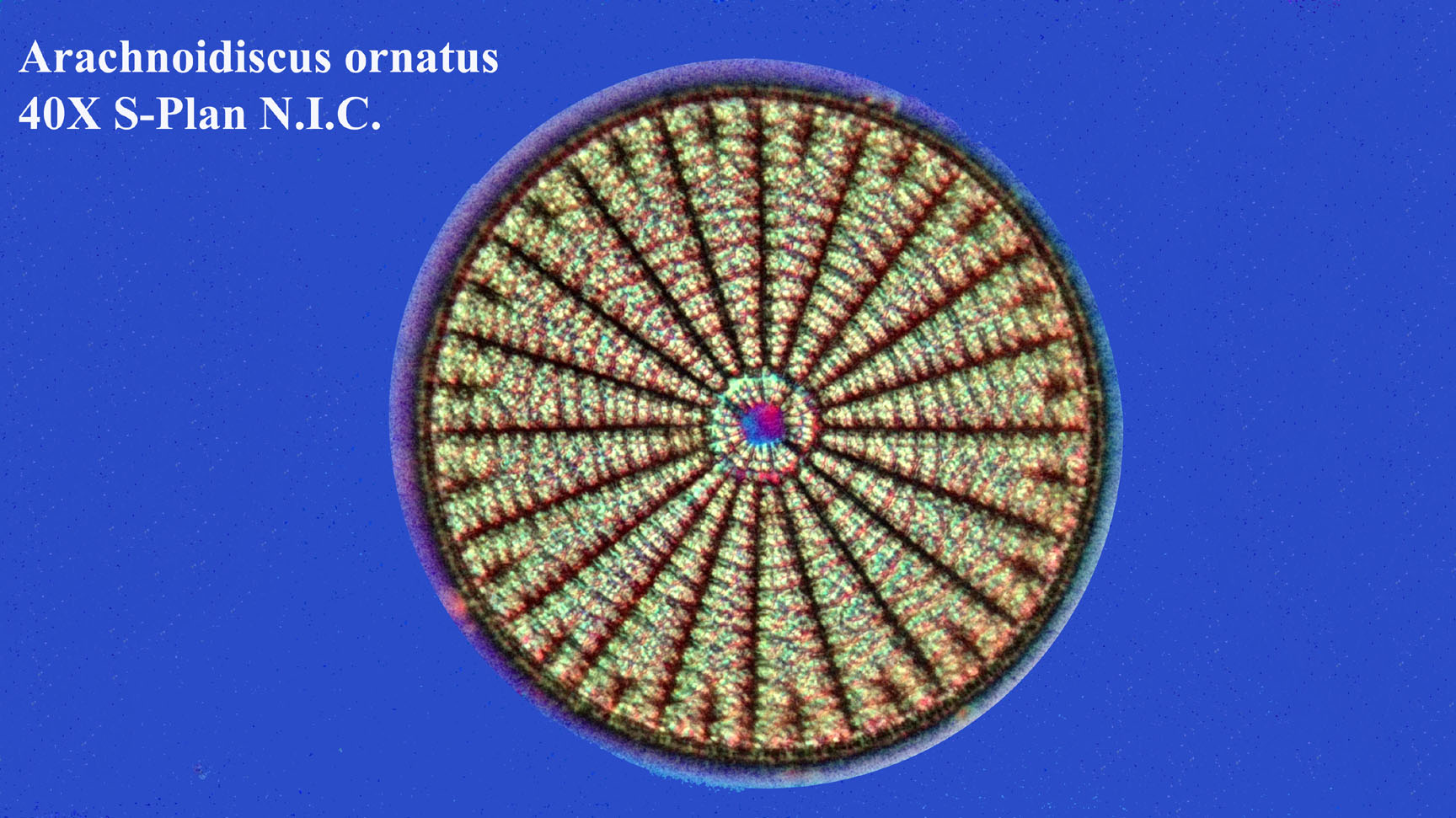
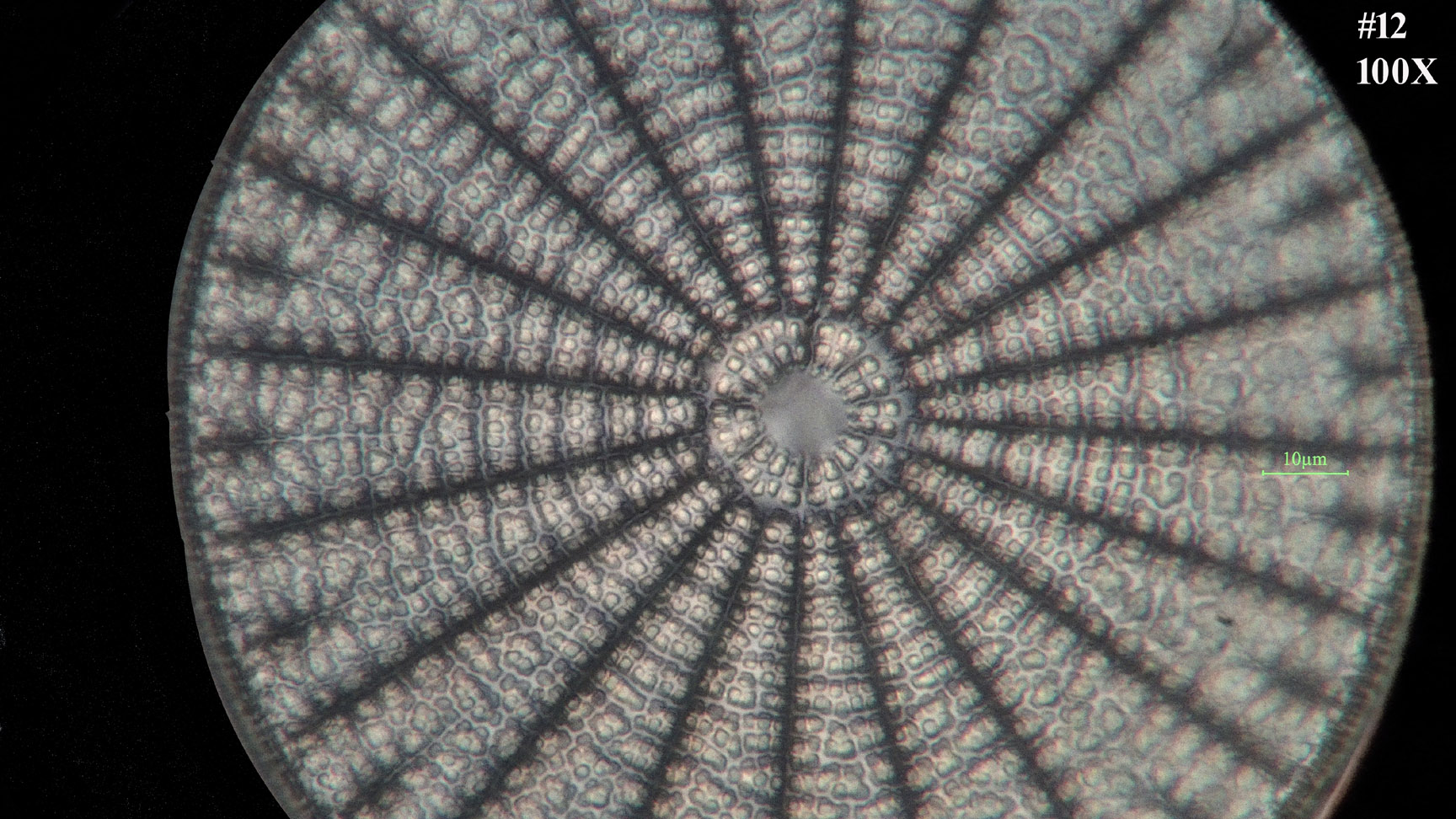
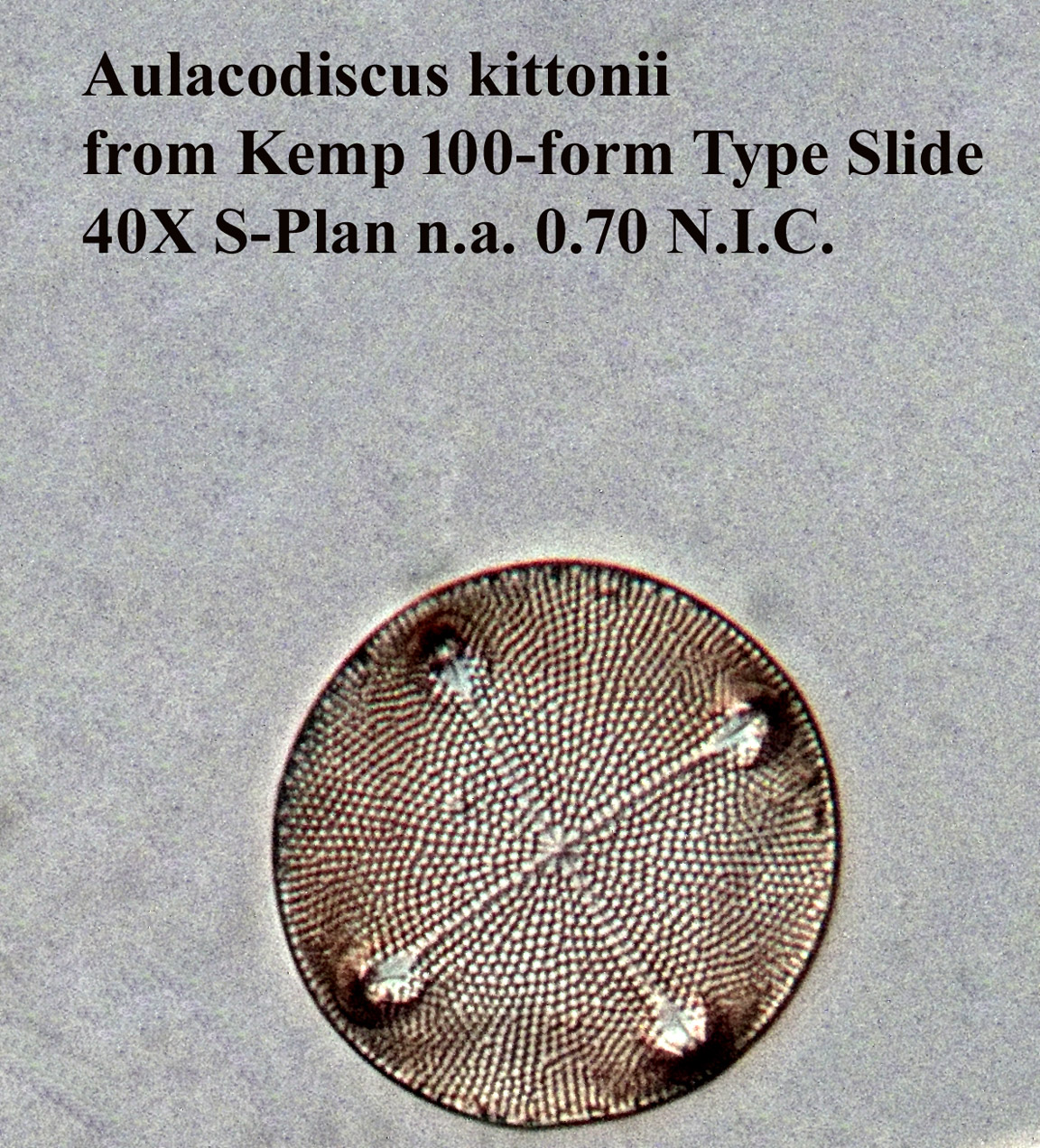
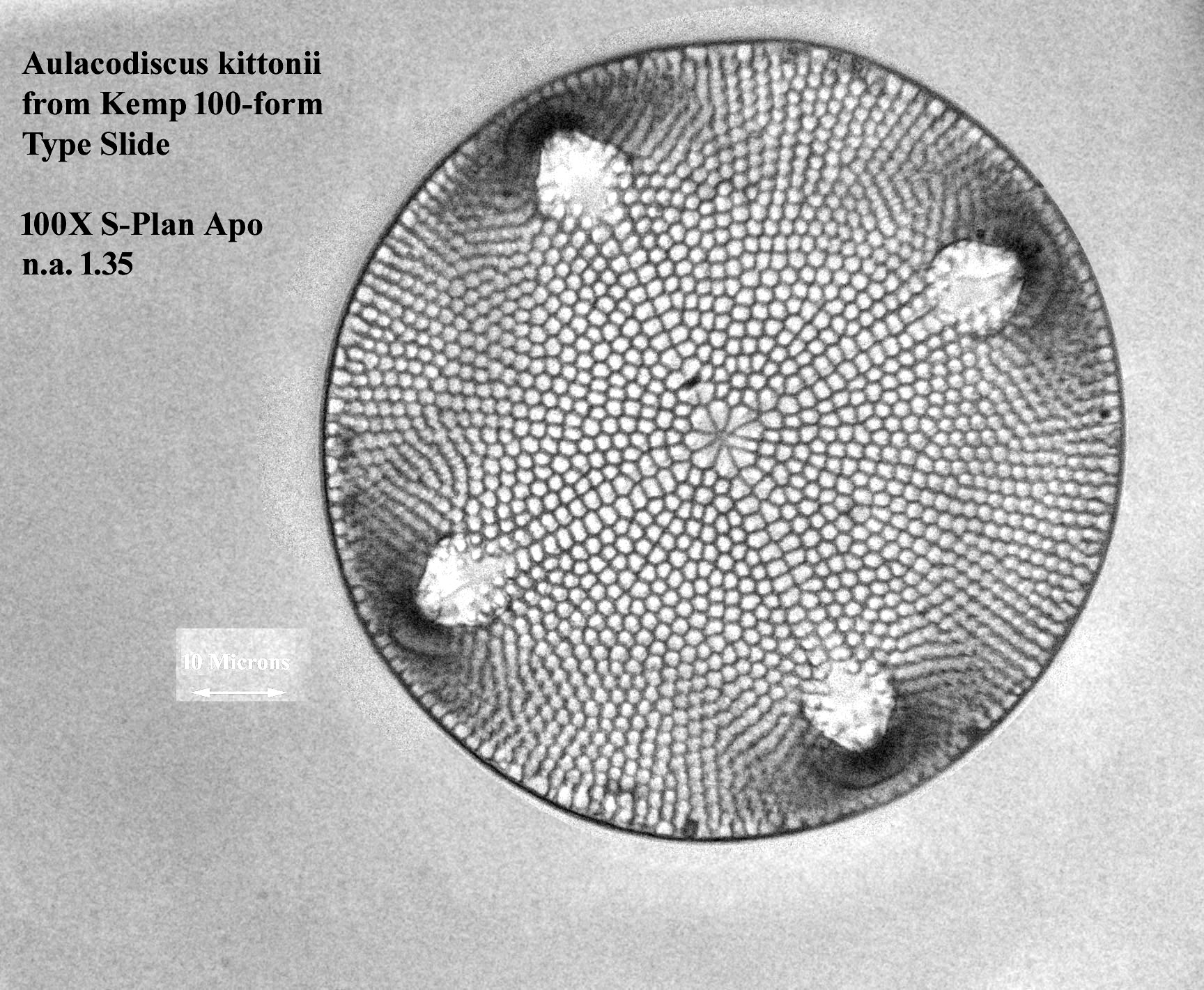
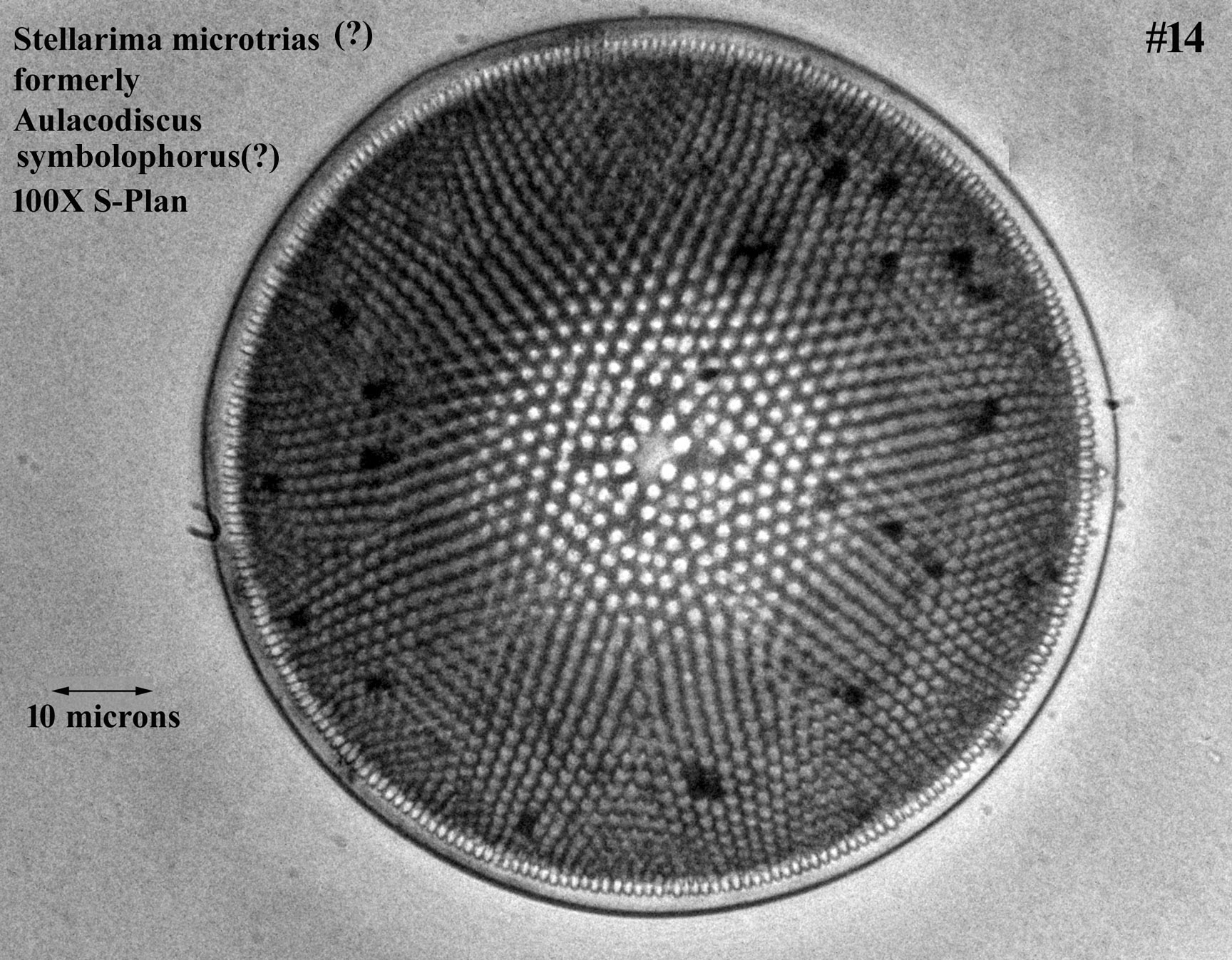
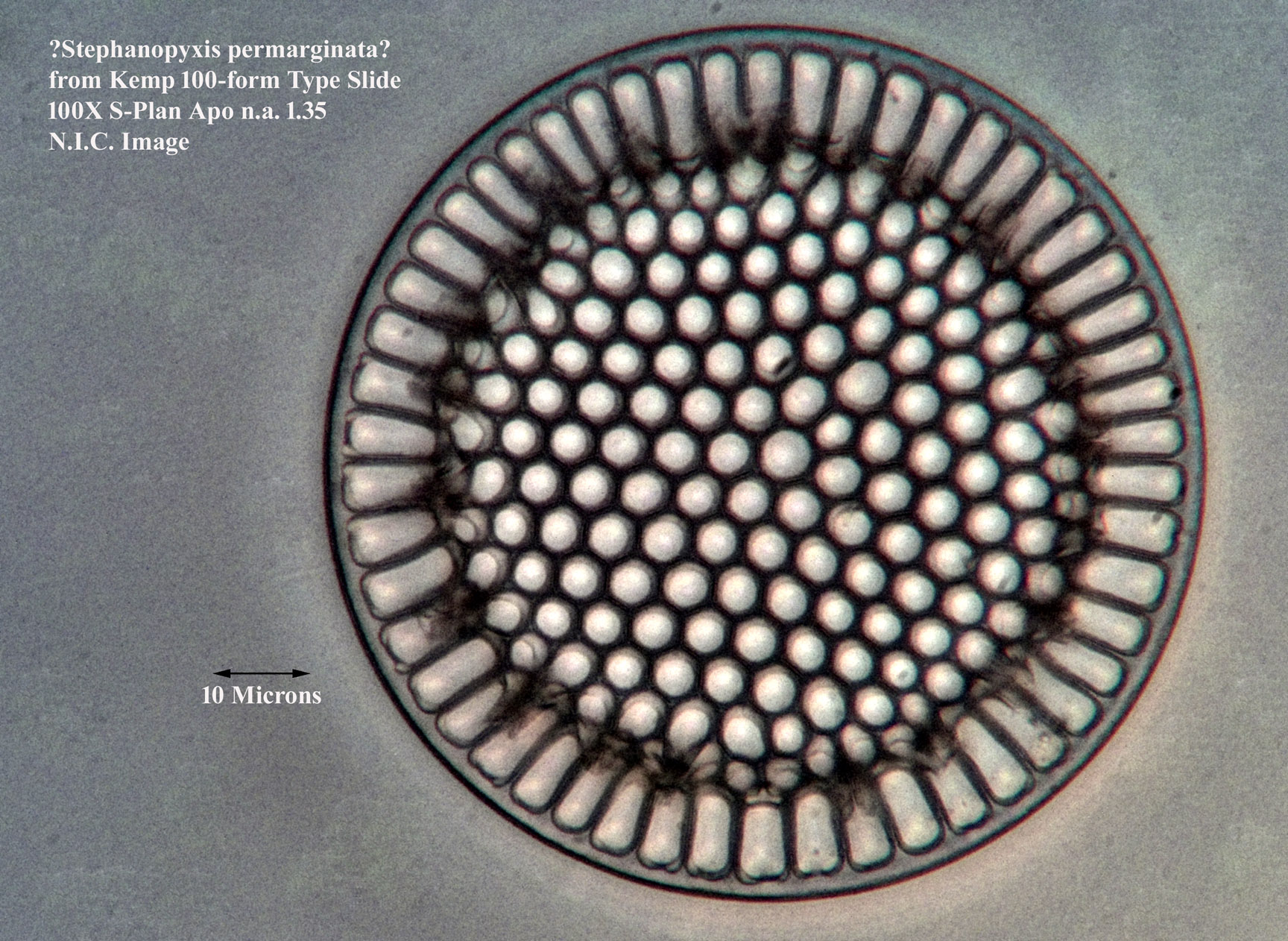
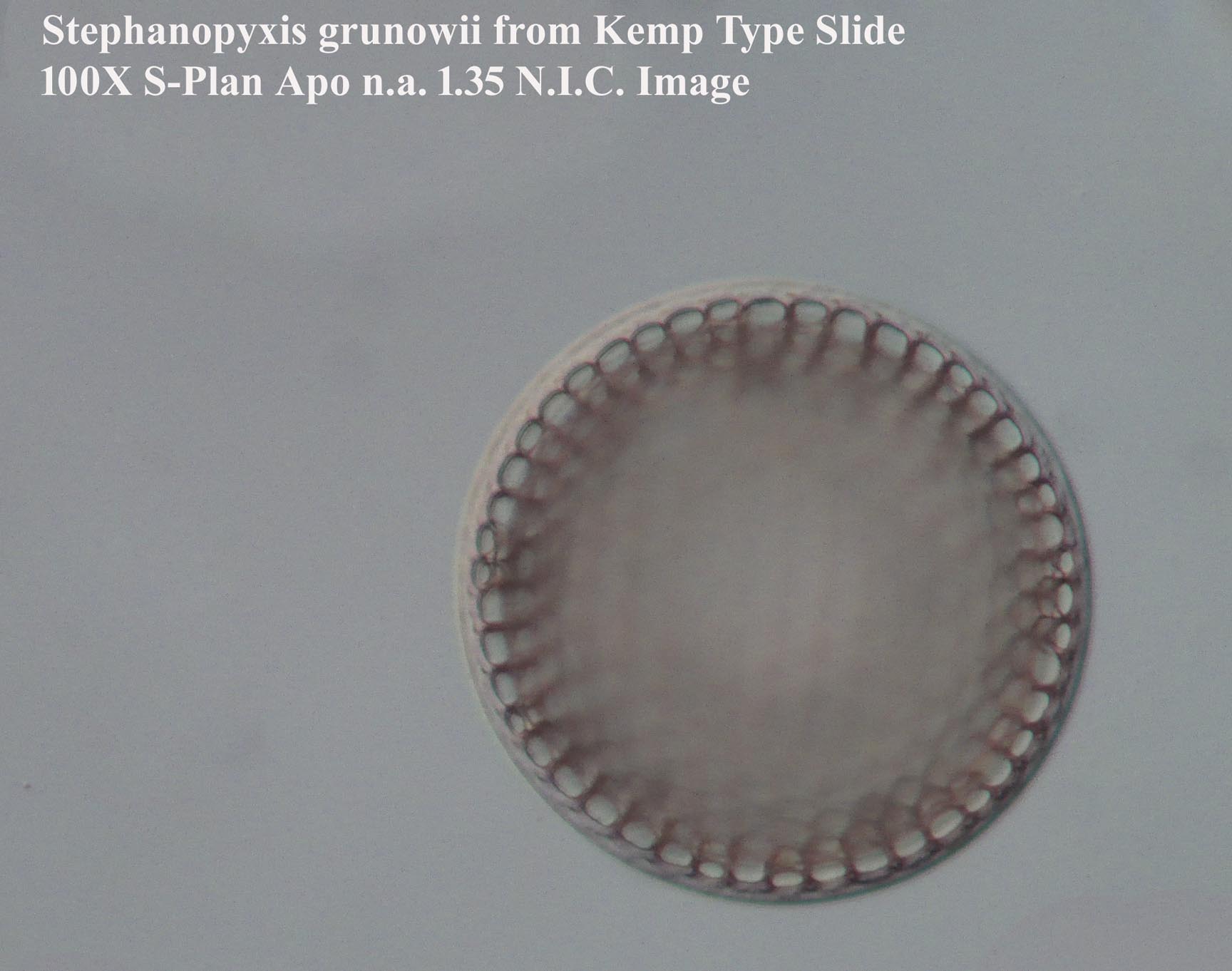
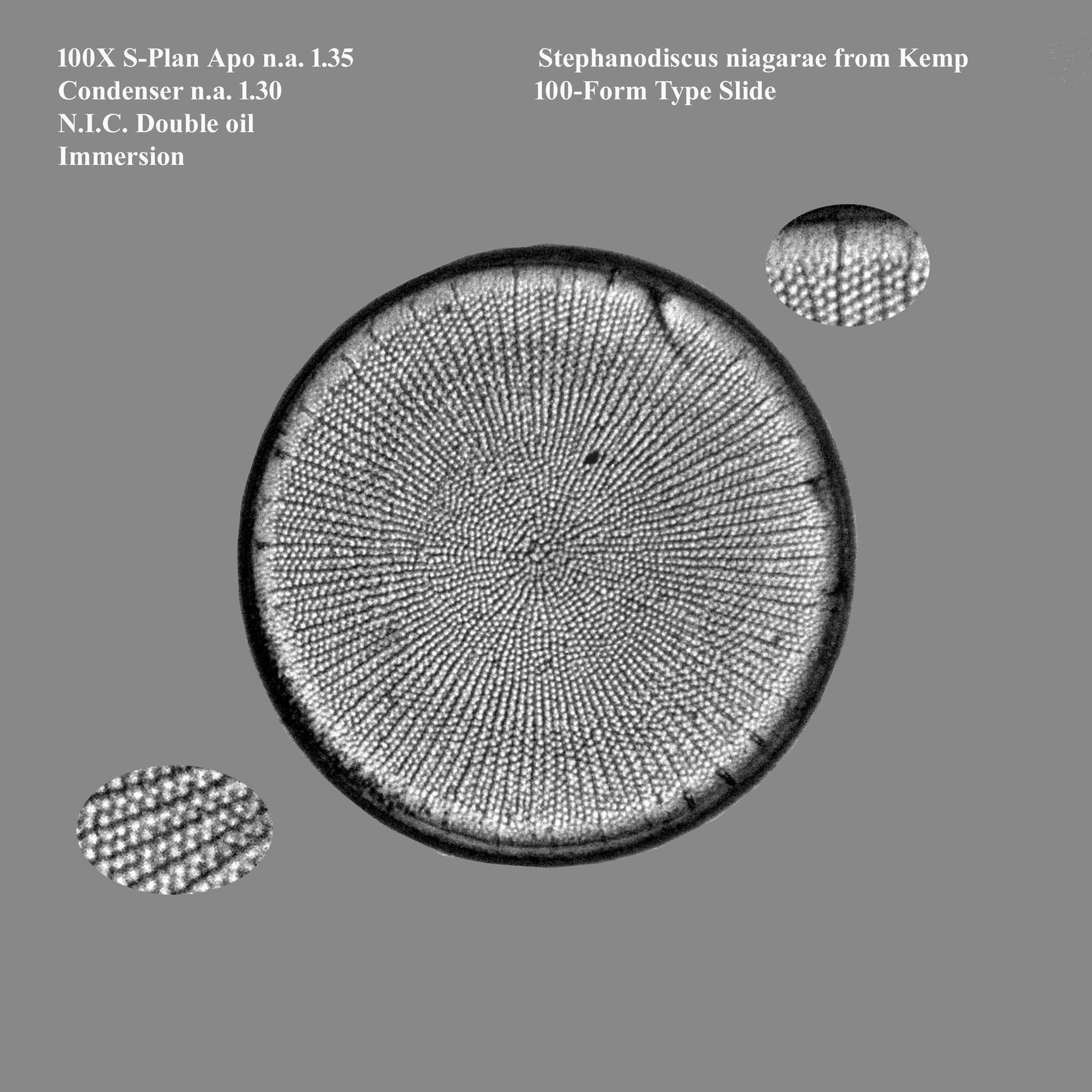
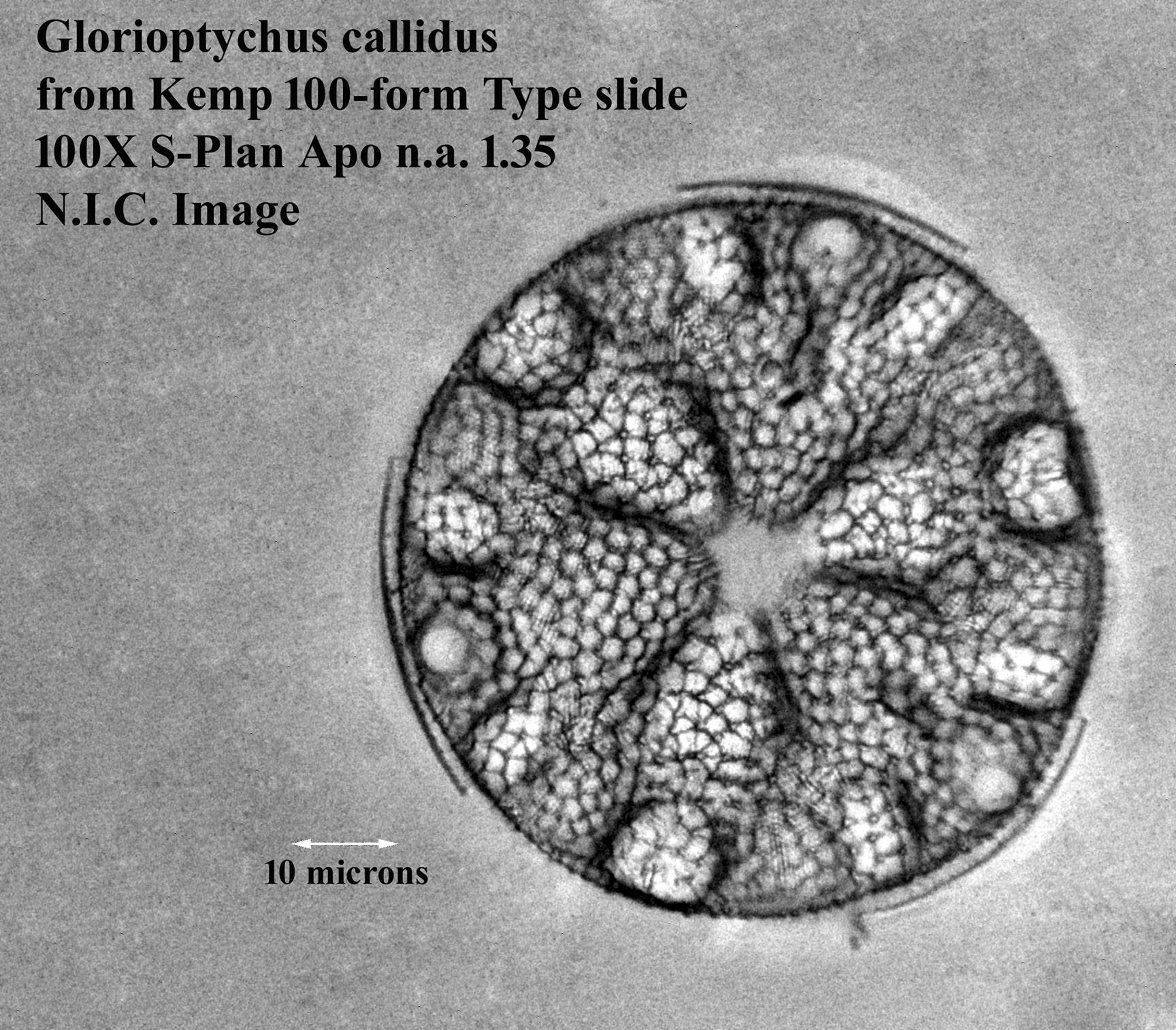
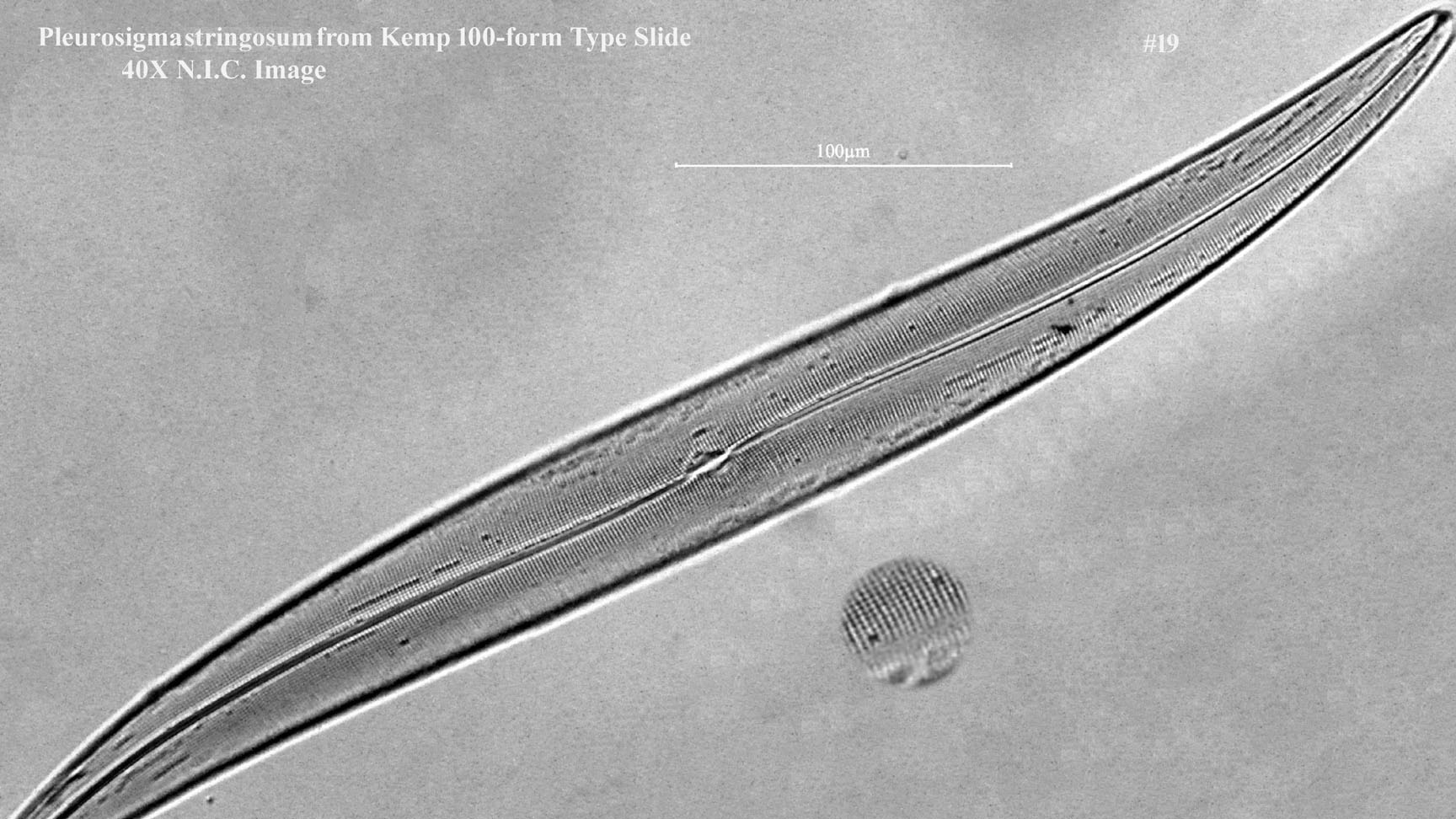
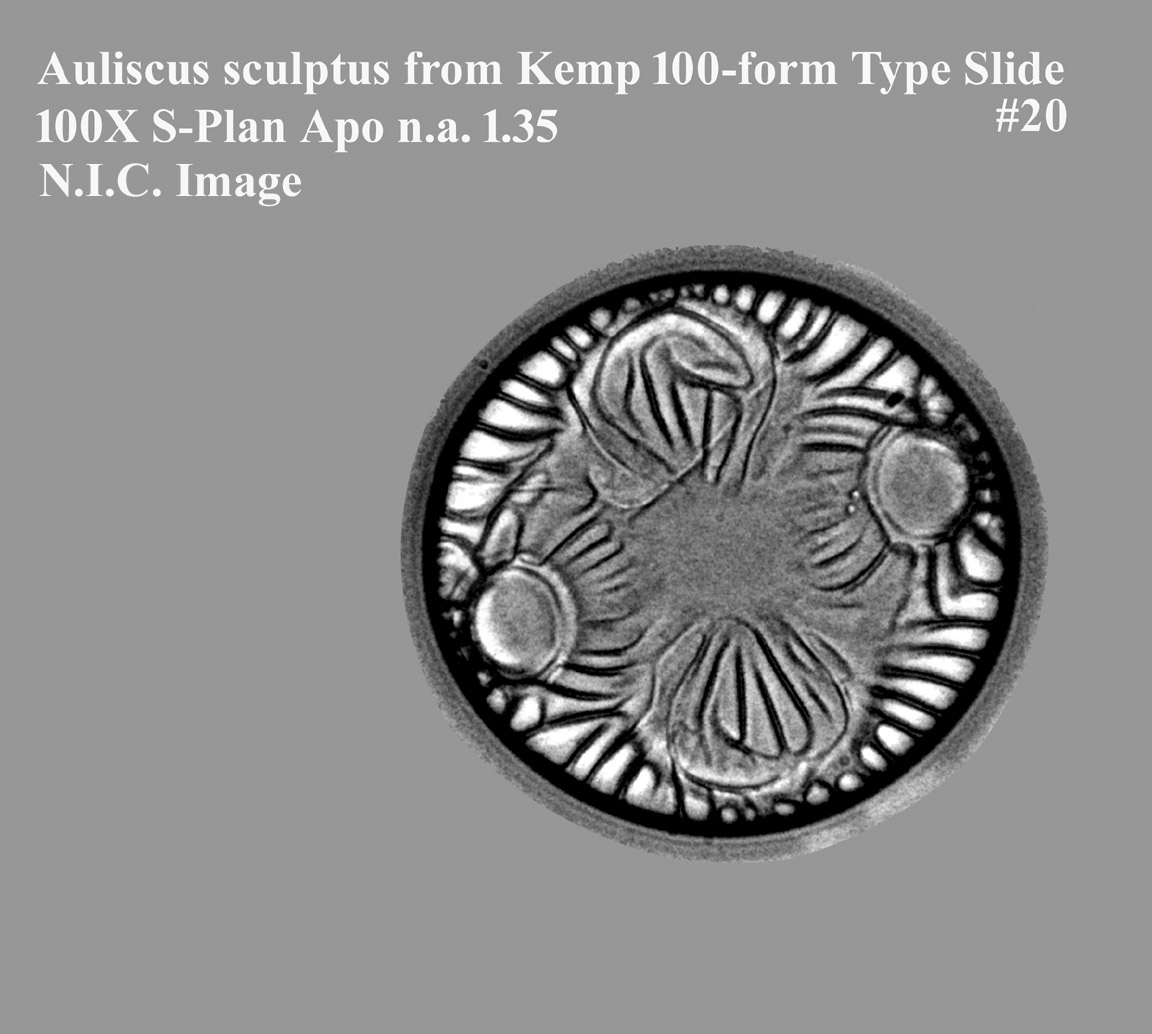
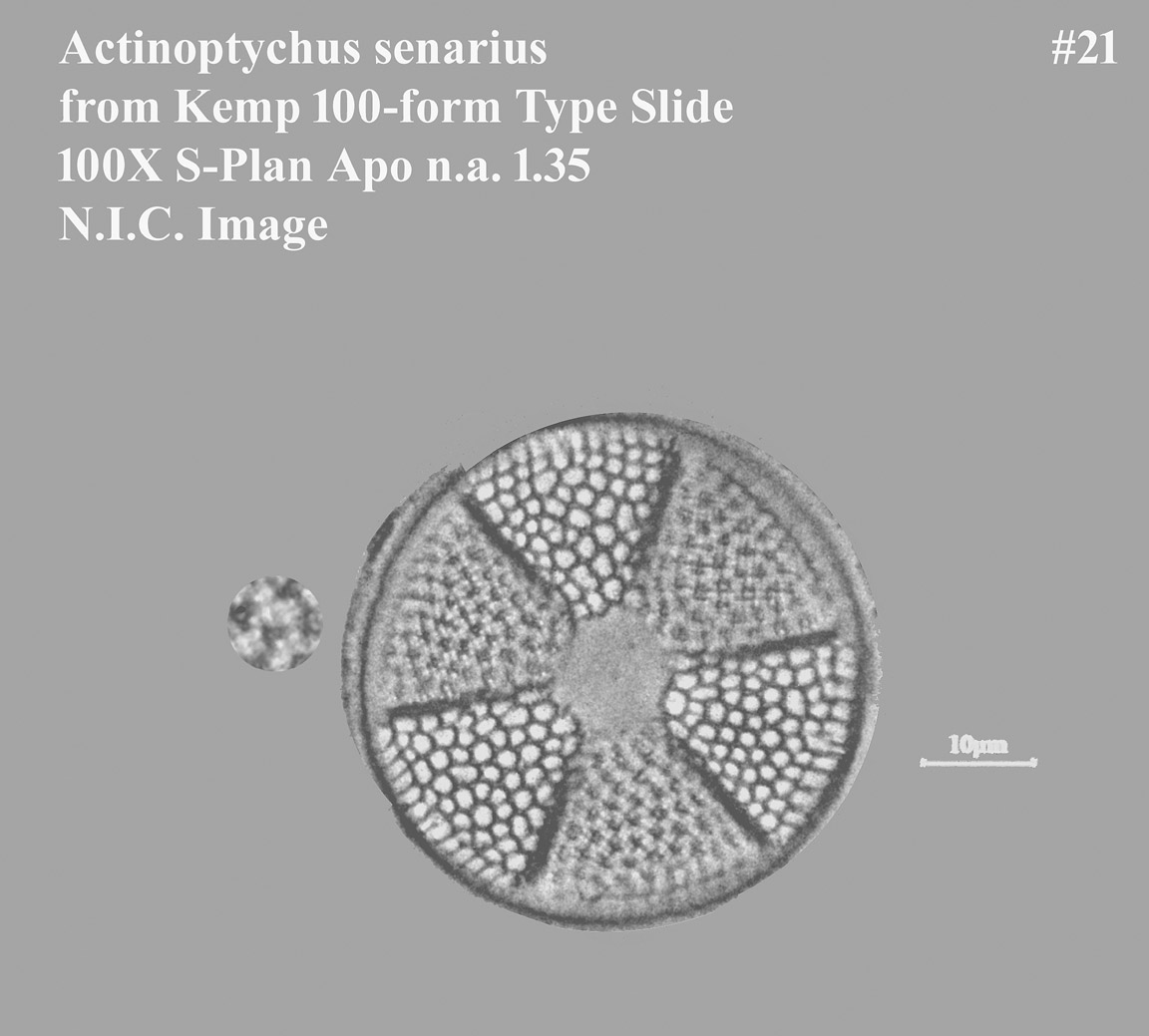
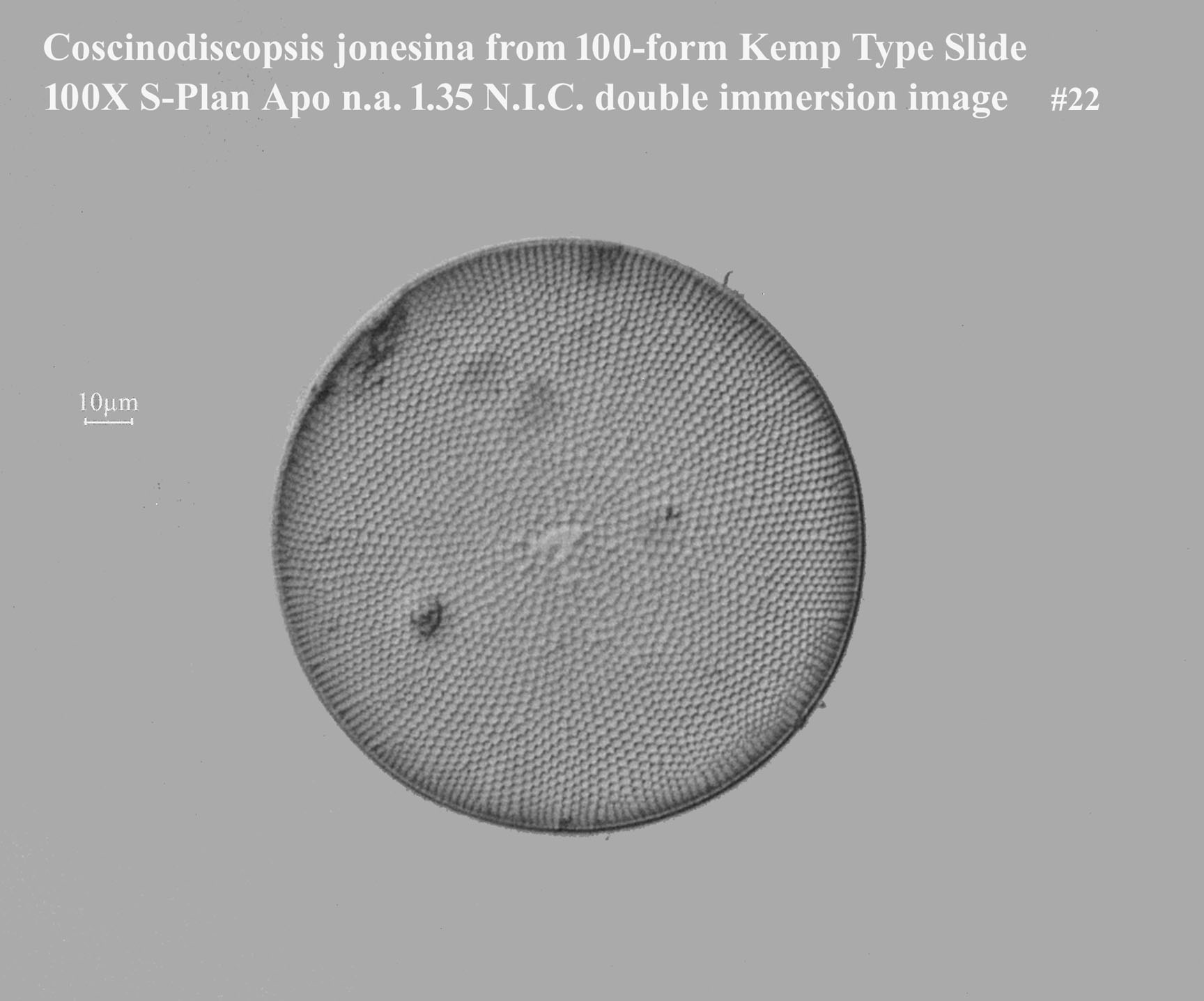
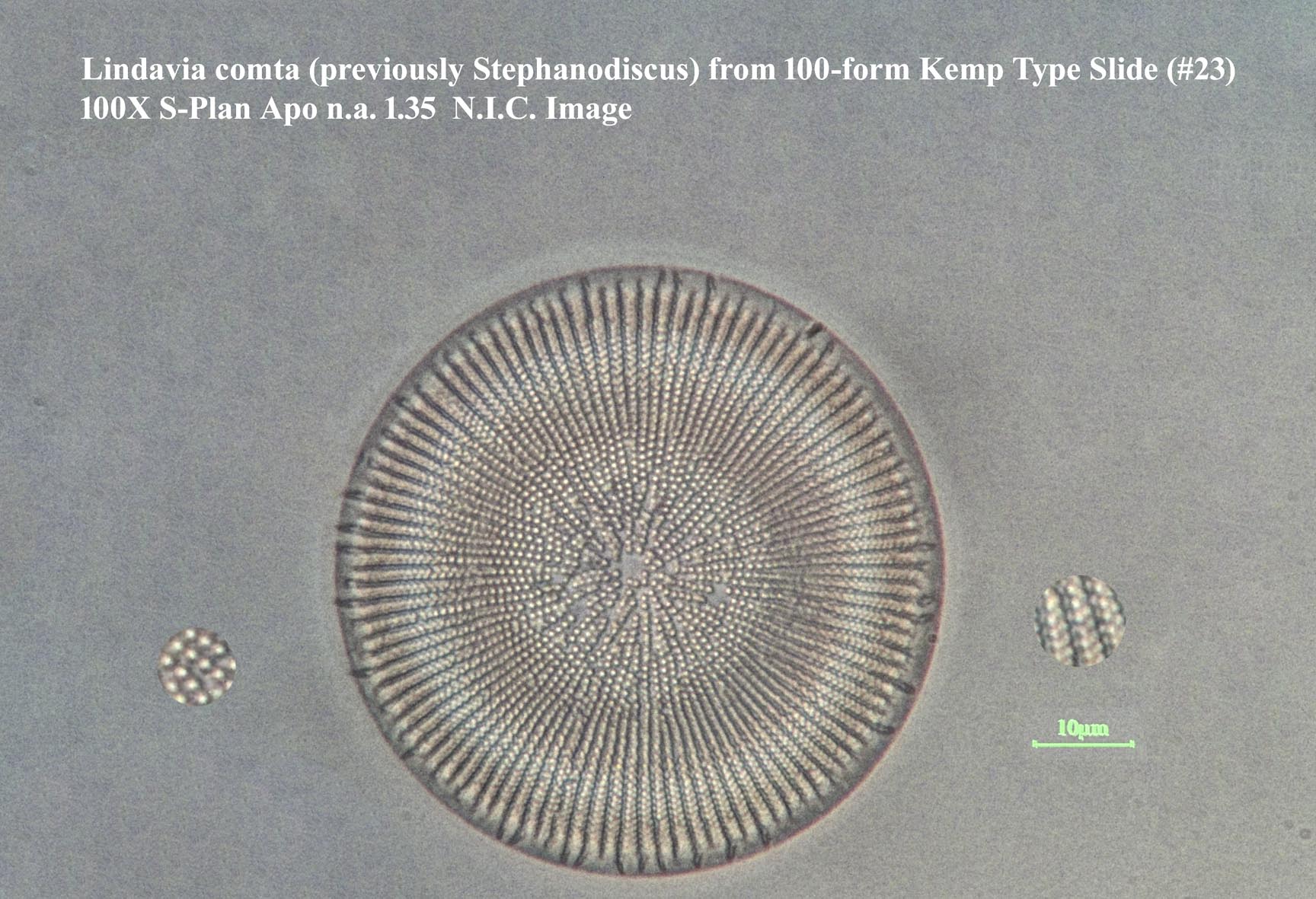
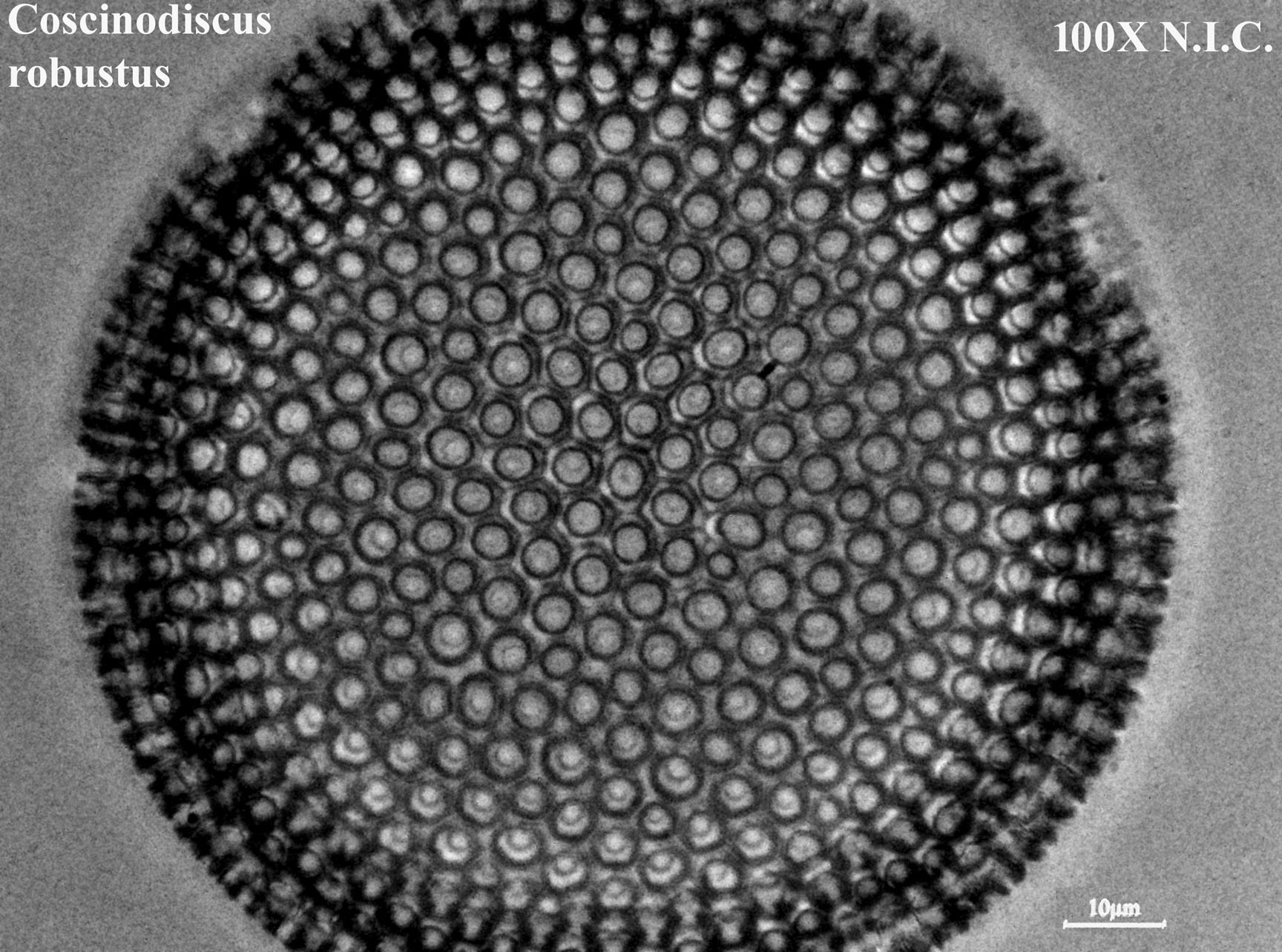
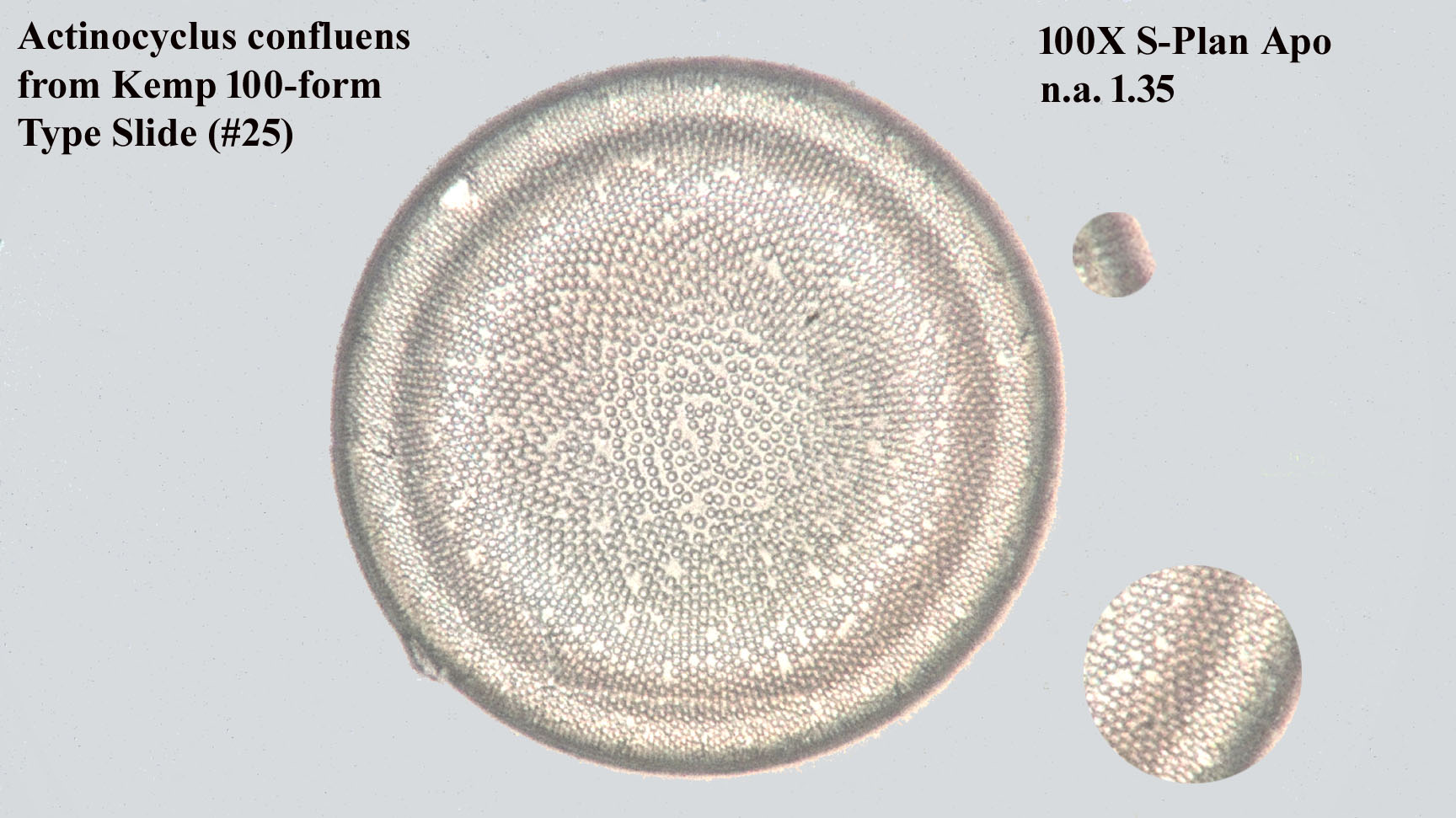
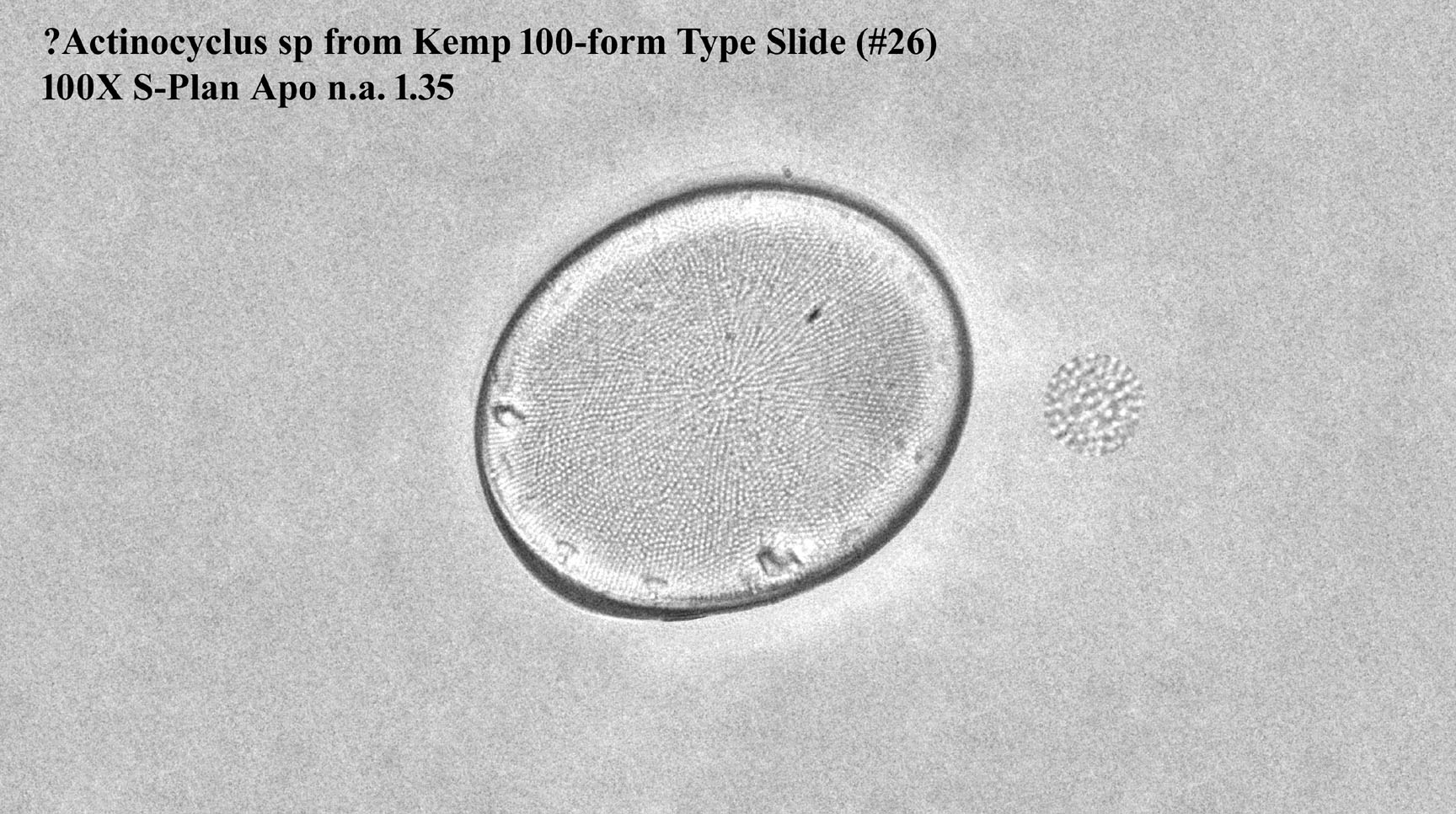
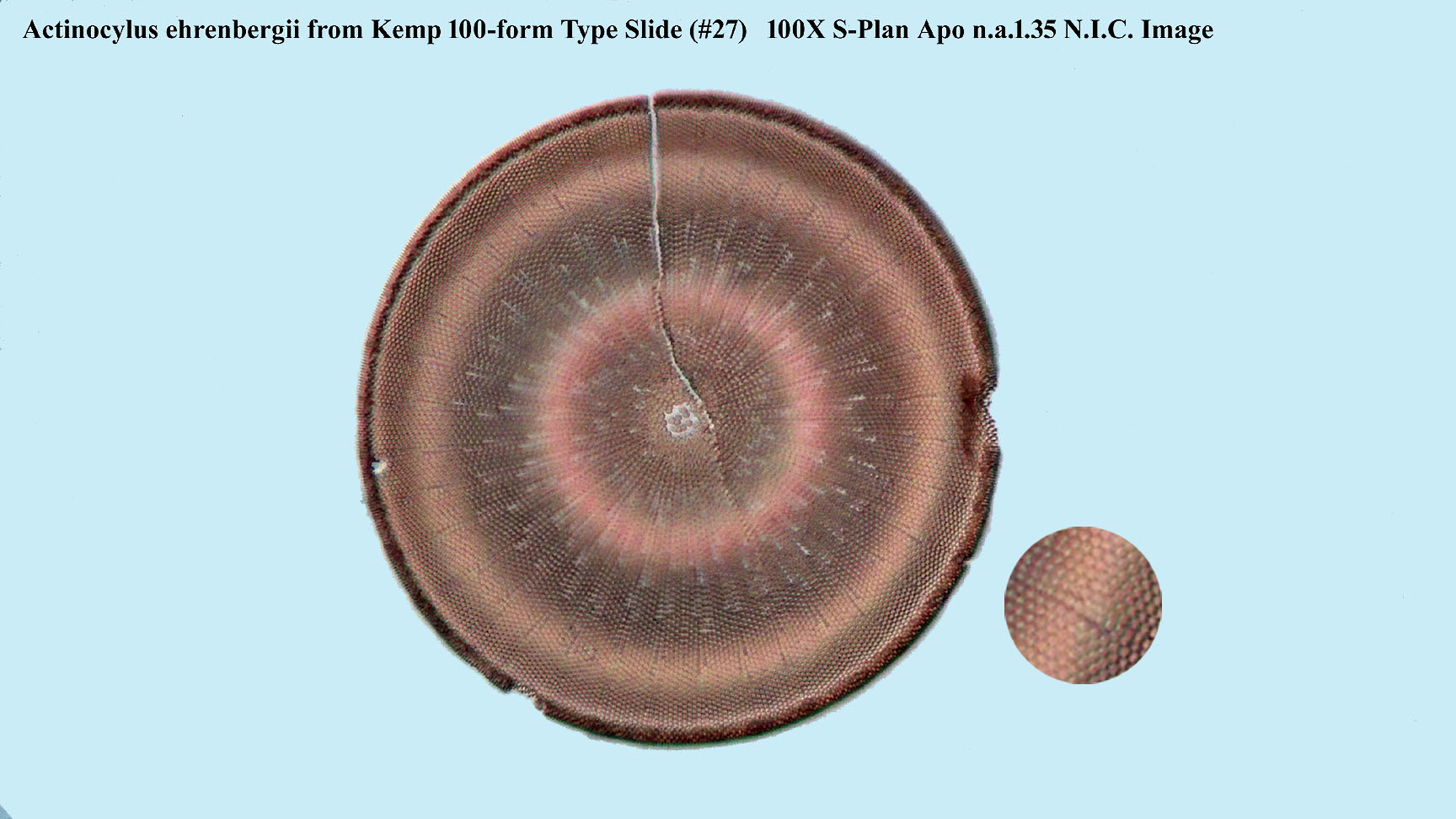
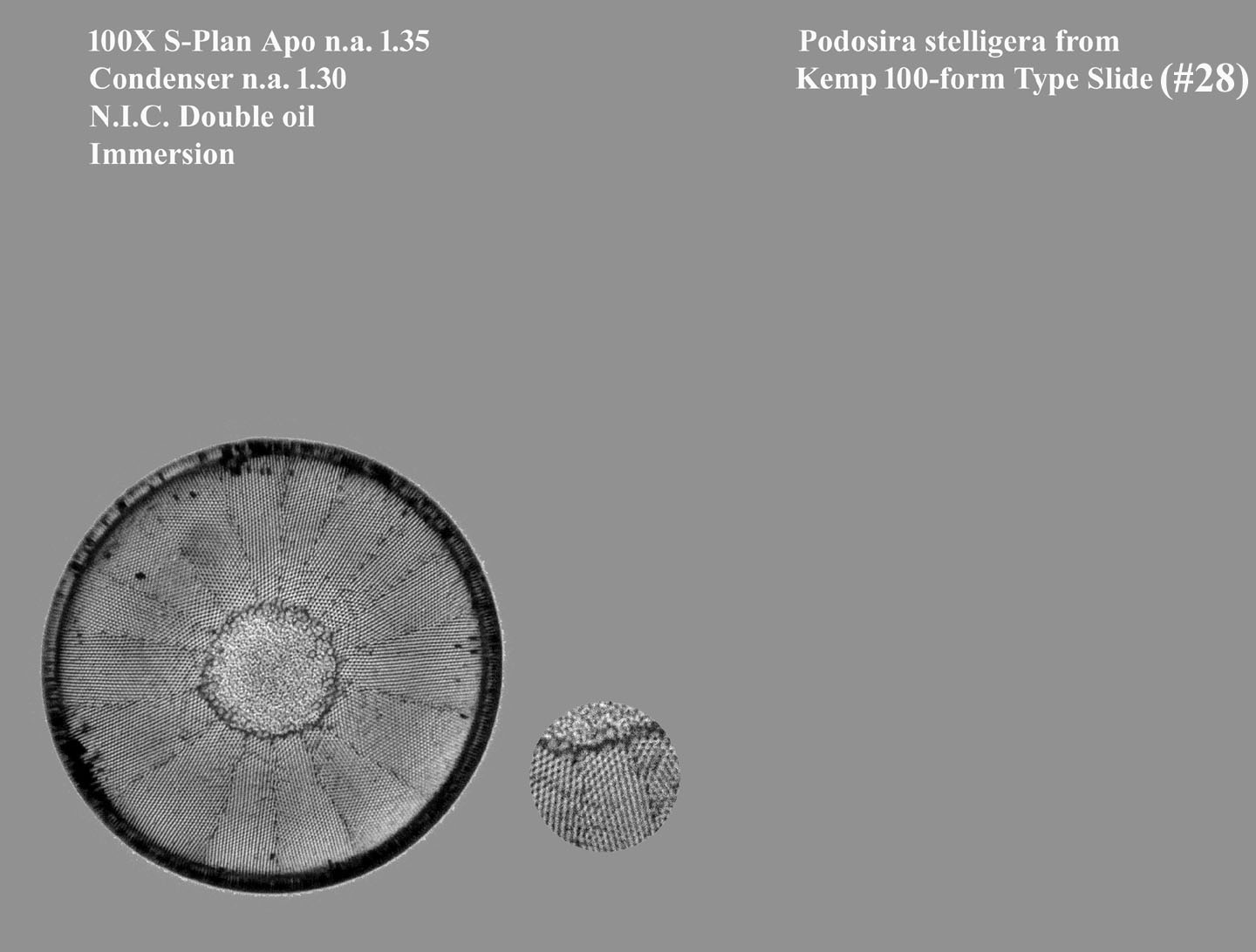
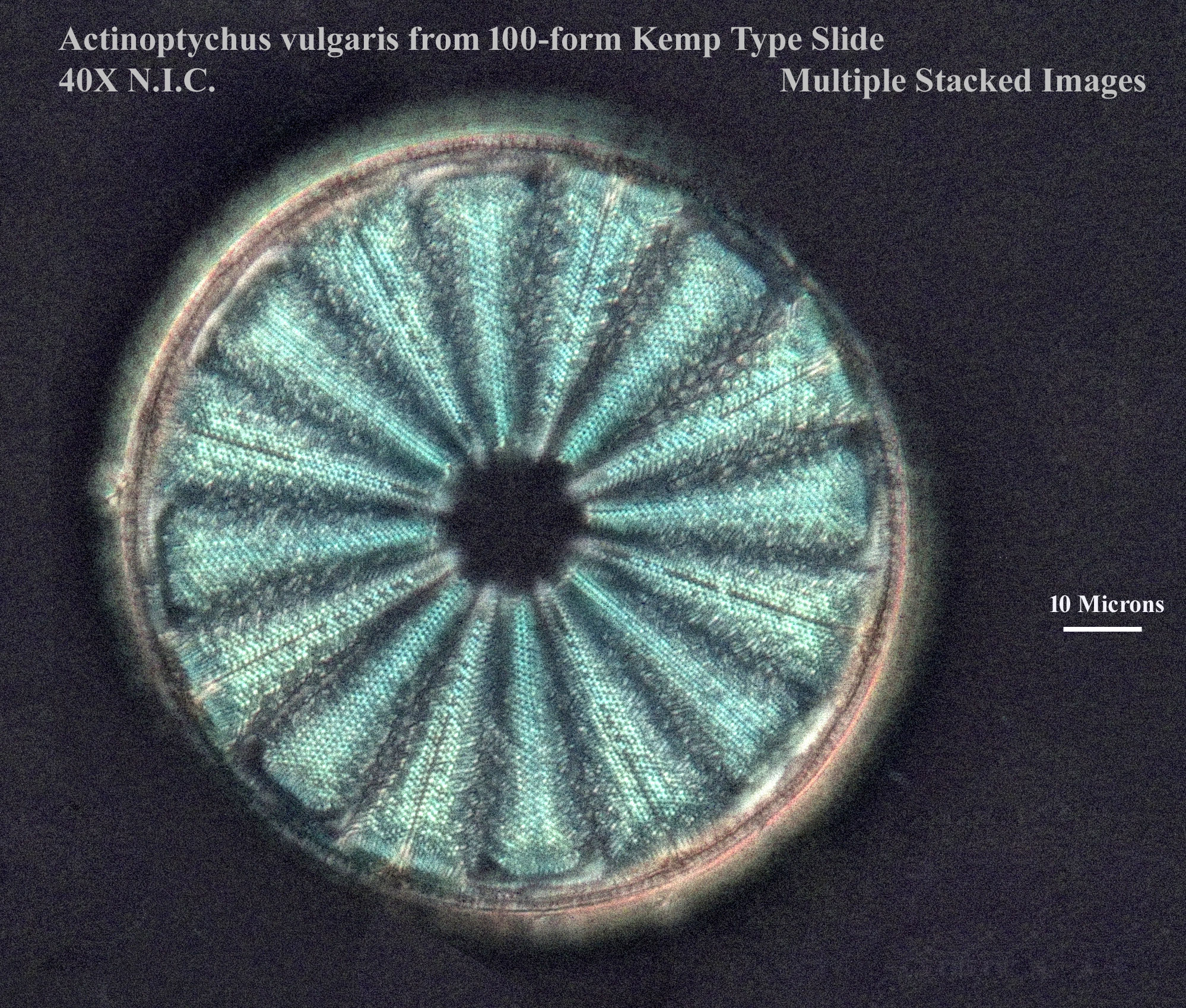
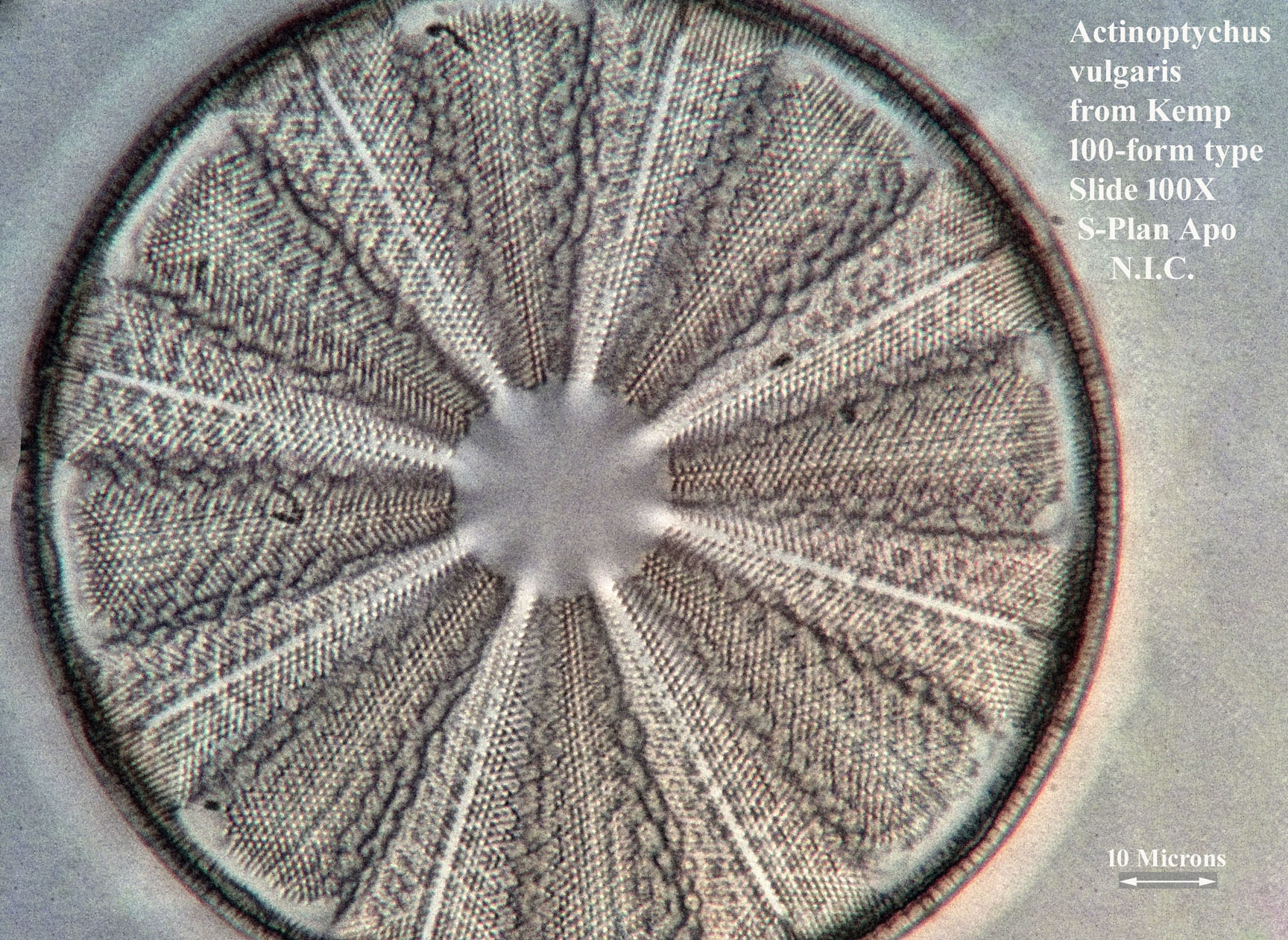
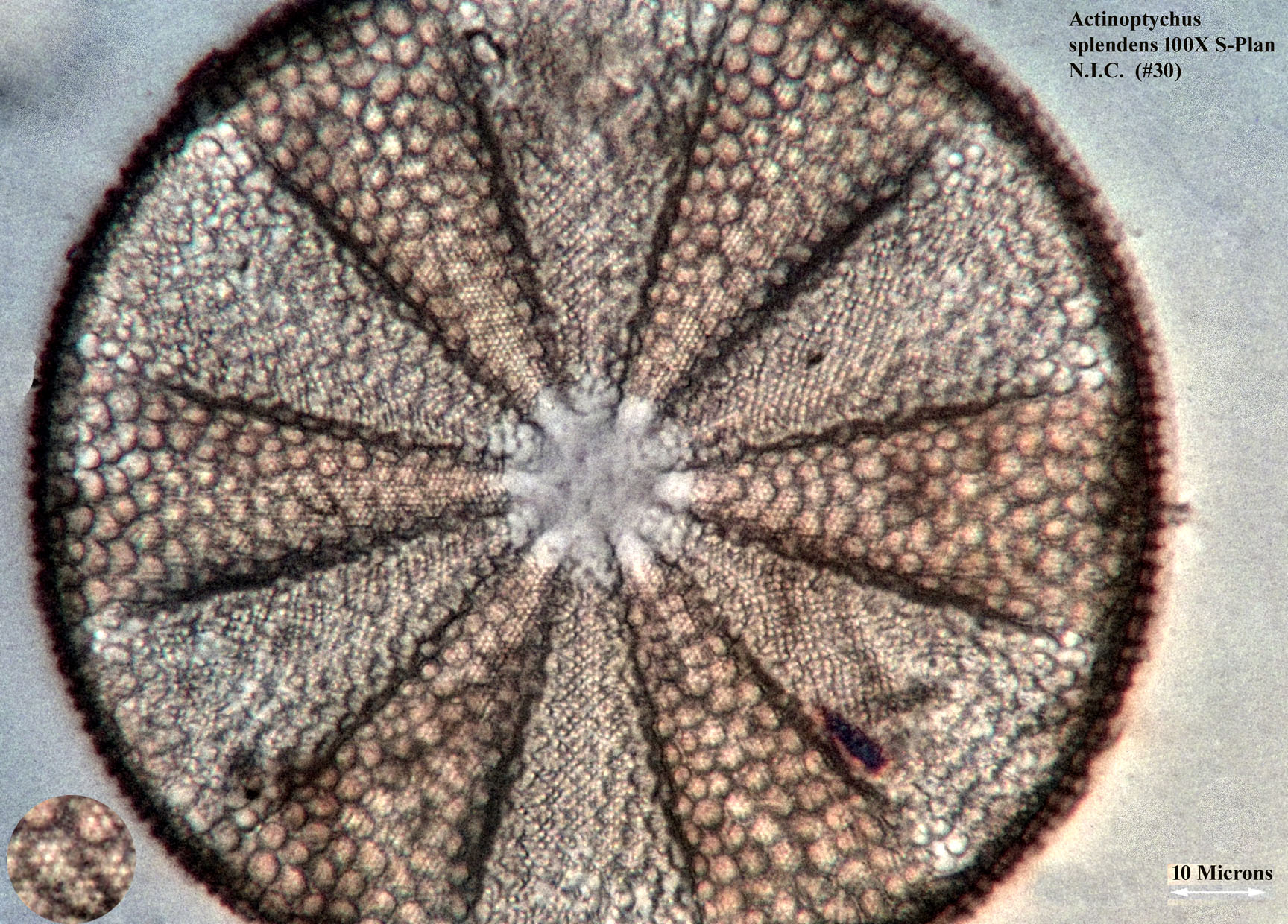
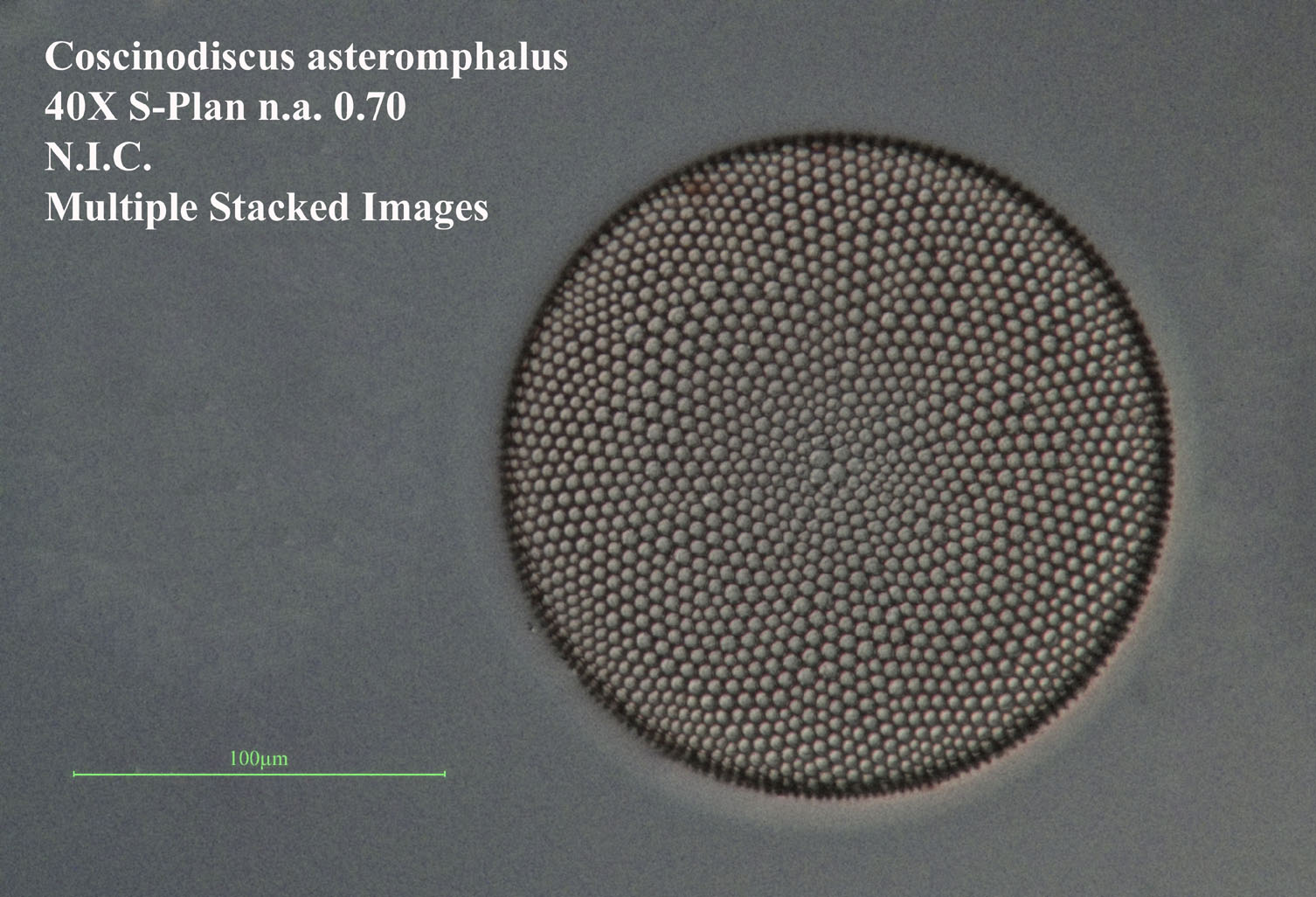
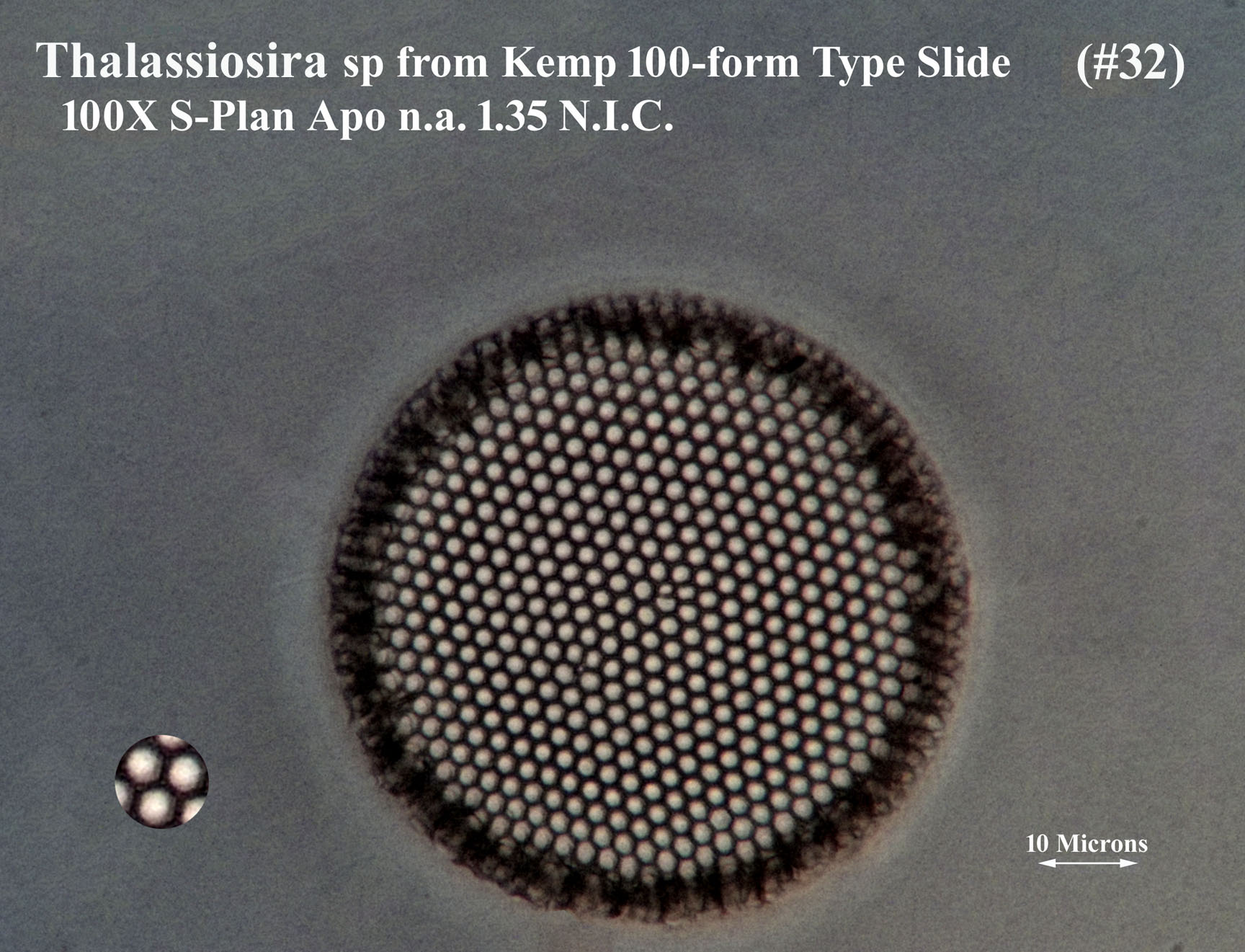
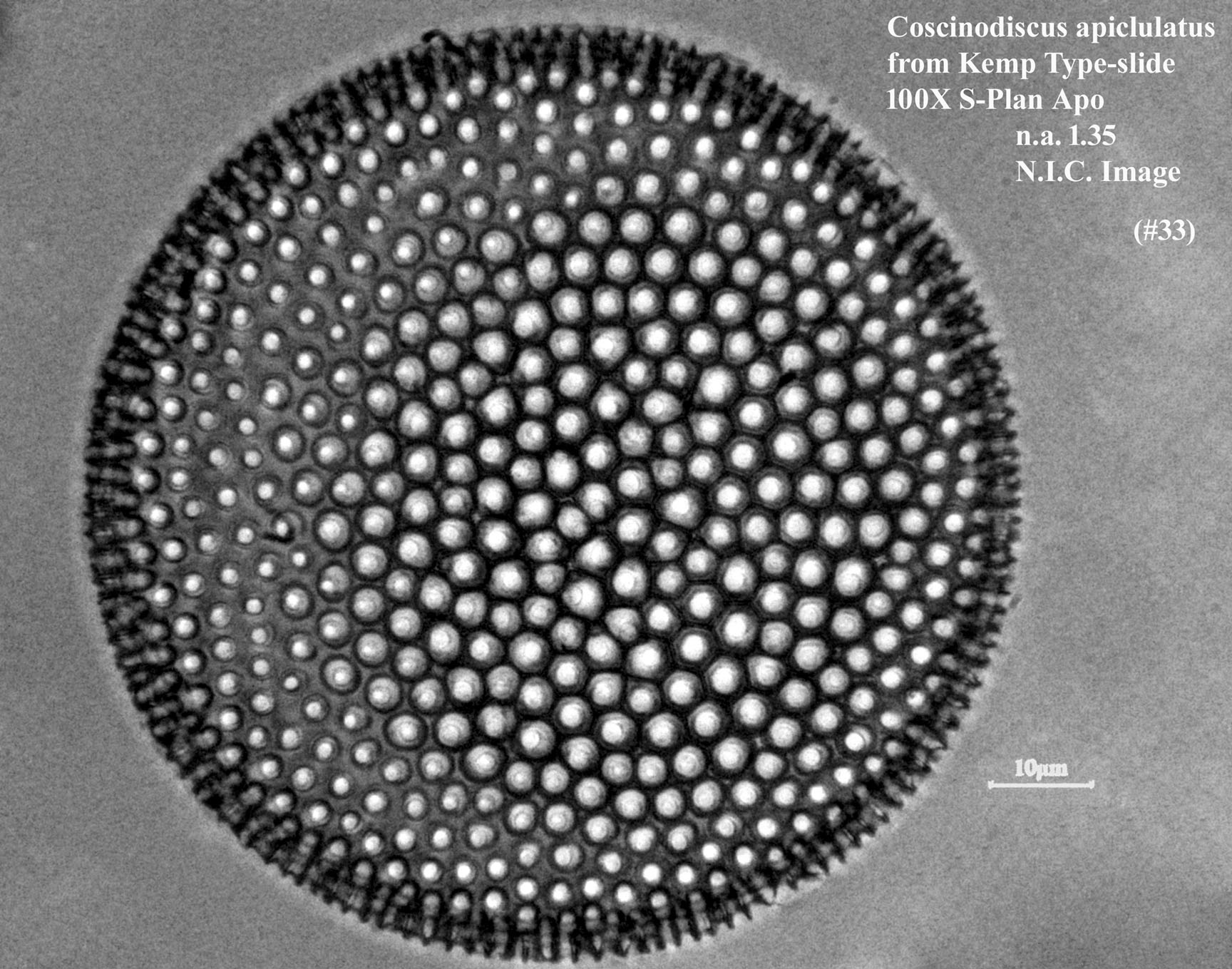
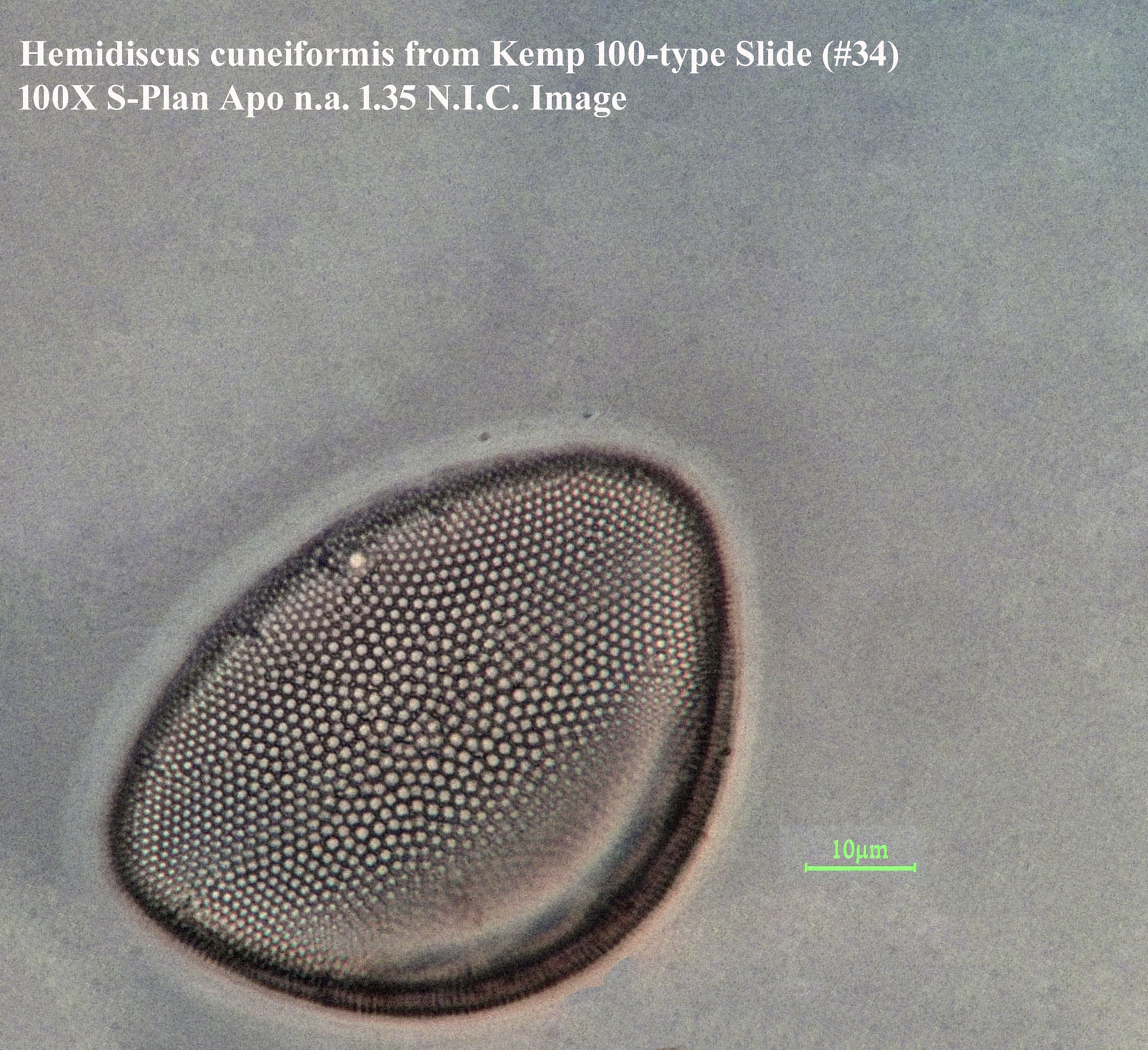
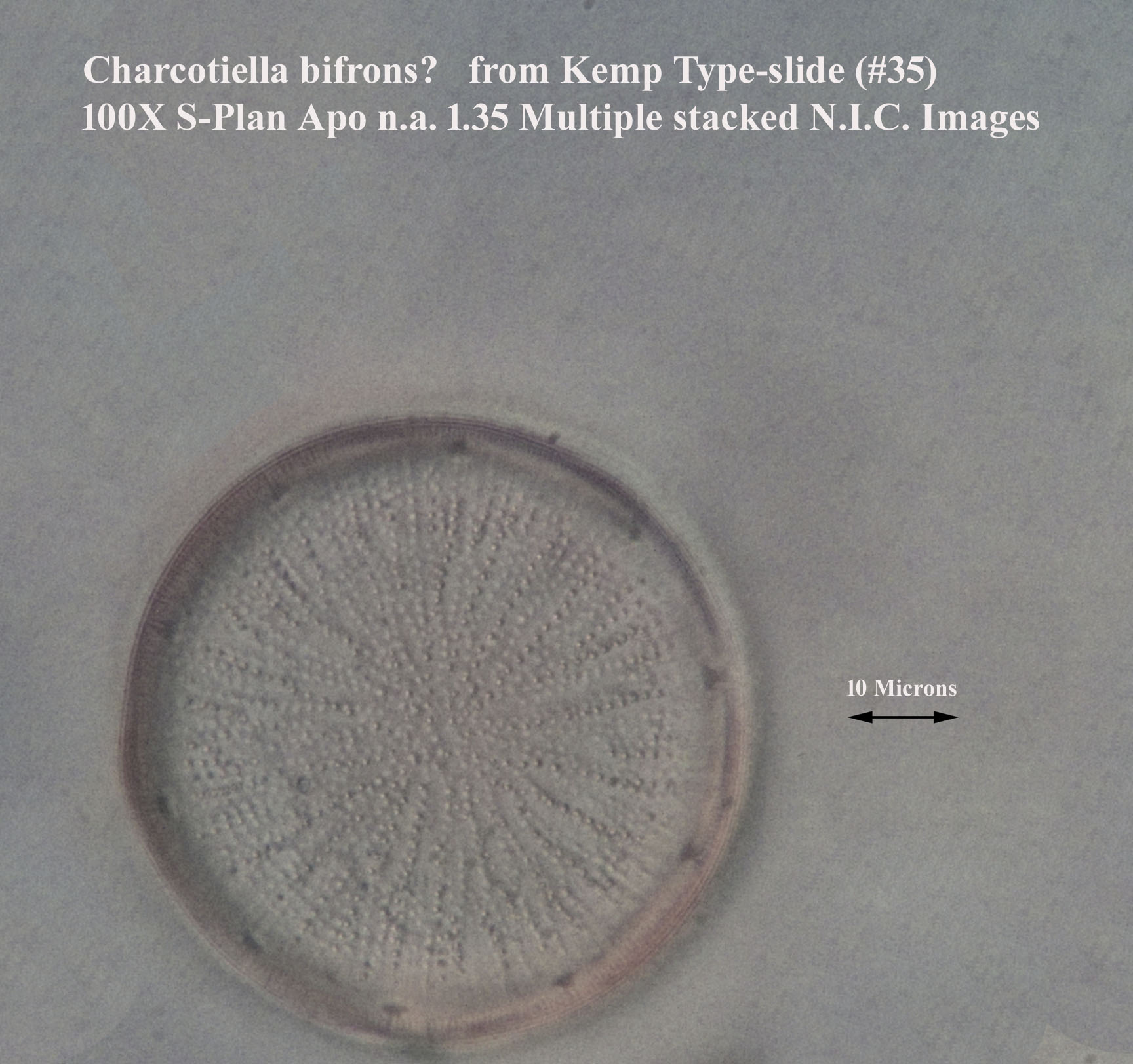
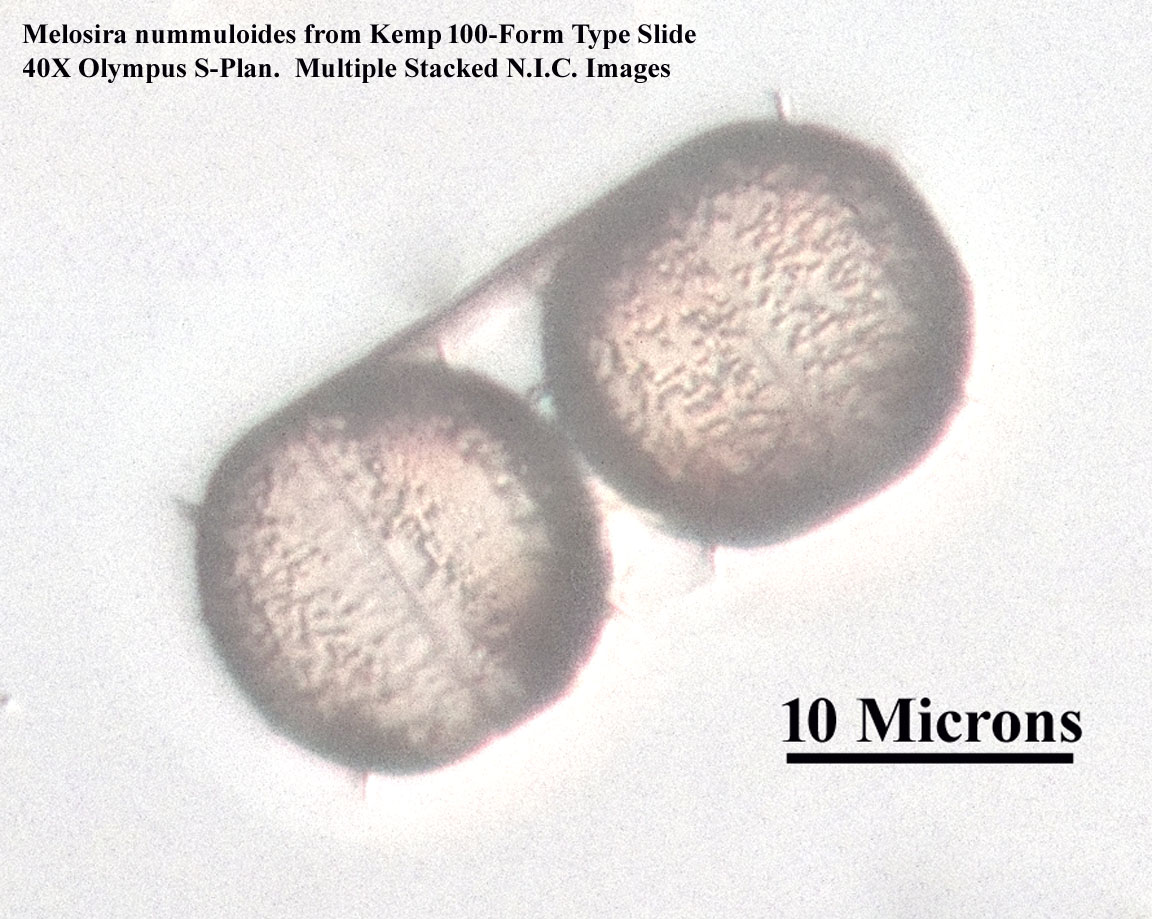
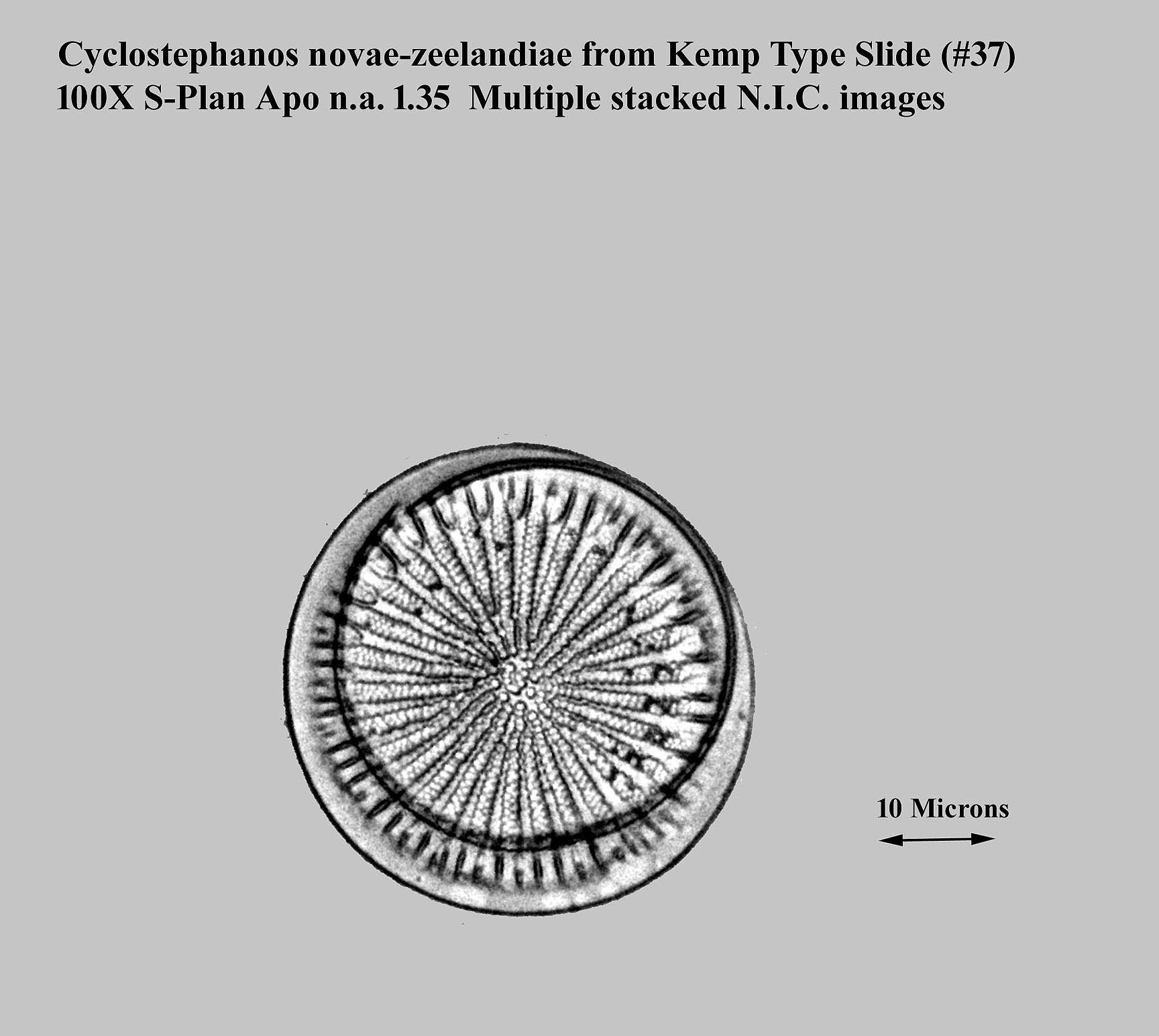
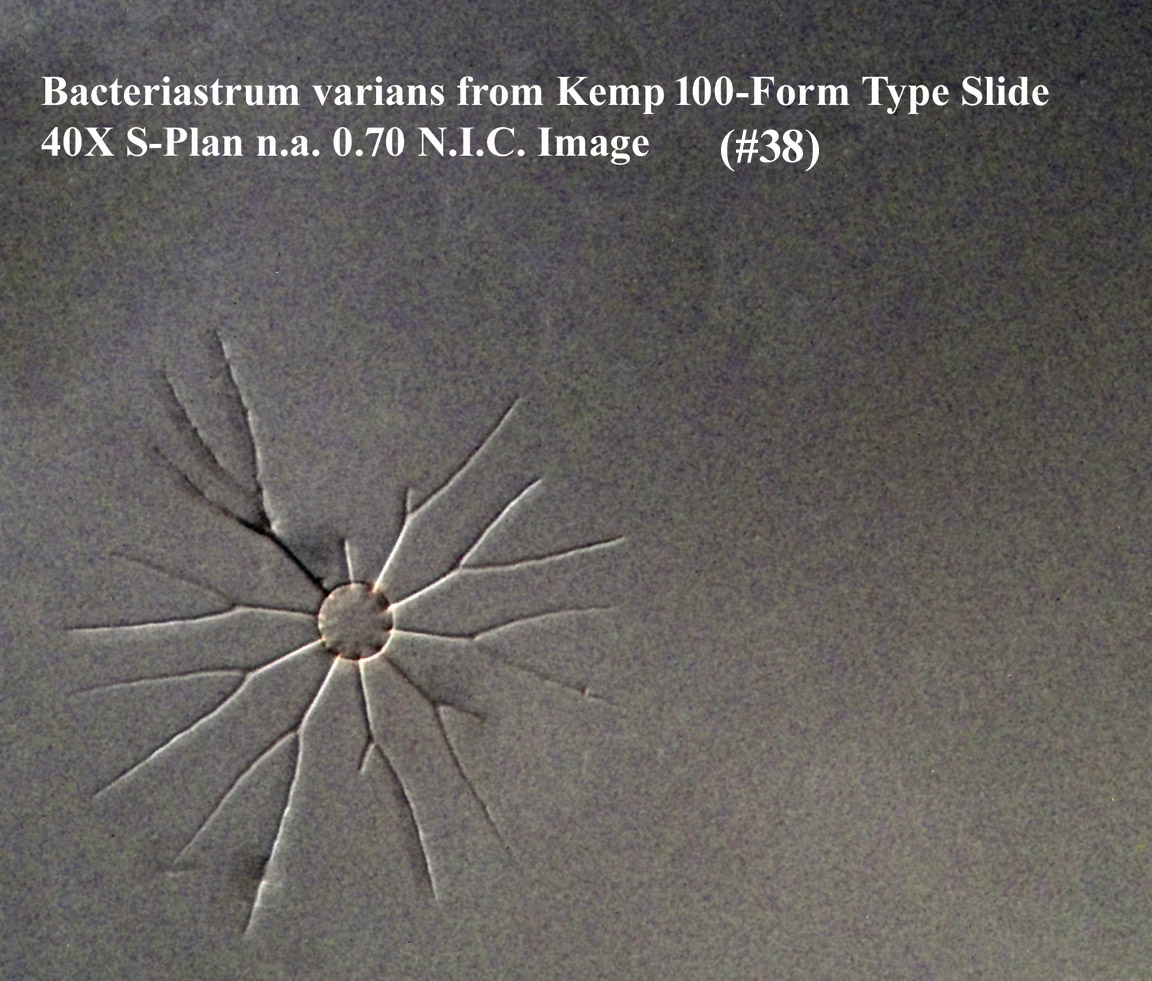
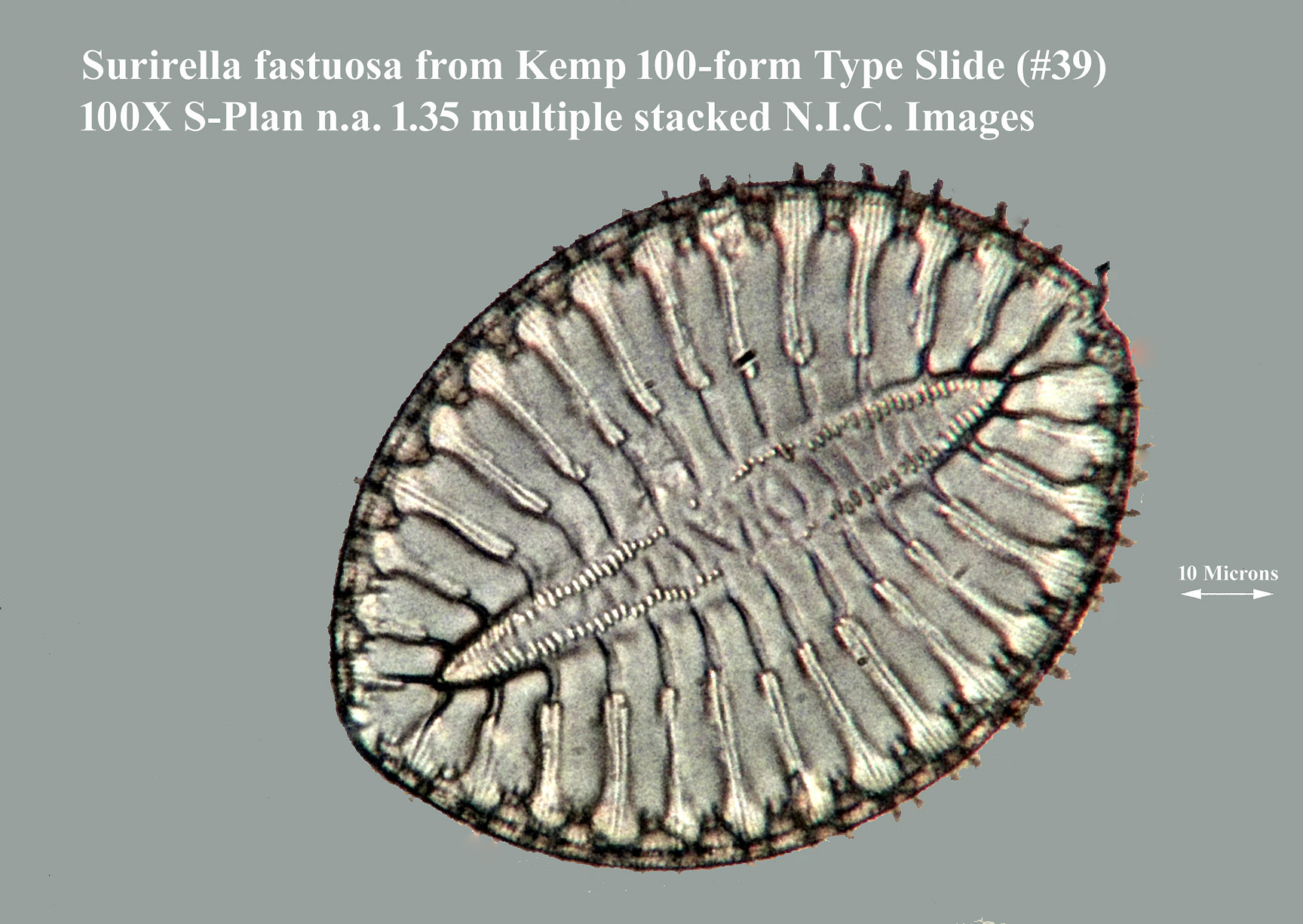
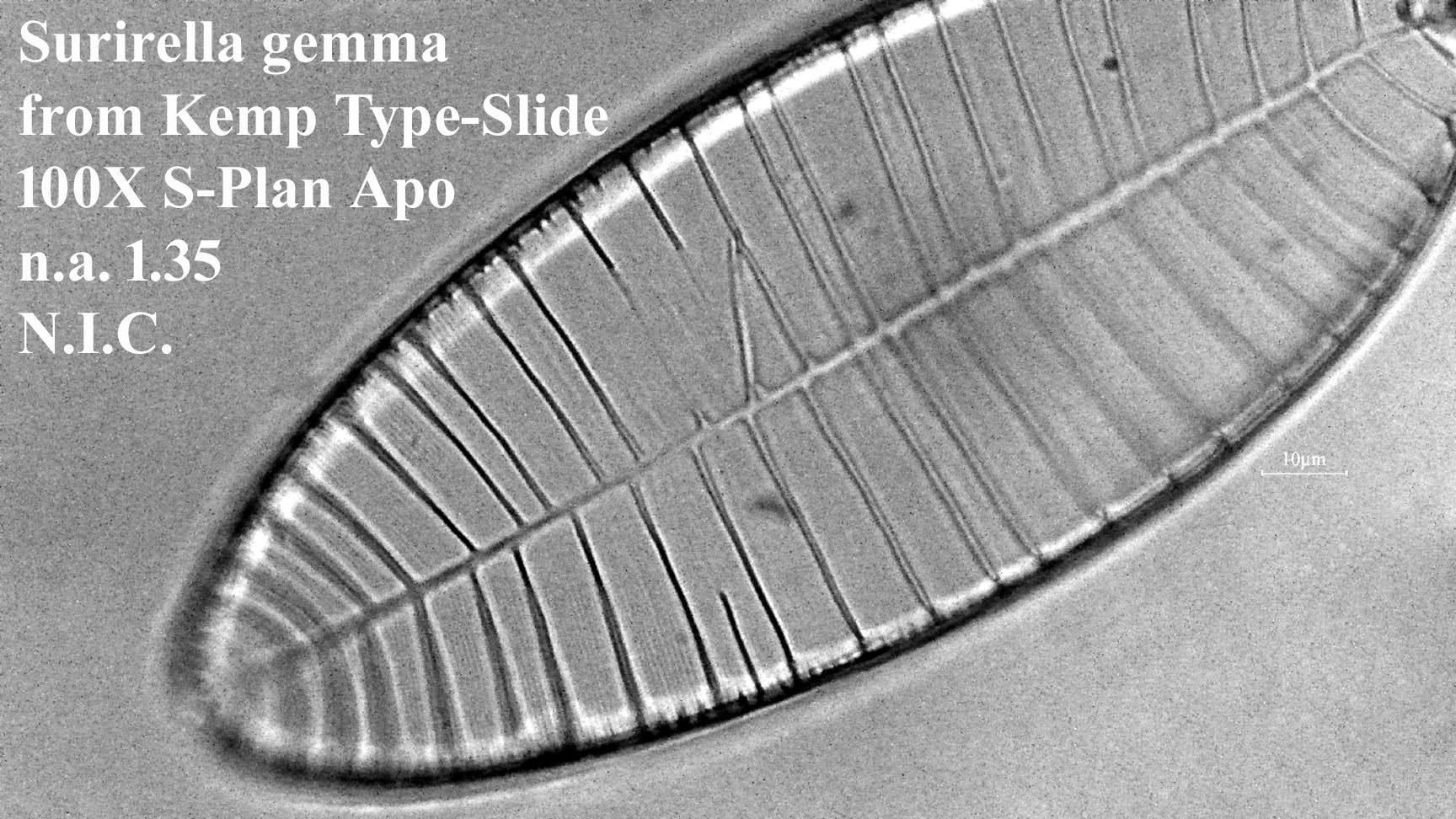
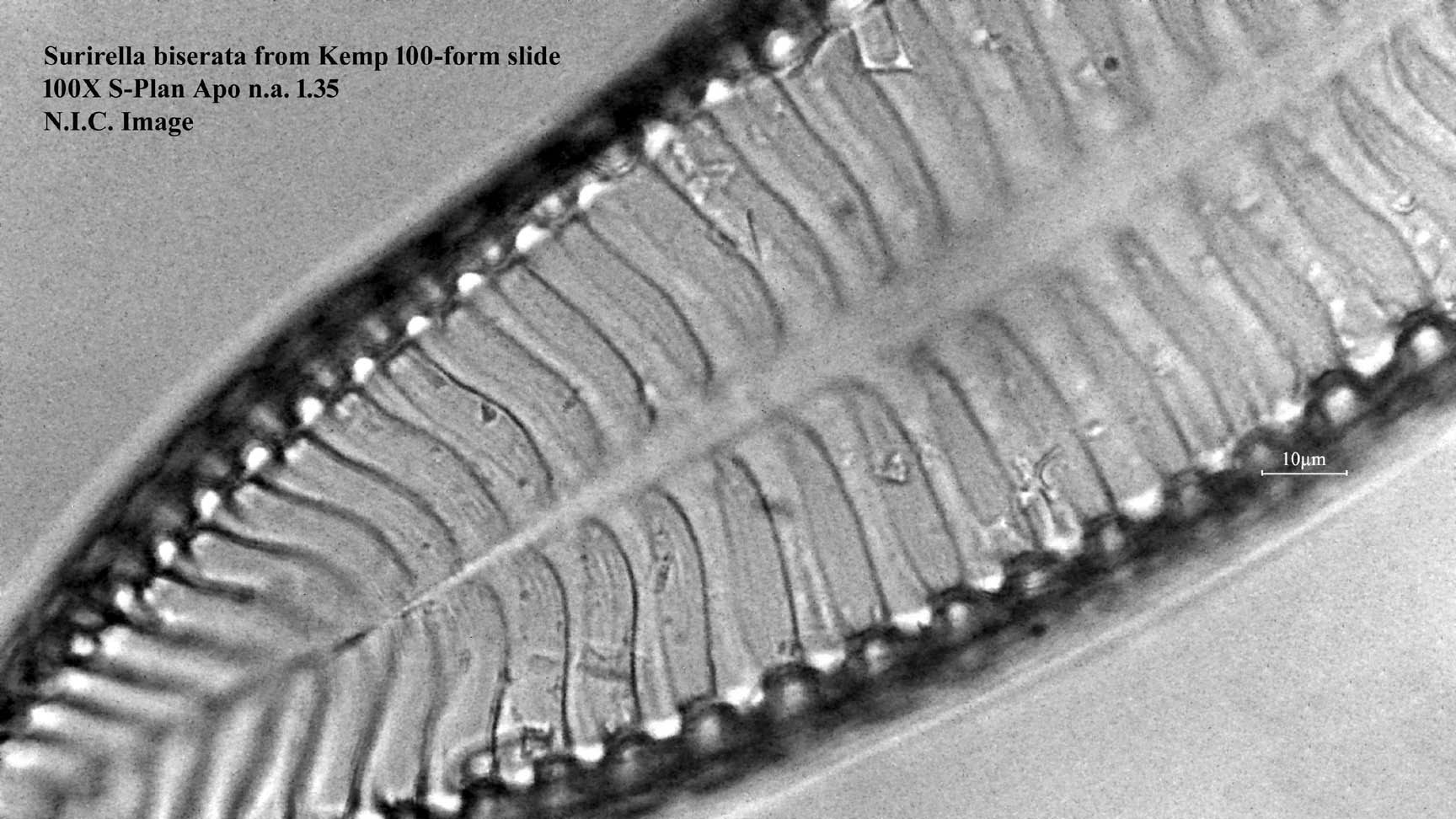
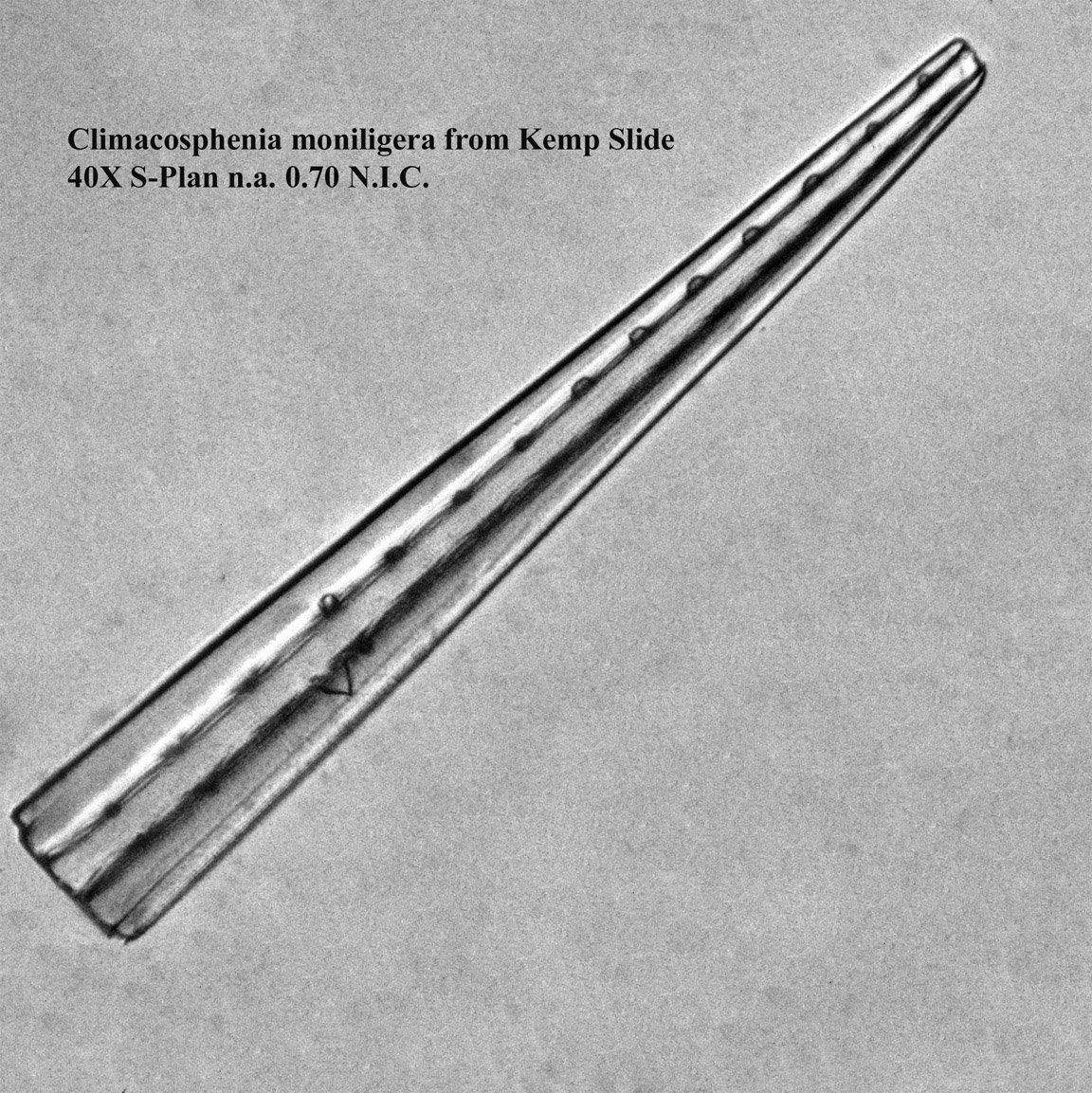
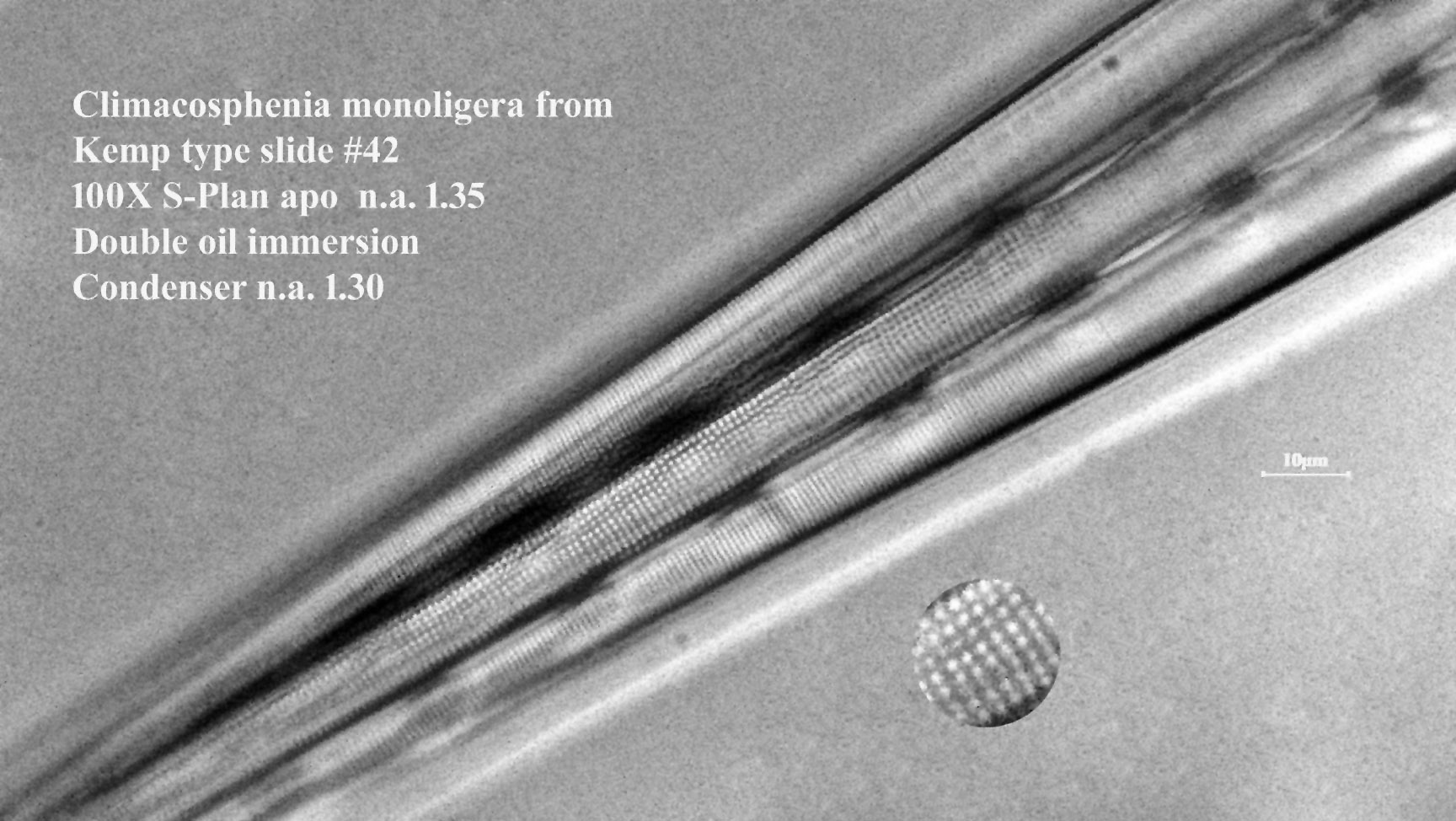
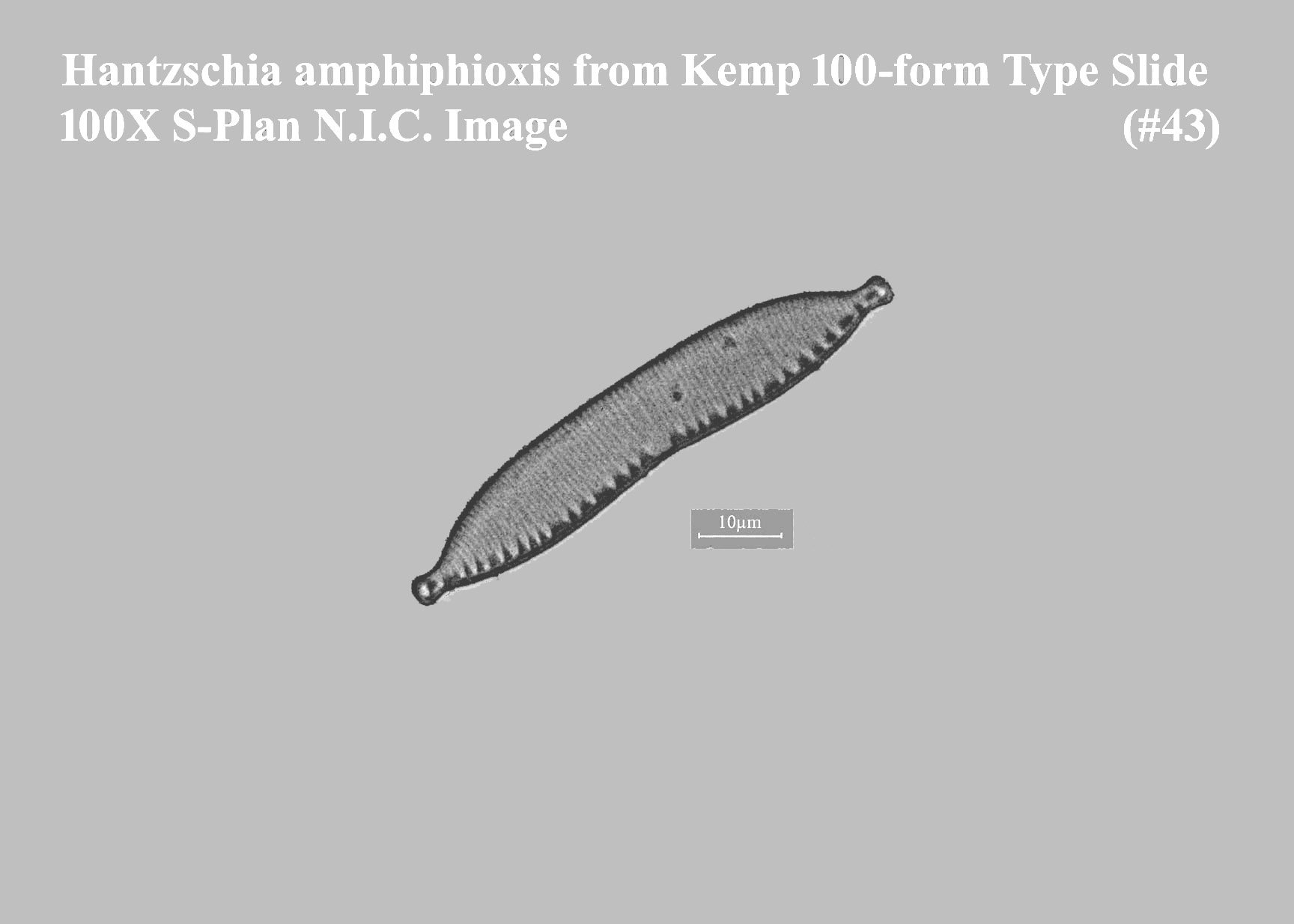
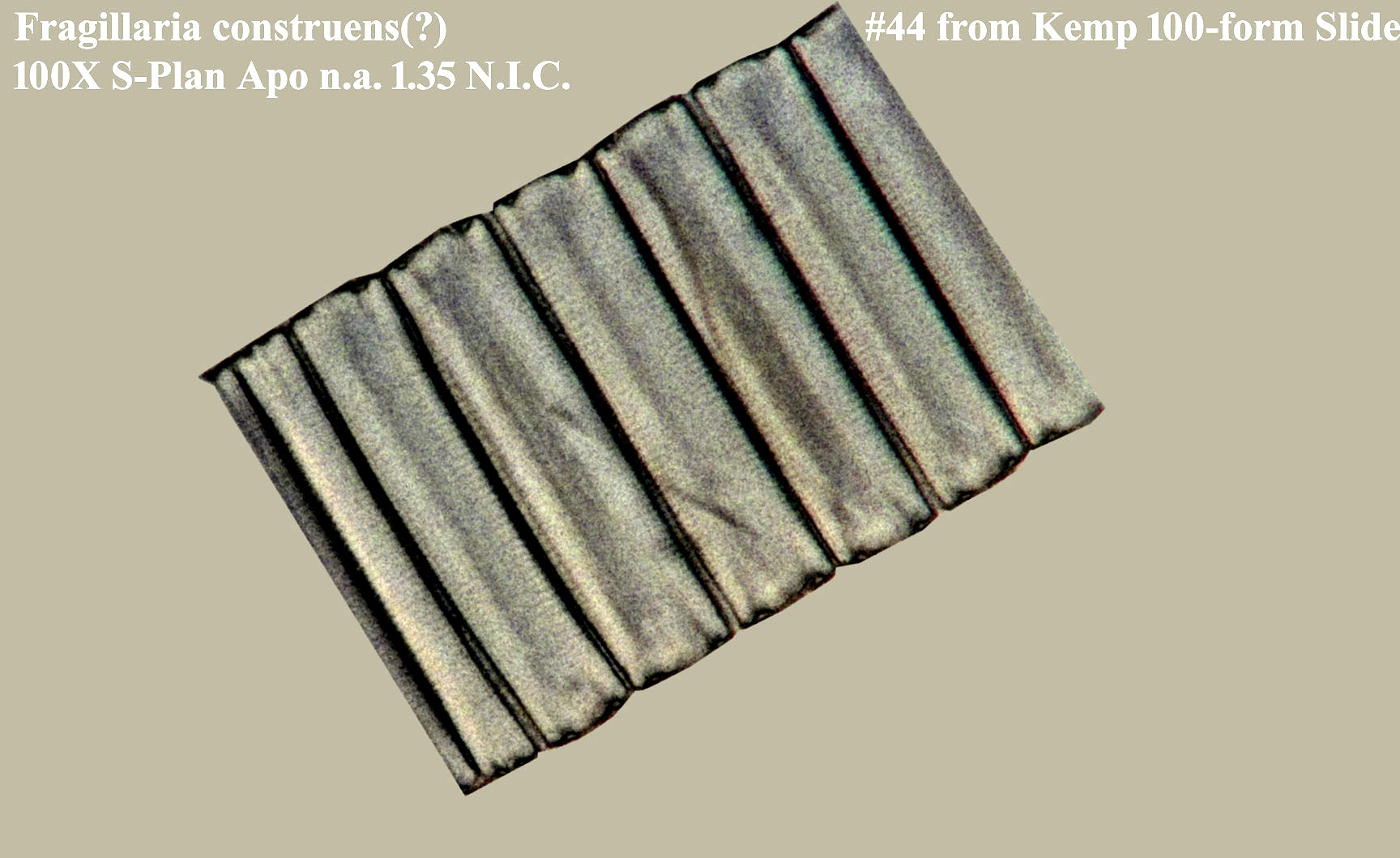
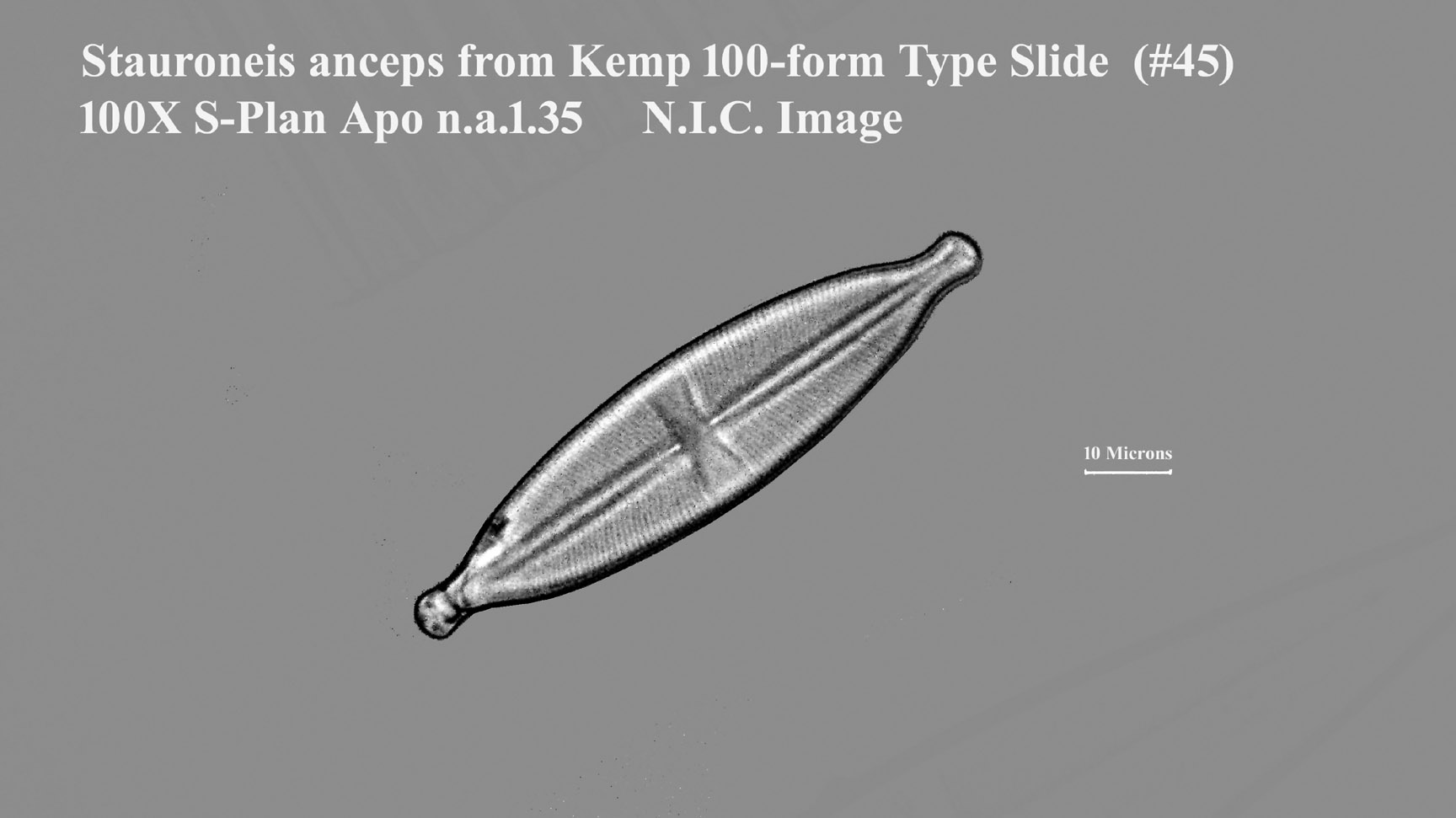
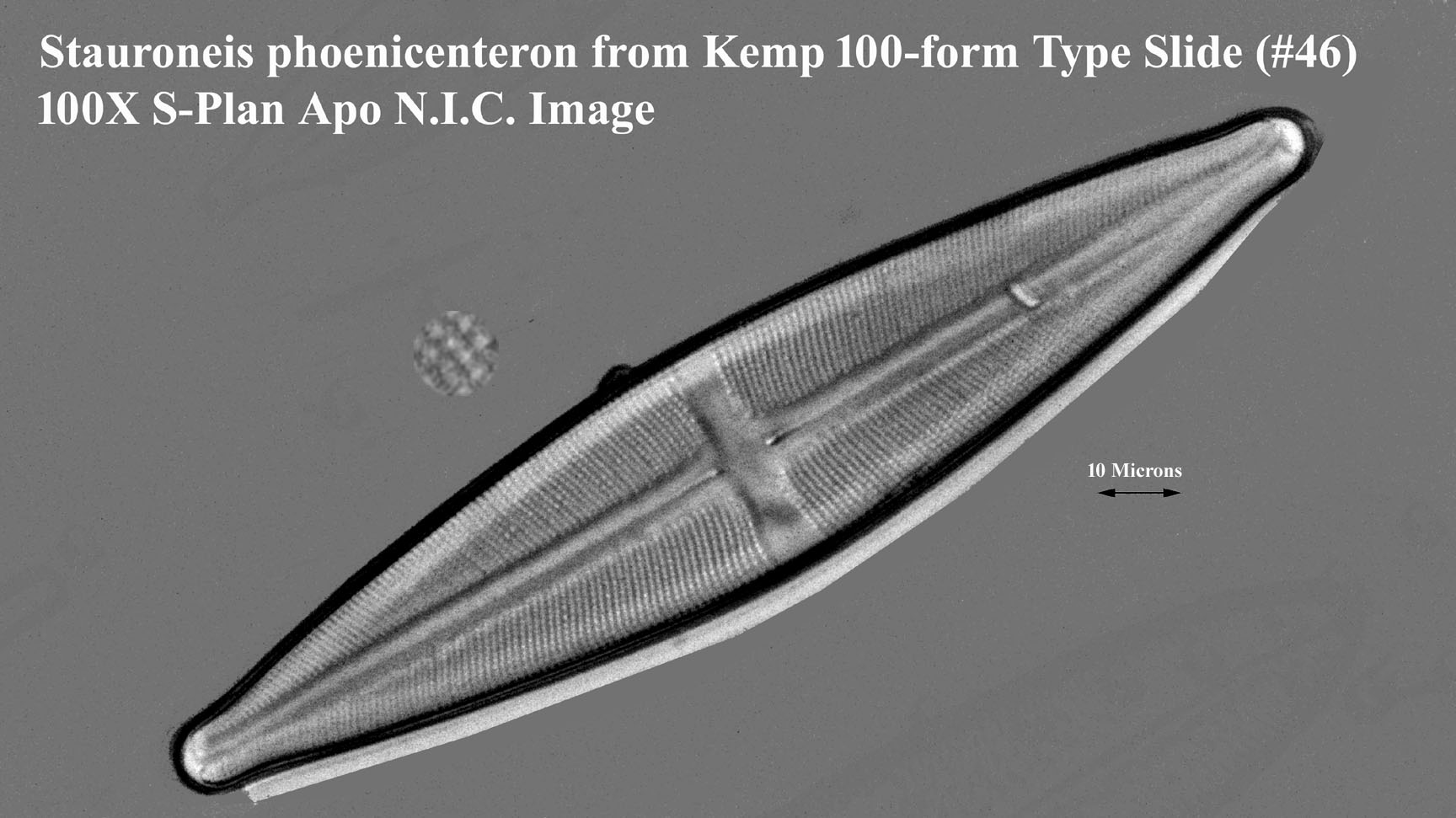
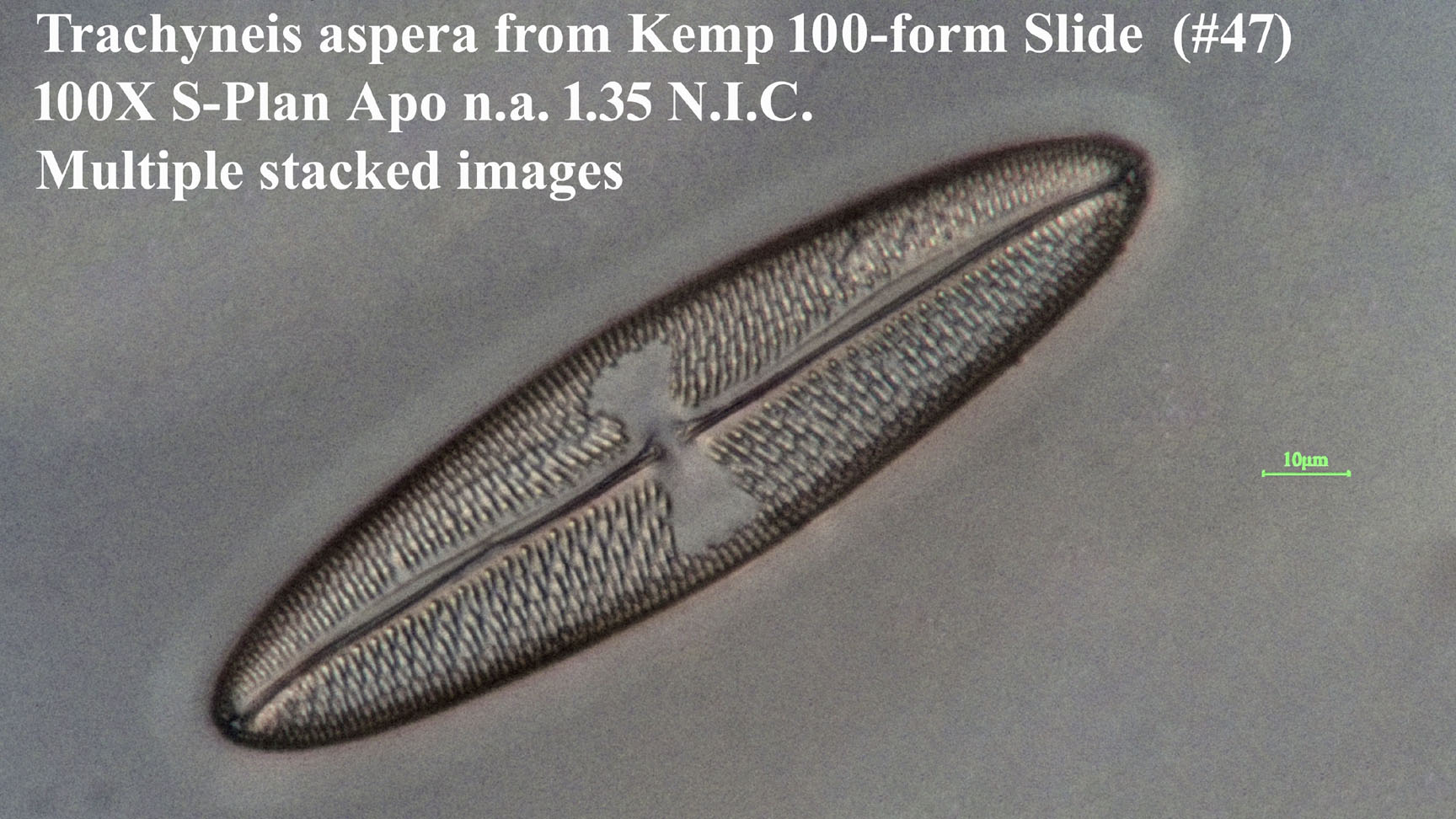
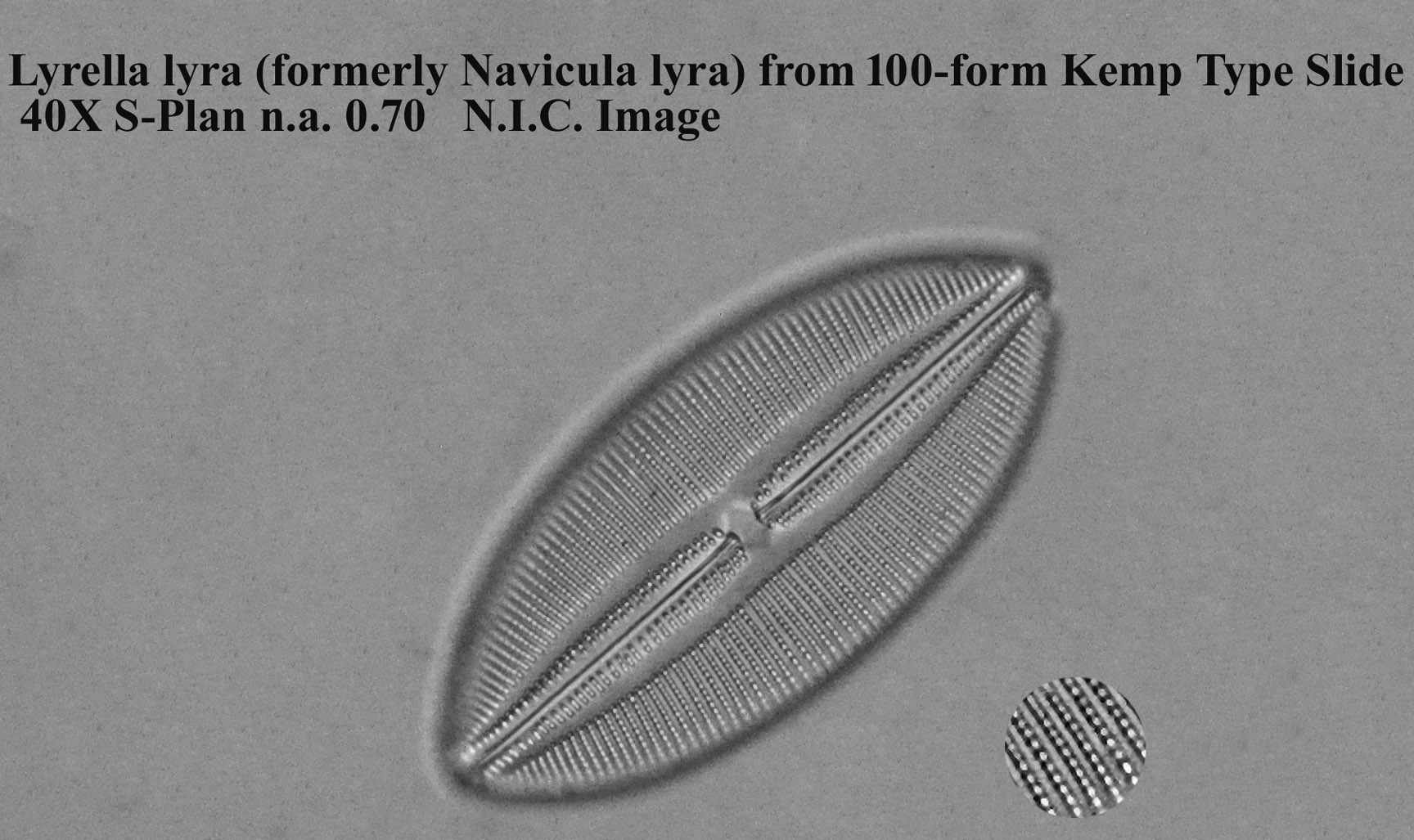
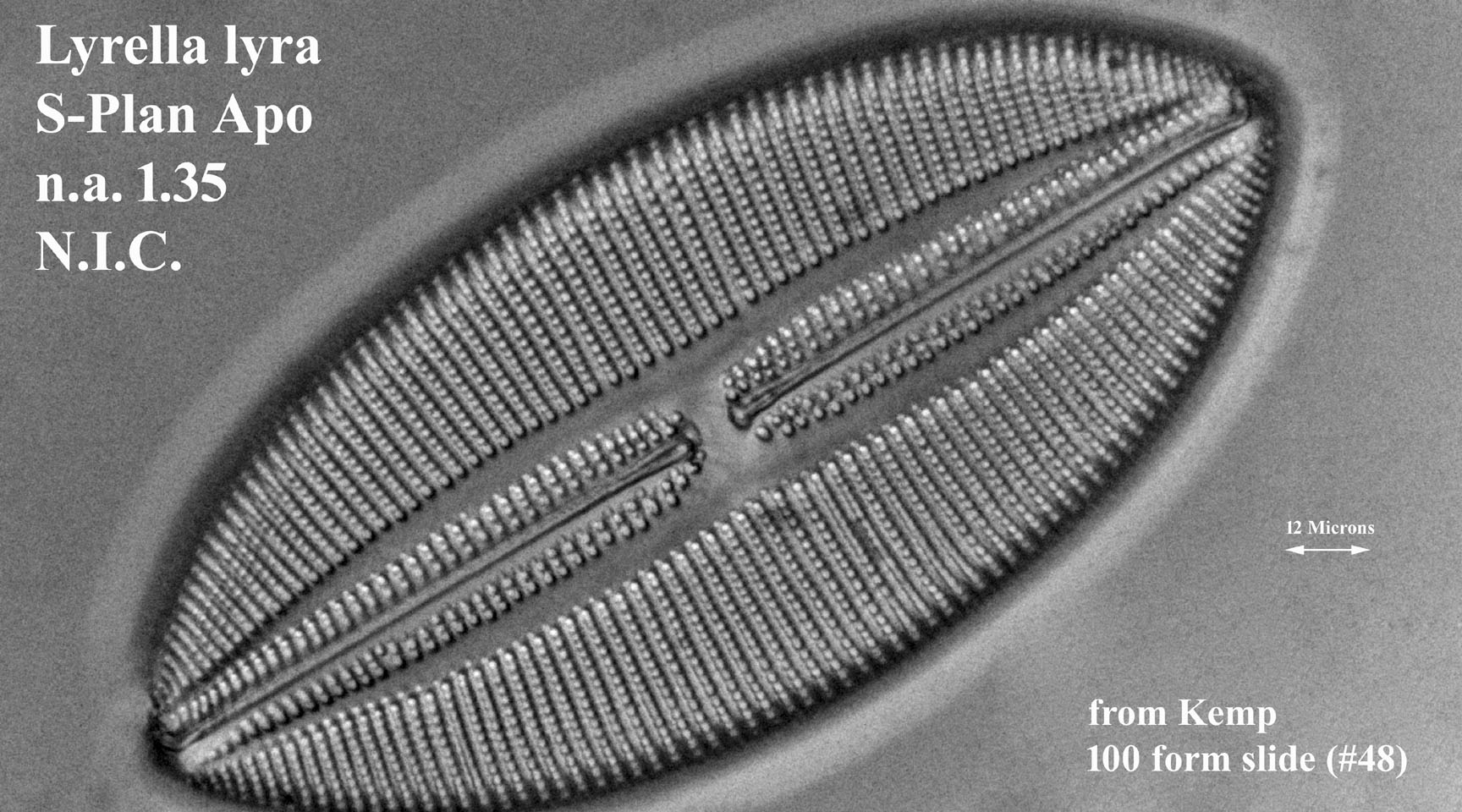
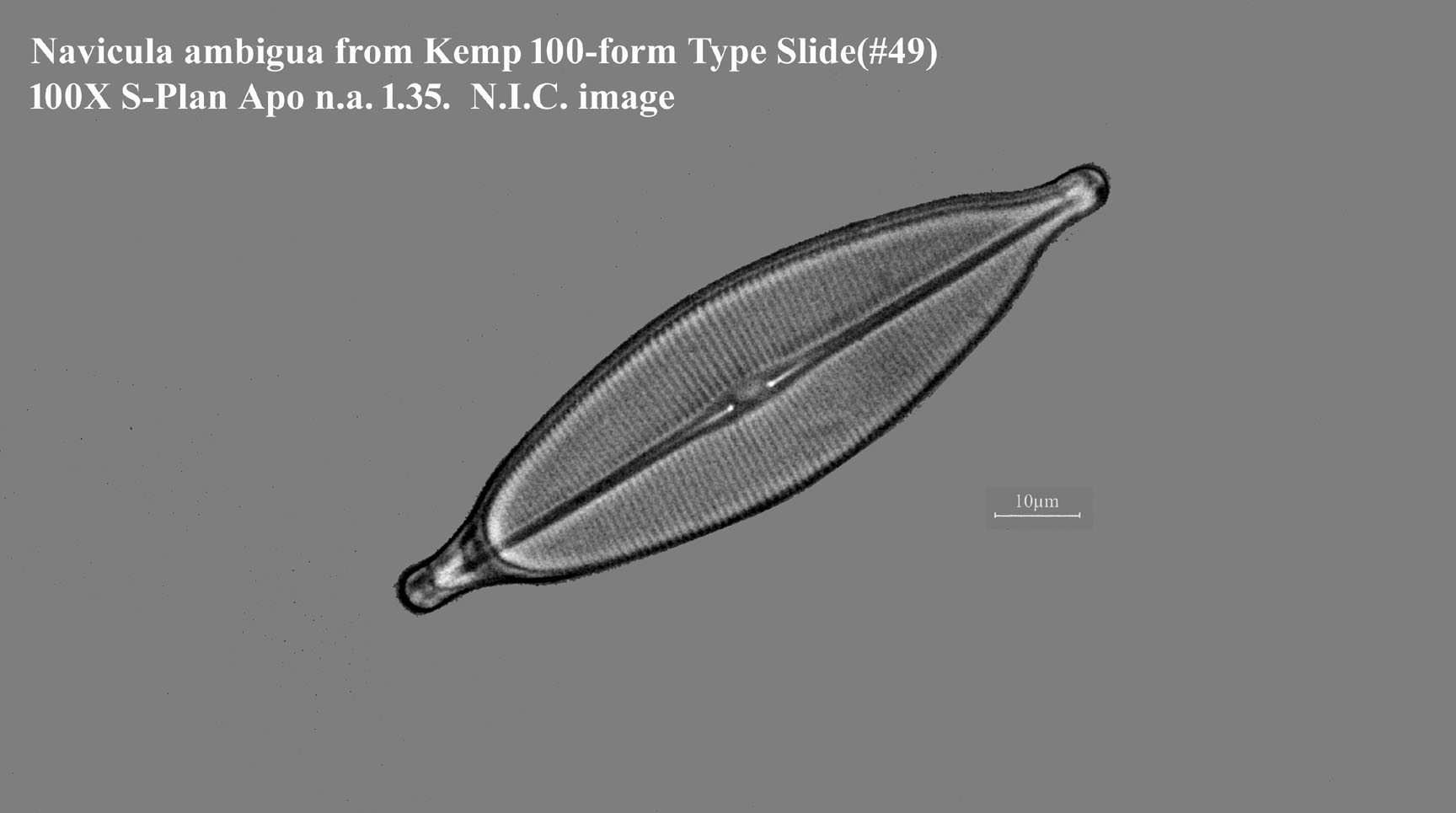
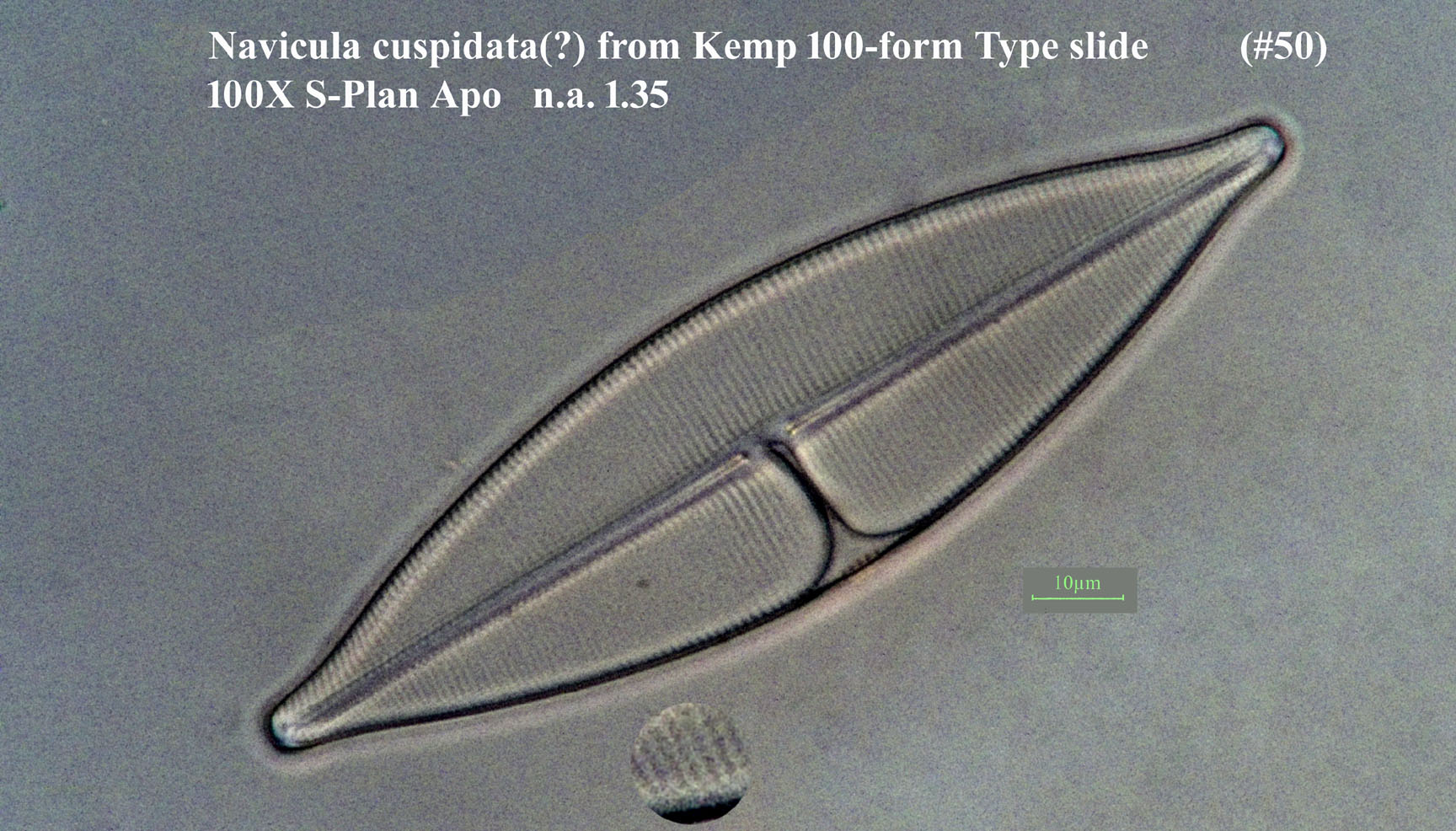
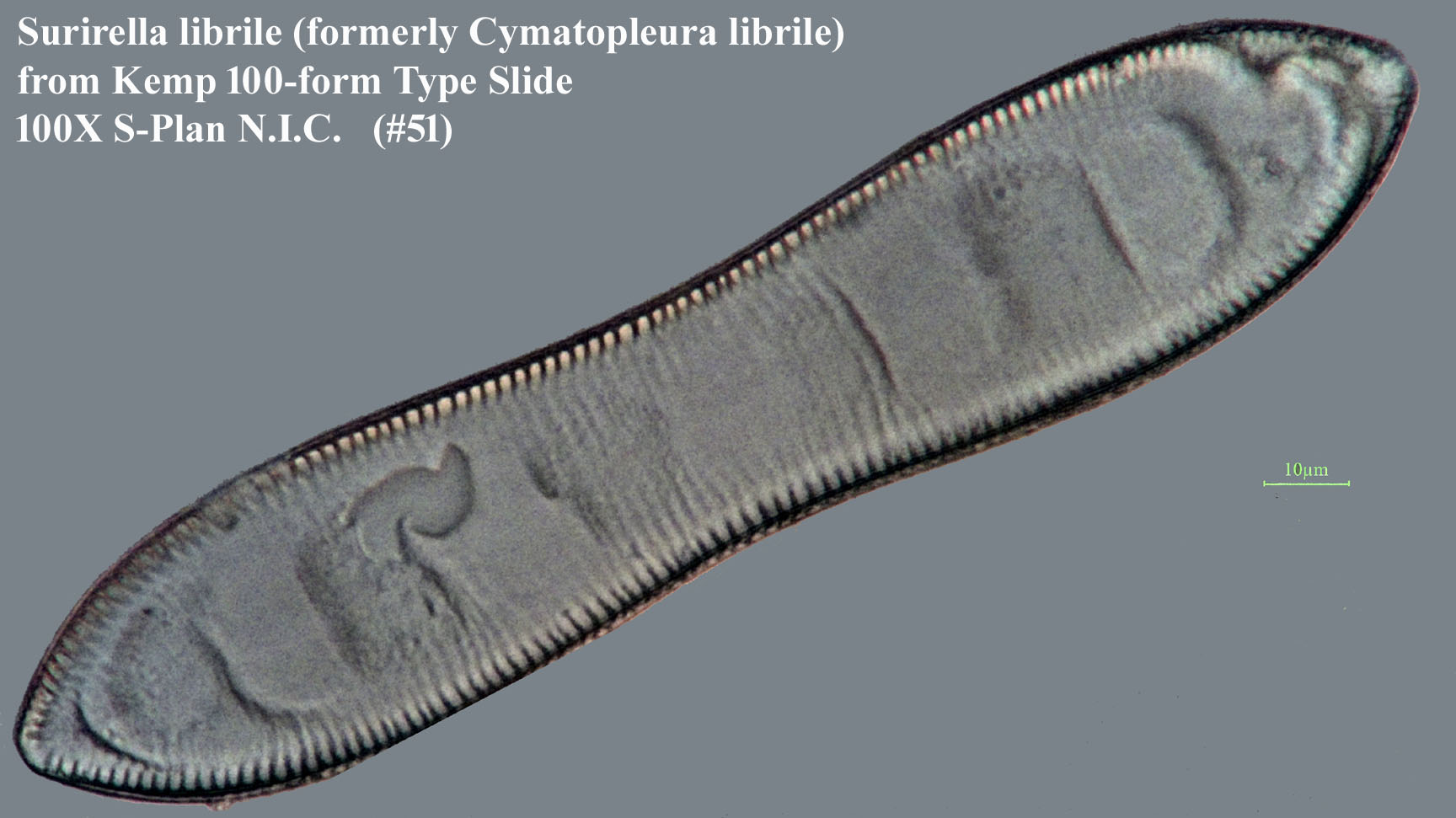
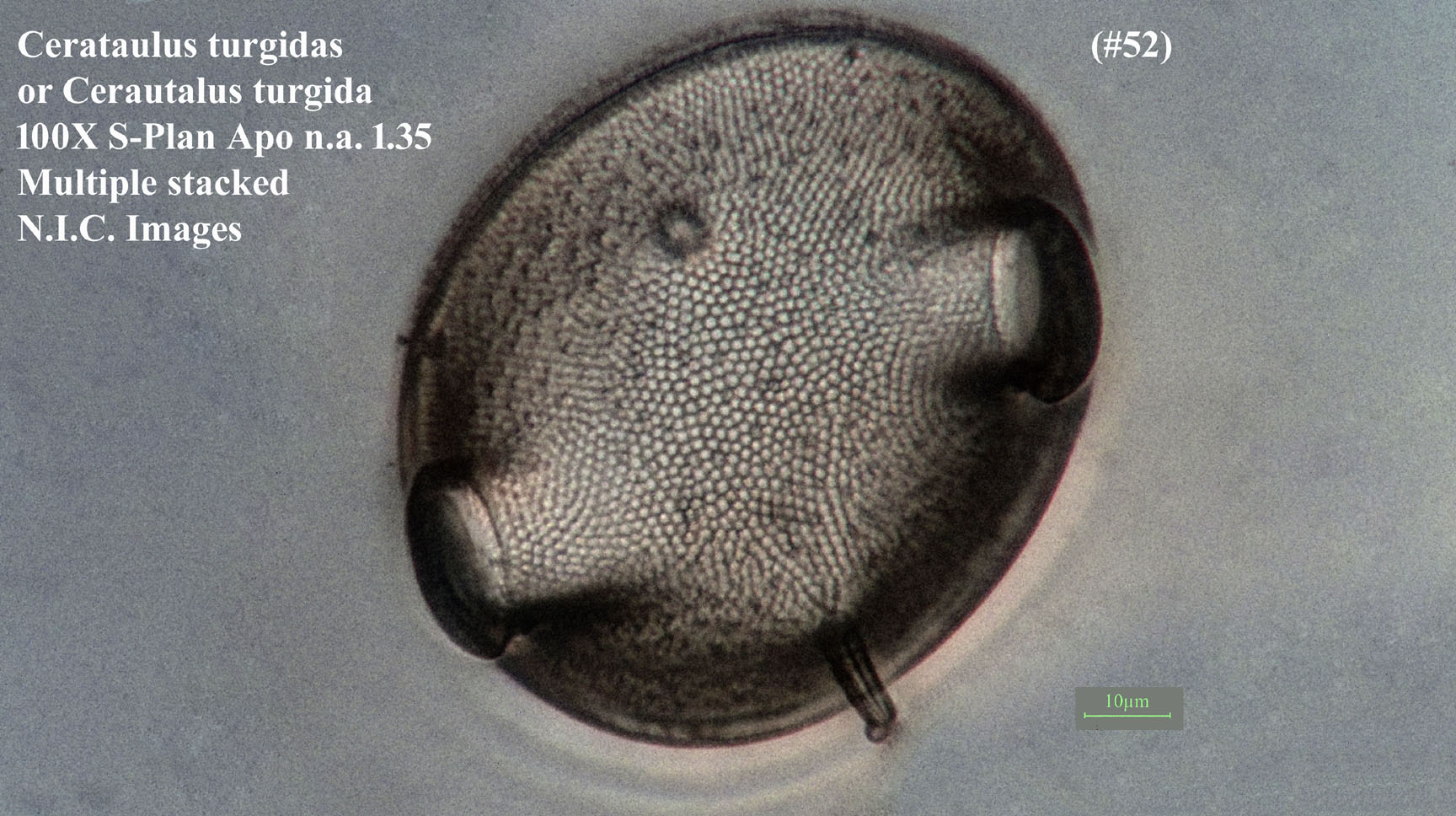
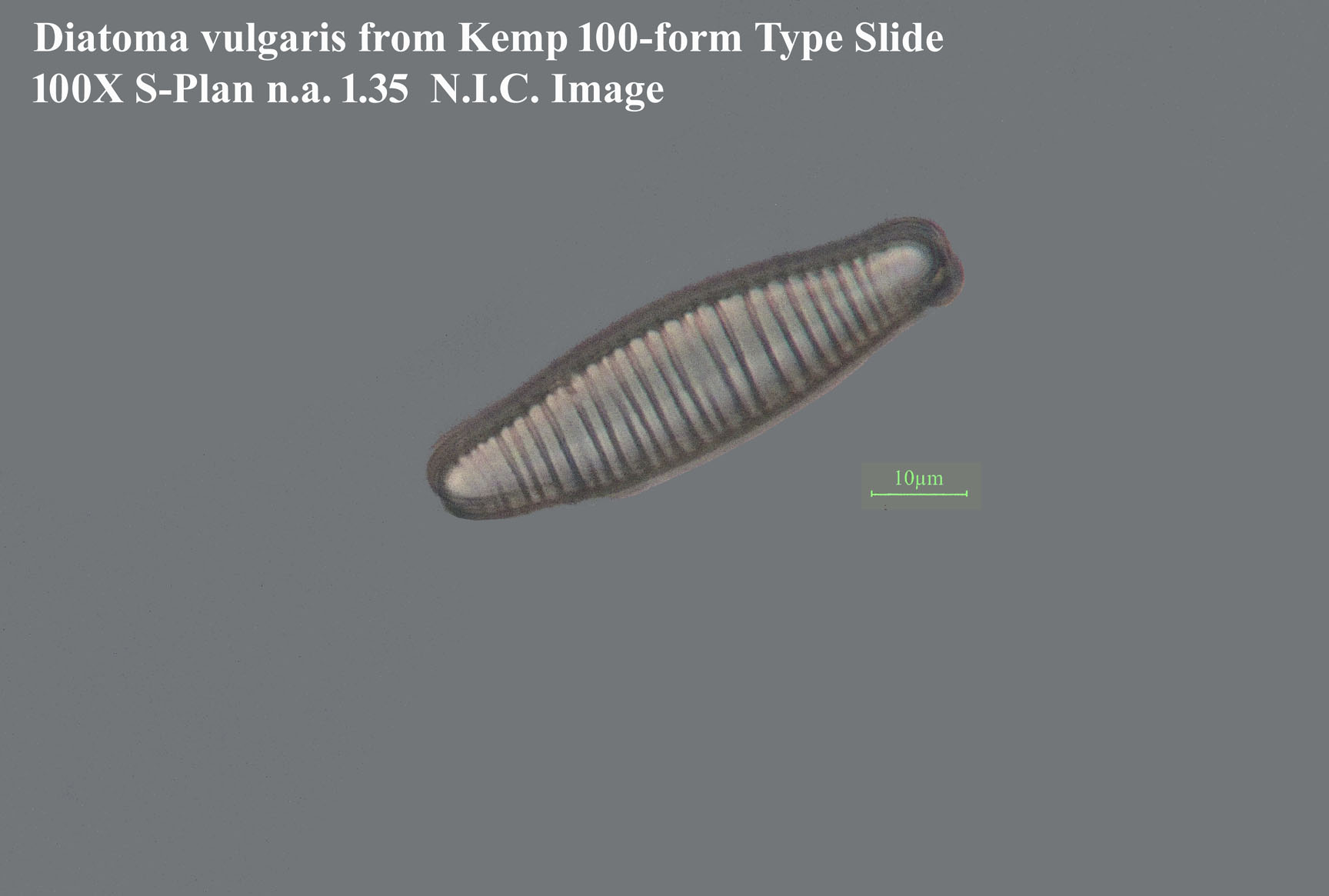
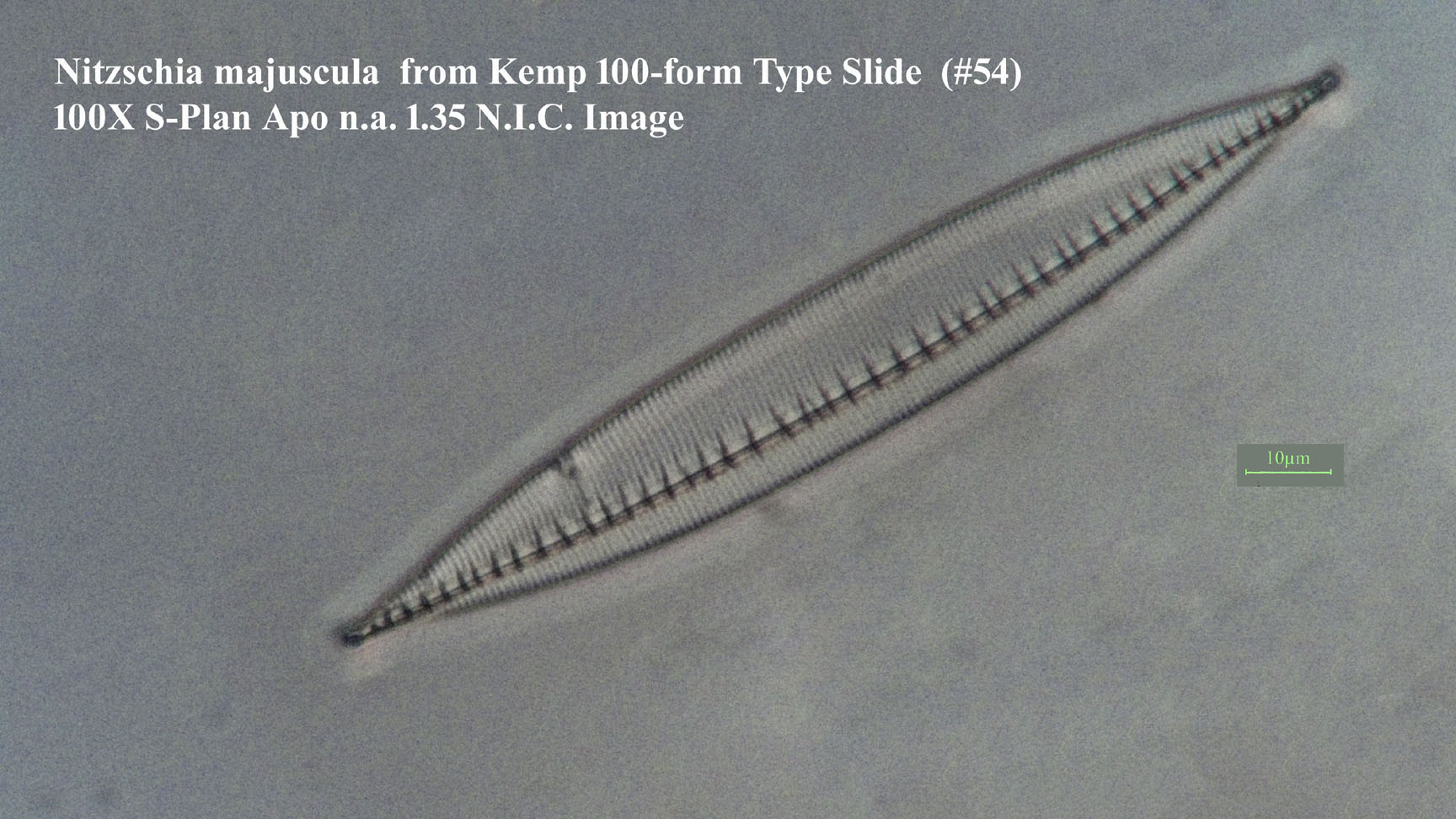
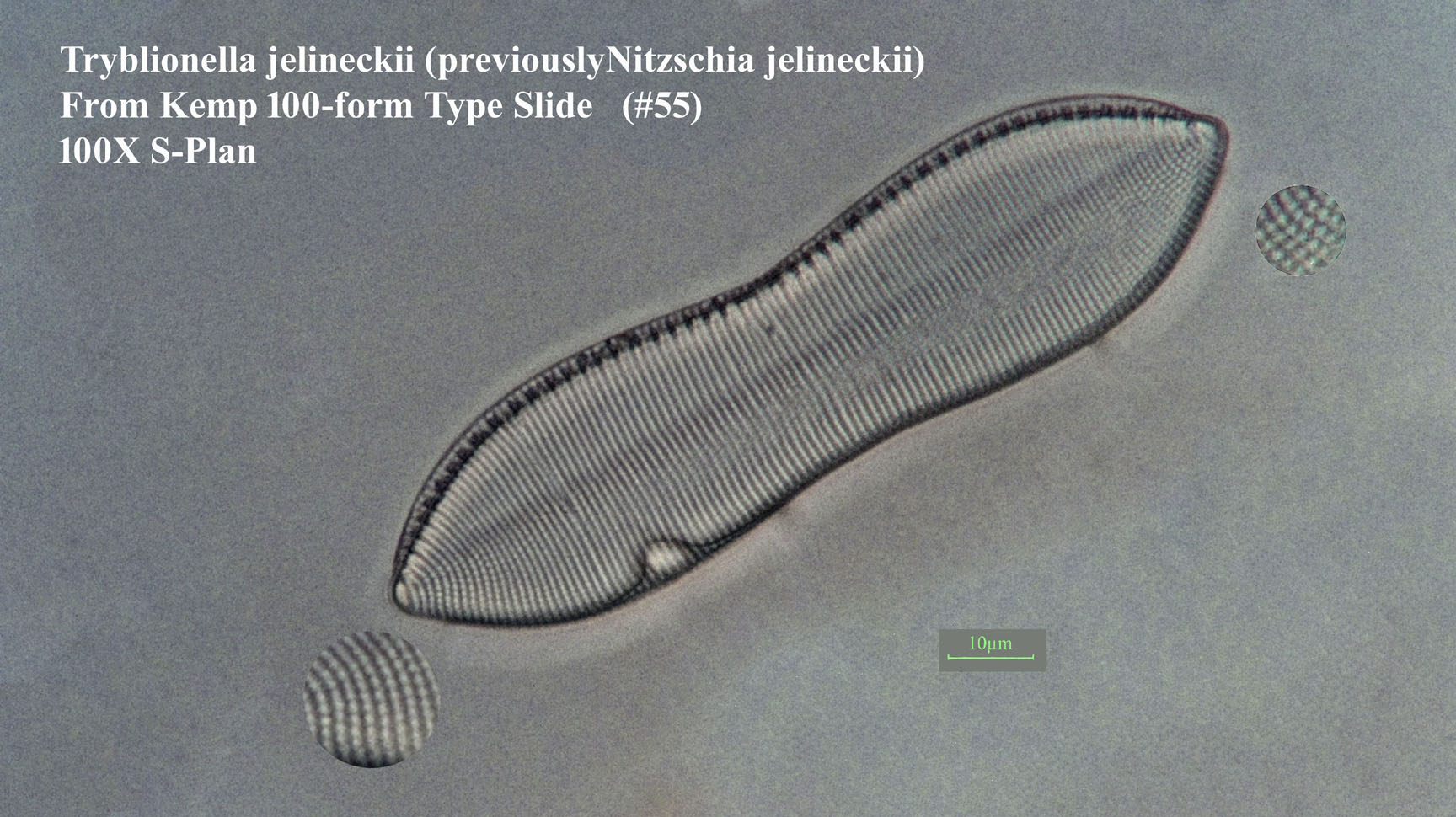
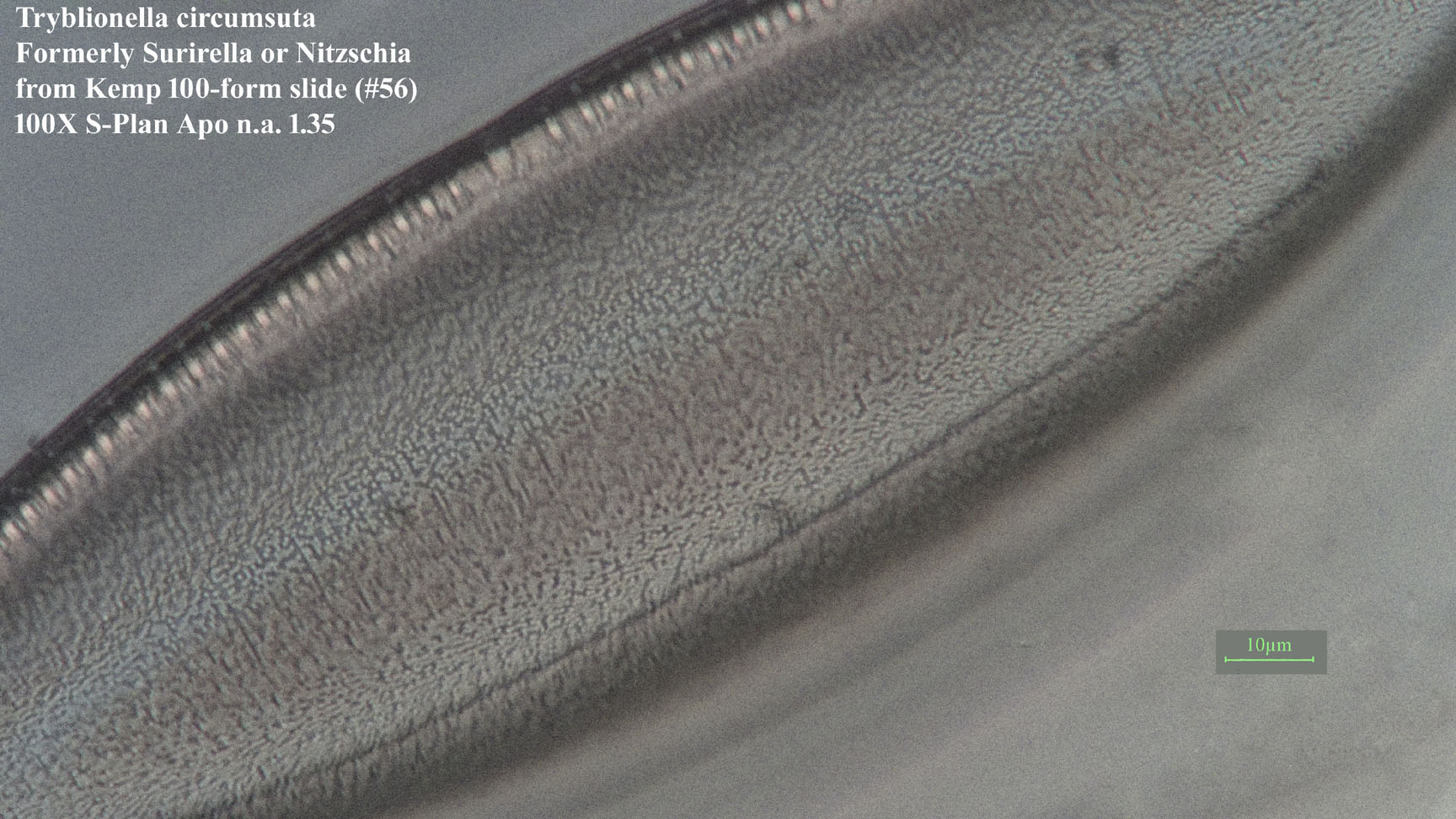
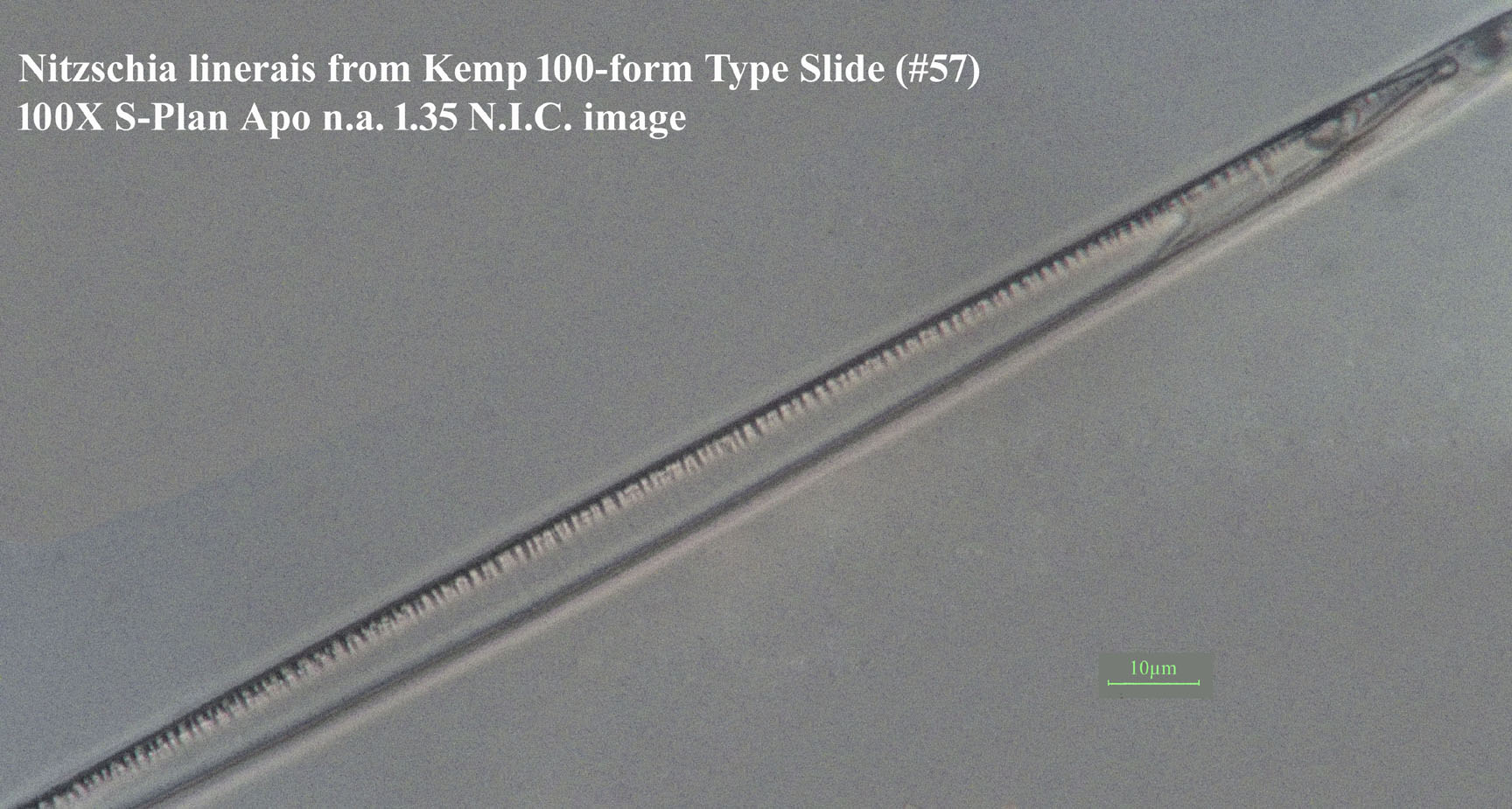
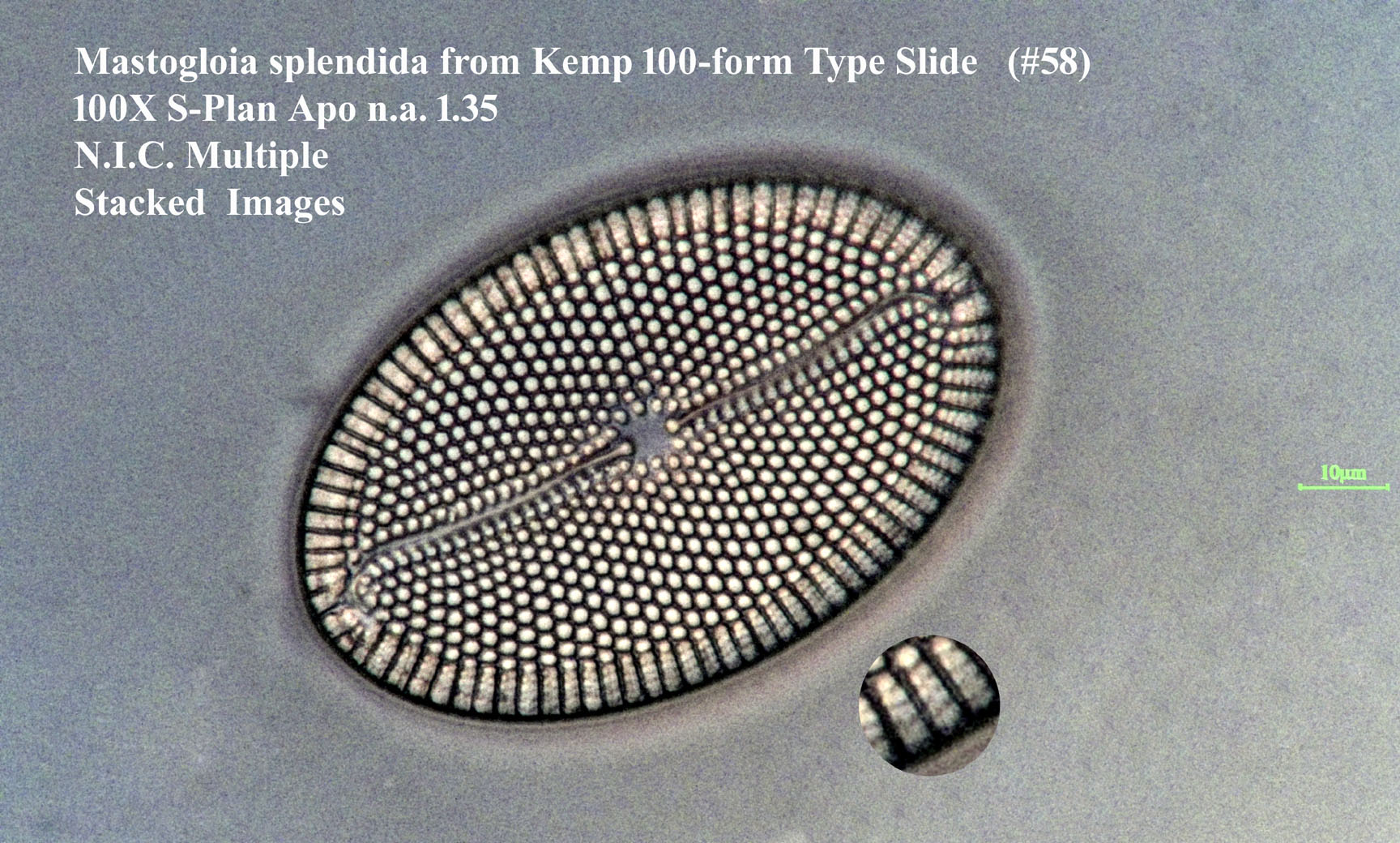
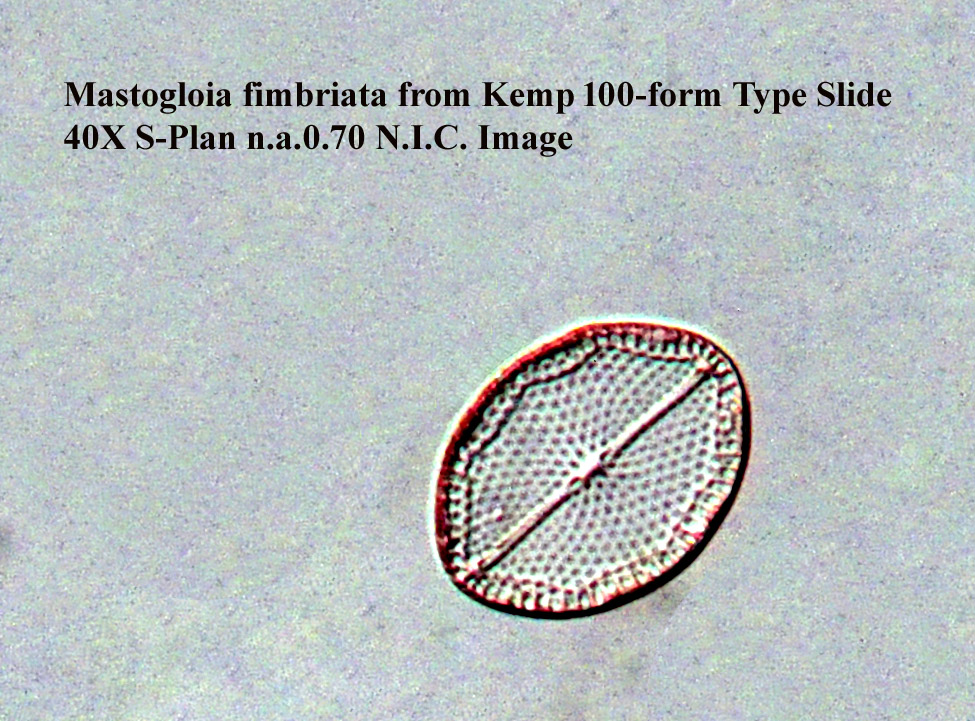
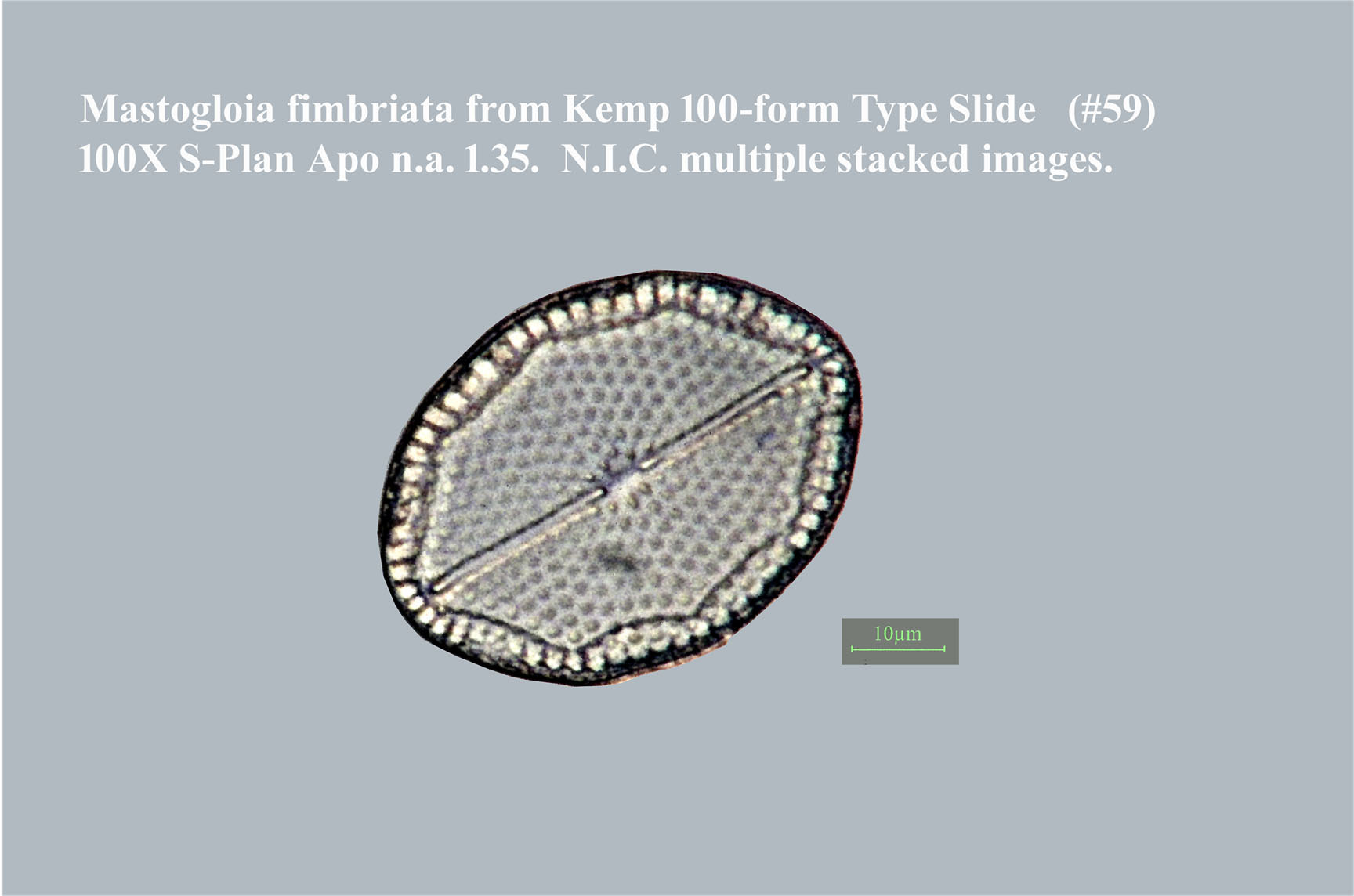
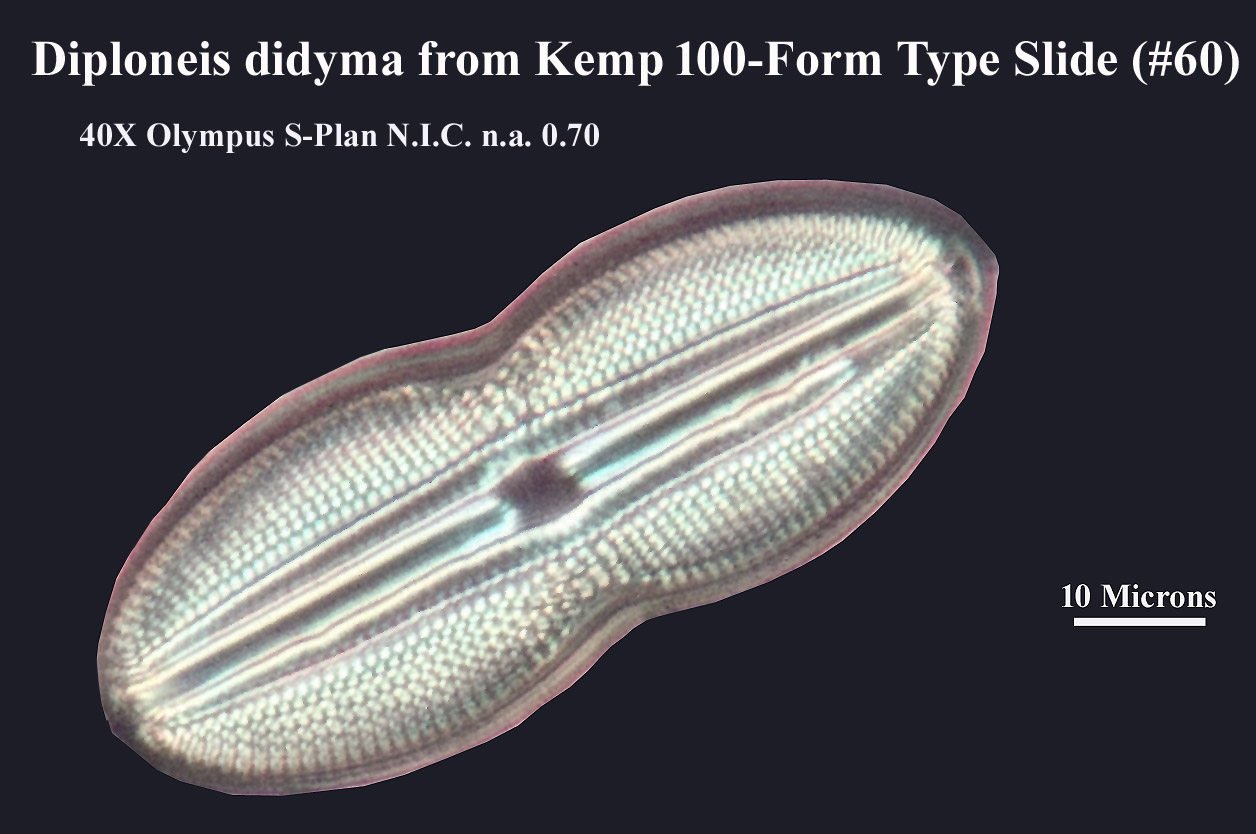
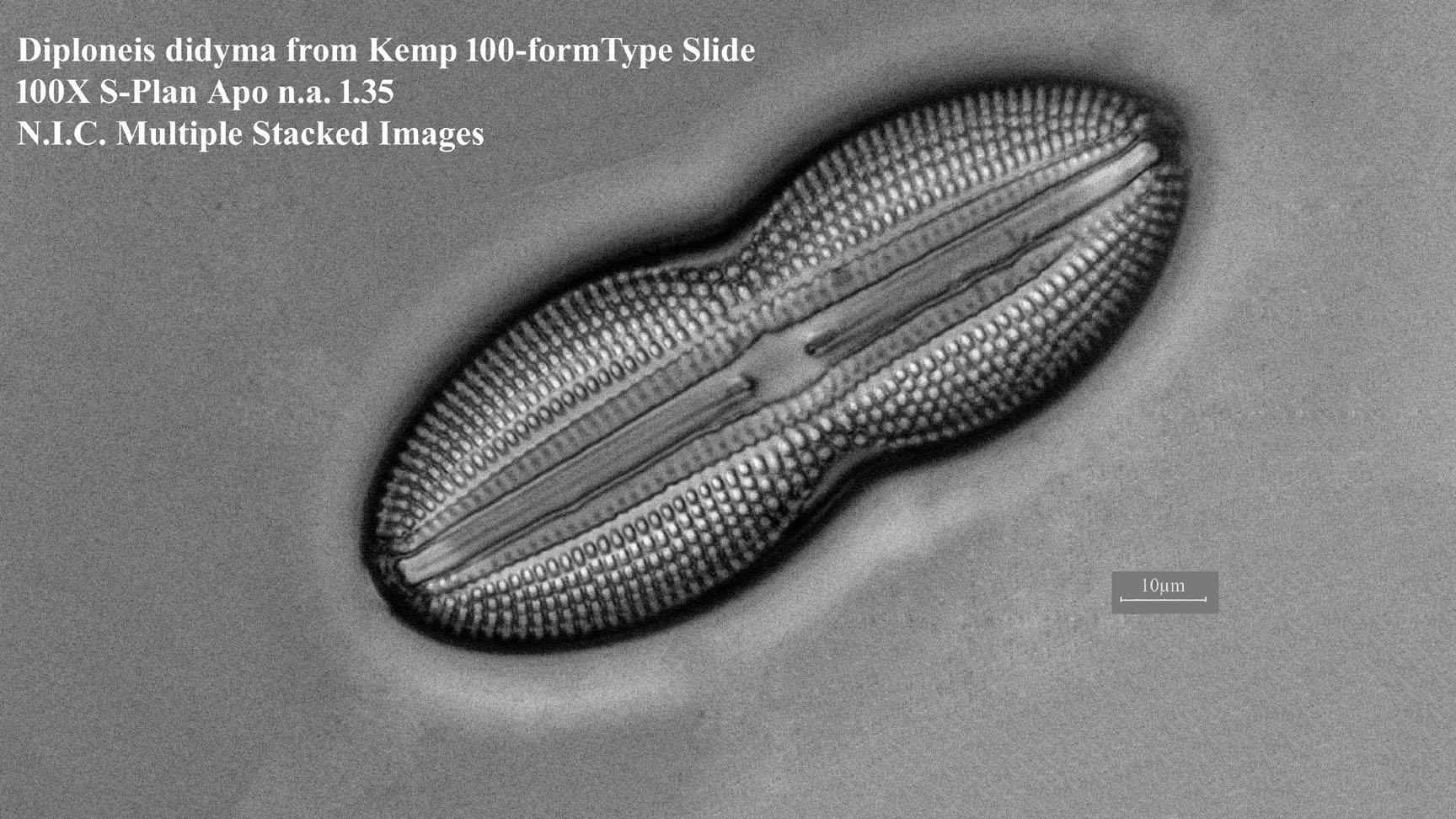
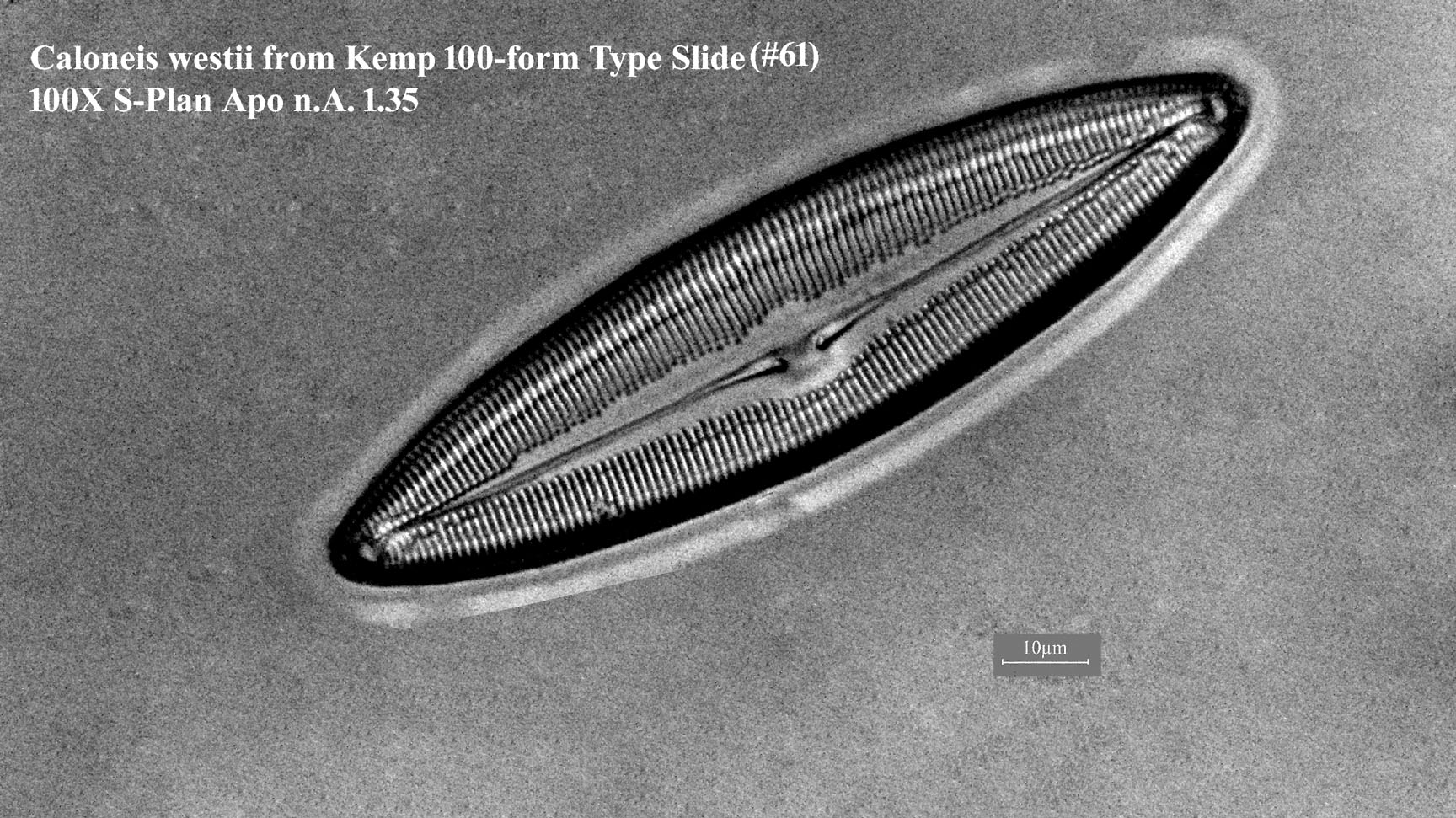
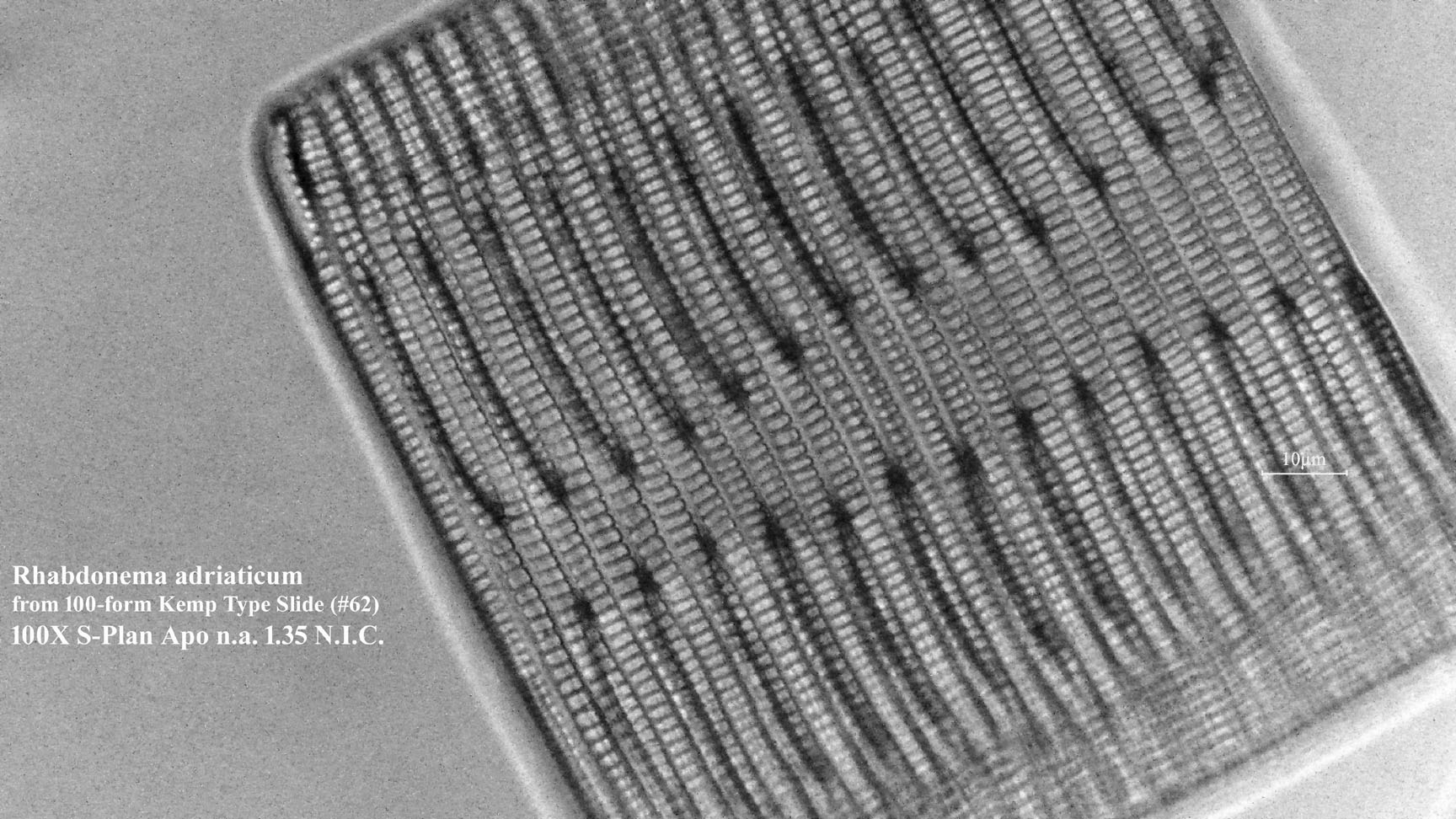
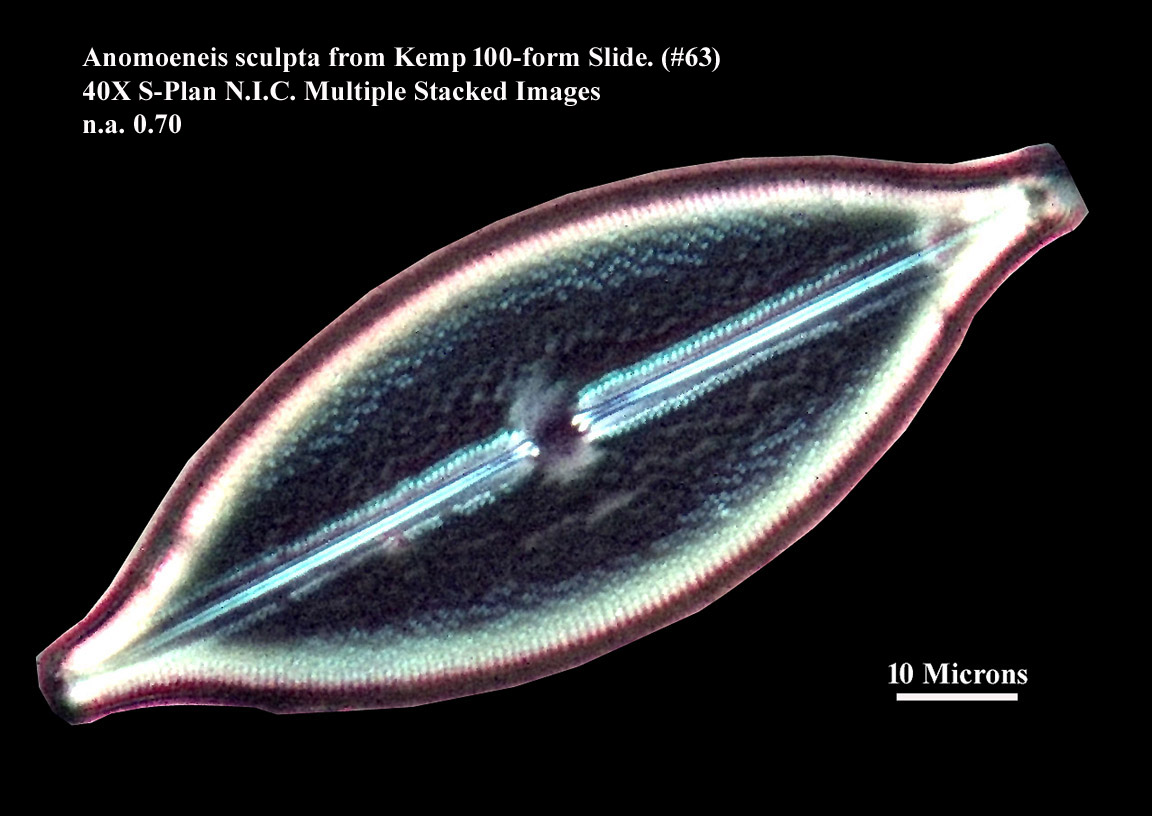
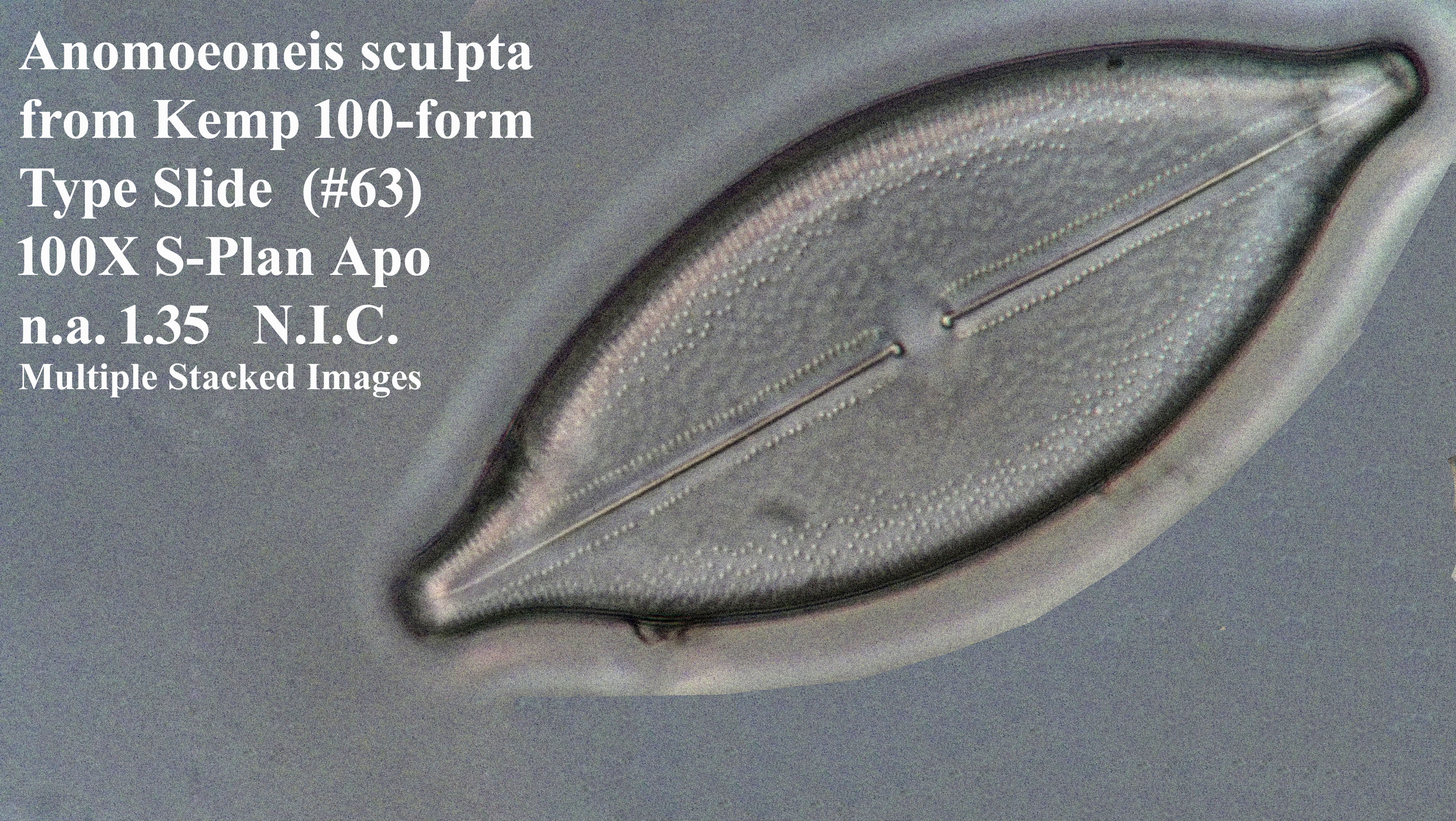
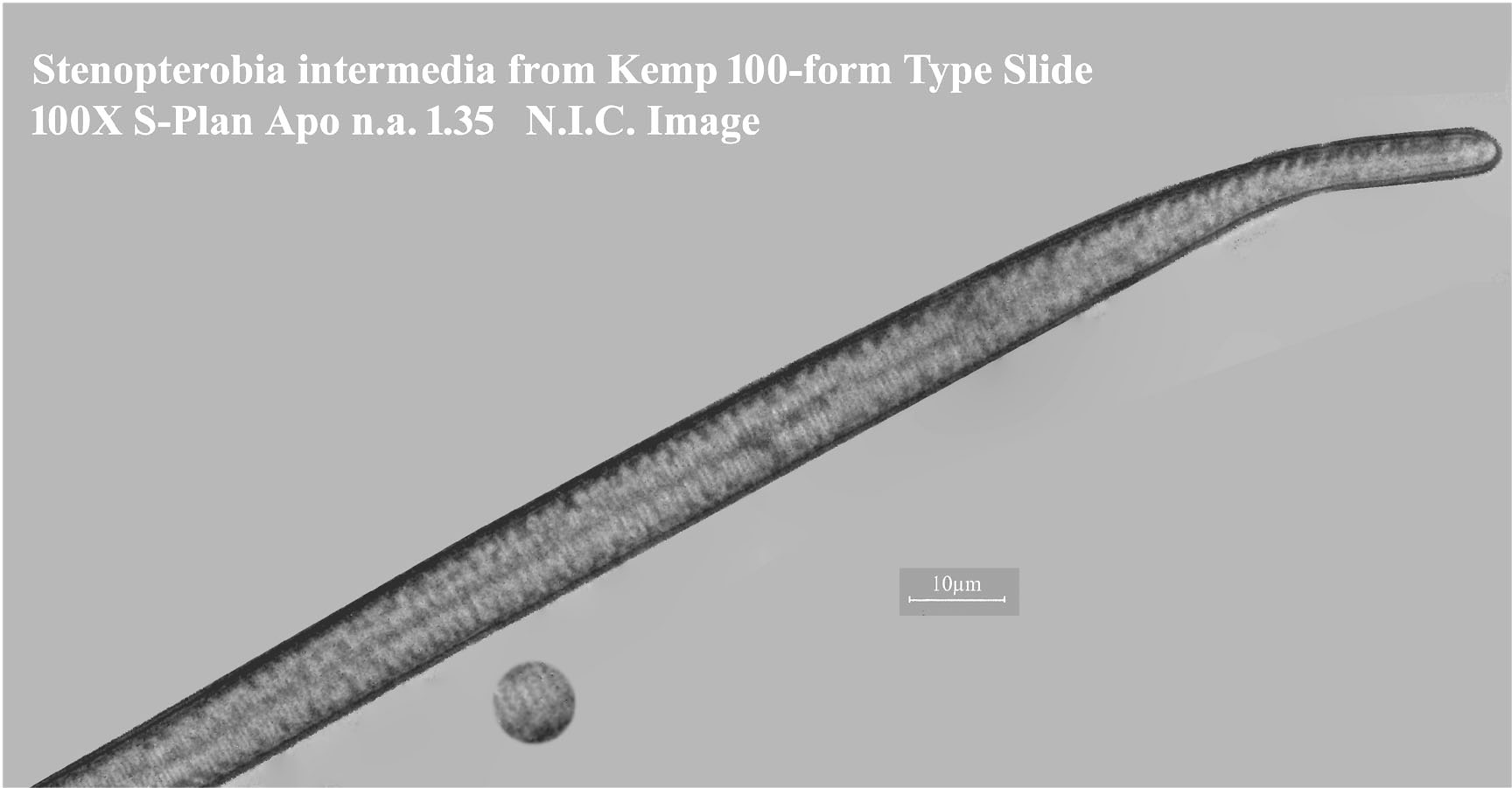
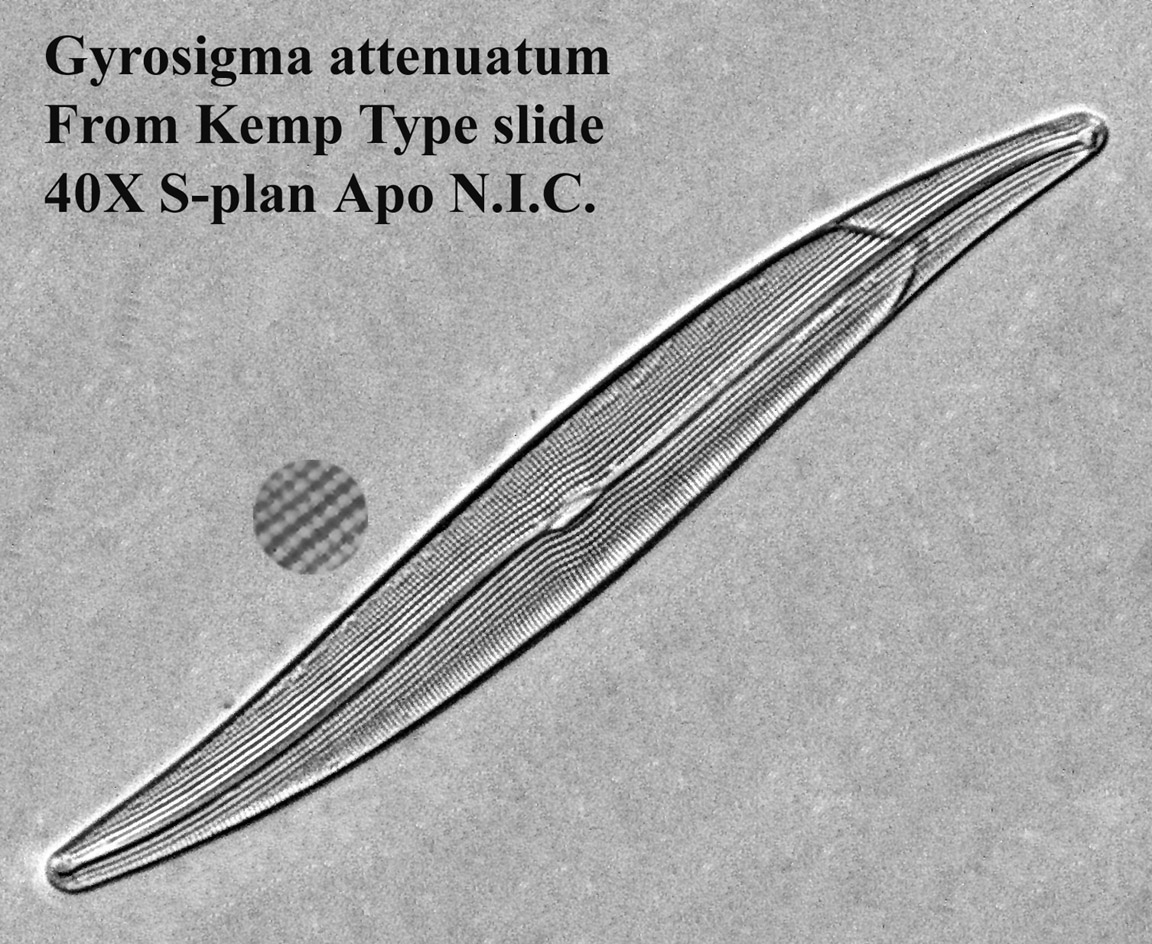
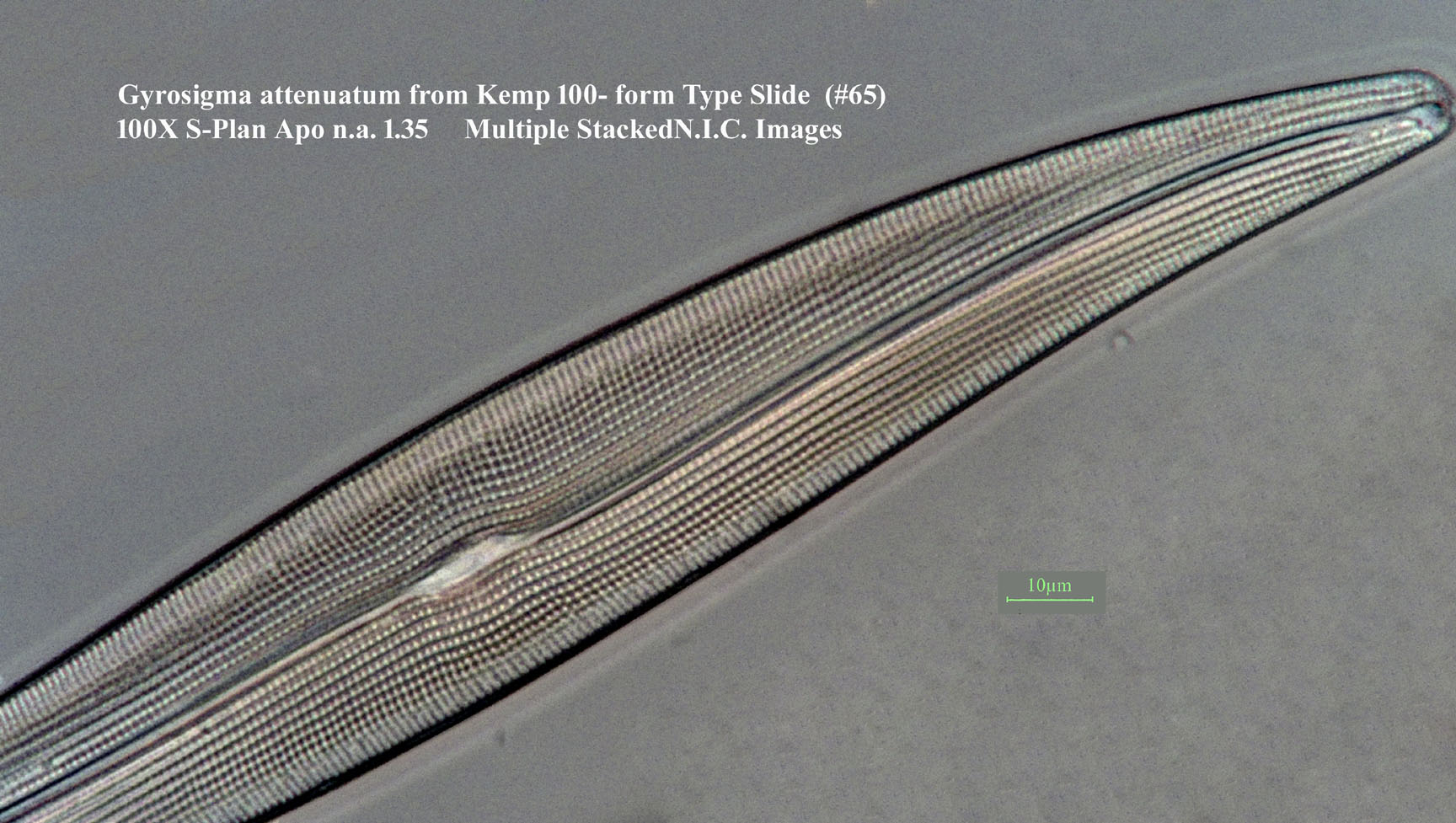
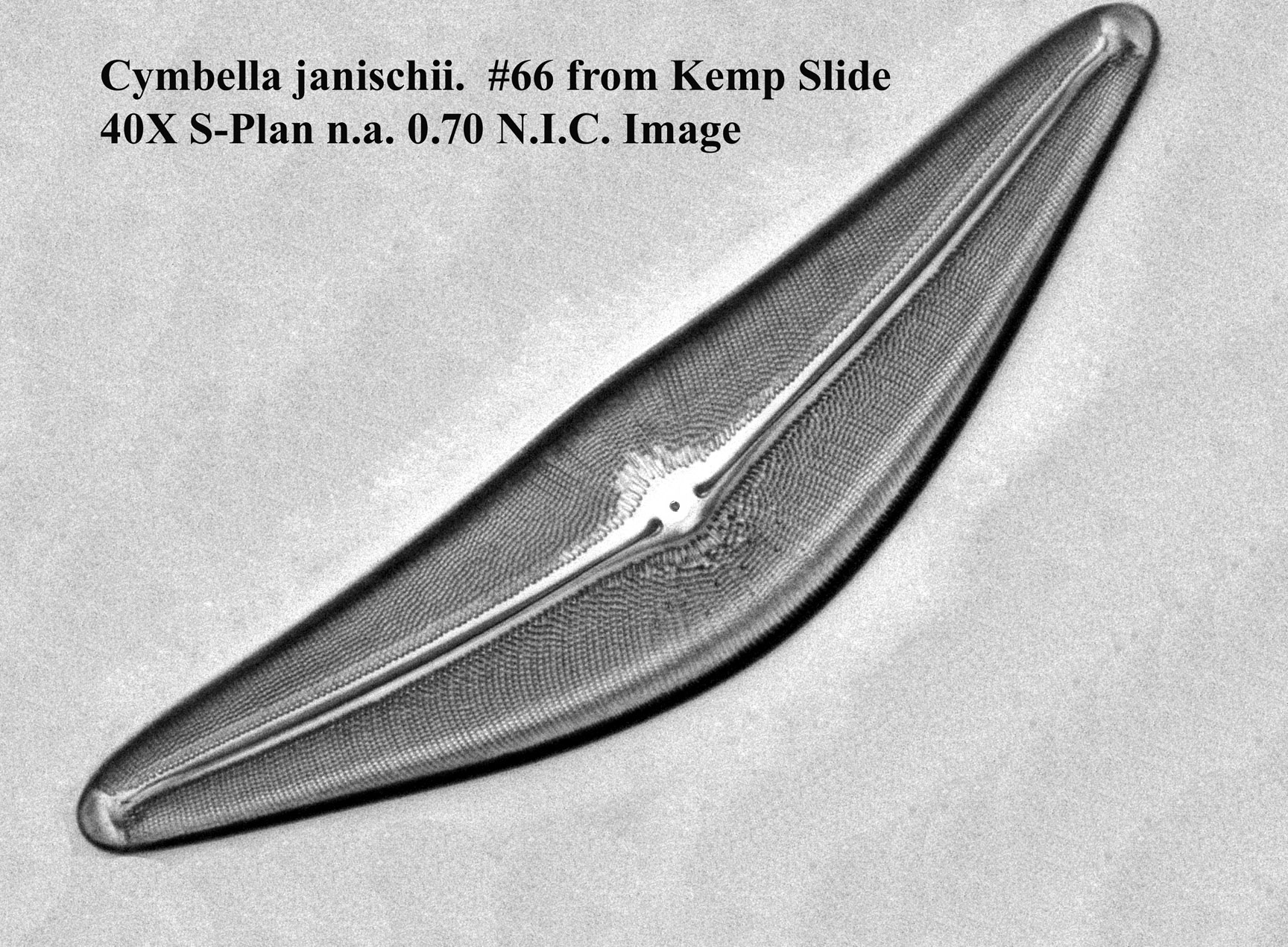
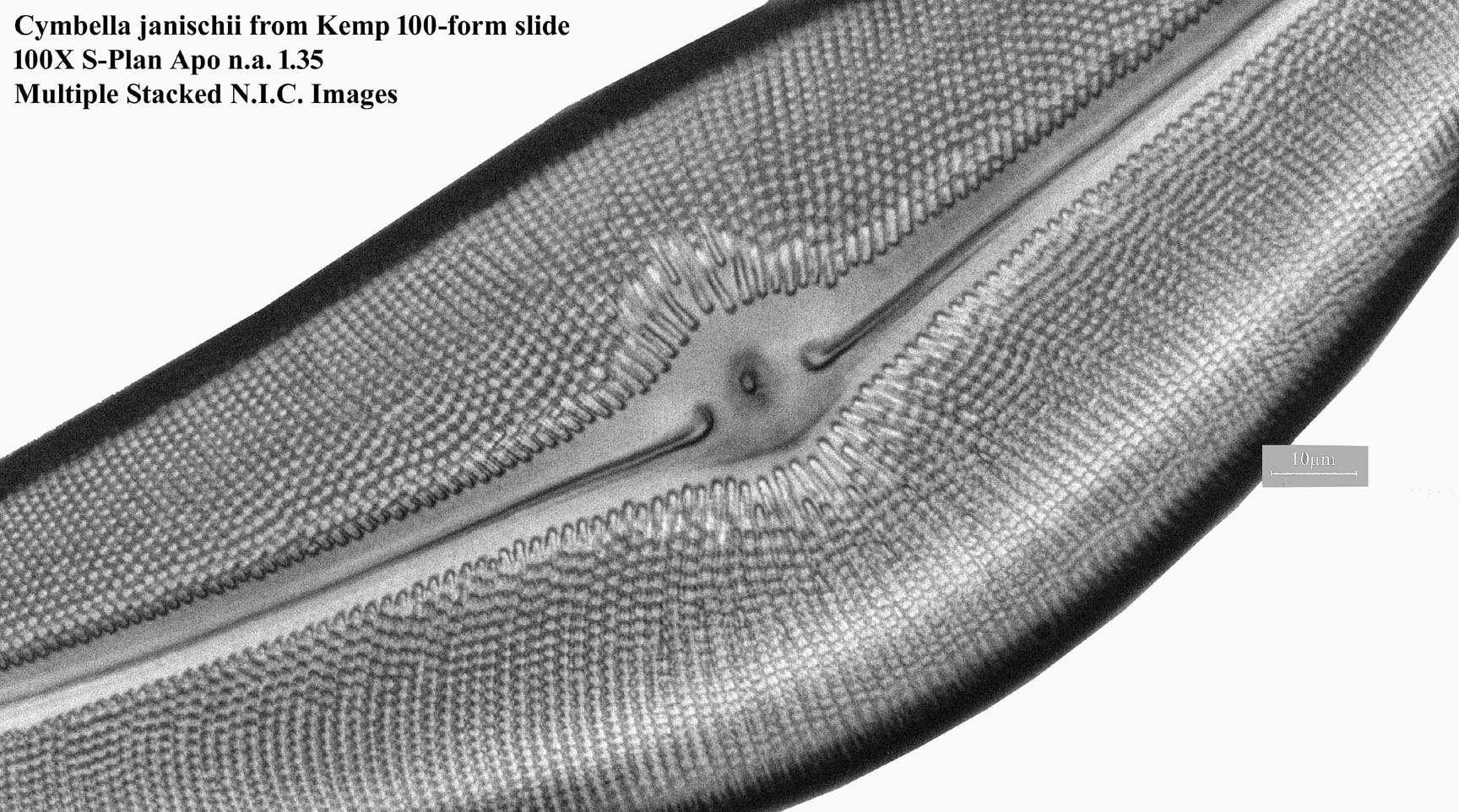
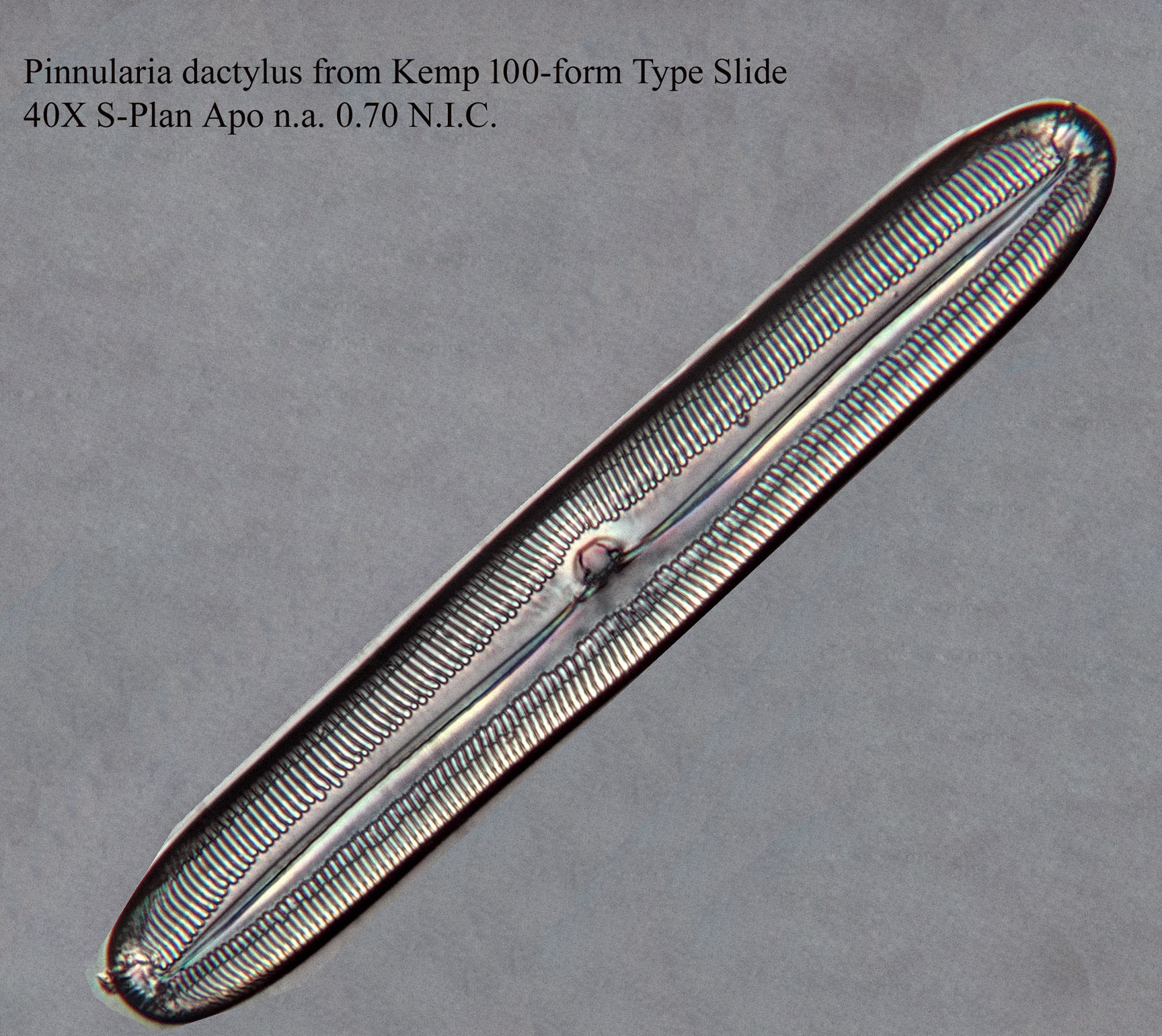
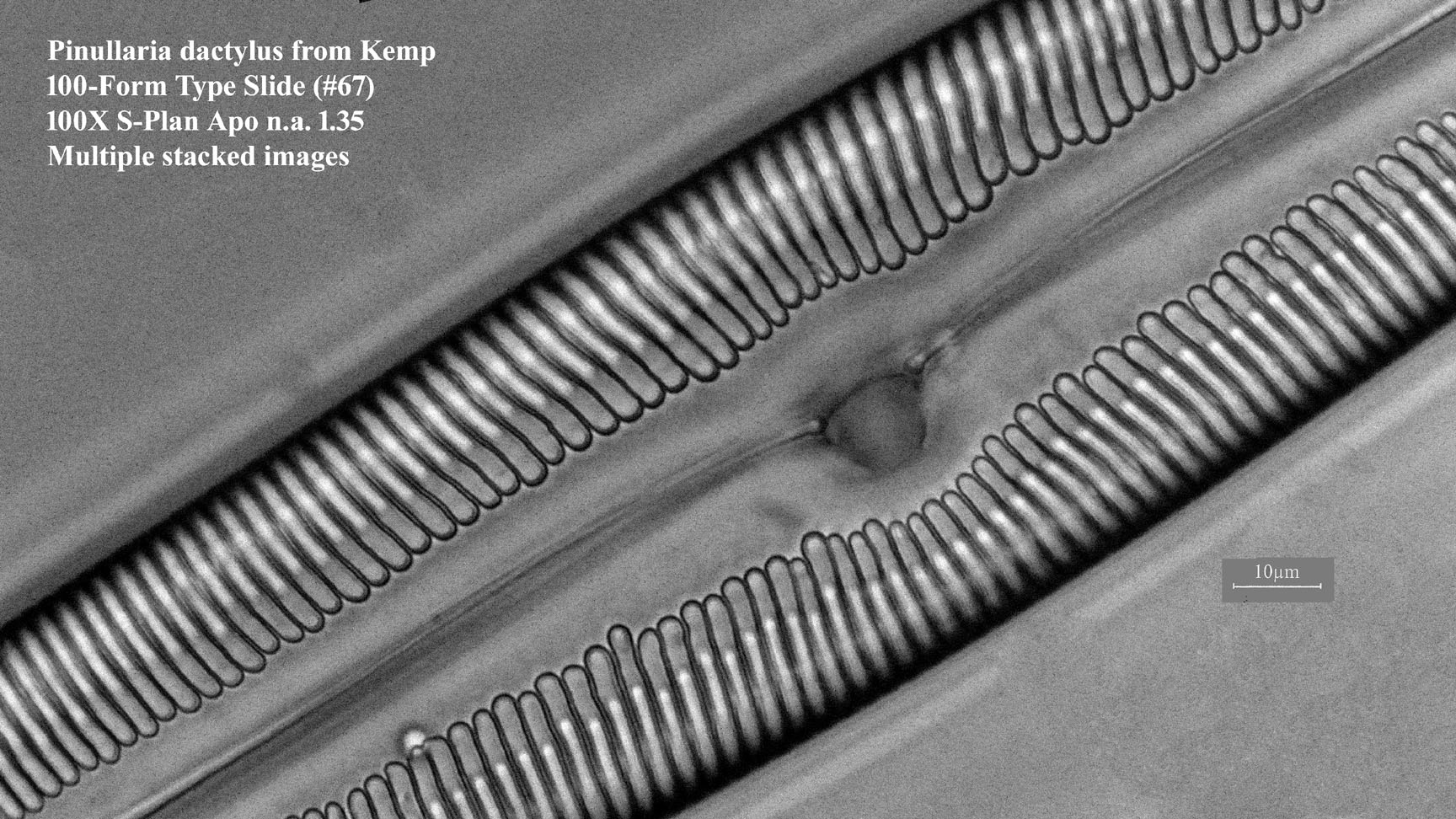
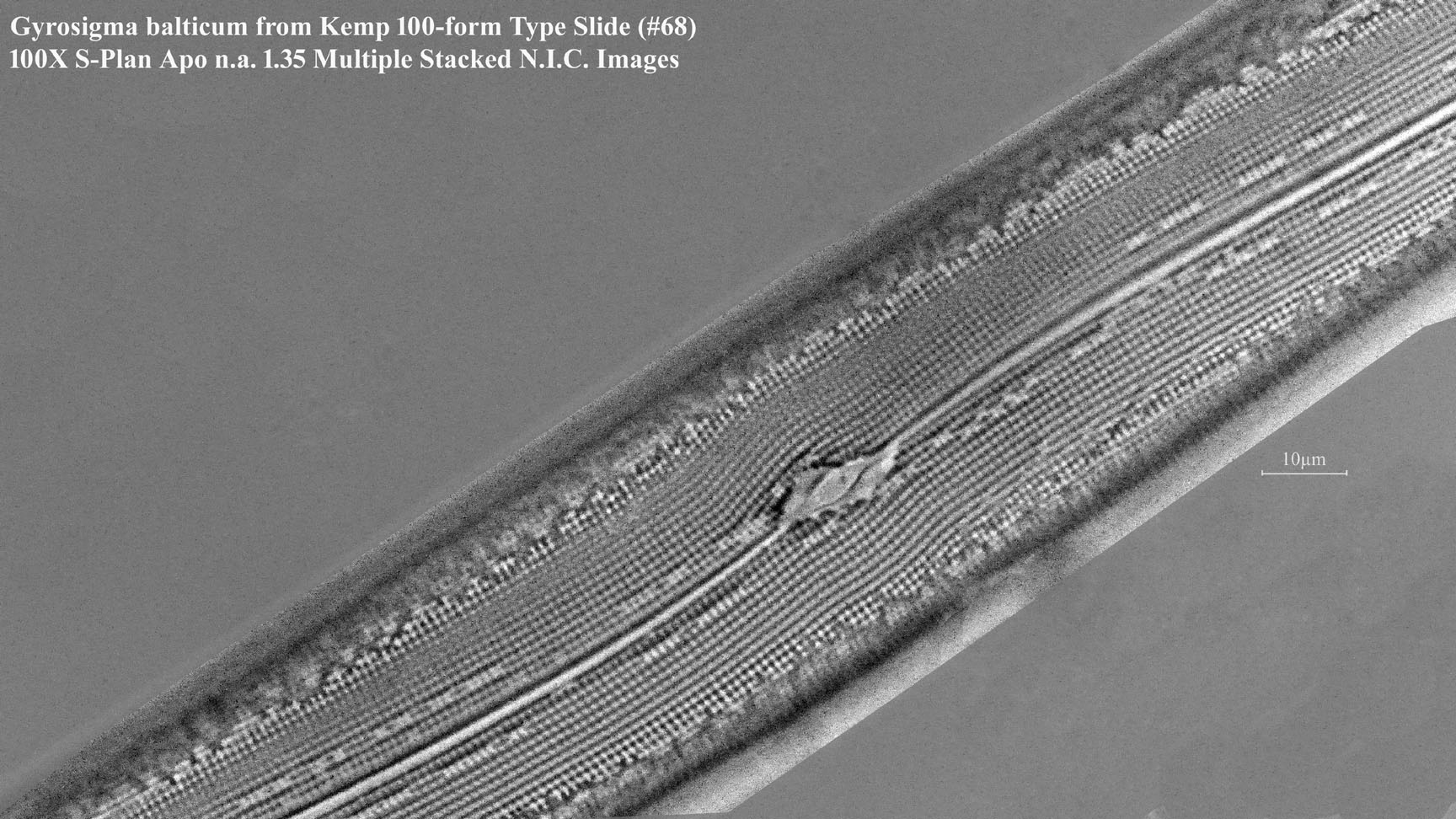
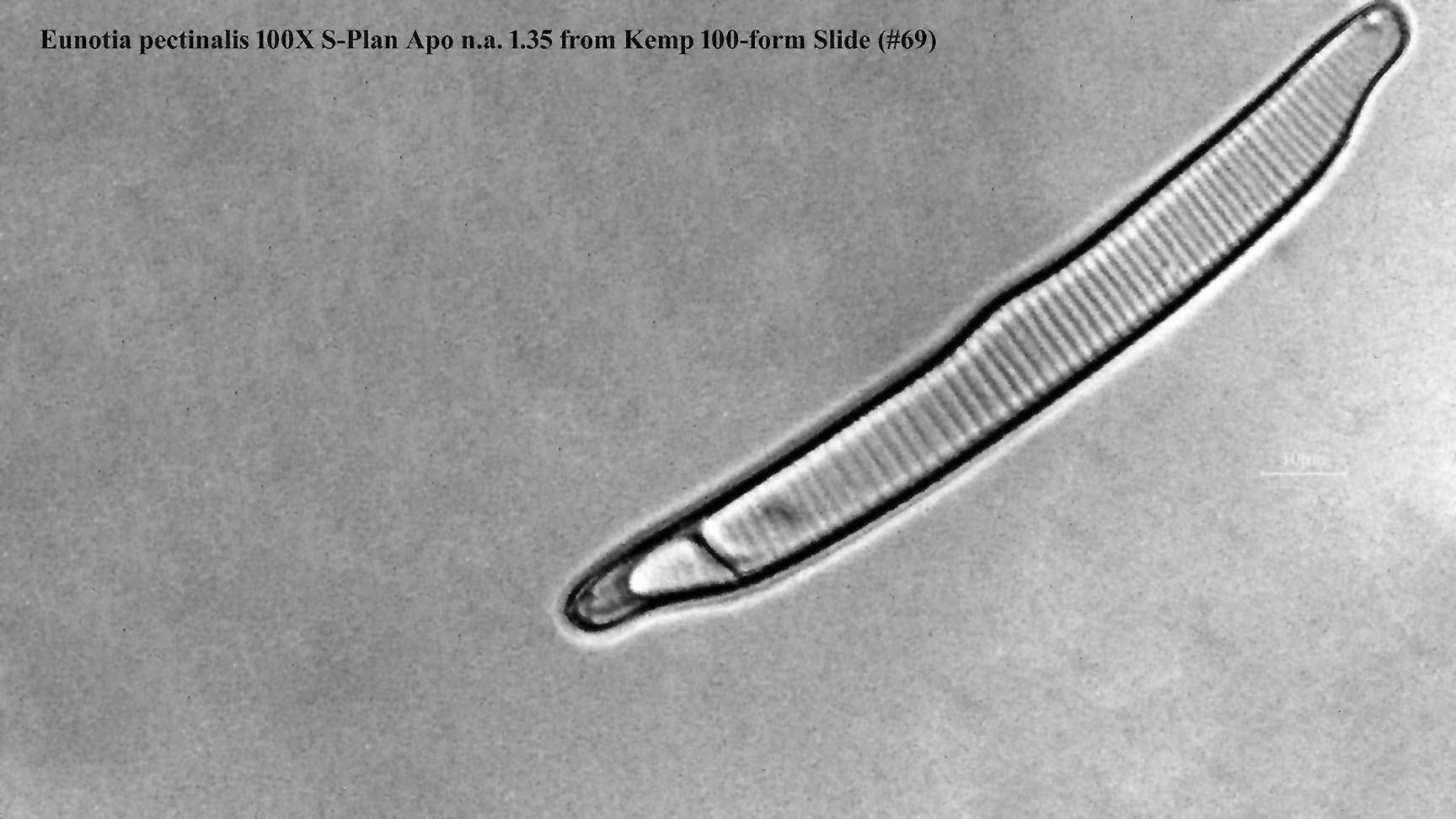
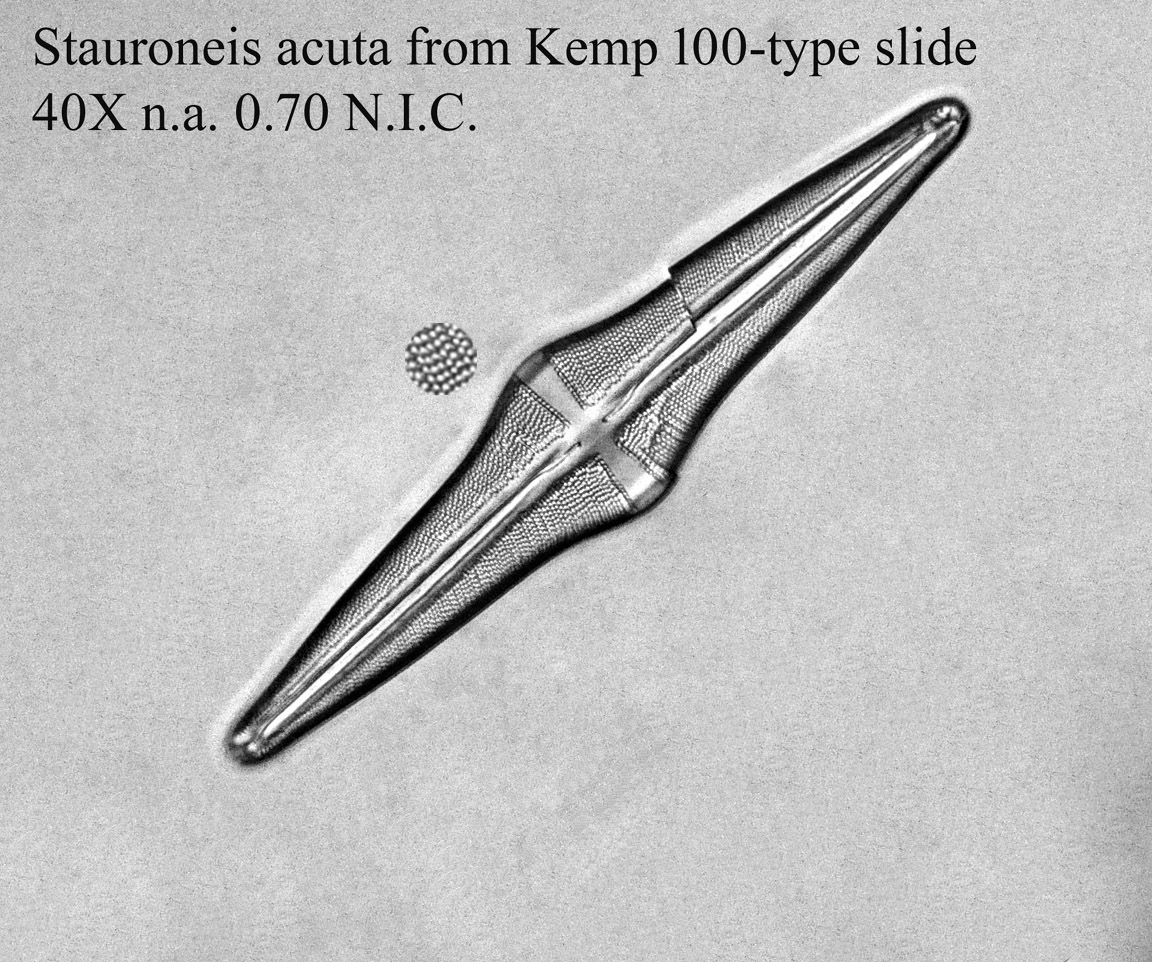
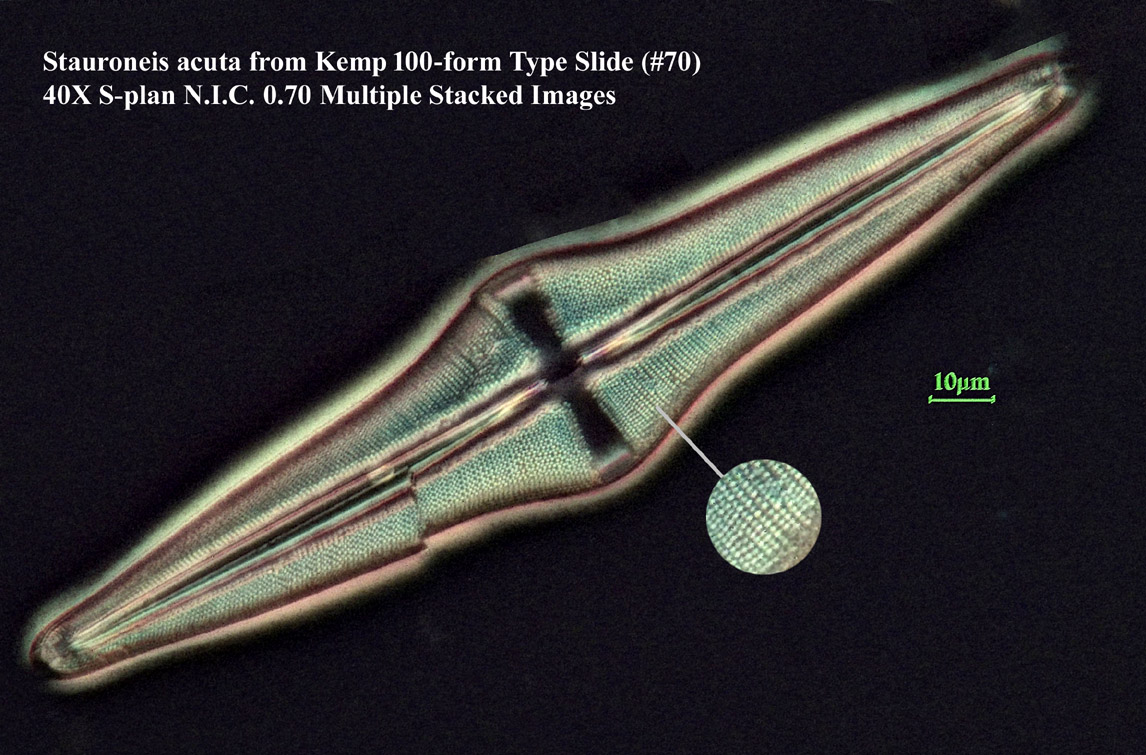
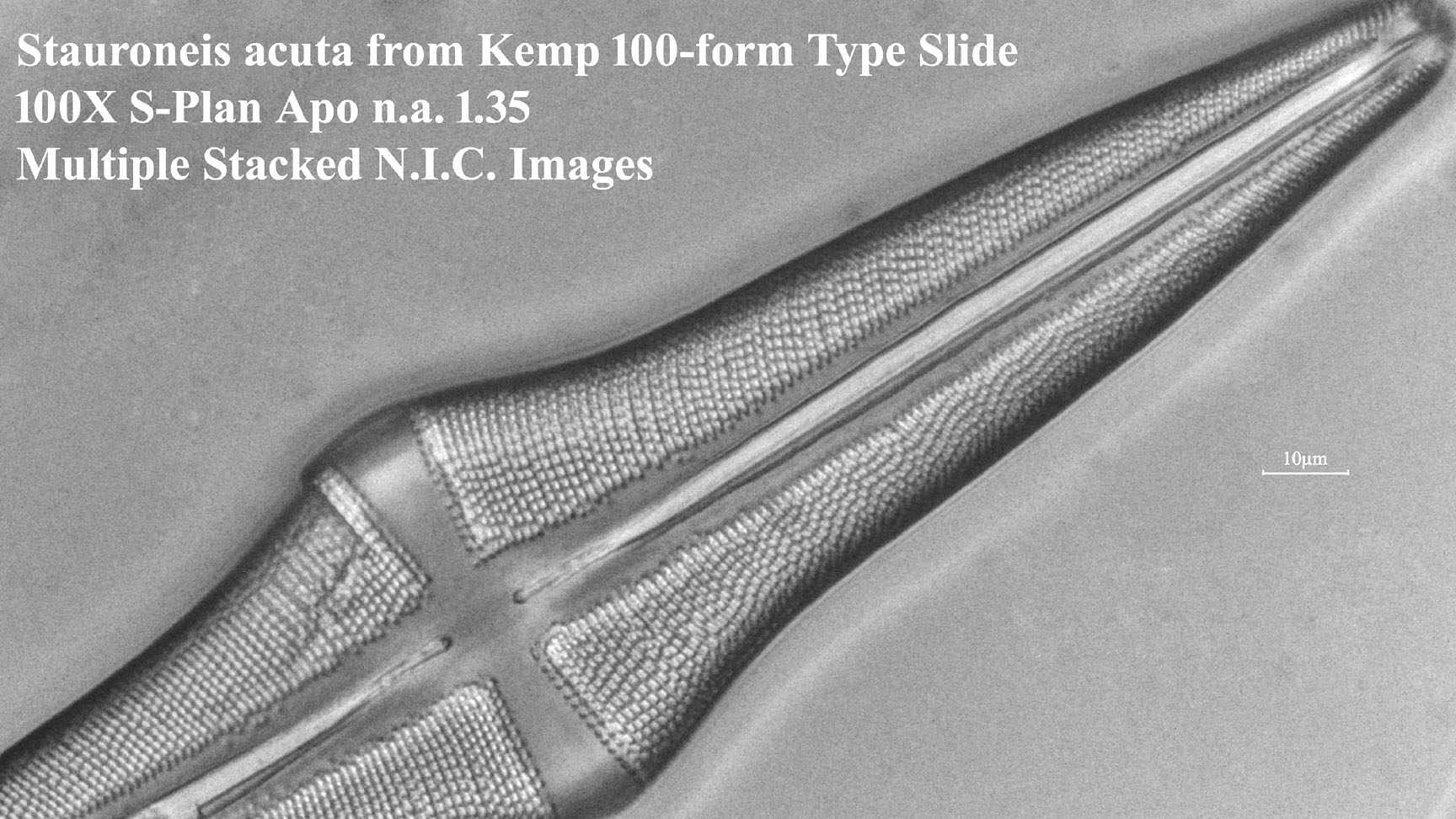
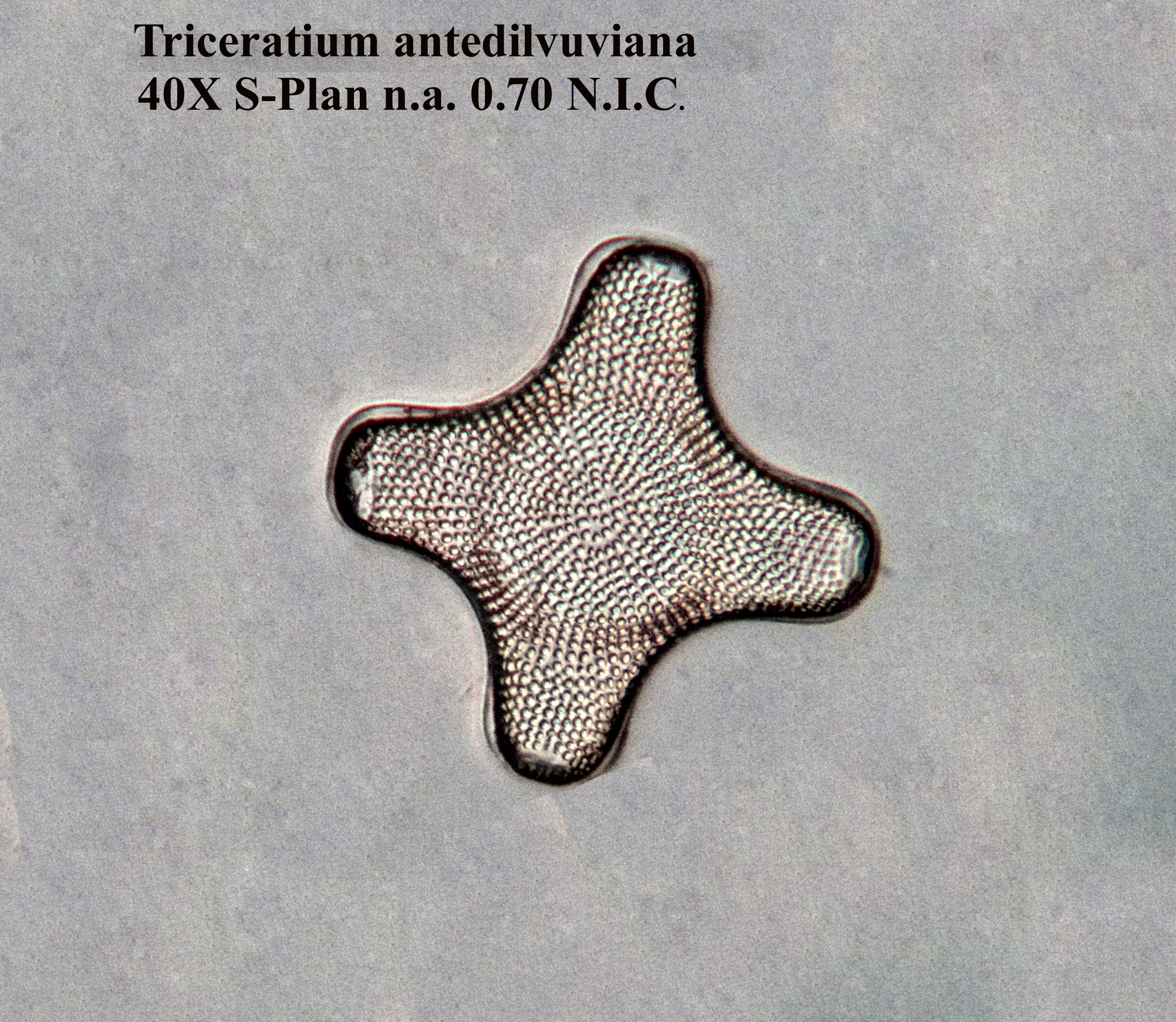
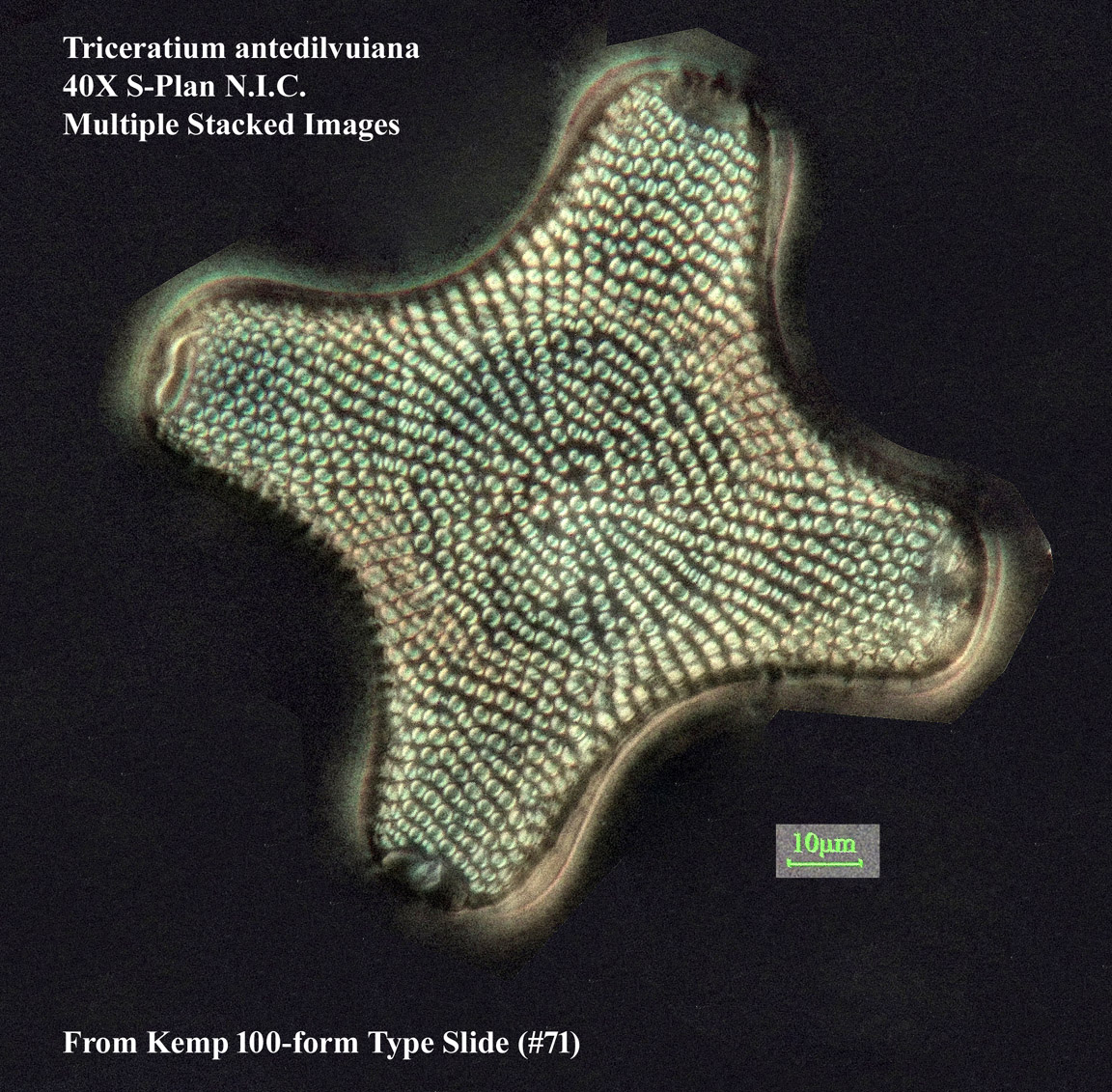
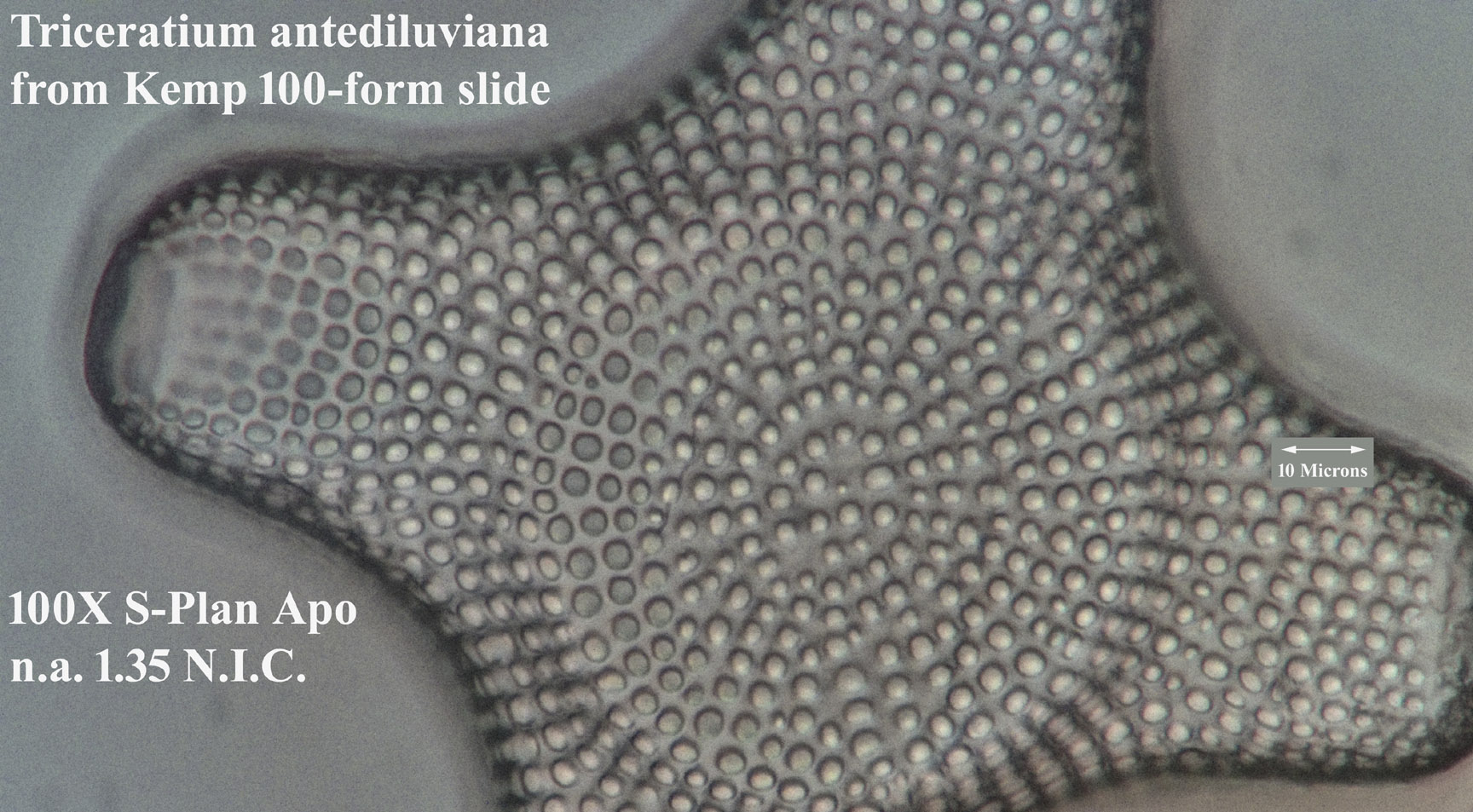
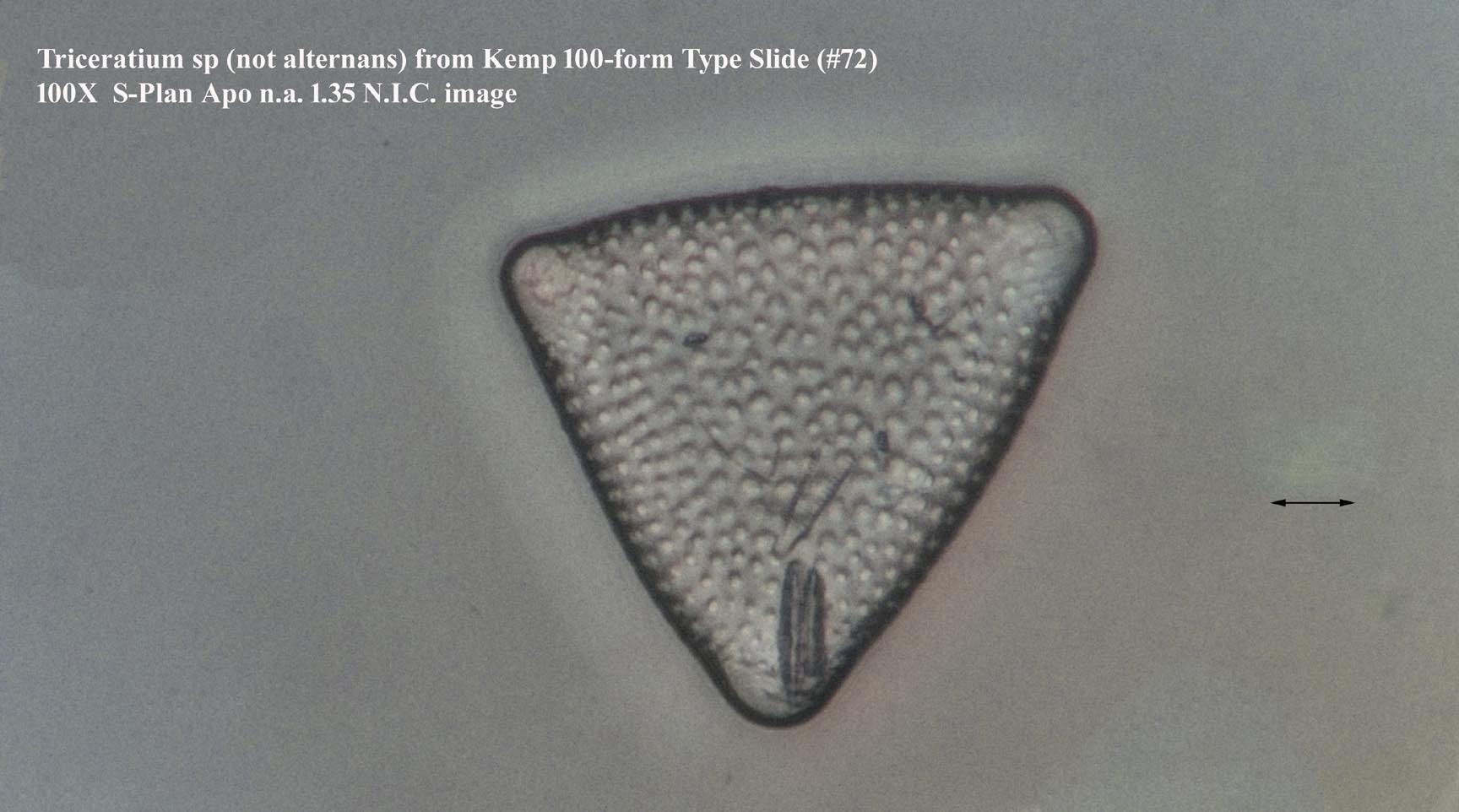
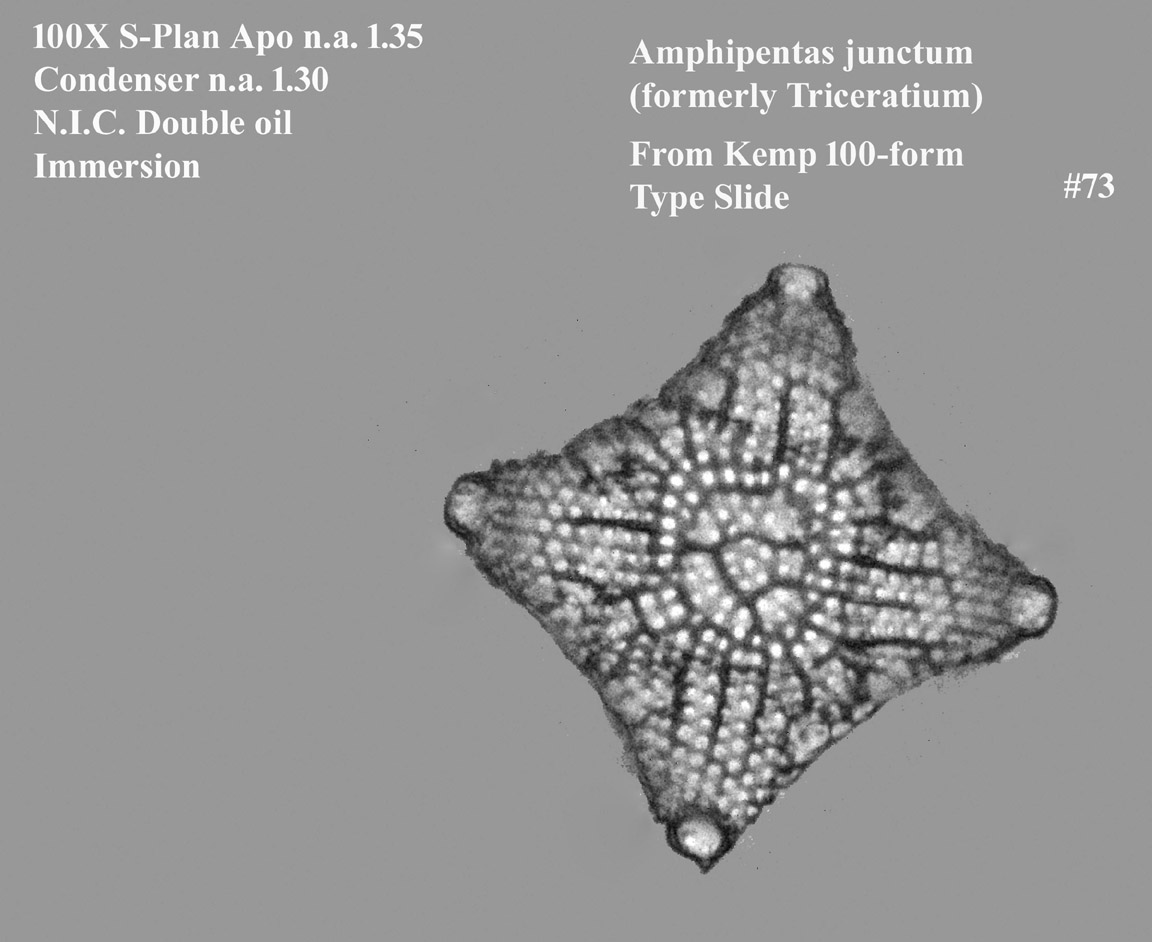
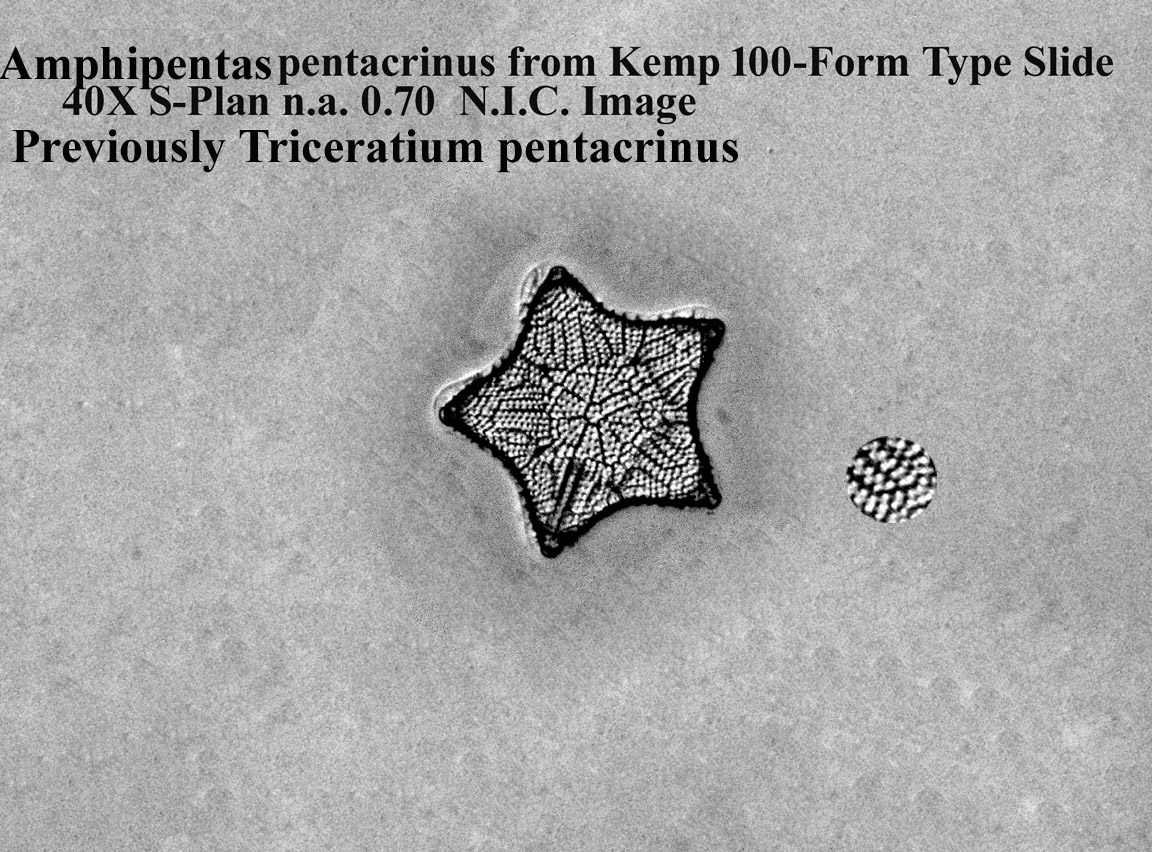
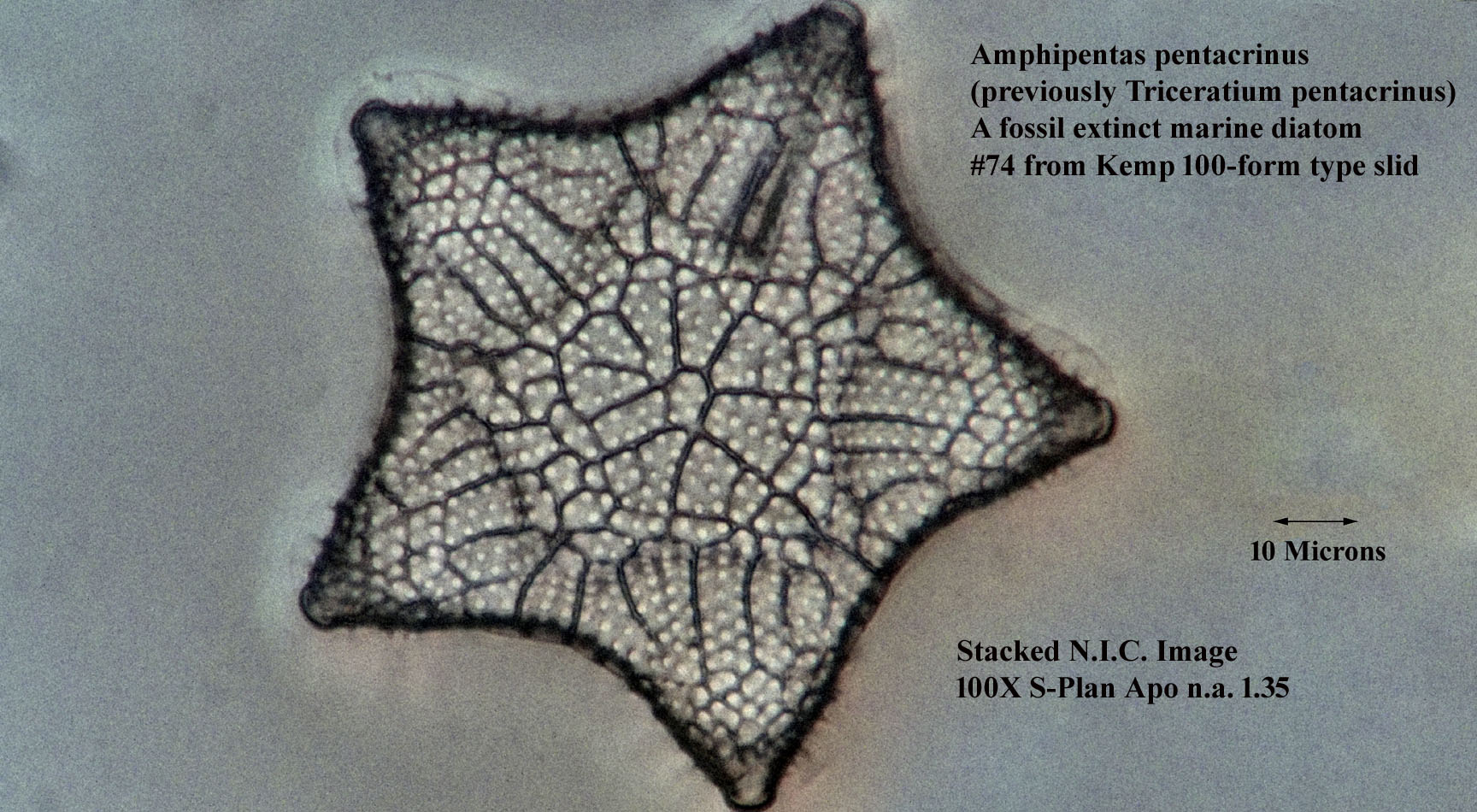
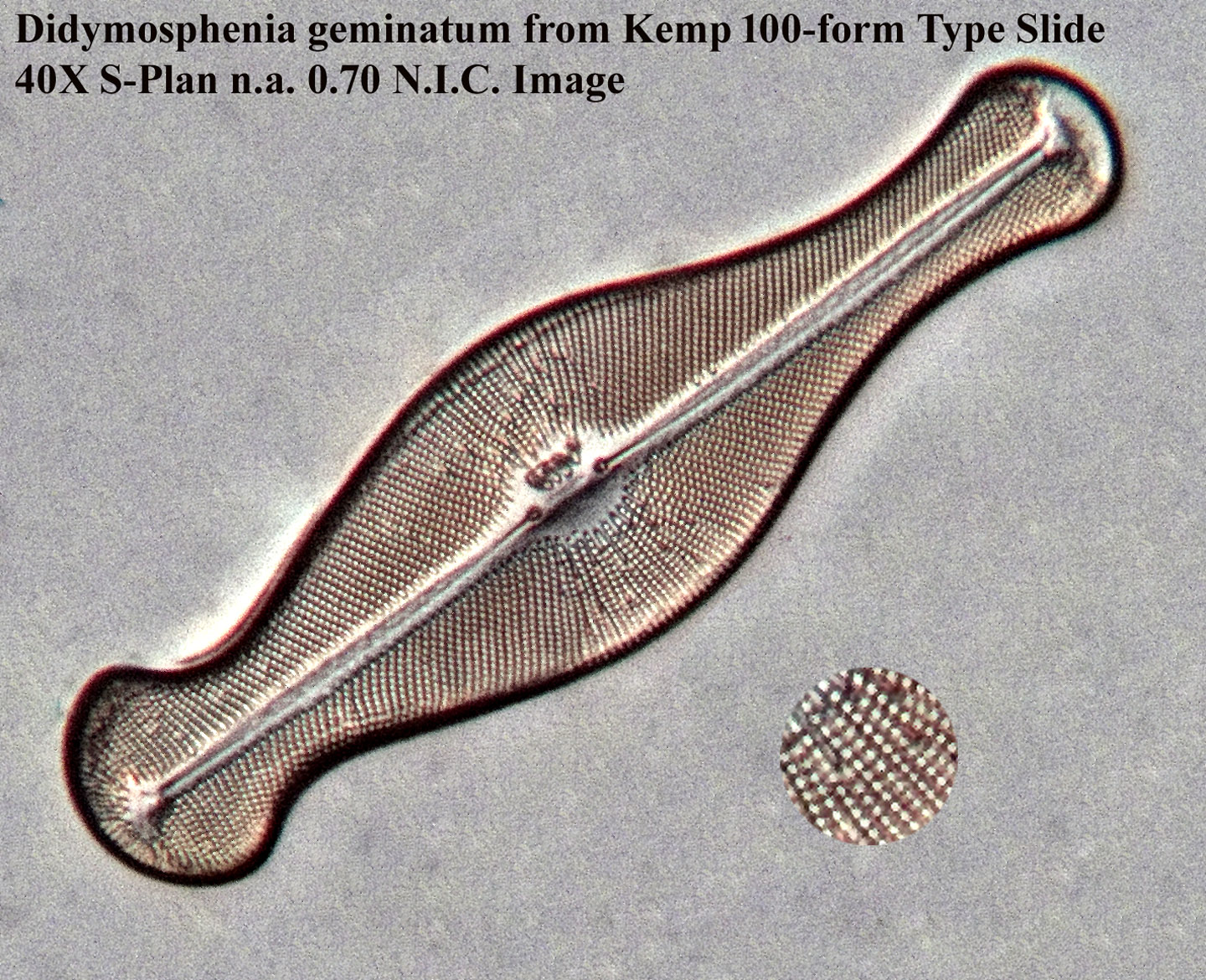
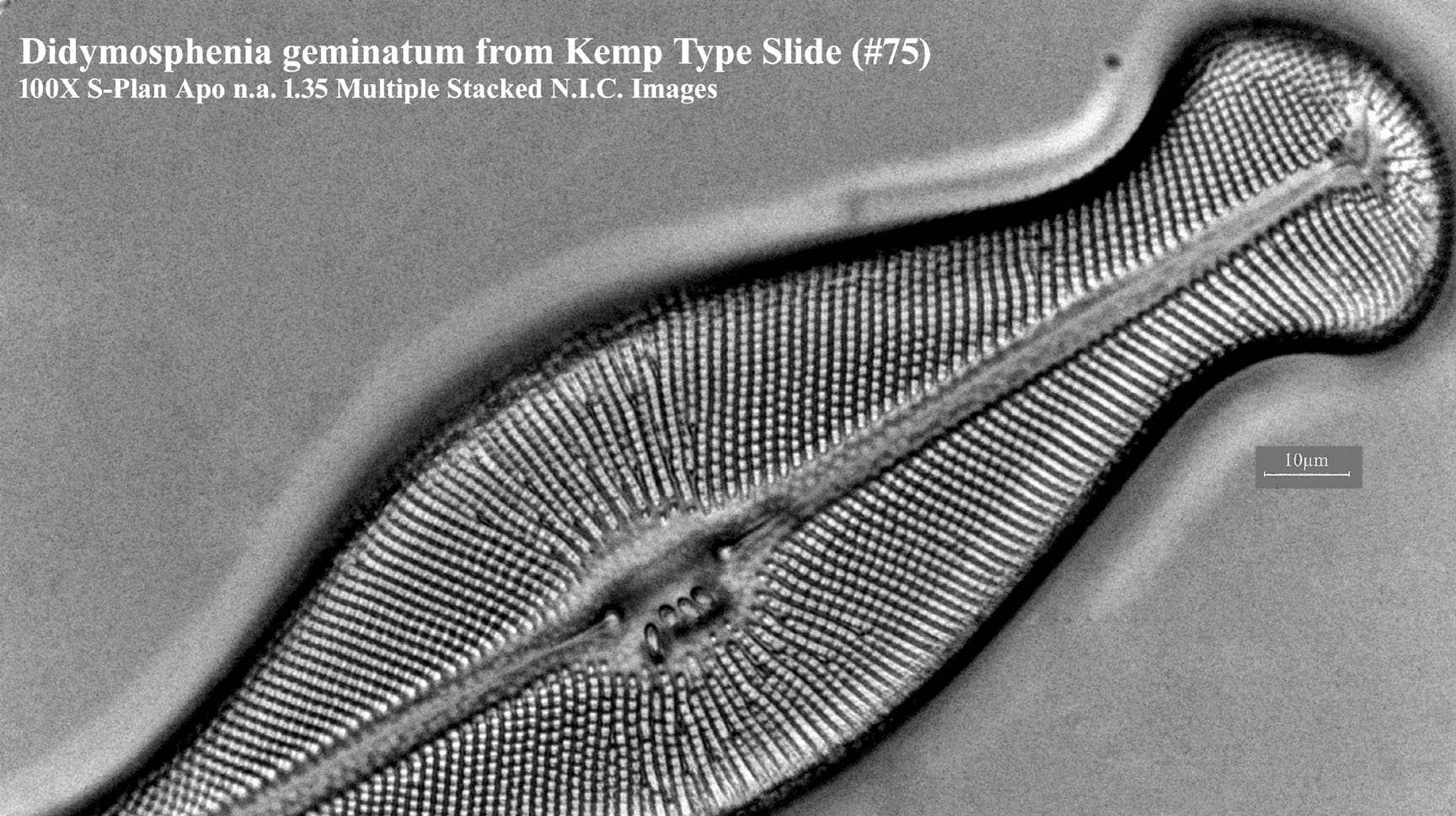
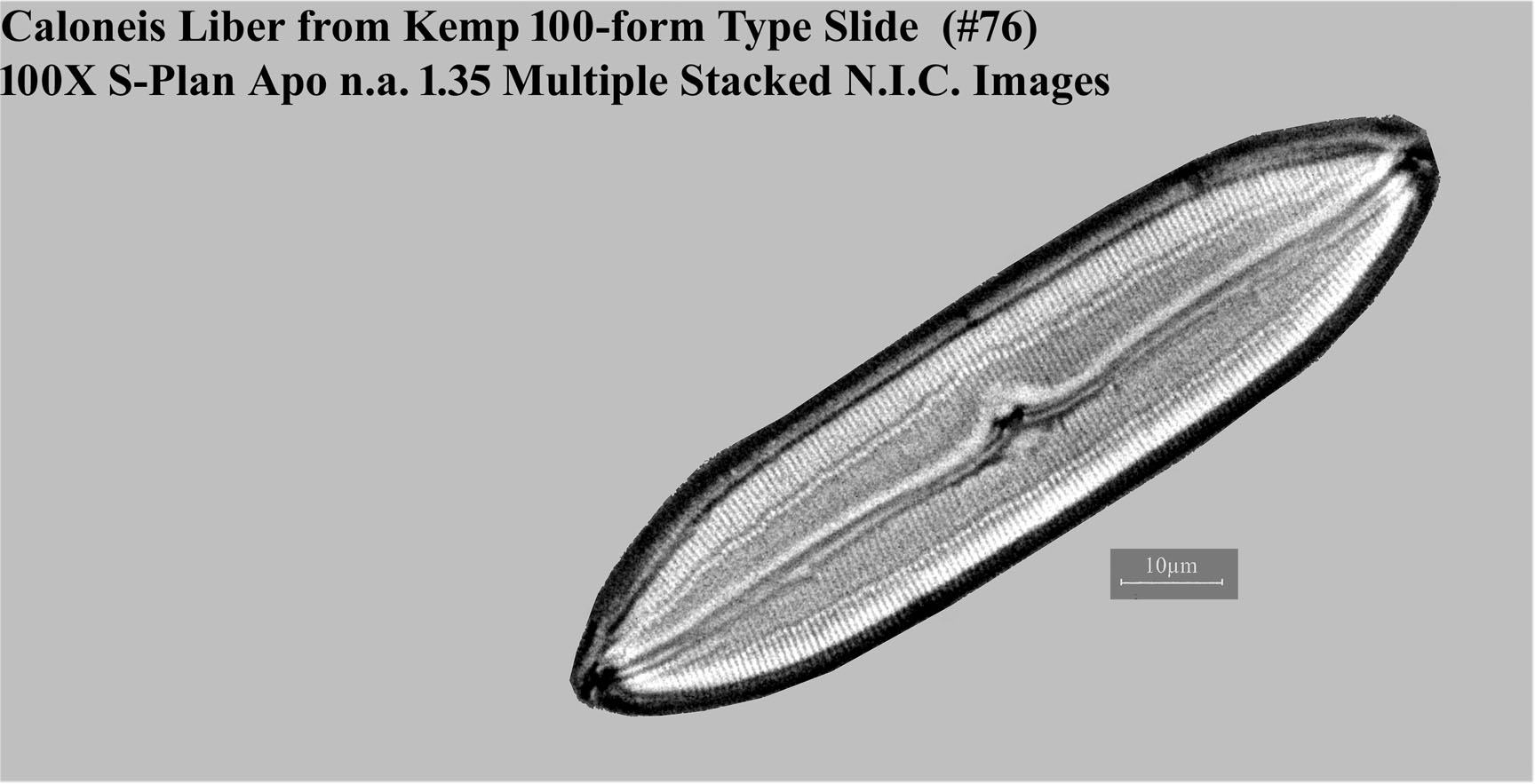
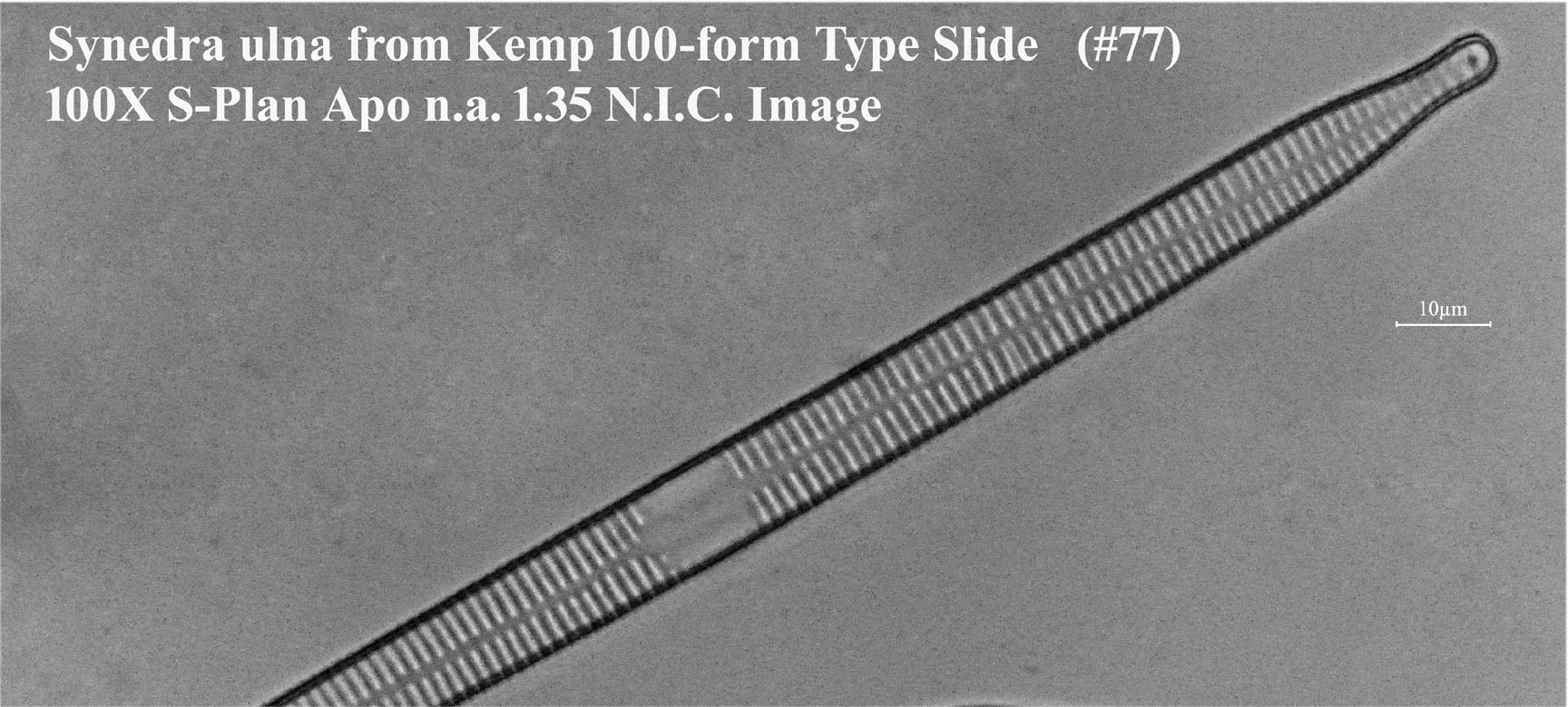
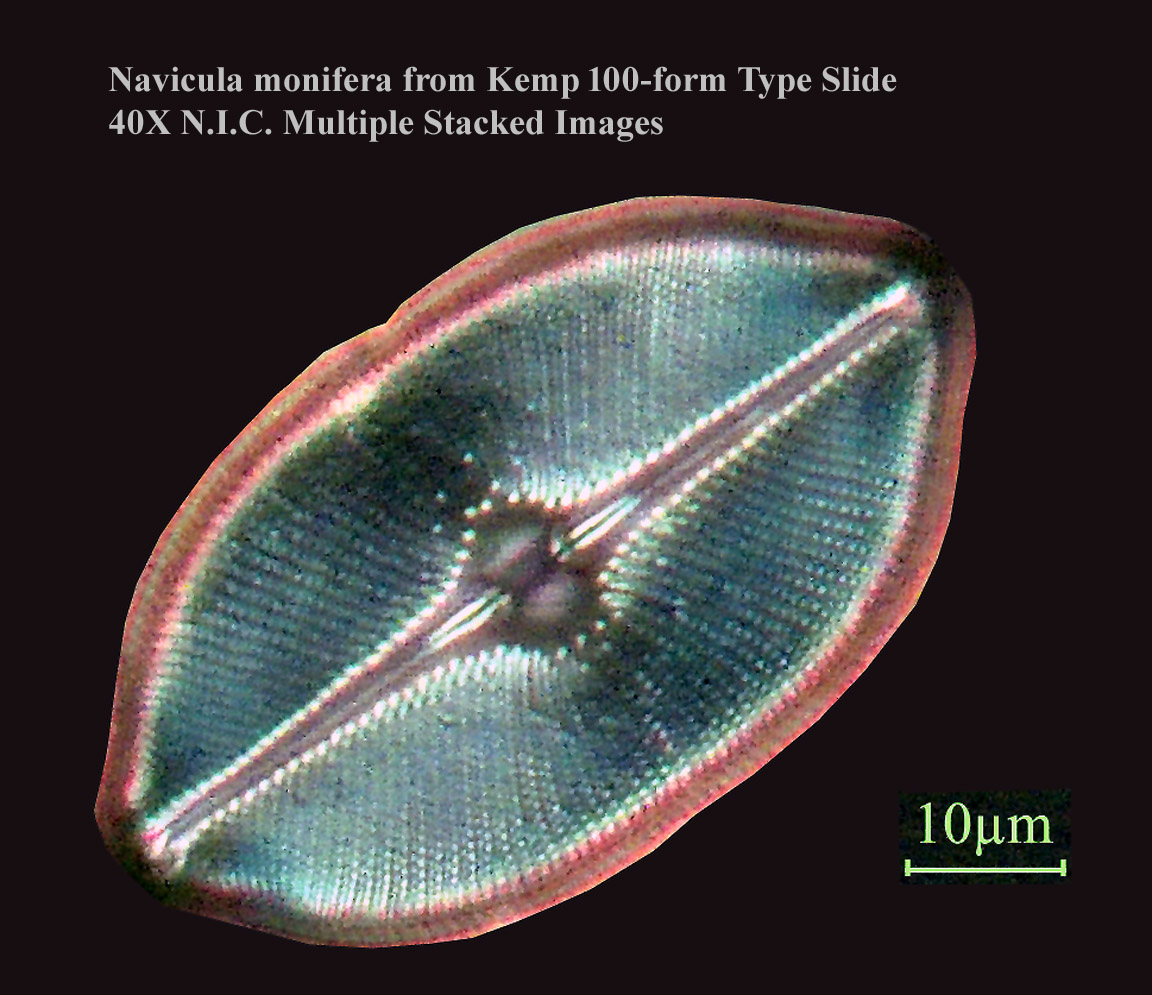
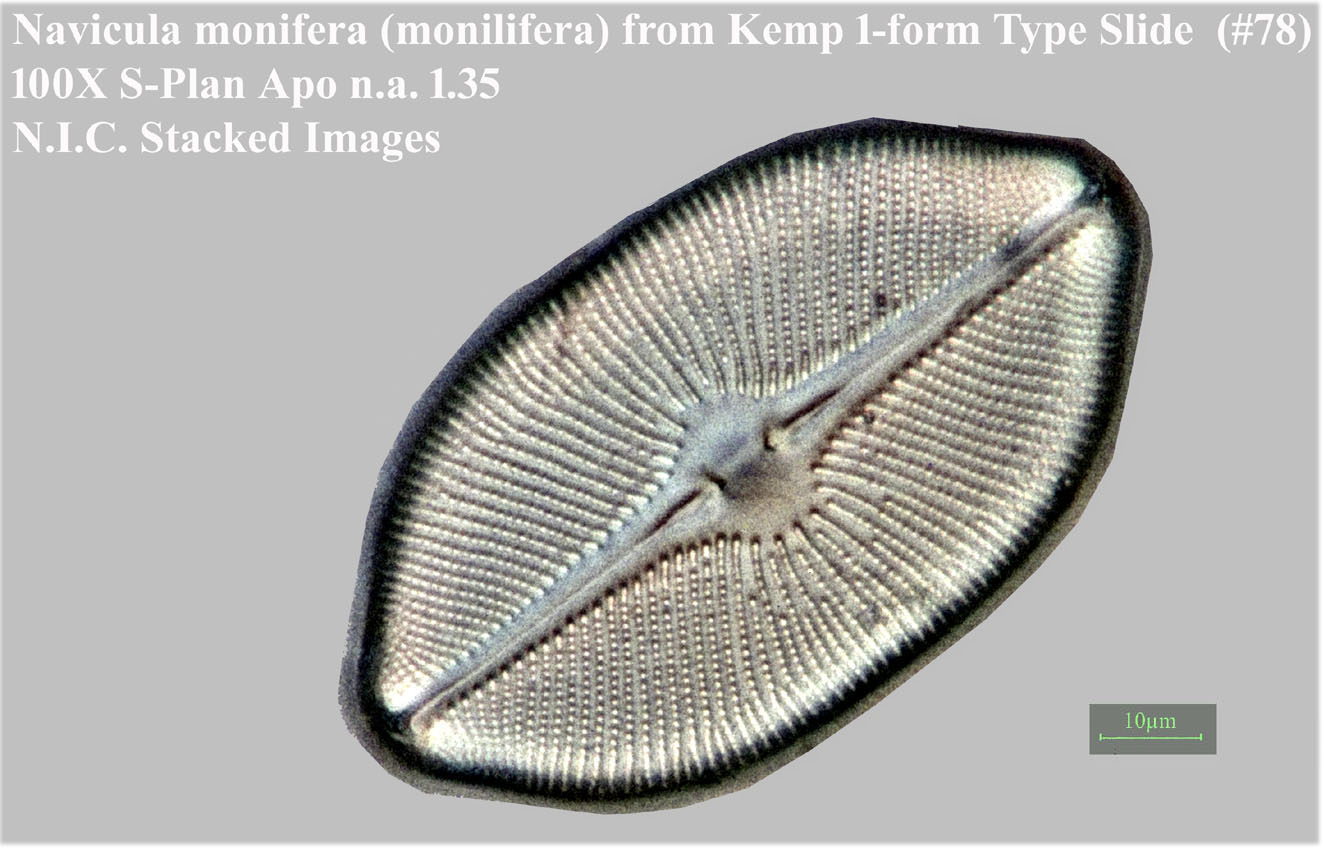
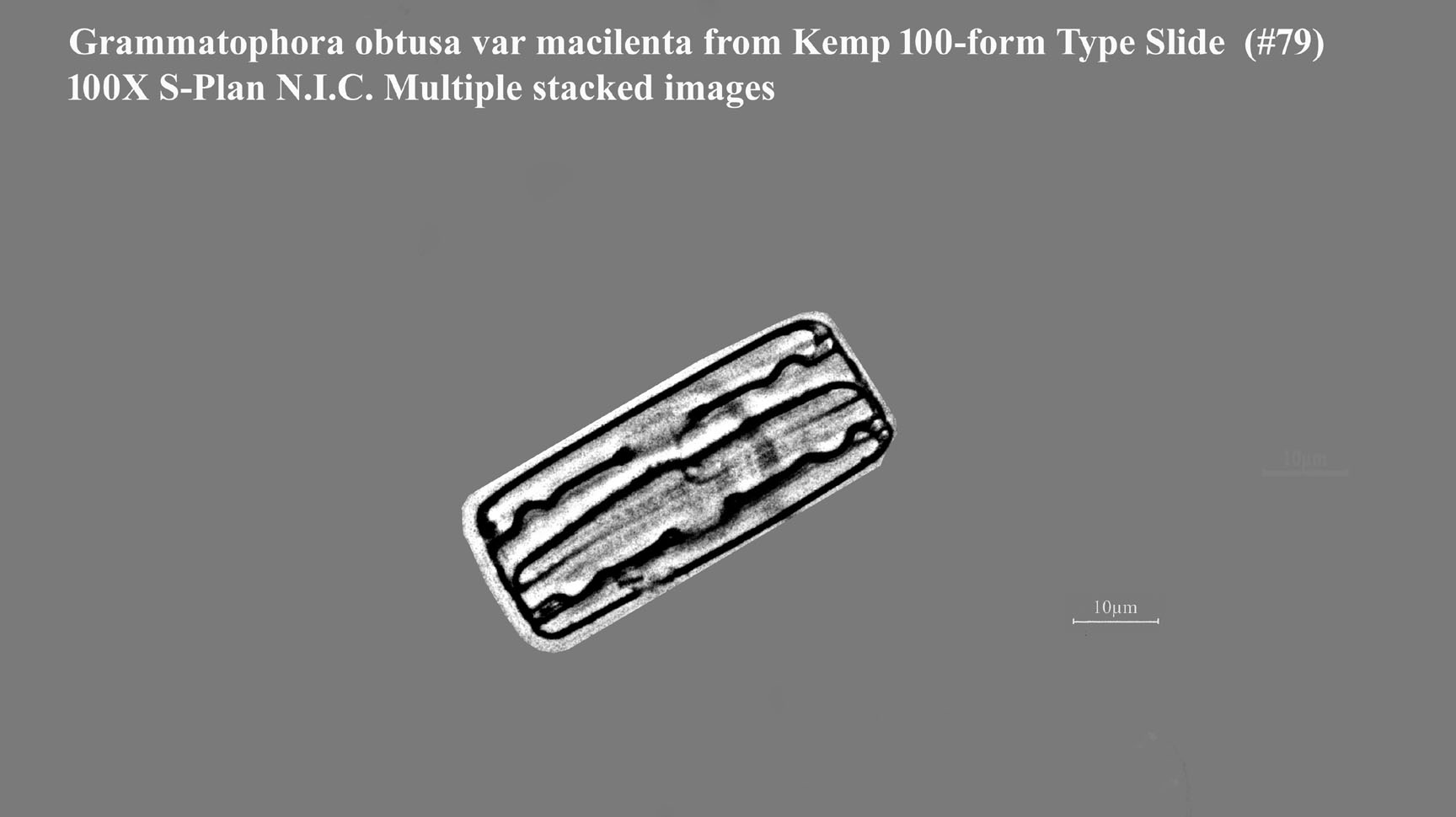
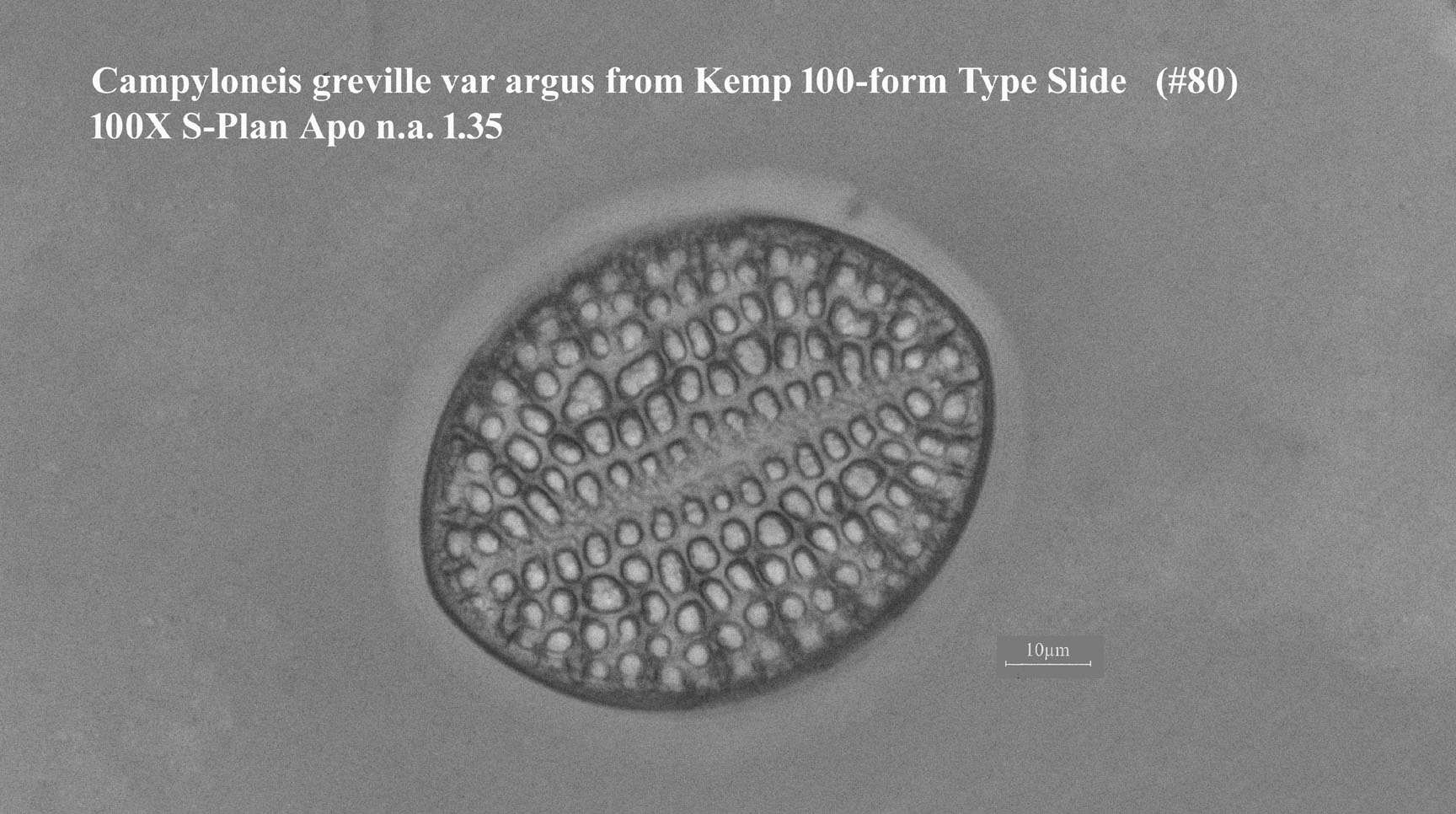
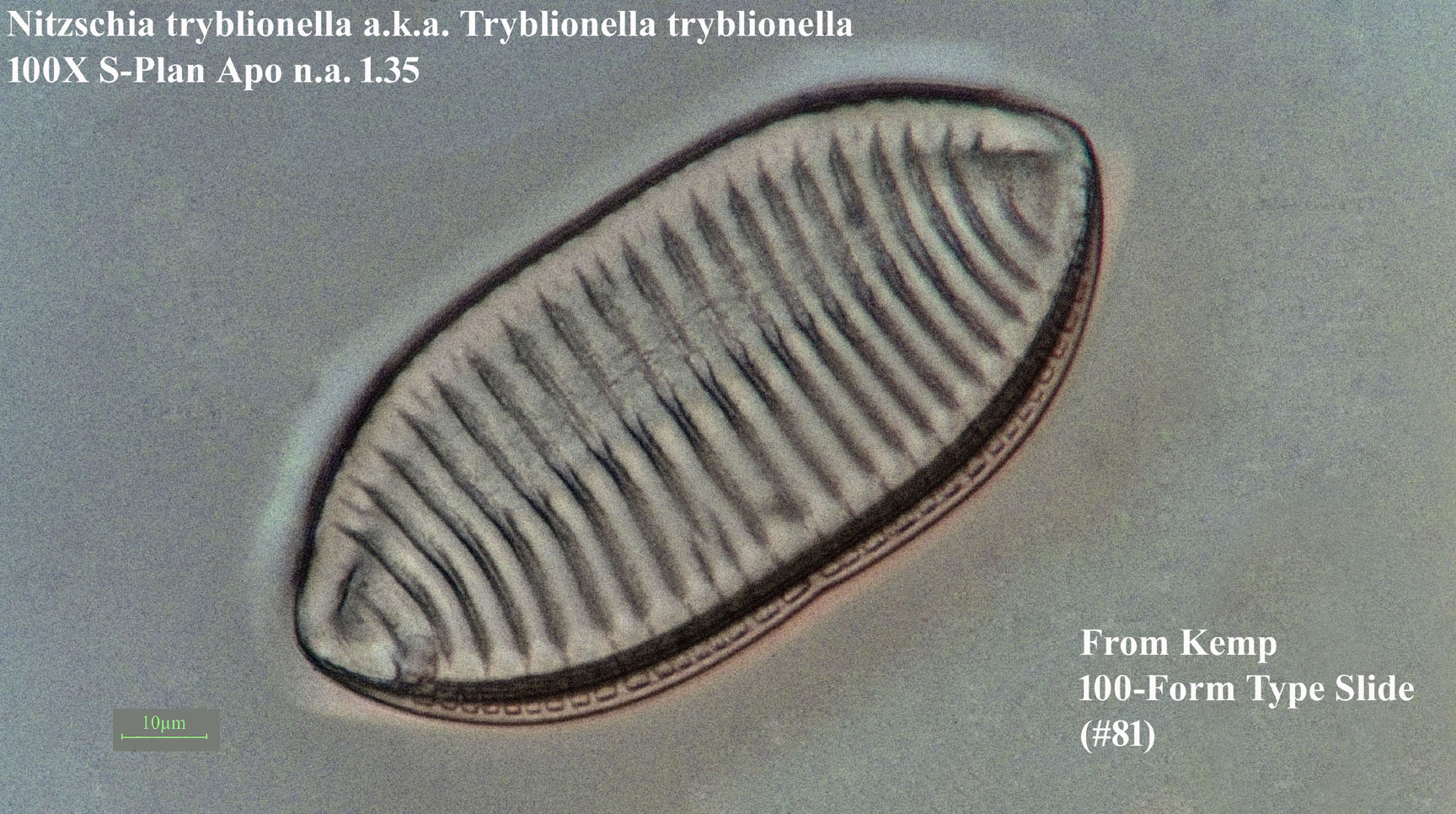
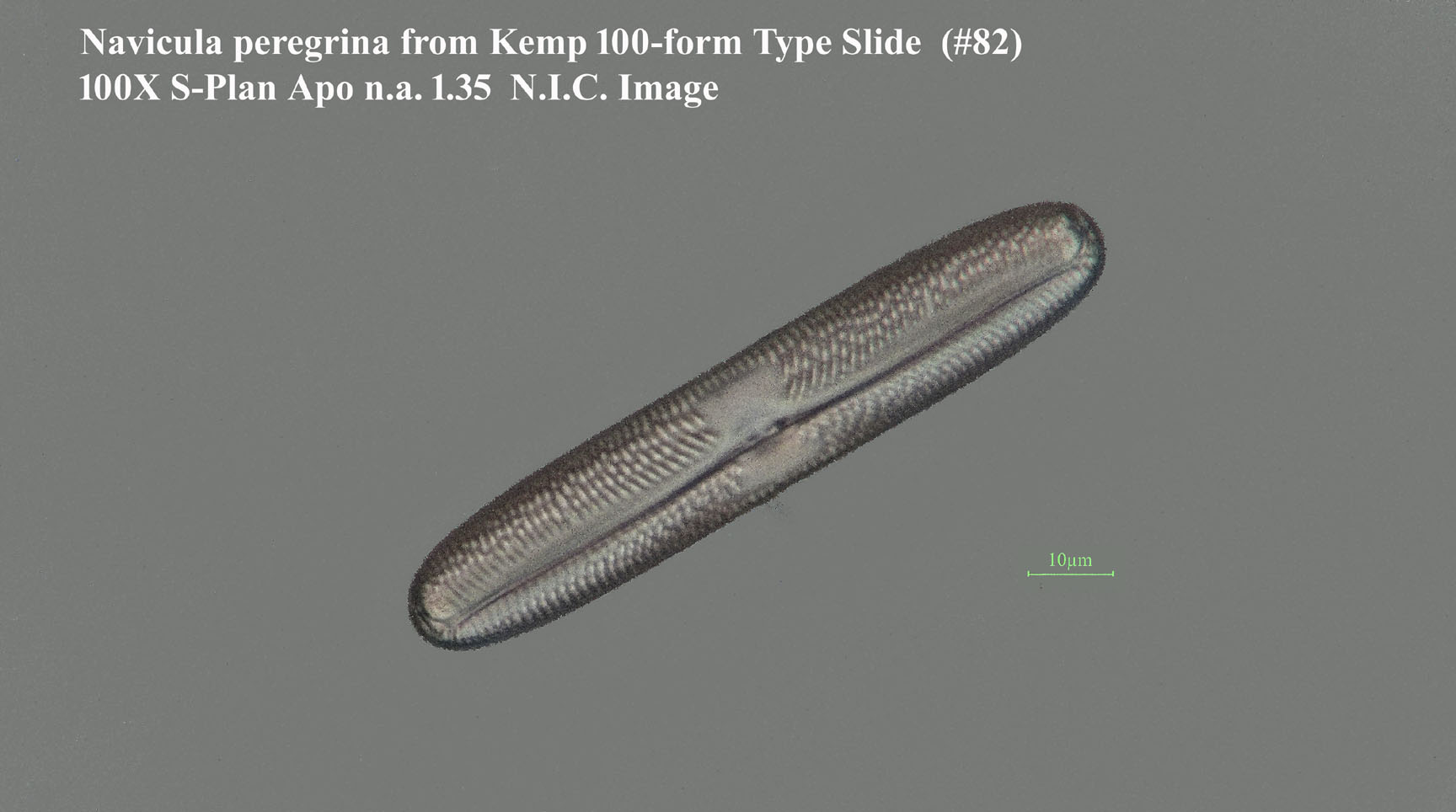
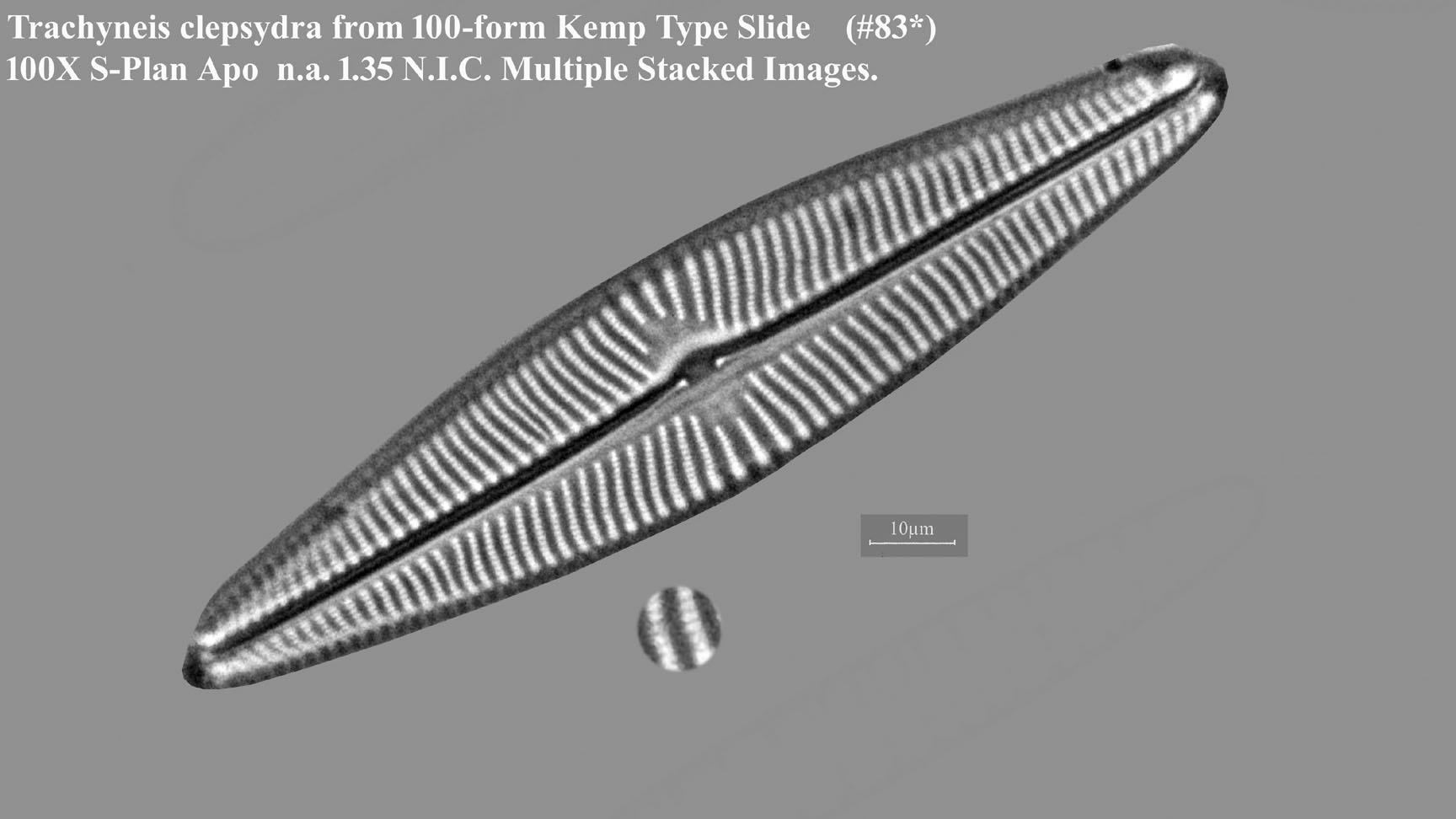
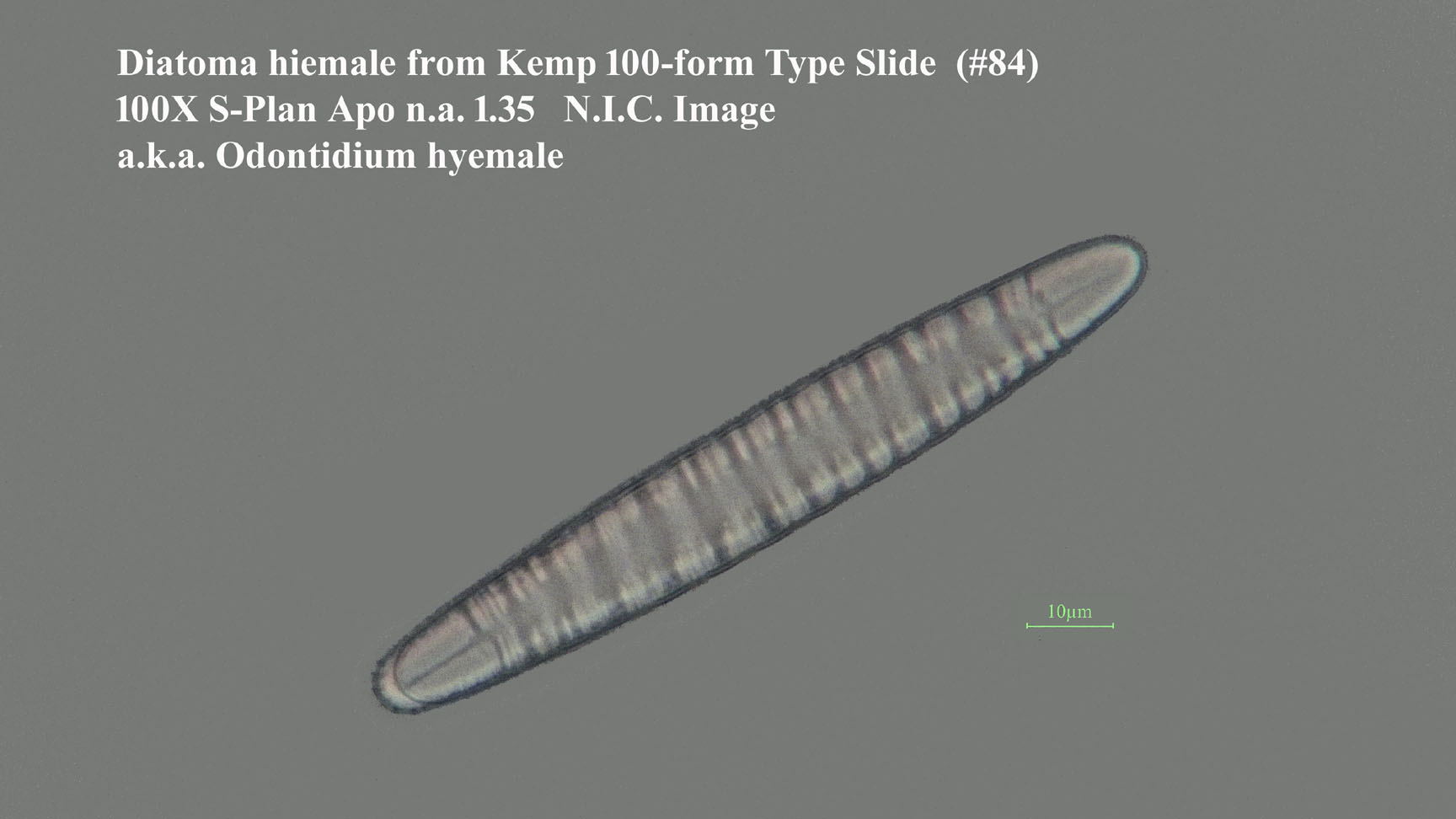
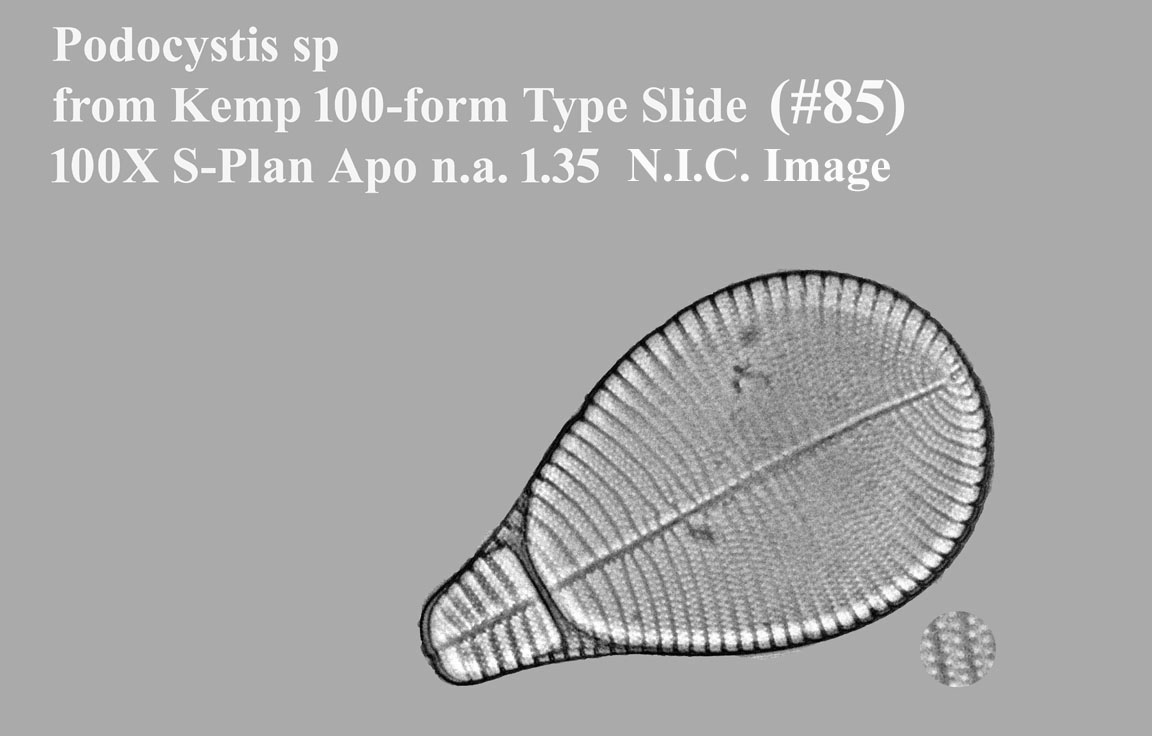
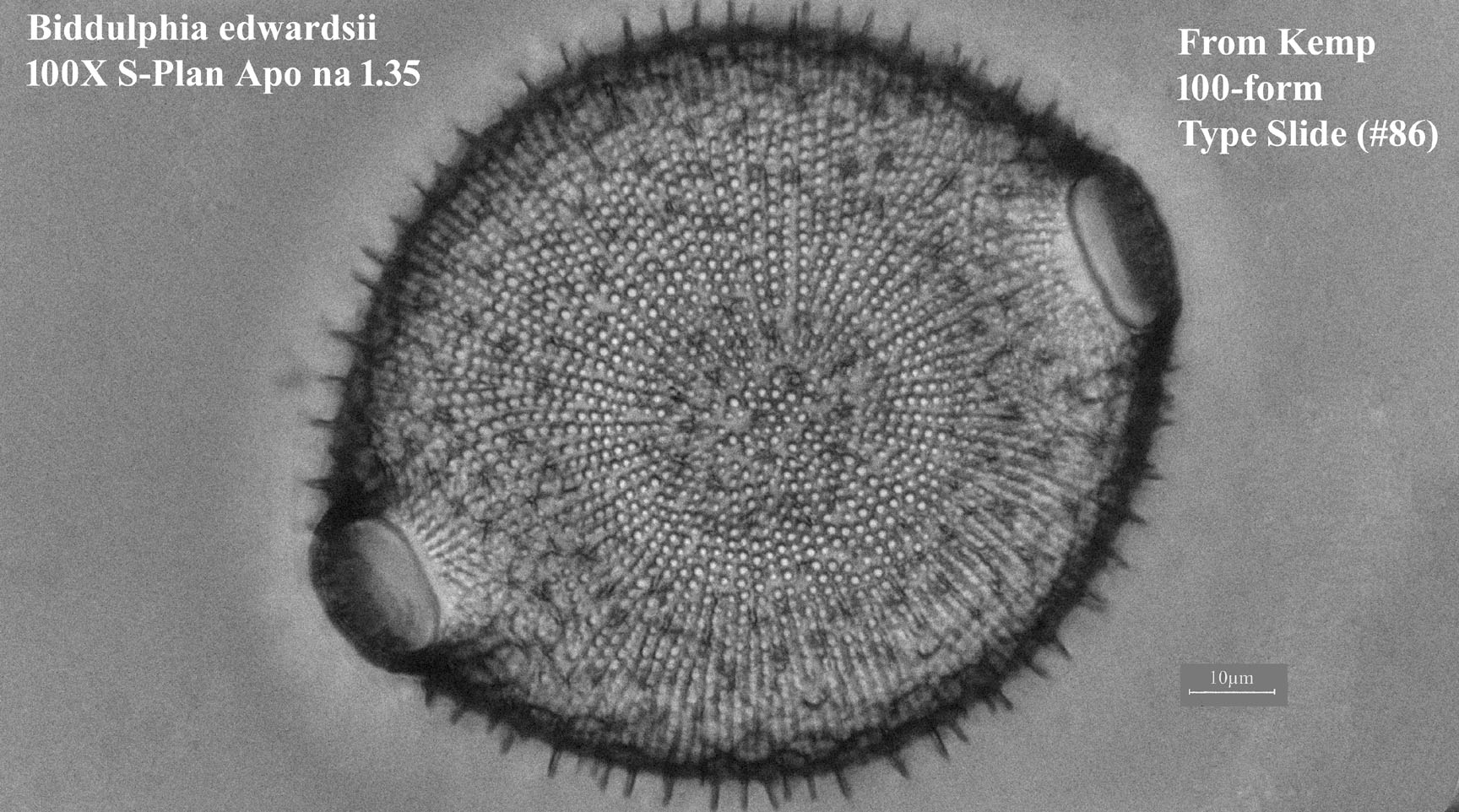
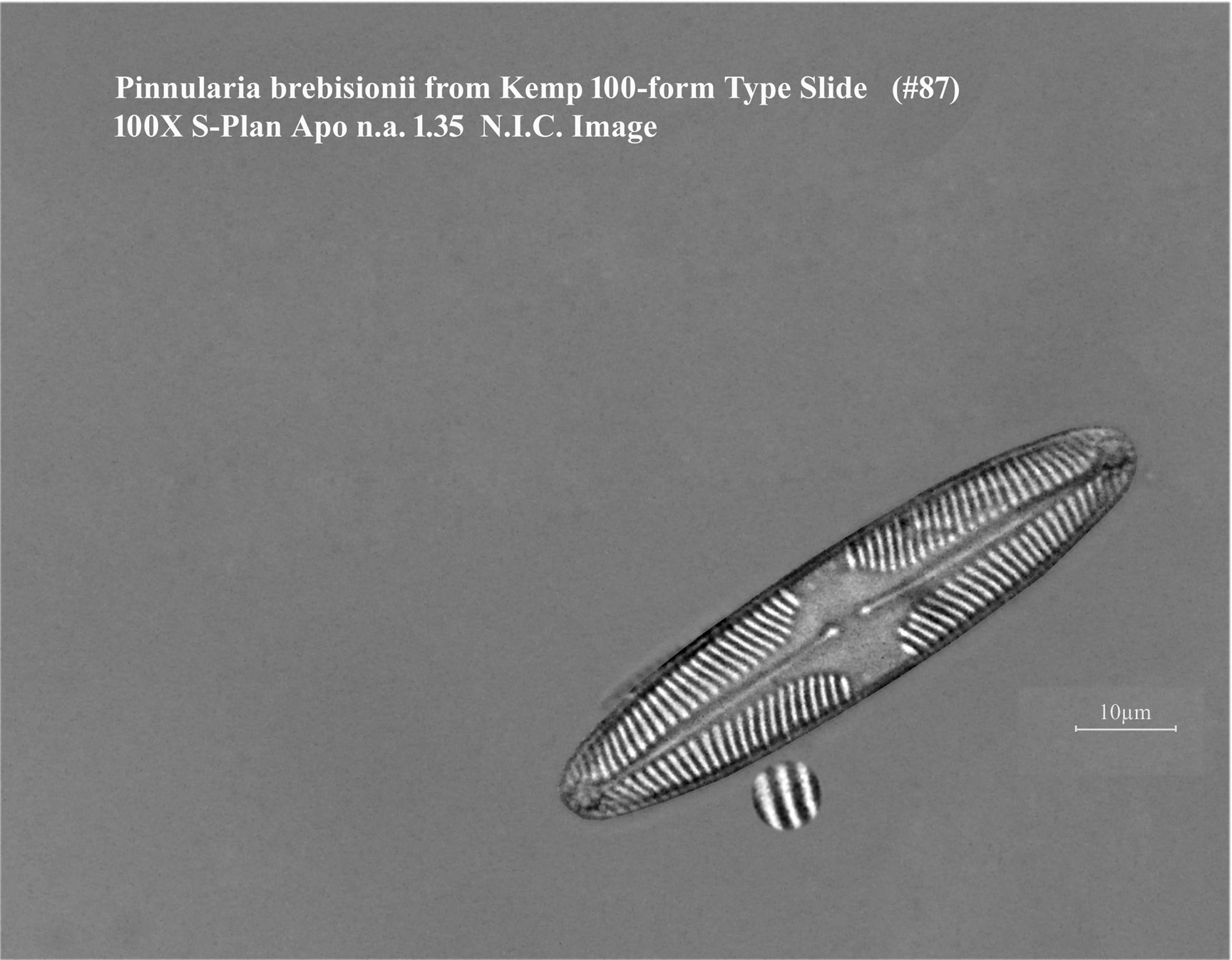
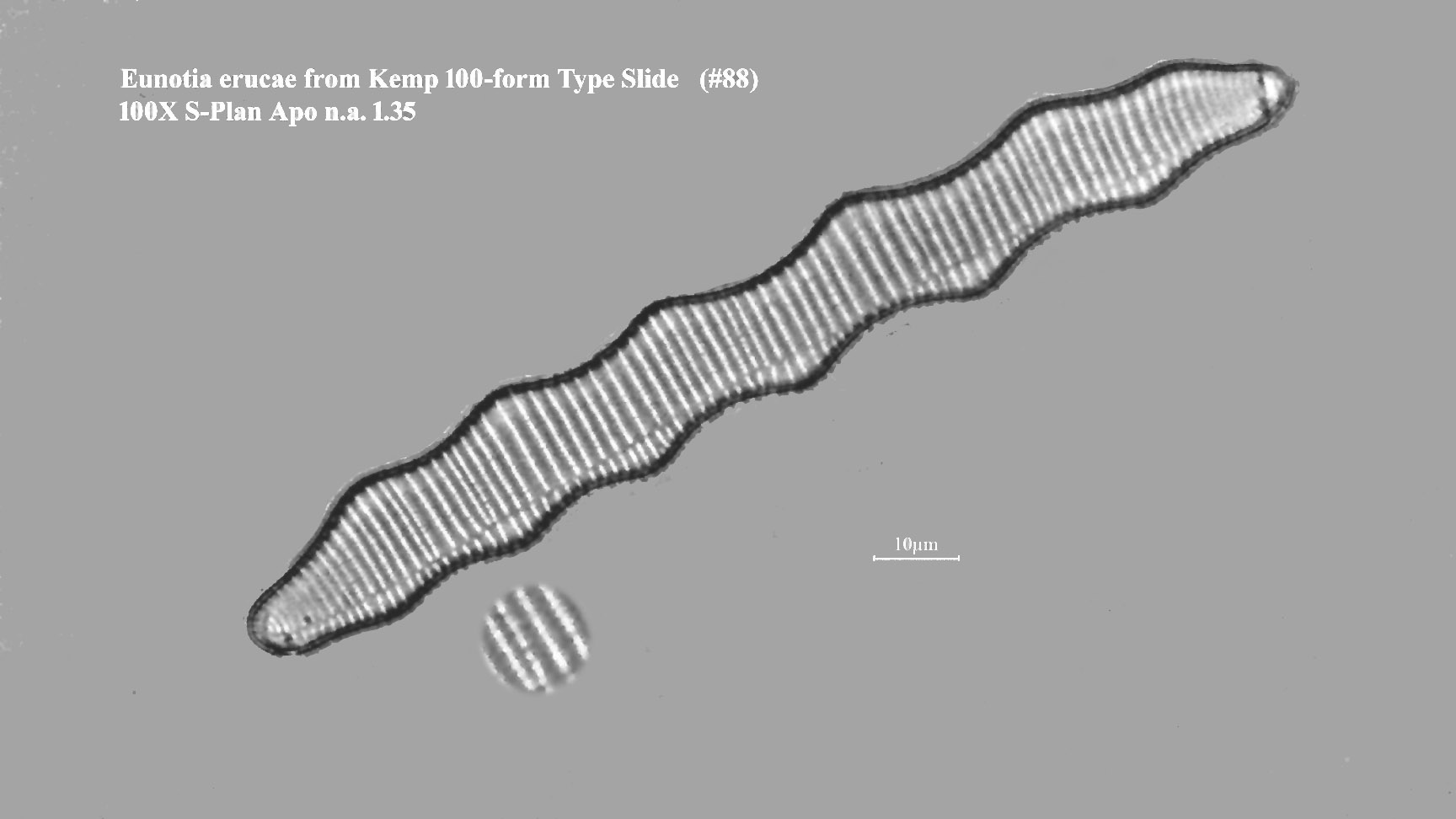
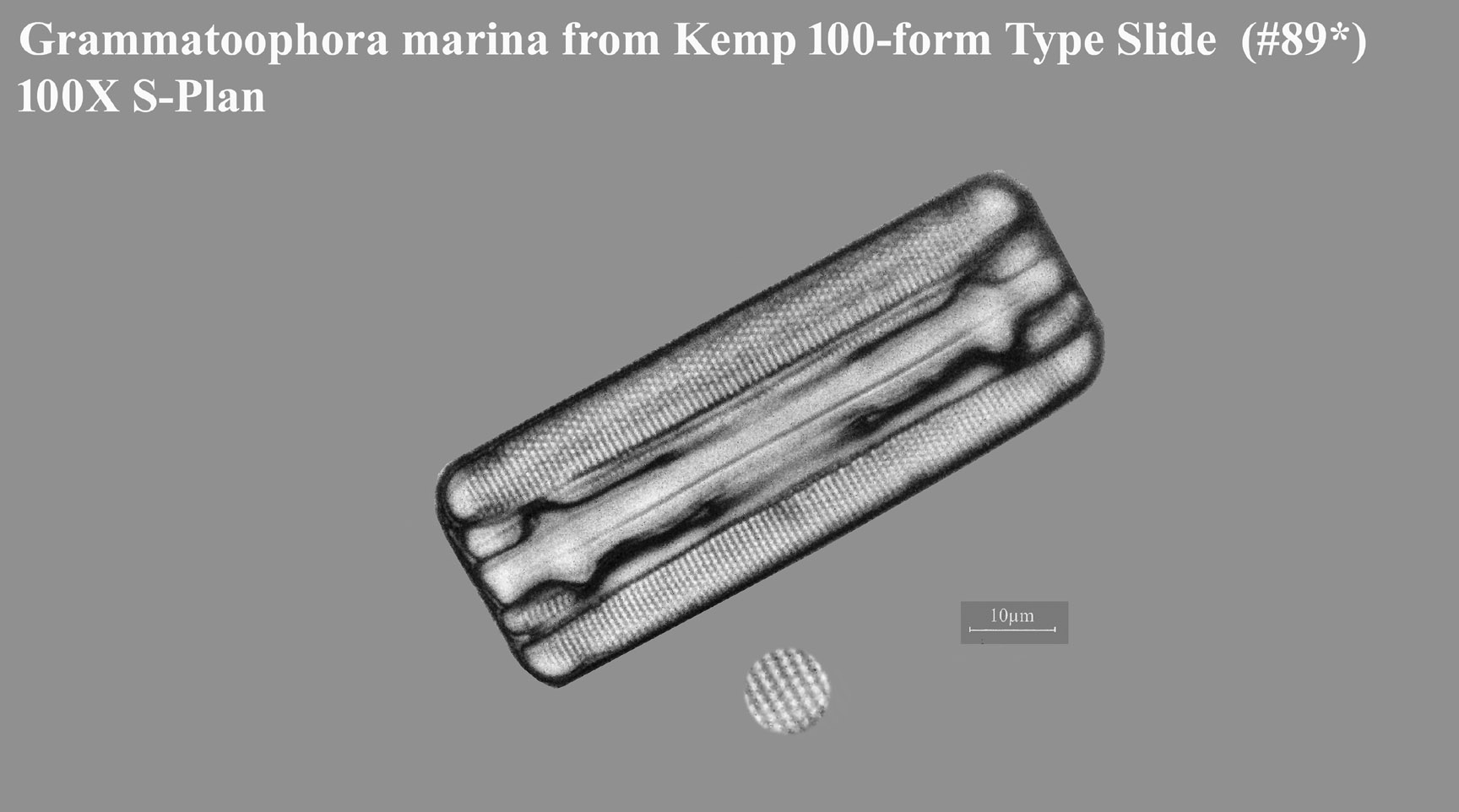
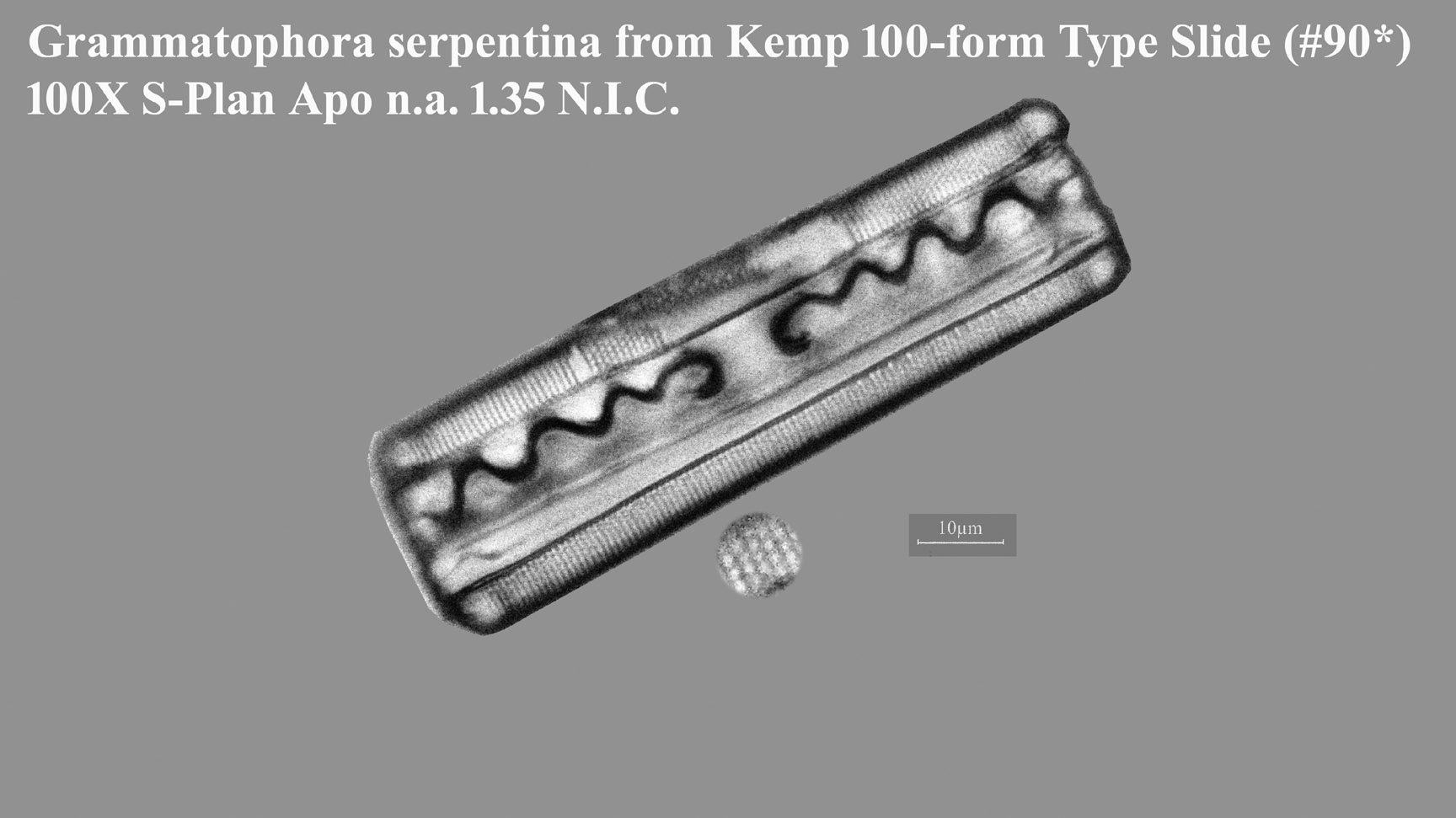
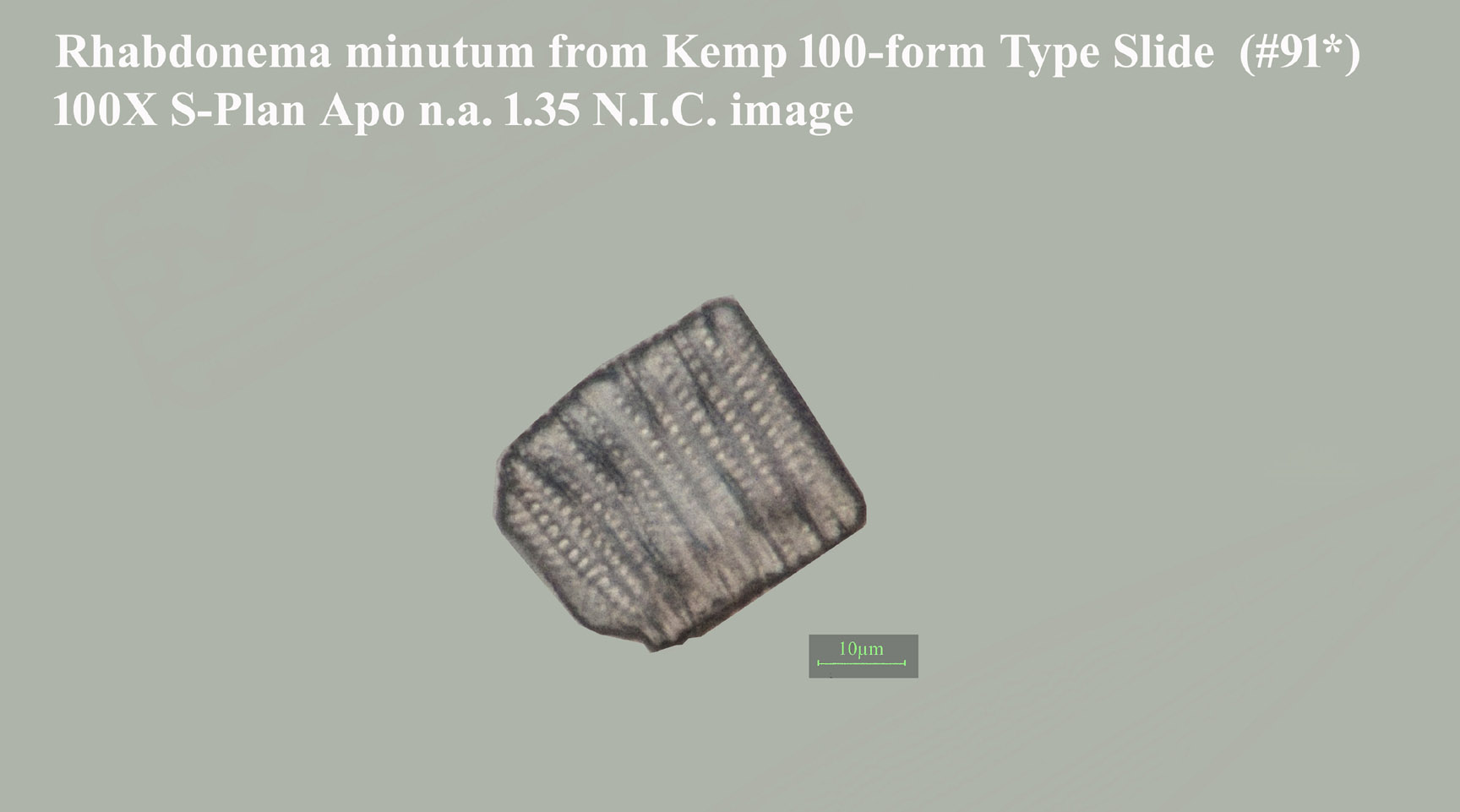
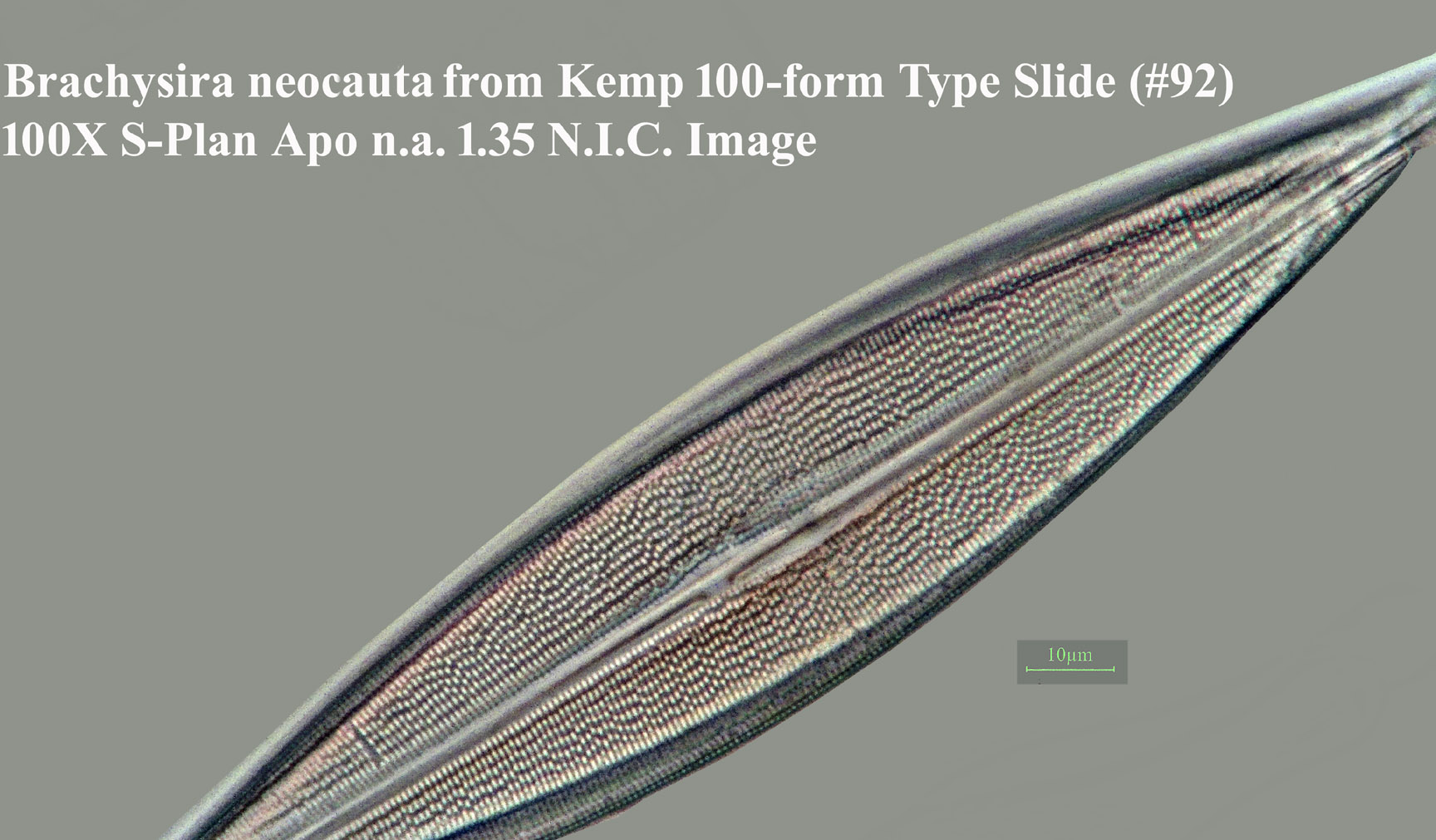
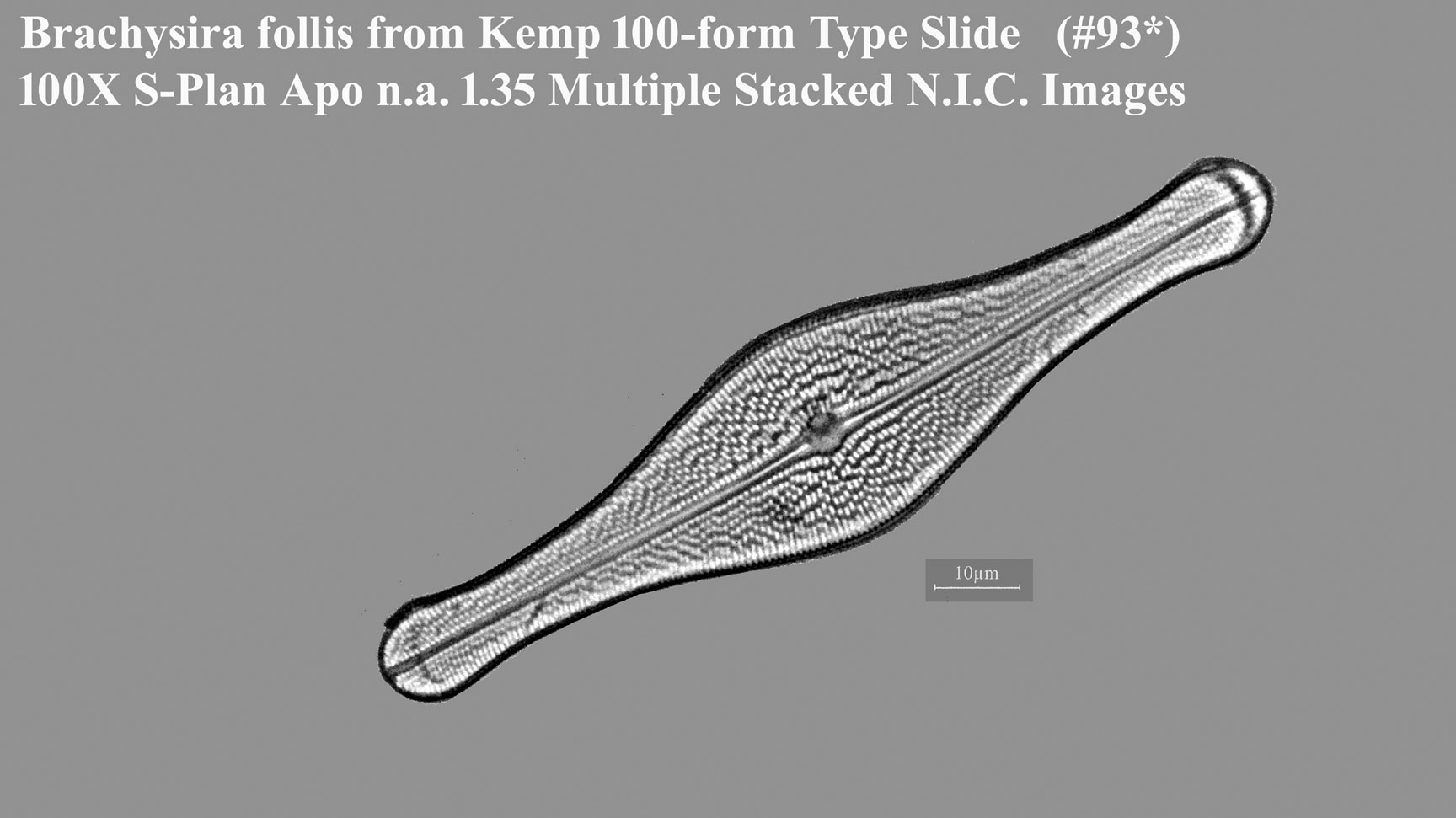
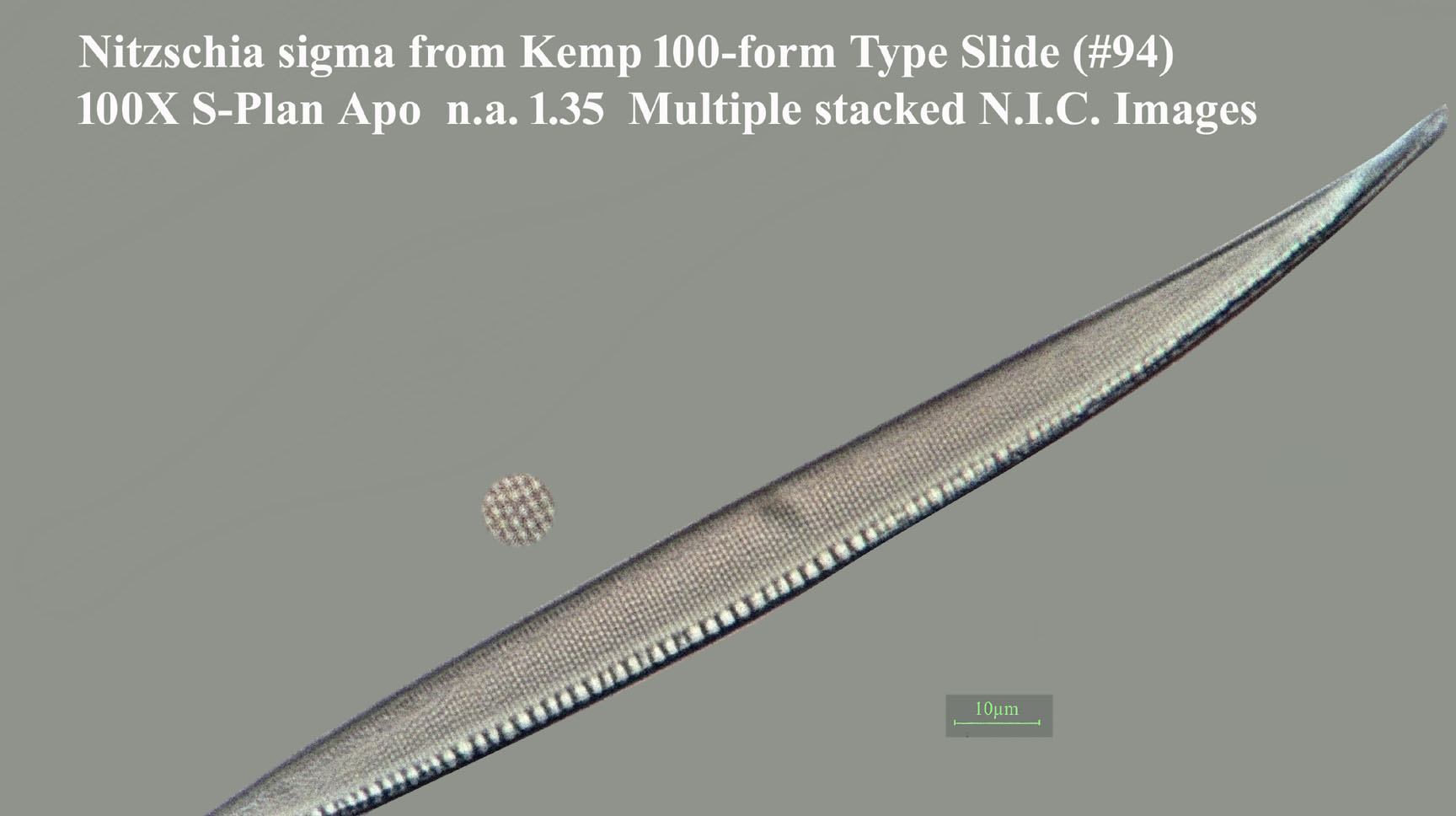
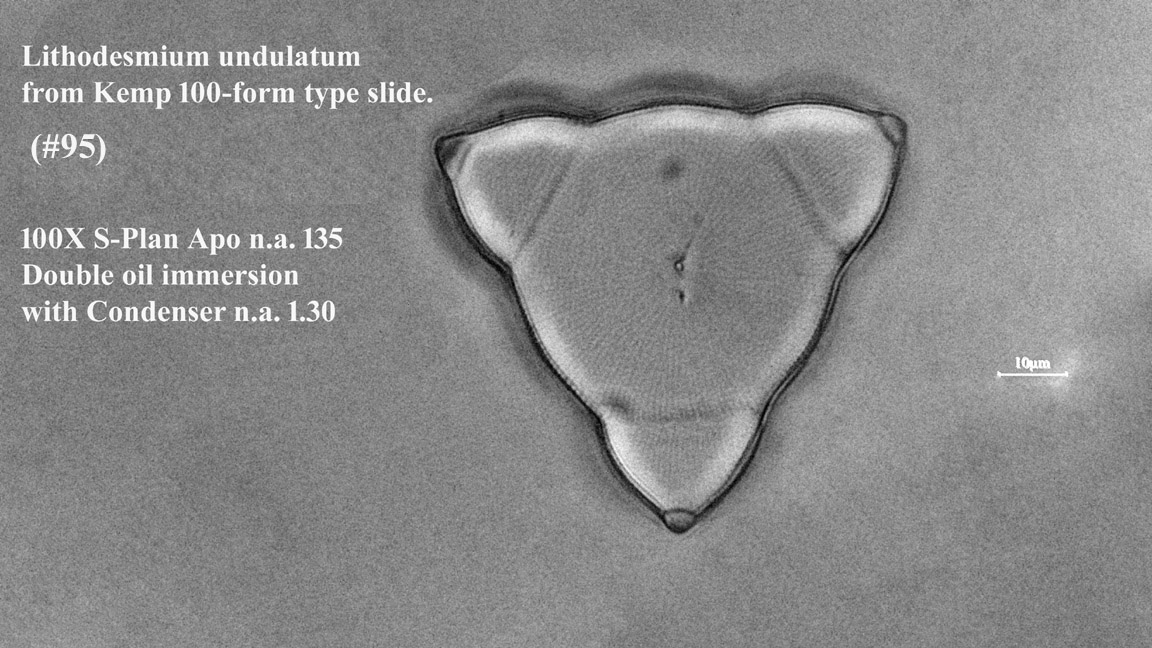
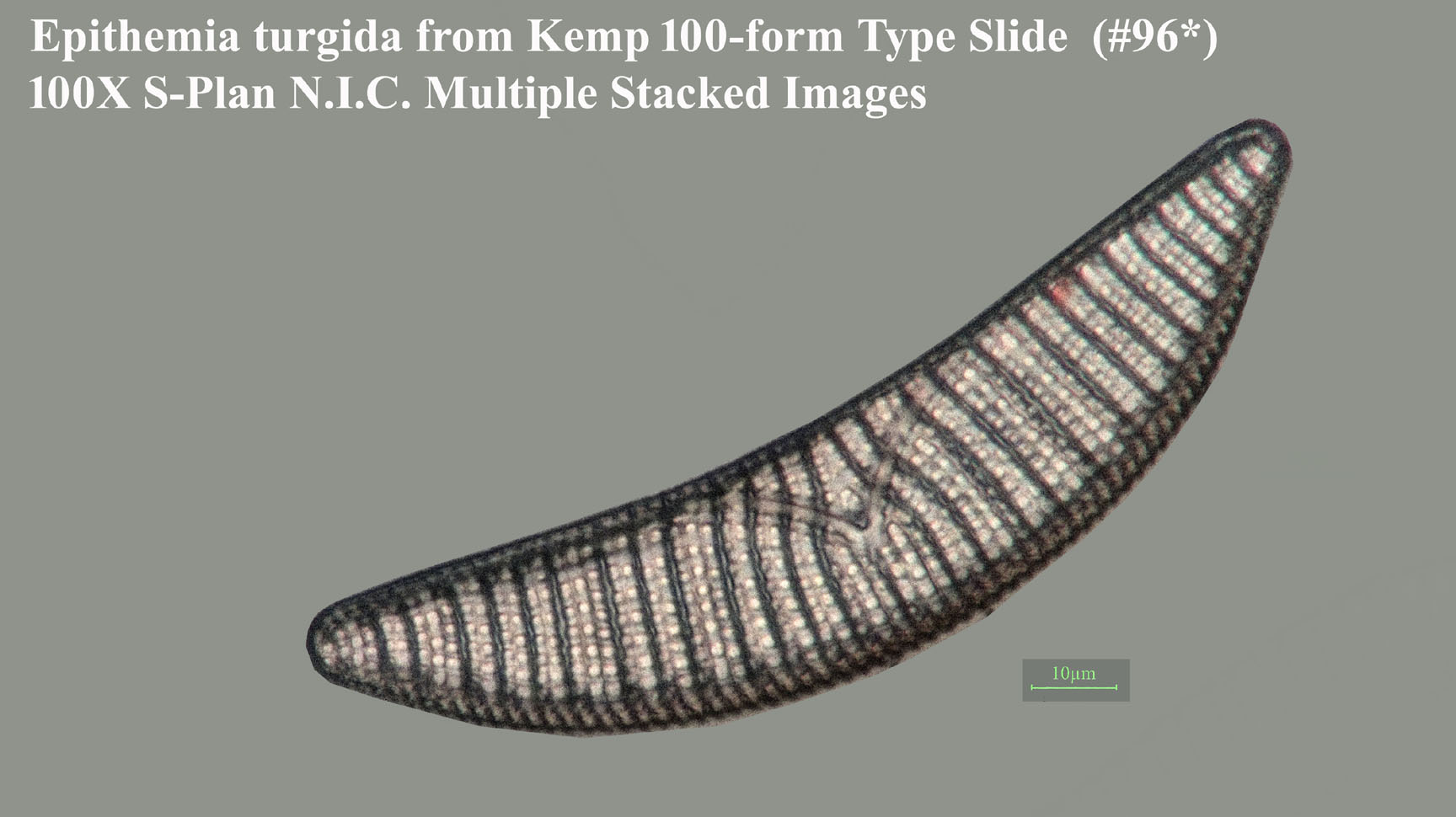
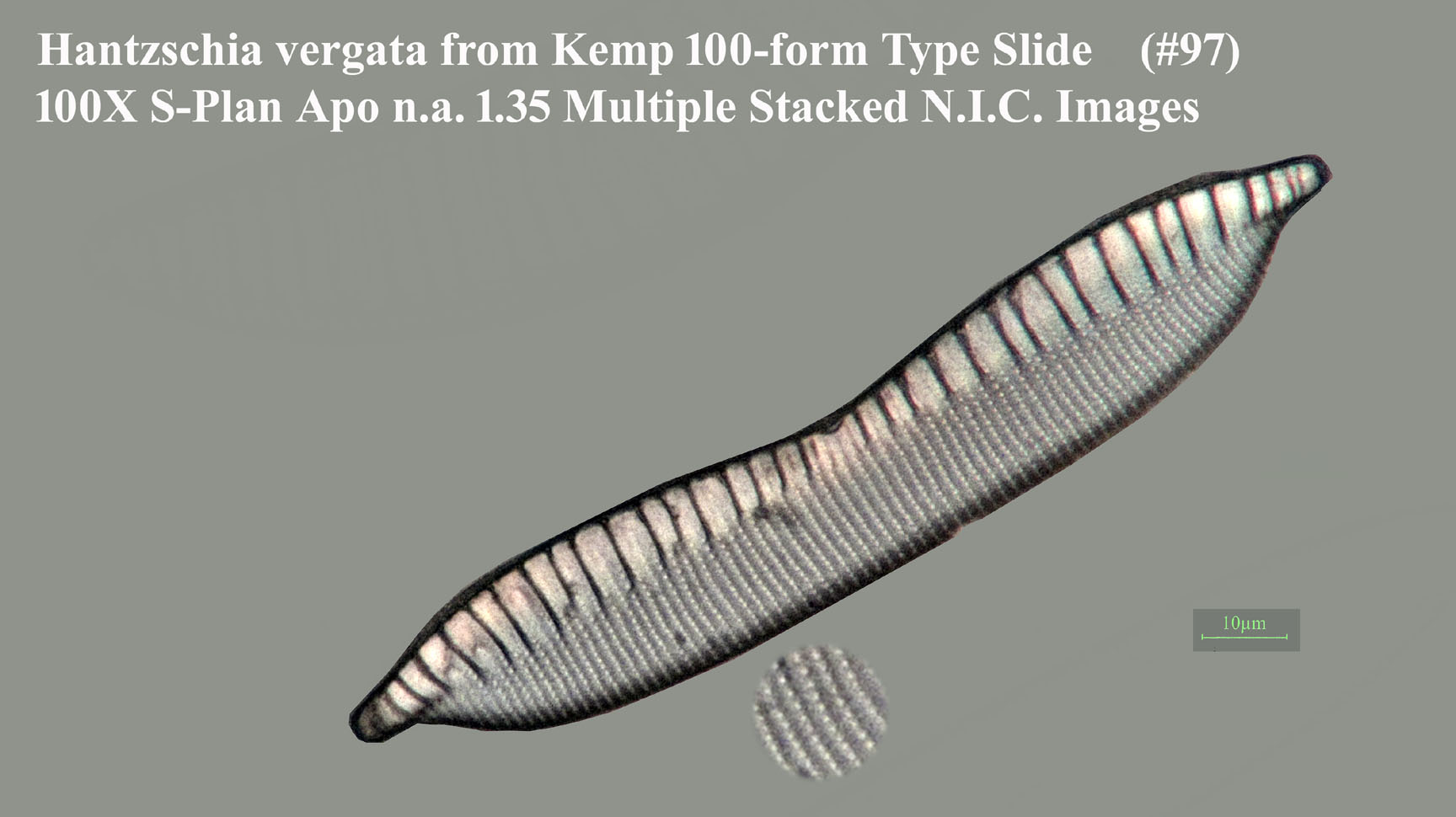
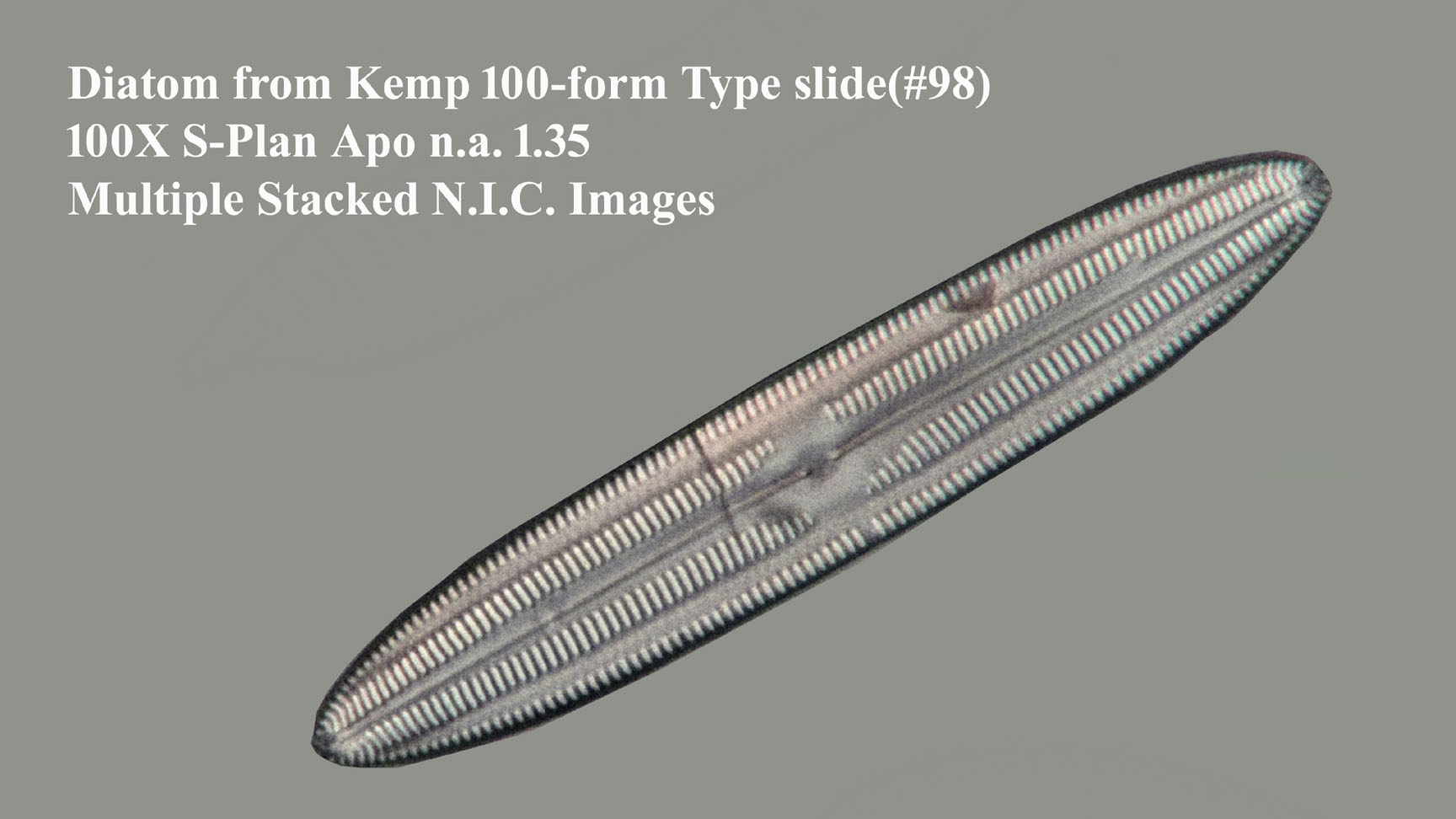
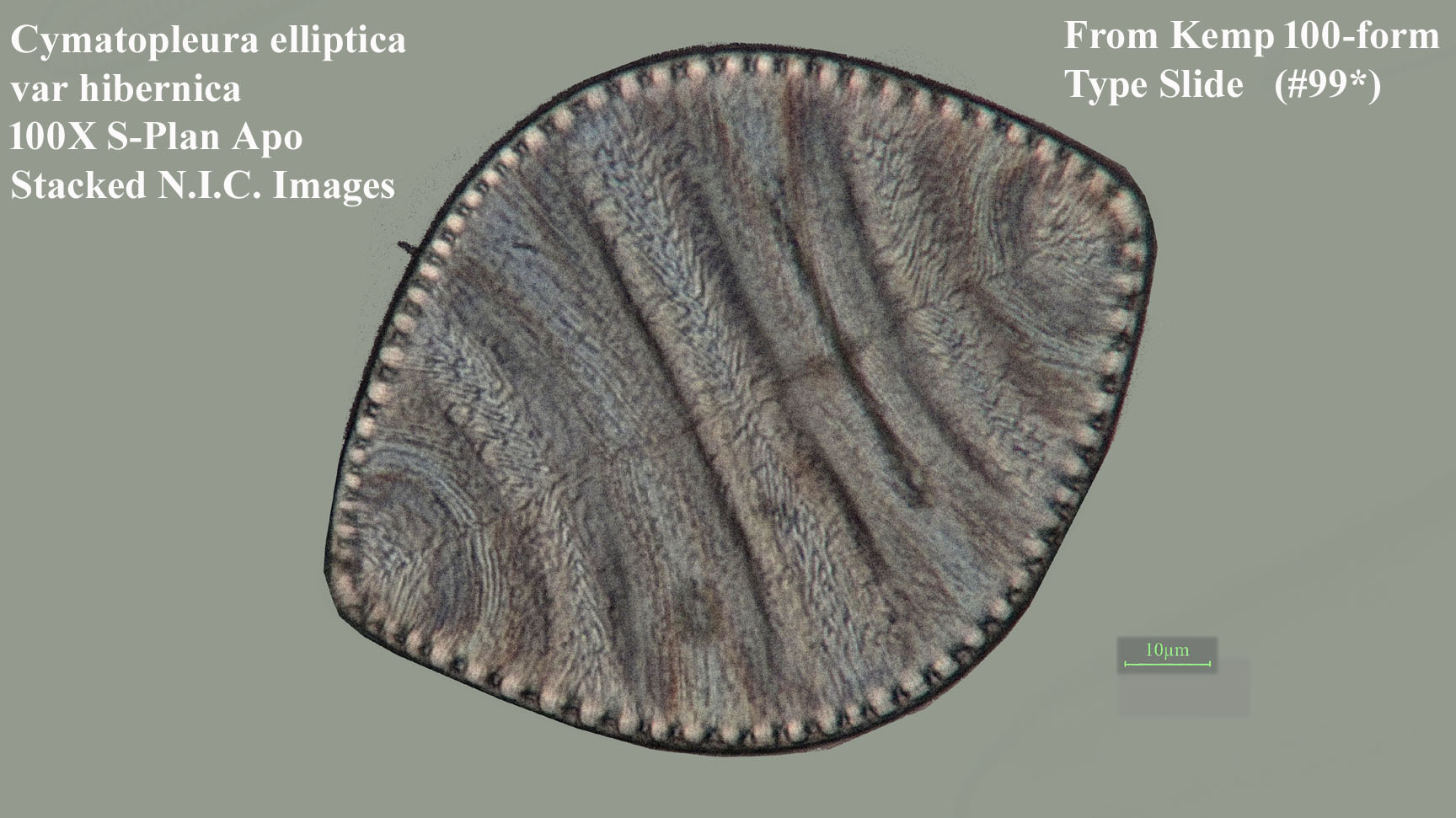
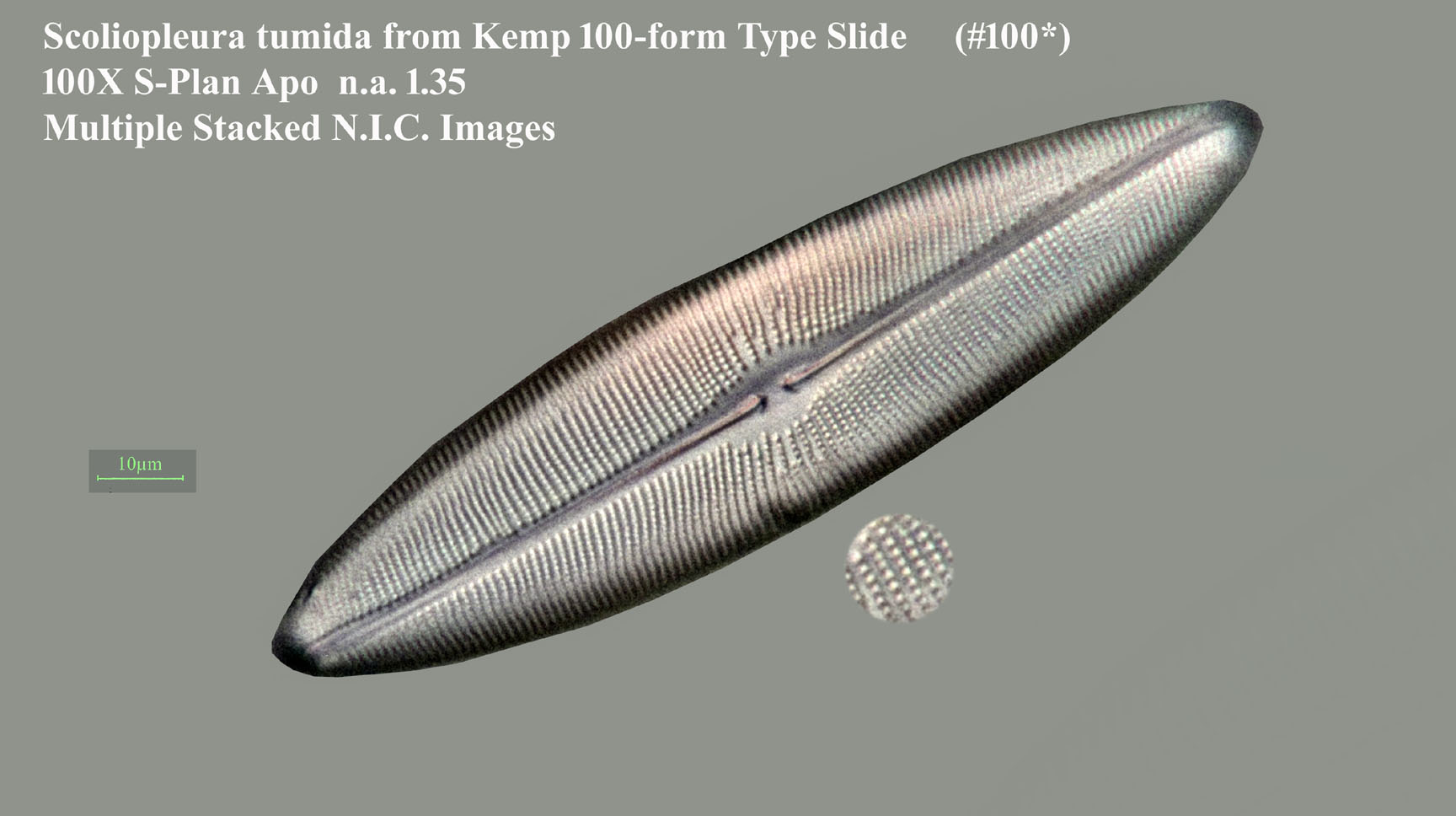
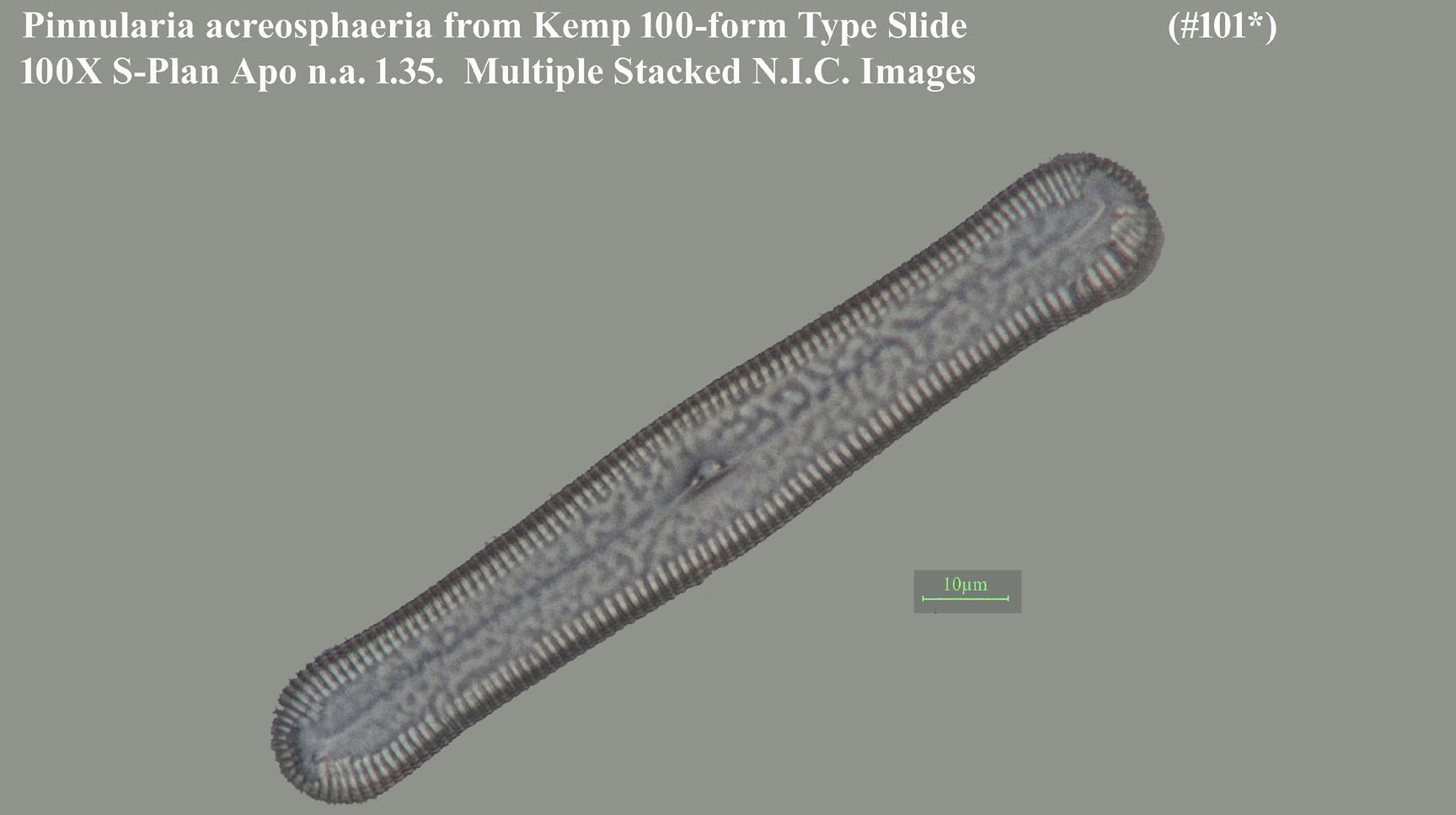
DESCRIPTION: Klaus Kemp sold, among other things this 100-form slide with a typewritten List. I bought this one from him in 2019 for 92 £. Although it is labeled as a 100-form slide, it actually contains 101 different diatoms. There is a good variety of different types including both centric and pennate types including some very unusual ones and some particularly beautiful geometric forms. They vary in the extent to which fine details are visible; sometimes this is due to the fact that the light microscope is incapable of resolution of the areolae. (The scanning electron microscope has made determining the fine structure of these possible, but I limit my observations to light microscopy.) A few diatoms are not good specimens. For instance, #40, surirella gemma was not as well resolved as other examples from Kemp in my collection. I have photographed all the diatoms on this slide including a general view as well as individual images of each diatom, often at different magnifications, usually with interference contrast and usually producing the final product with multiple stacked images using Helicon Focus software. I have also produced videos of the 3 dimensional structure of some of these, again using the Helicon Focus program. These reveal the amazing 3D structure in a way that no single image ever could. The slide is in well-preserved condition; all the diatoms are present and have not moved from their original position. A few of the diatoms have slight defects such as cracks or small pieces missing, as Klaus did not see this as a detraction, but rather illustrating their condition as they were found.
SLIDES BY KLAUS KEMP: Klause created many different types of slides including strews (both for transmitted and top lighting), 5-form test slides, and the 100-form slide on this page. He eventually specialized in arrangements, some of which are featured elsewhere on this site. and I believe that Kemp was the first mounter to mount in 3 separate layers to create arrangements that appear 3 dimensional under a stereo microscope. The Kemp 3-D slides in this collection include one of a Seascape and another Junglescape. Klaus also made slides to request, and these could be very personalized to the new owner's request. In this collection these include a valentine to my wife, and a slide commemorating the birthday of my daughter. In 2004, I asked him for a type slide of every different diatom he had and he came through with a 530-type slide, but declined to make a list as he did for his 100-form slides. It may take me the rest of my life to identify all of those diatoms! His skill at mounting is obvious but I was most impressed when he came to the Los Angeles area to demonstrate his techniques live via a video camera connected to his microscope. To my amazement, he demonstrated putting a centric diatom on its edge and splitting the top and bottom valves apart using a simple manual micromanipulator which had no gears or threads! He is sorely missed by many of his clients and friends all over the world.
HISTORY:
Klaus D. Kemp was born in Germany in December of 1937. His attempt to escape the war led to his internment as a P.O.W. and he was trapped in East Berlin until 1948. He came to England with no knowledge of English but eventually had an interest in Biology and went to work for Flatters and Garnet Ltd at the age of 16. He eventually was put in charge of preservation, and learned much about mounting diatoms, developing his own techniques and mounting materials. In 1976 he joined Phillip Harris, but by 1987 was filling orders for slides on his own. He supplied slides to Turtox, Carolina Biological, Zeiss Jena, and Olympus. With the help of Steve Gill, he created a web site and started to supply his slides to collectors and investigators all over the world. In some instances he mounted large collections of diatoms, five diatoms per slide, on request. Many diatom images seen today are mounts he produced. He met Bernard Hartley, a world famous microscopist and diatomist and they became great friends. As Hartley's health deteriorated he gave his own personal diatom collection to Klaus and this included a collection from R.I.Firth. Klauss became close friends with John Field, and it was through John(who has also passed away) that I first learned about Klaus' work. I have treasured all the slides he provided me until his death after a long illness. His slides were always fairly priced and they have dramatically appreciated in value since his death. He is missed by all who knew him.
NUMBERING, IDENTITY, AND SEQUENCE: To make it easier to understand, I have created a numbered list of the diatoms on this slide, and numbered the image shown above. The diatoms are shown below in the order of the numbers. It should be noted that for some of the diatoms, the names have changed since Kemp identified them. In these cases, I tried to indicate that. I also note that sometimes Kemp's list shows two diatoms next to each other out of order, but my ordered list is correct. I also tried to confirm the identification of each, as Klaus warned me I might not agree with his identification in all cases. In cases where I am reasonably certain of the identity, I have pasted as asterisk(*) next to the name. In those in which I am very uncertain or doubtful, I placed a question mark(?). In some cases I was unable to find a good image of the diatom named and these have neither mark. Two diatoms (#72 and #98) are clearly not what Kemp said they were, and this is indicated, as so far, I have not been able to firmly identify them. Some are misspelled in his original list, and so I tried to correct all of Kemp's spelling errors, but I may still have made my own! Comments are very welcome!