
J.Zentmayer, Maker, Philad' a
| DESCRIPTION | HISTORY |
Please Click On Any Picture for a Larger Version
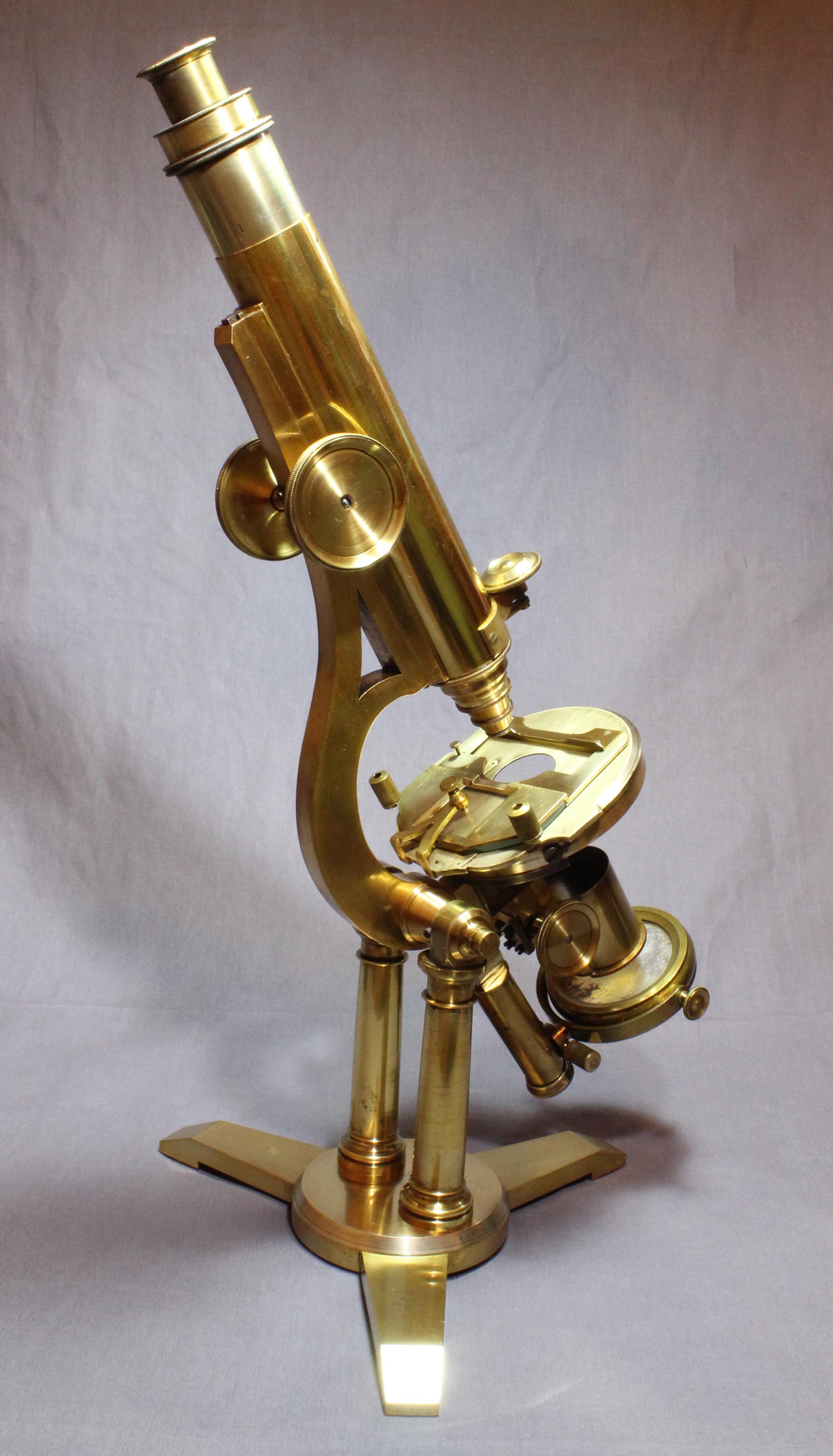
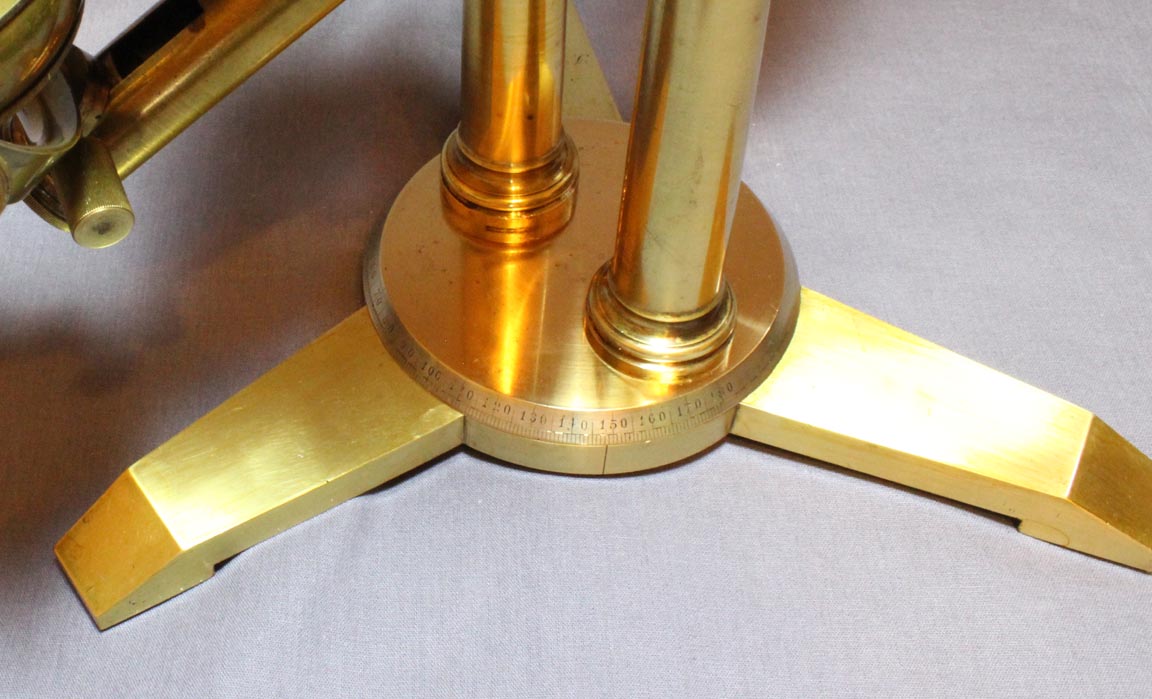
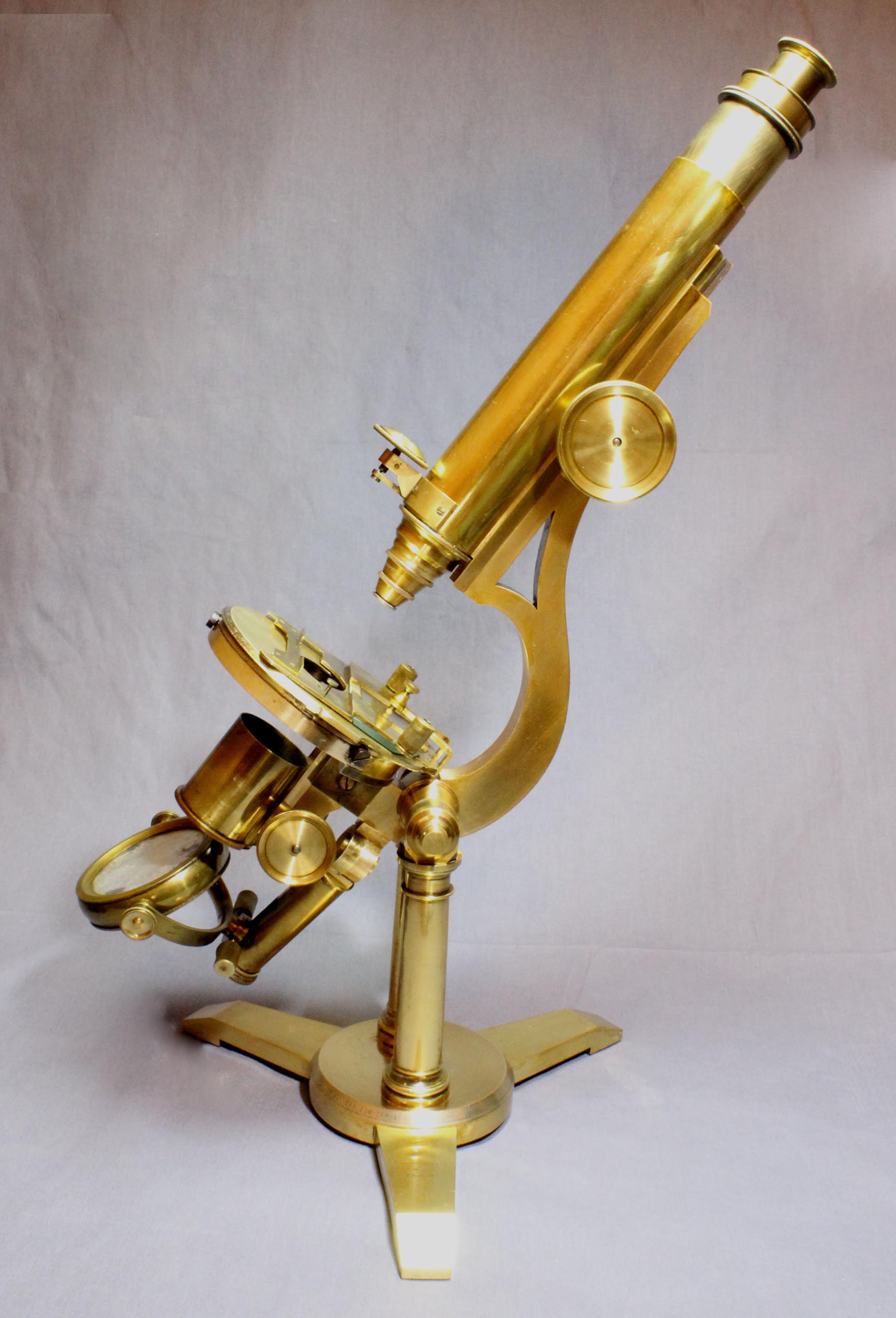
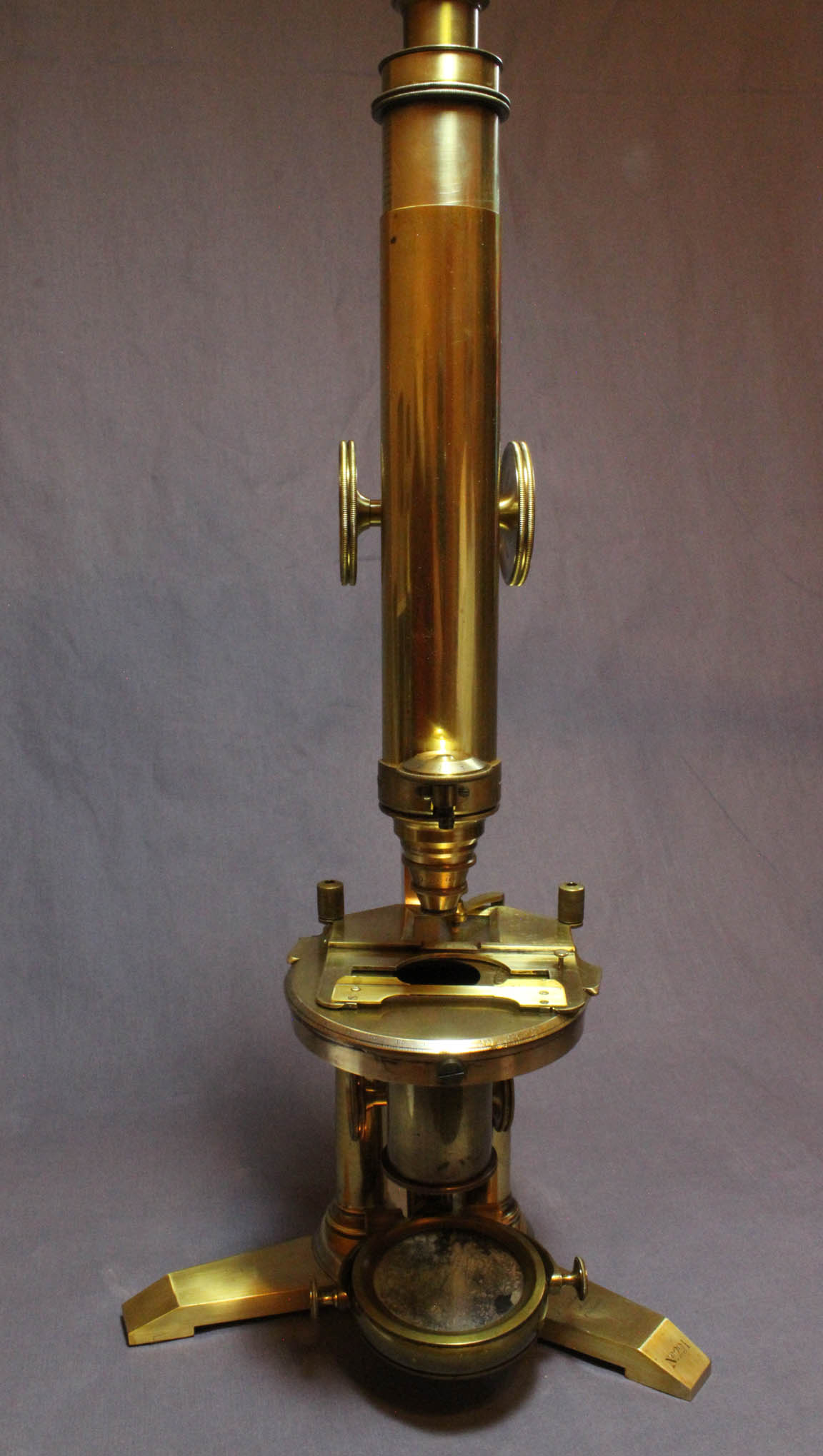
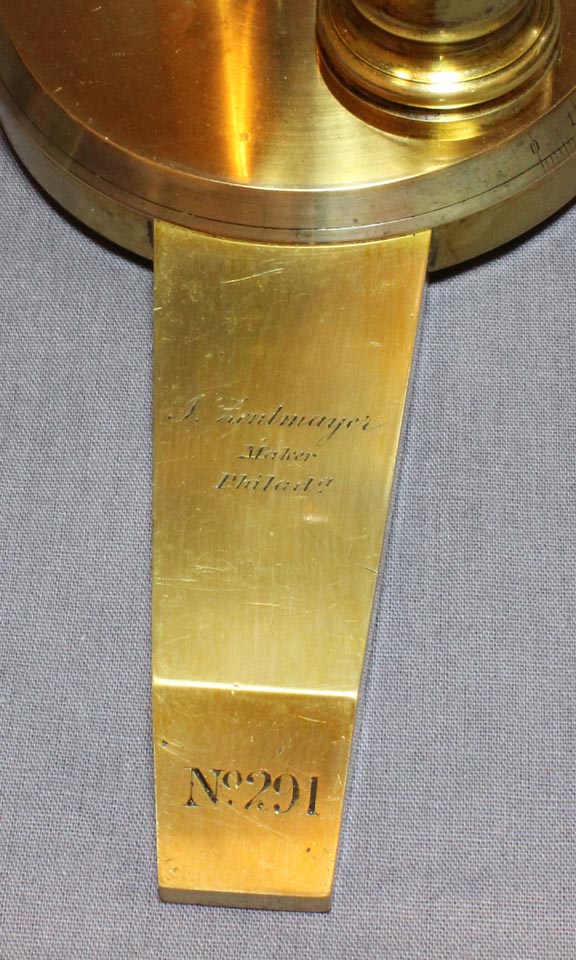 Signed in Script on the Foot:
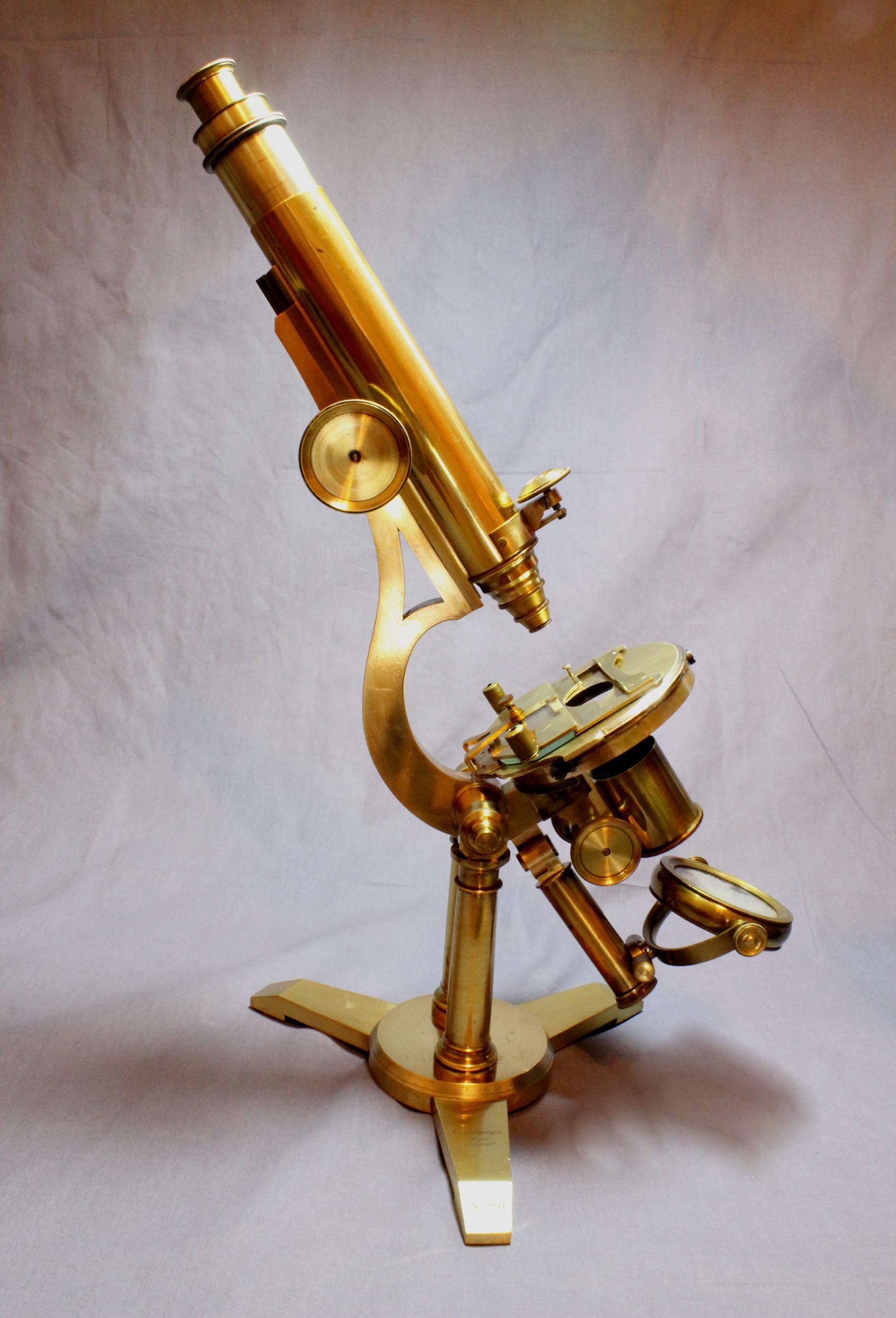
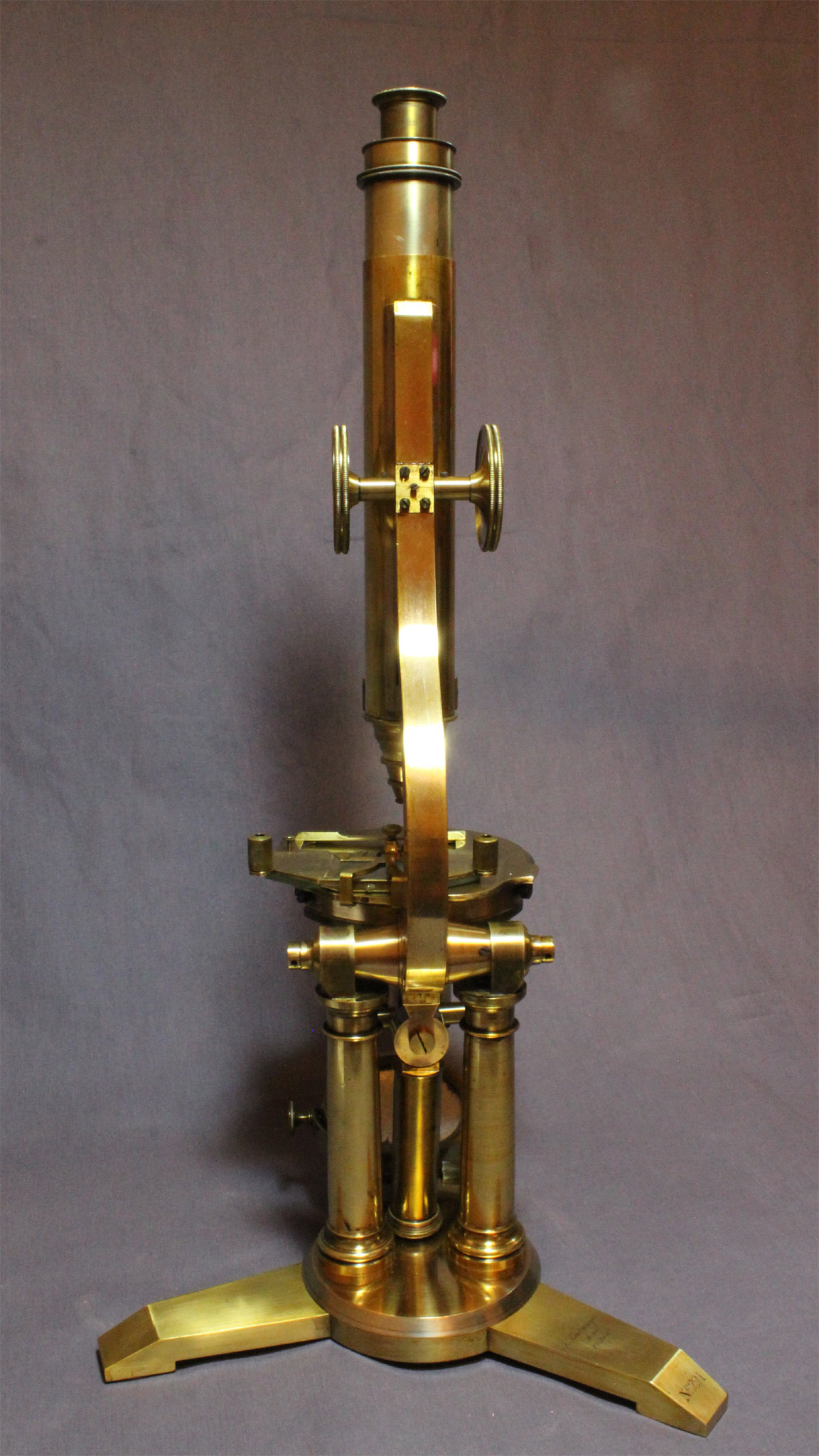
 J. Zentmayer, Maker, Philad ' a. This well-built, heavy, Jackson-Lister-limb microscope arises on two pillars from an American style flat tripod foot with calibrated rotation via a silvered scale. The limb is one solid piece of brass which incorporates the support for the main optical tube, the support for the substage, and protruding part into which the swinging tailpiece fits. The limb has a curved triangular cutout distinctive to Zentmayer's Grand American Microscopes from their inception.
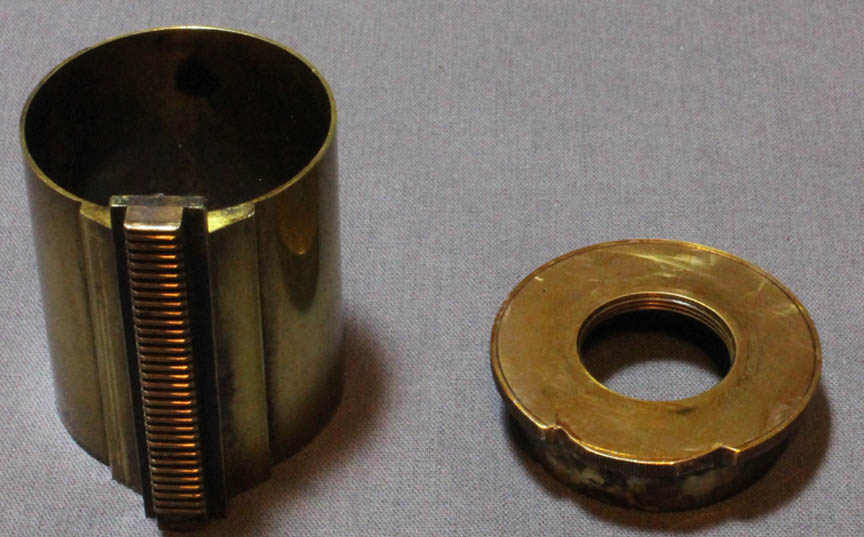 The substage sleeve (right) has a cap which has an RMS thread to accept, for example an objective as a condenser. This cap can be attached to the top or bottom of the sleeve. With the cap removed, or relocated to the bottom of the sleeve, the sleeve can accept other accessories such as a traditional condenser or polarizer on top.
 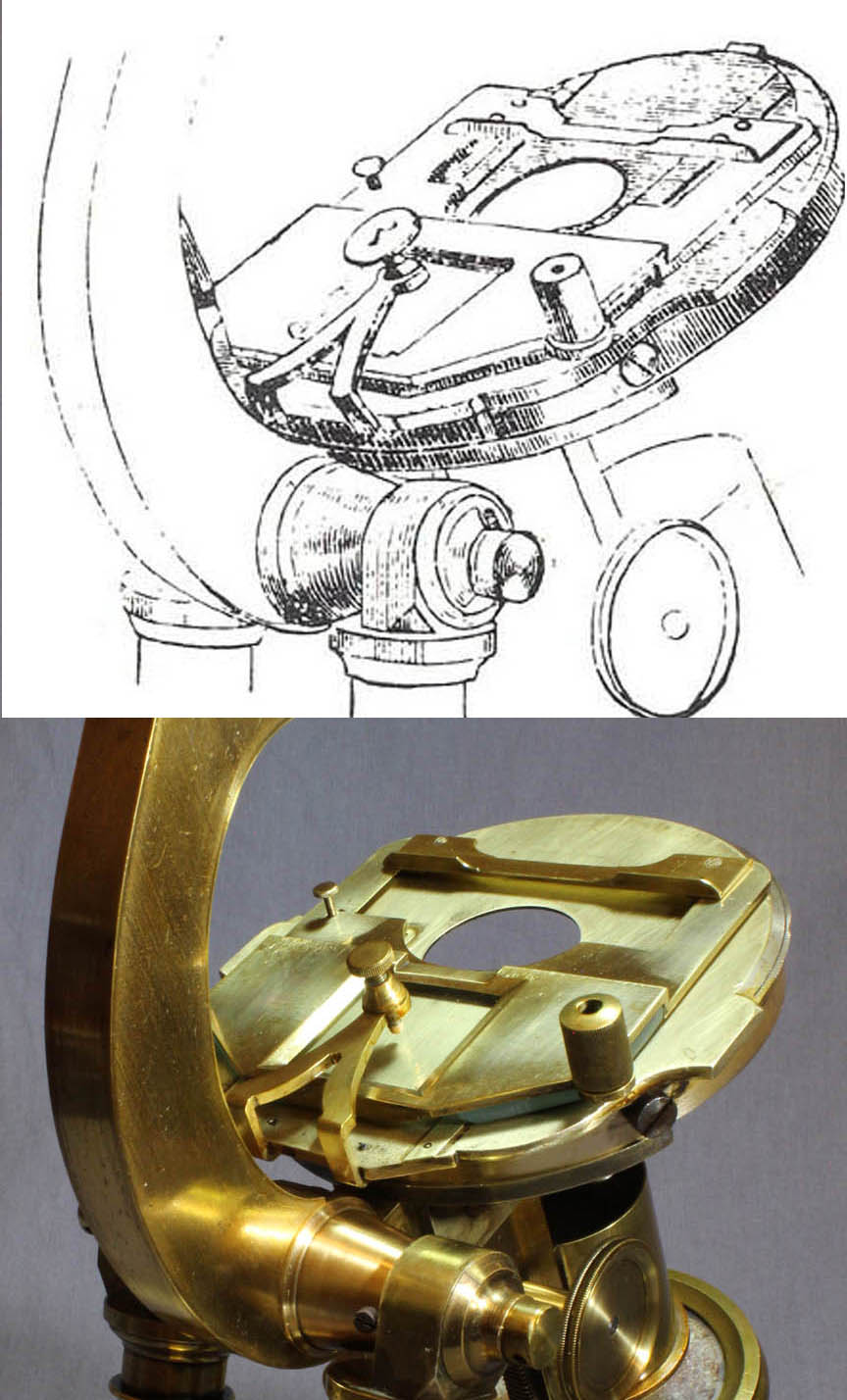 The support for the round stage saddles the limb, held on it by two screws, one screwing into the limb from each side. The stage rotates by use of concentric rings and there are three screws that can be used to center the axis of rotation. The stage rotation is calibrated via a silvered scale; it can rotate 360 degrees. A Zentmayer gliding slide holder runs on top of two slightly raised linear bars. The glider, with a partly glass bottom, is held down by an ivory-tipped screw. The tension can be adjusted to allow smooth movement, yet keep the gliding slide holder from sliding away after the desired position has been reached. This mechanism, invented by Zentmayer, allows very smooth and controlled motion via the two handles on either side. The gliding slide holder has a small knob to register the slide on the left side, and has an adjustable front register to accomodate a variety of slide widths. Two knurled knobs serve as handles to control the movement of the glider, and each has a hole in it to accomodate accessories like a stage forceps.
 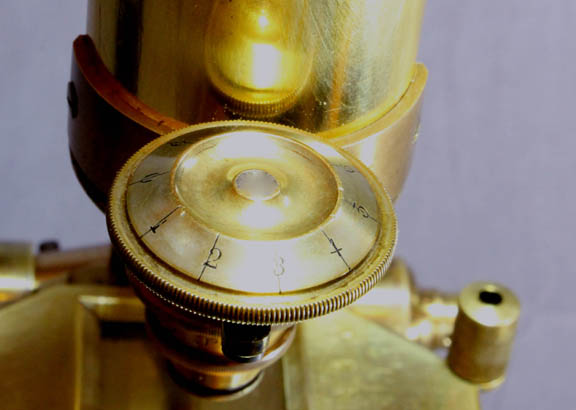 The nosepiece fine focus wheel is calibrated and silvered. The main optical tube is focused via staight rack and pinion nearly identical to the one on the substage, other than the size of the knobs. There is a draw tube, calibrated in 1/8th inch increments, over a four inch range, and labeled every inch. The single ocular has a slot to admit a Jackson type micrometer. The drawtube is threaded at its distal end to accept an analyzer or an erecting lens. There is a single moderate power objective signed
 Queen.
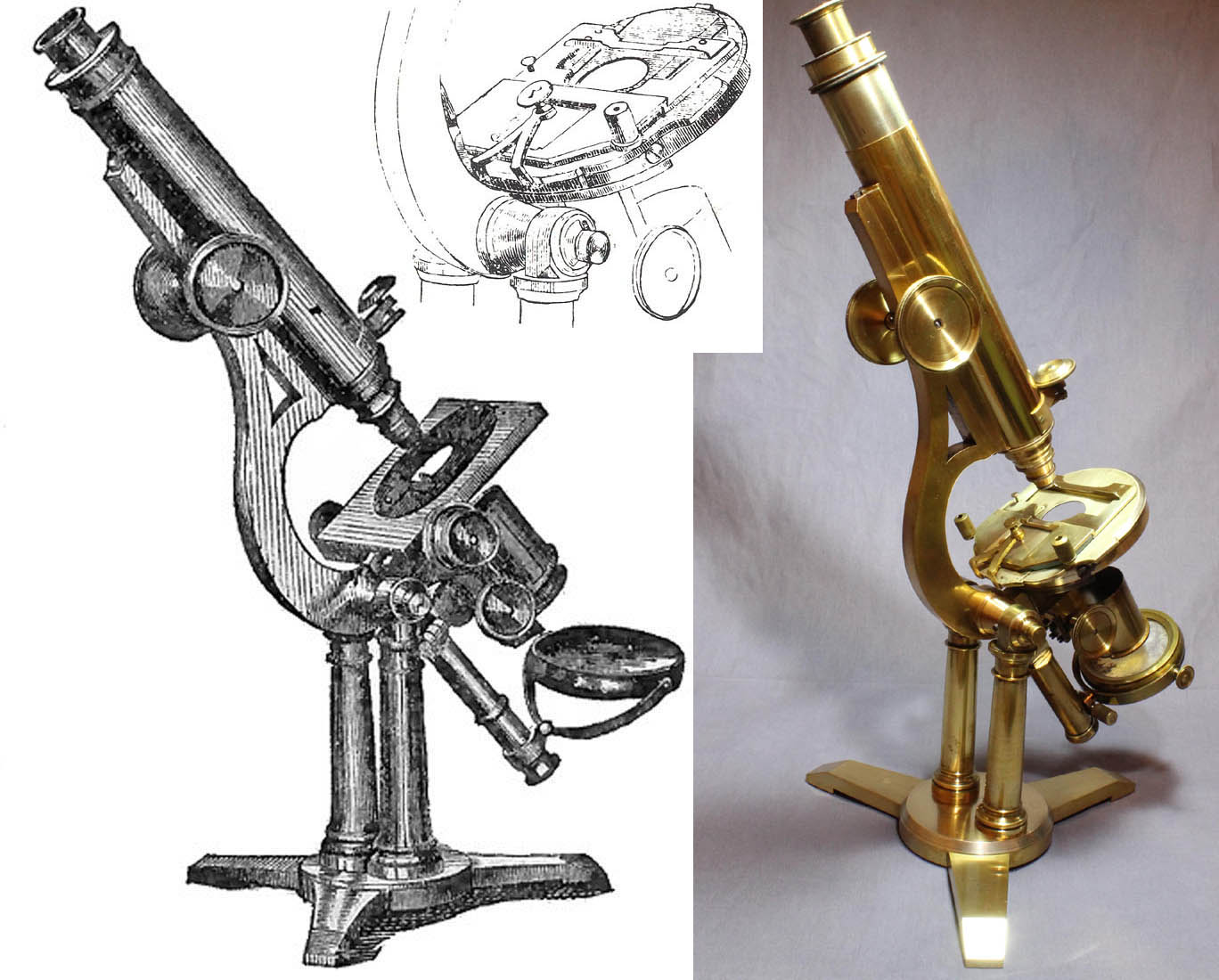 Joseph Zentmayer was born in Germany 1826 and emigrated to the U.S.A. after receiving training in Europe.
He apparently started his own business in 1853 and built his first big microscope almost identical to this one about
1858 to the design of a Dr Hunt of Philadelphia; it was still advertised in the T. H. McAllister Catalog of 1876.
Joseph Zentmayer was born in Germany 1826 and emigrated to the U.S.A. after receiving training in Europe.
He apparently started his own business in 1853 and built his first big microscope almost identical to this one about
1858 to the design of a Dr Hunt of Philadelphia; it was still advertised in the T. H. McAllister Catalog of 1876.