MICROSCOPE-ANTIQUES.COM © 2013-16.
'STATIV XIII MICROSCOPE':
c. 1890
Unsigned, but Likely by Paul Waechter
Serial Number: None
DESCRIPTION
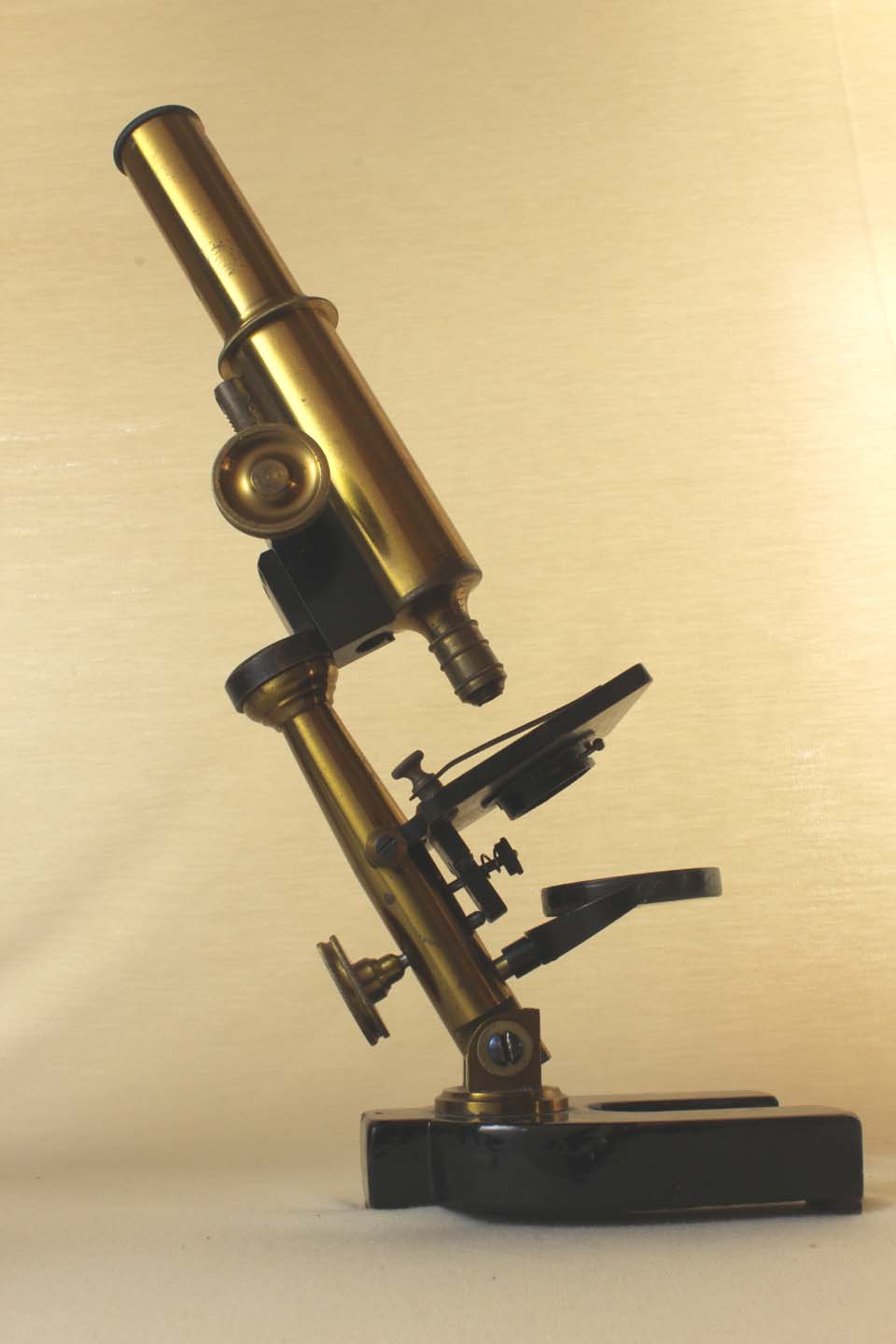
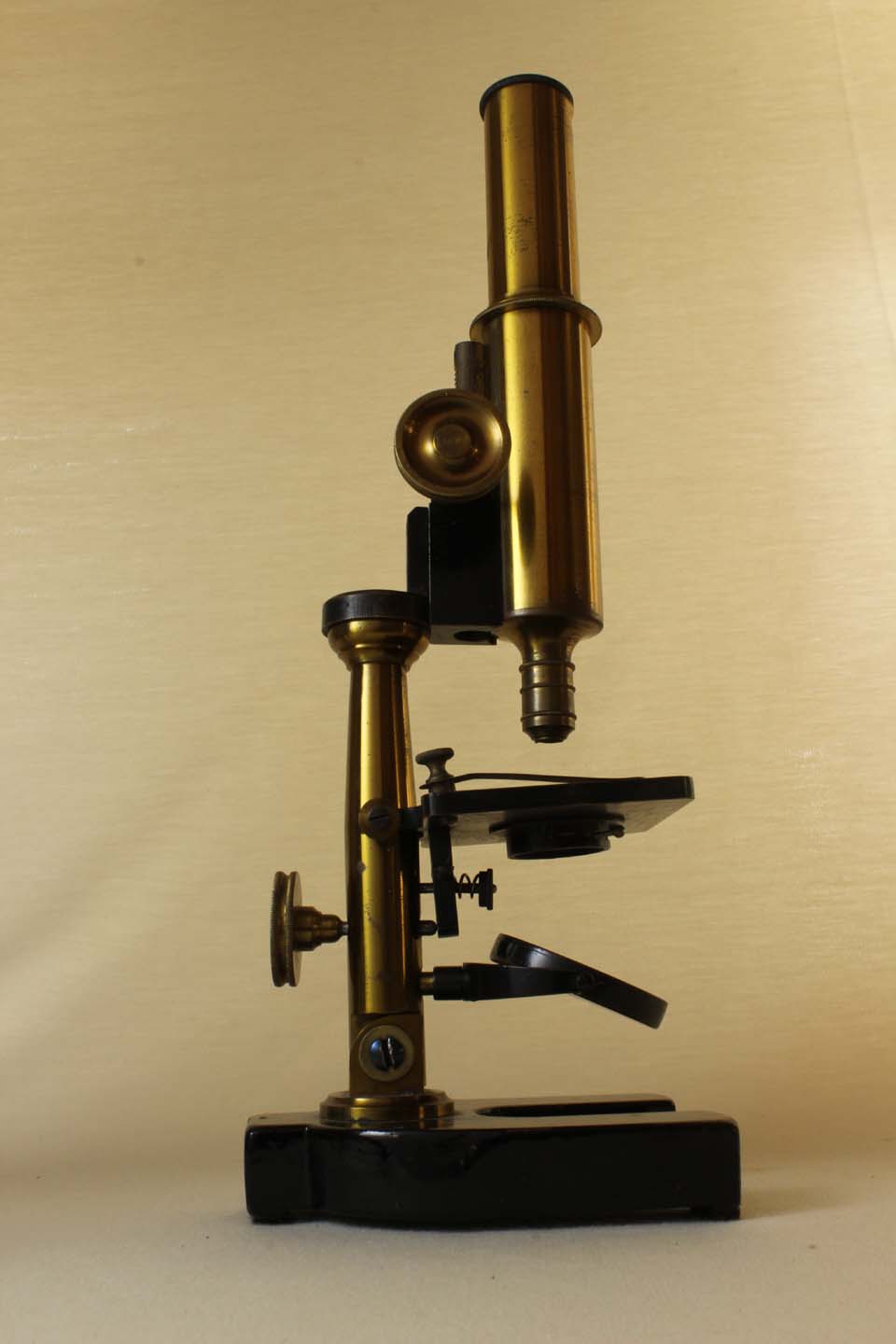
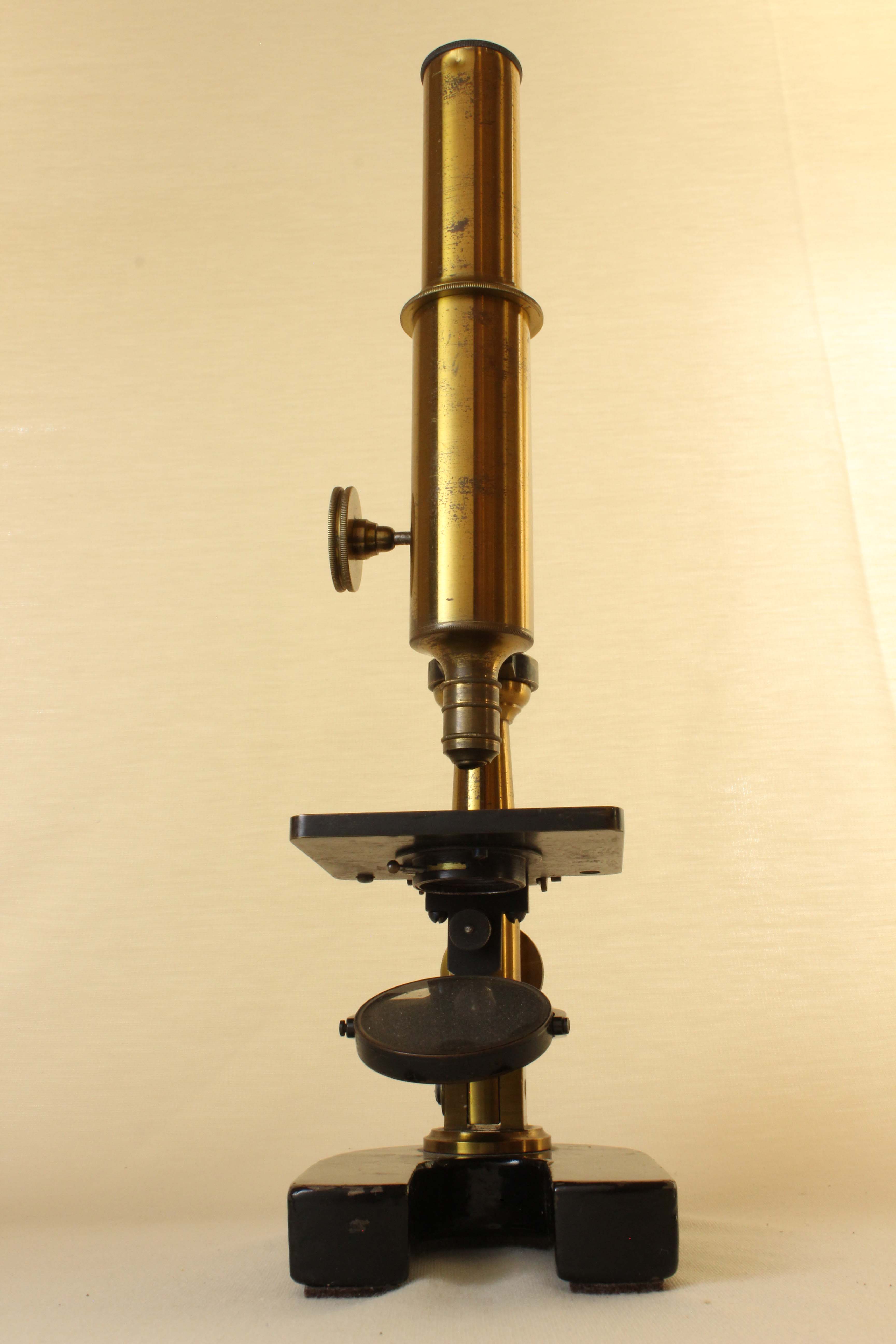
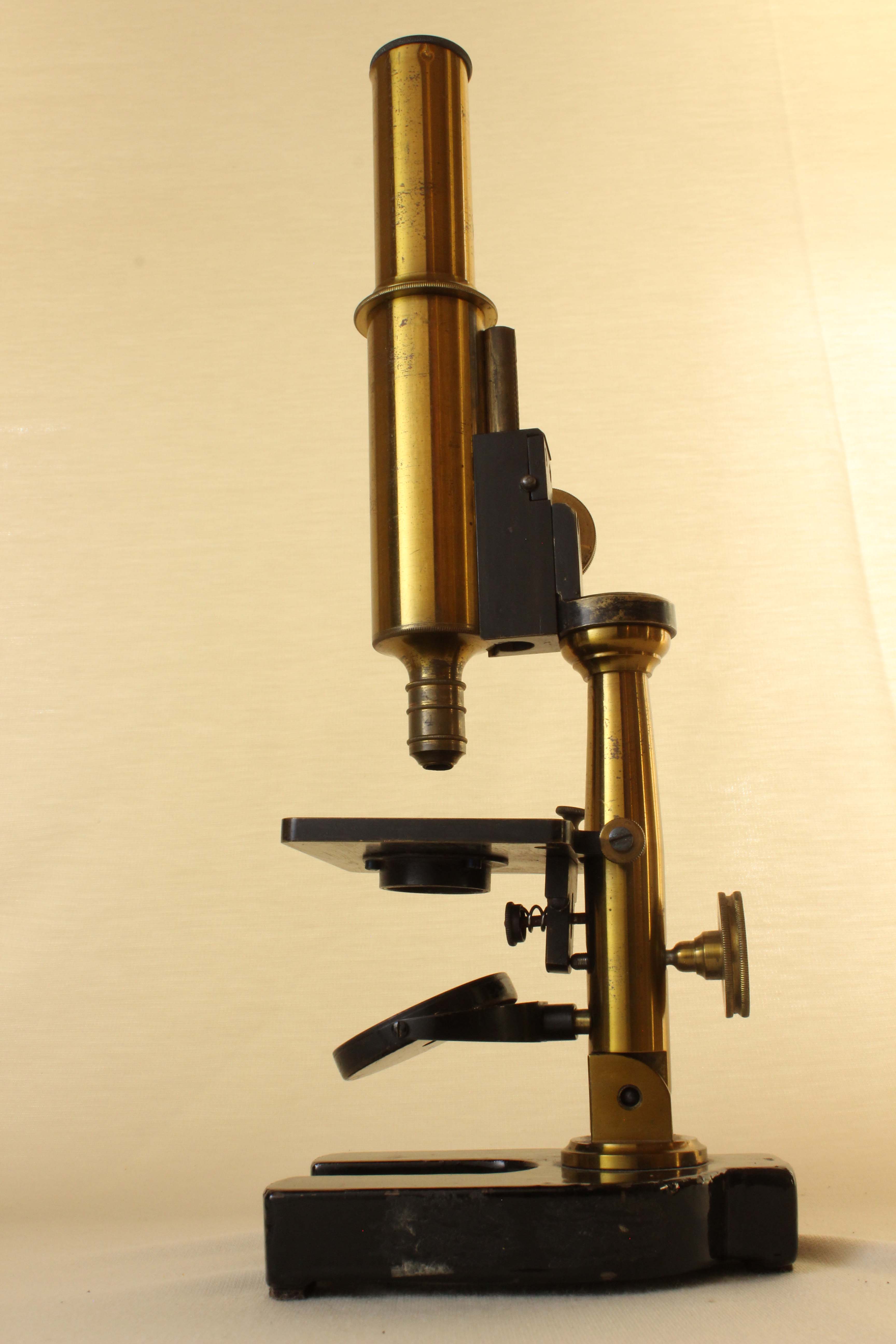
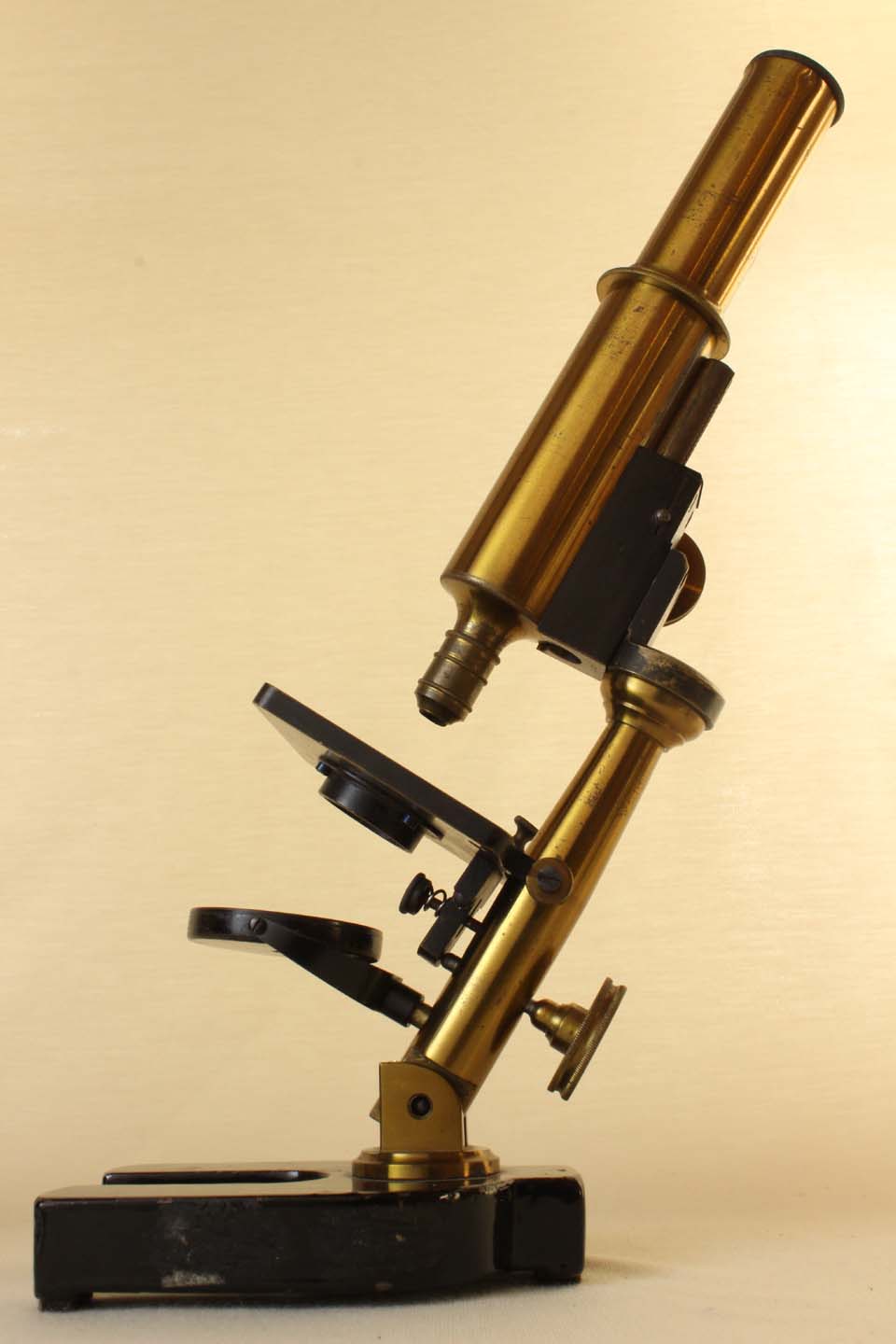
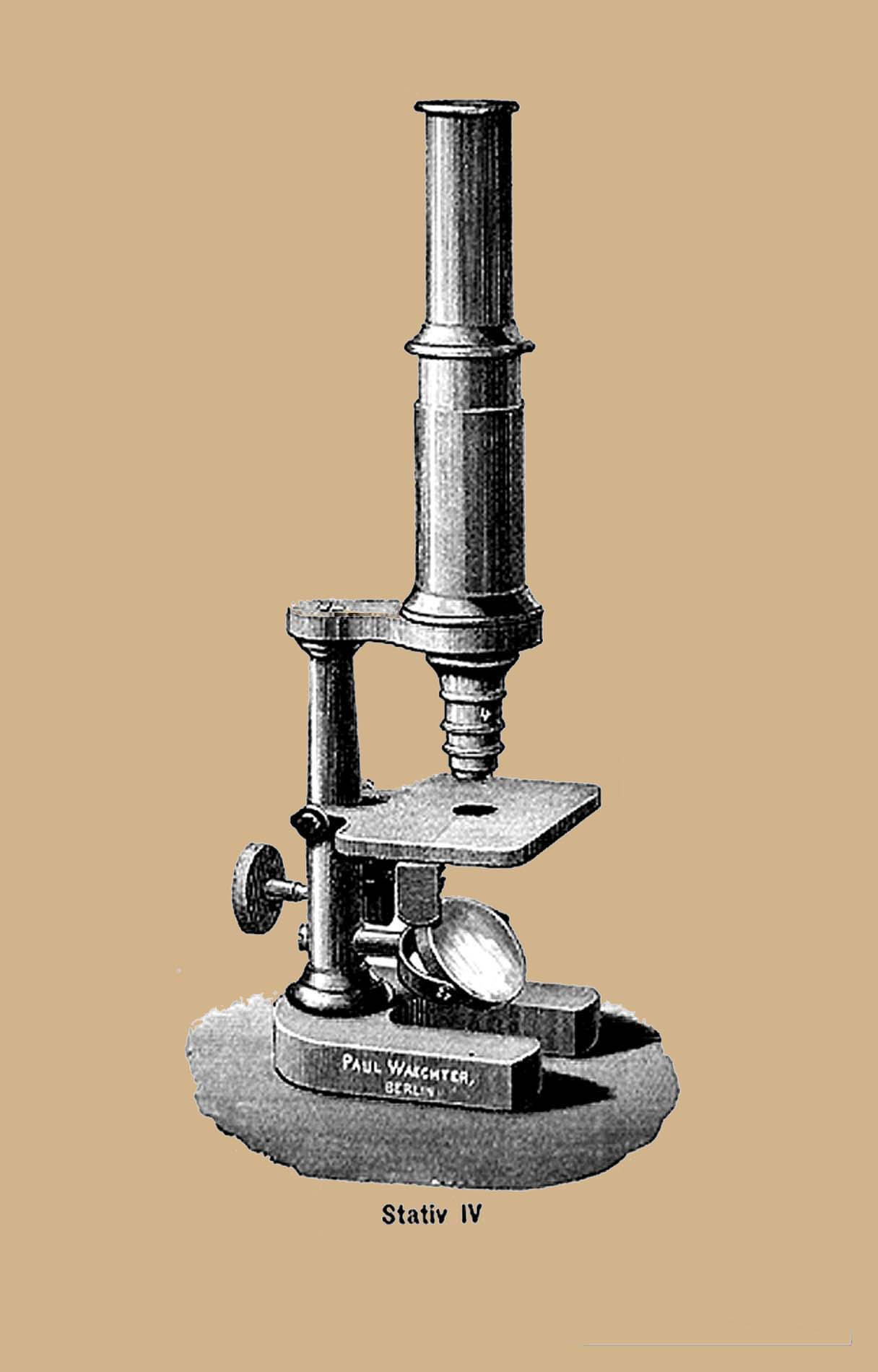
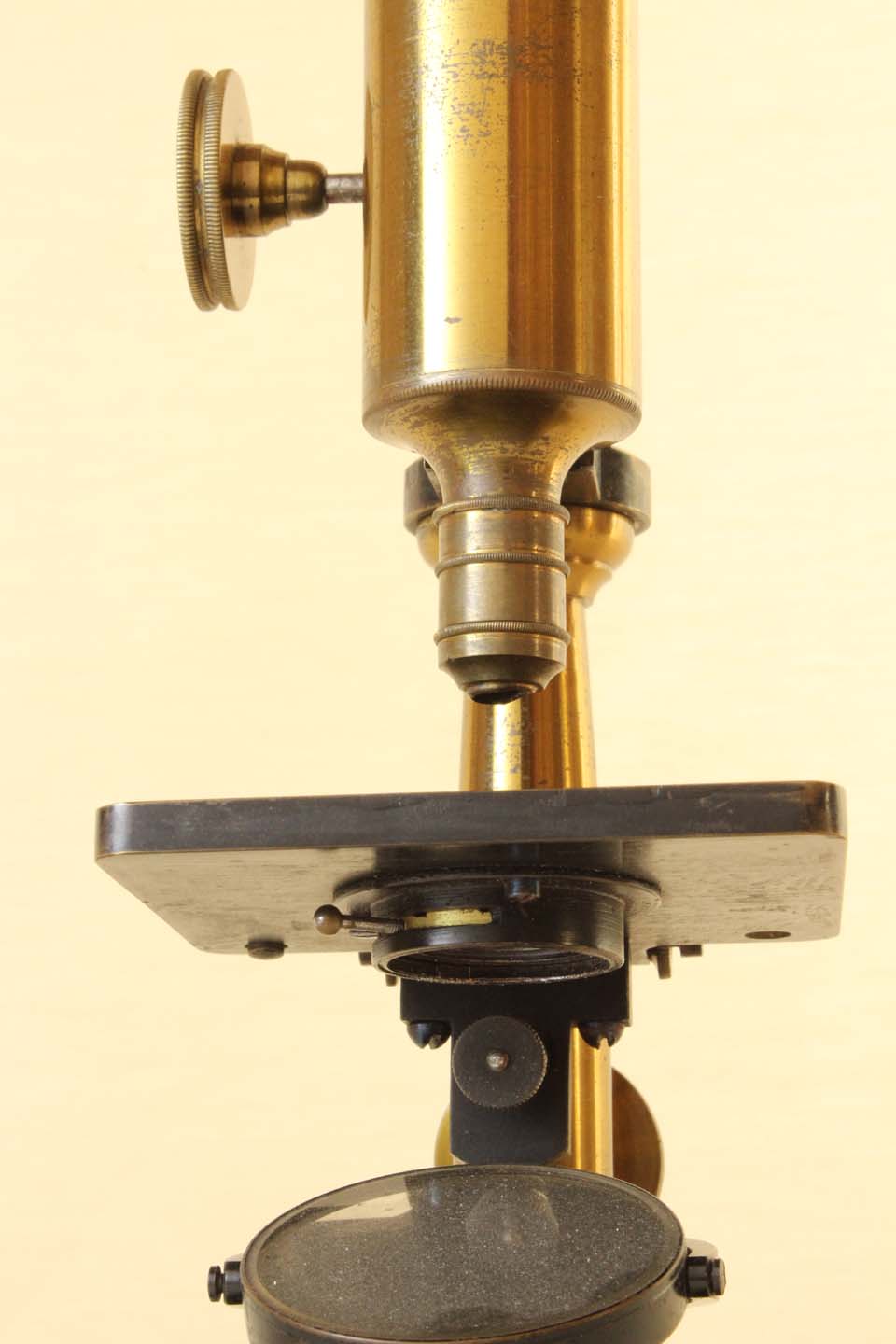 This is a small, but heavy for its size, monocular microscope most likely manufactured by the German optician, Paul Waechter, of Berlin, Germany. It is about 11 inches tall in use. The stage is about 3 X 2 inches. This is likely a Paul Waechter Stand Vb microscope. This microscope is unsigned and does not bear a serial number, but it is likely a Paul Waechter instrument. This microscope is built upon a
conventional “Continental” design horseshoe shaped foot of black painted metal. Rising from the foot is an inclination joint to which is attached a tapered brass pillar that
supports the stage and the rest of the microscope, including a bar limb. Under the stage is an iris diaphragm. There is a single slide clip on top of the stage with provision for two. The stage is attached to the pillar with a pair of set screws positioned approximately 60mm above the foot of the
microscope. This arrangement allows the stage to move slightly up or down, pivoting on the setscrews. Below the stage is a 30mm diameter plano mirror that is attached on a black stem that extends
through the pillar. Coarse focus is by moving the body tube of the
microscope up or down within a brass sleeve that is attached to the top
of the pillar with a bar limb. This microscope has a unique form of
fine focus. A spring loaded “T” shaped bar extends below the
stage. Extending through the pillar is a control knob that can be used
to exert pressure on the back of the brass bar. This action tends to
tilt the stage ever so slightly up or down to afford fine focus.
Despite the fact that it tilts the stage slightly from the horizontal
plane, it still is quite effective in providing fine focus for low
power work; for high power work it would change the illumination and
this would be a problem. The body tube of the microscope is of brass. A
single eyepiece (unmarked). At the base of the body tube is a single cylindrical objective lens. The microscope weighs about 3 pounds. Another smaller but similar Waechter microscope is also in this collection, as is a Trichinascope.
This is a small, but heavy for its size, monocular microscope most likely manufactured by the German optician, Paul Waechter, of Berlin, Germany. It is about 11 inches tall in use. The stage is about 3 X 2 inches. This is likely a Paul Waechter Stand Vb microscope. This microscope is unsigned and does not bear a serial number, but it is likely a Paul Waechter instrument. This microscope is built upon a
conventional “Continental” design horseshoe shaped foot of black painted metal. Rising from the foot is an inclination joint to which is attached a tapered brass pillar that
supports the stage and the rest of the microscope, including a bar limb. Under the stage is an iris diaphragm. There is a single slide clip on top of the stage with provision for two. The stage is attached to the pillar with a pair of set screws positioned approximately 60mm above the foot of the
microscope. This arrangement allows the stage to move slightly up or down, pivoting on the setscrews. Below the stage is a 30mm diameter plano mirror that is attached on a black stem that extends
through the pillar. Coarse focus is by moving the body tube of the
microscope up or down within a brass sleeve that is attached to the top
of the pillar with a bar limb. This microscope has a unique form of
fine focus. A spring loaded “T” shaped bar extends below the
stage. Extending through the pillar is a control knob that can be used
to exert pressure on the back of the brass bar. This action tends to
tilt the stage ever so slightly up or down to afford fine focus.
Despite the fact that it tilts the stage slightly from the horizontal
plane, it still is quite effective in providing fine focus for low
power work; for high power work it would change the illumination and
this would be a problem. The body tube of the microscope is of brass. A
single eyepiece (unmarked). At the base of the body tube is a single cylindrical objective lens. The microscope weighs about 3 pounds. Another smaller but similar Waechter microscope is also in this collection, as is a Trichinascope.

 HISTORY OF THE PAUL WAECHTER MICROSCOPES