
| DESCRIPTION | HISTORY |
Please Click On Any Picture for a Larger Version
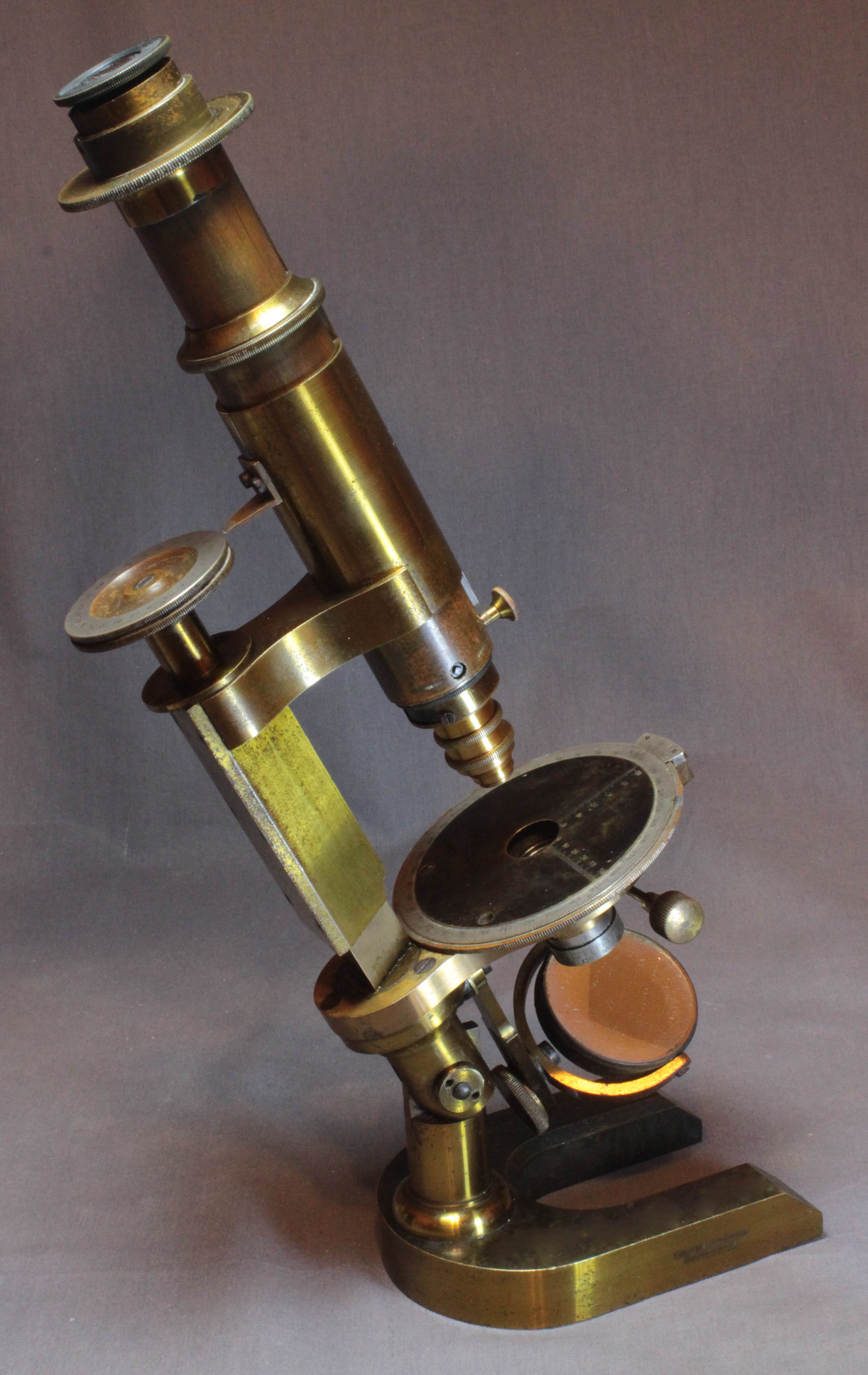
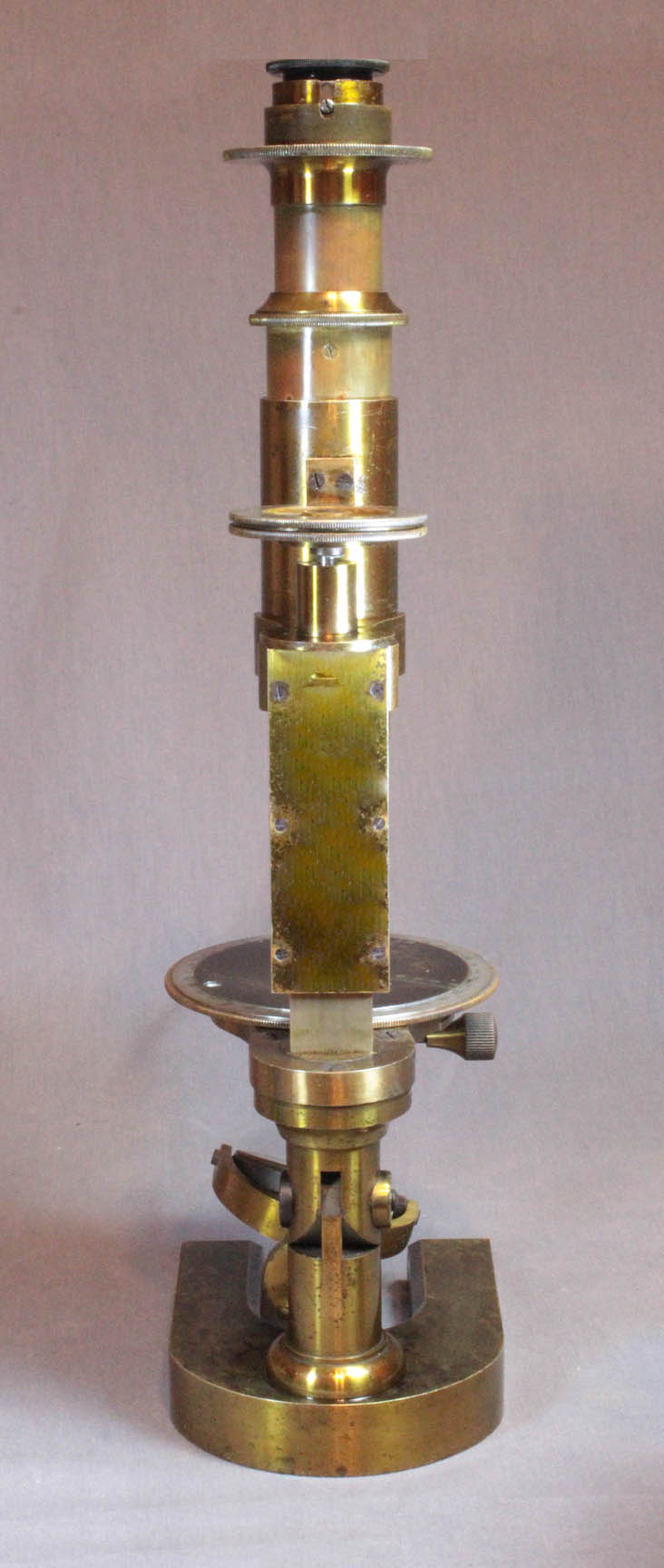
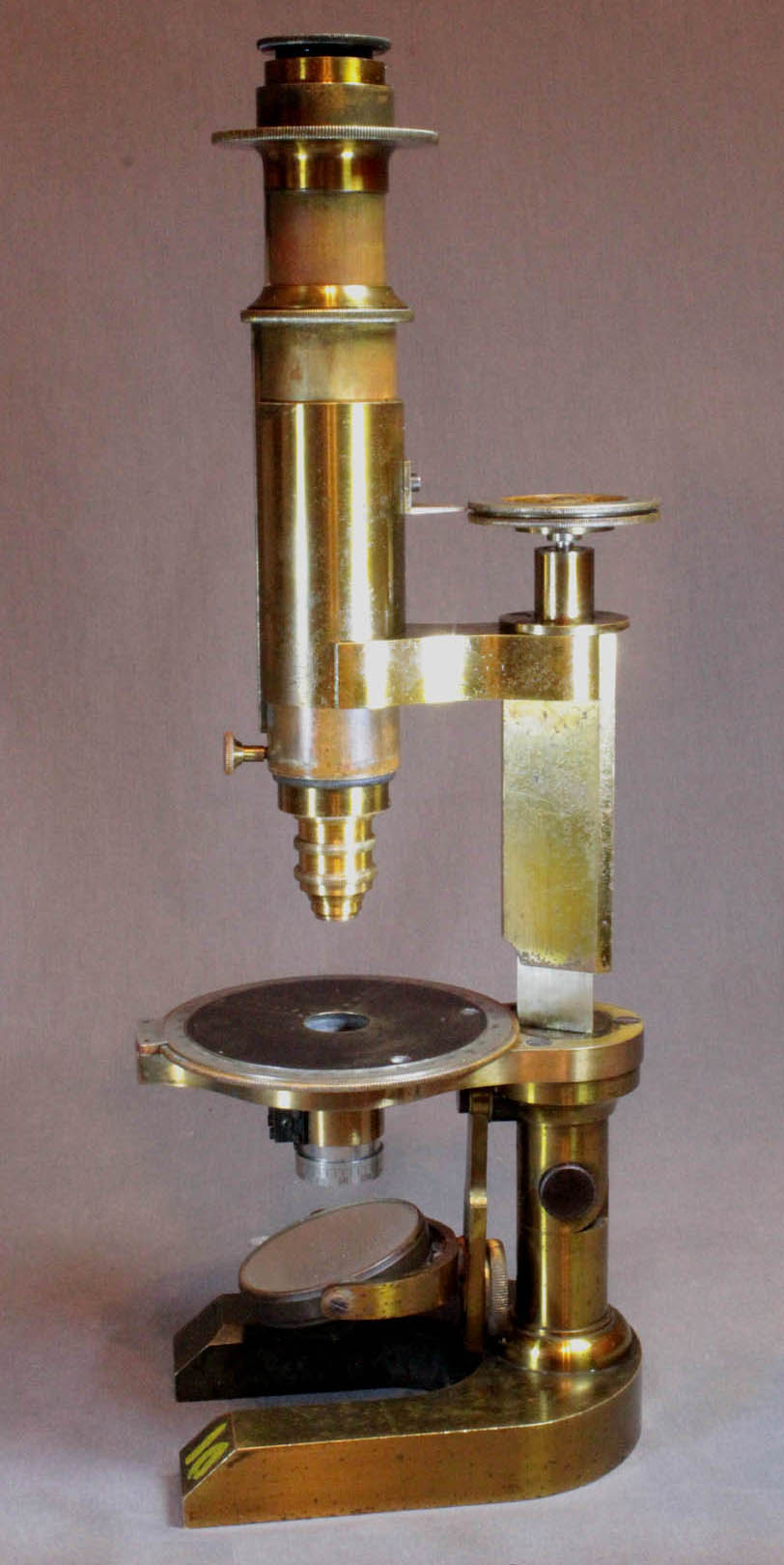
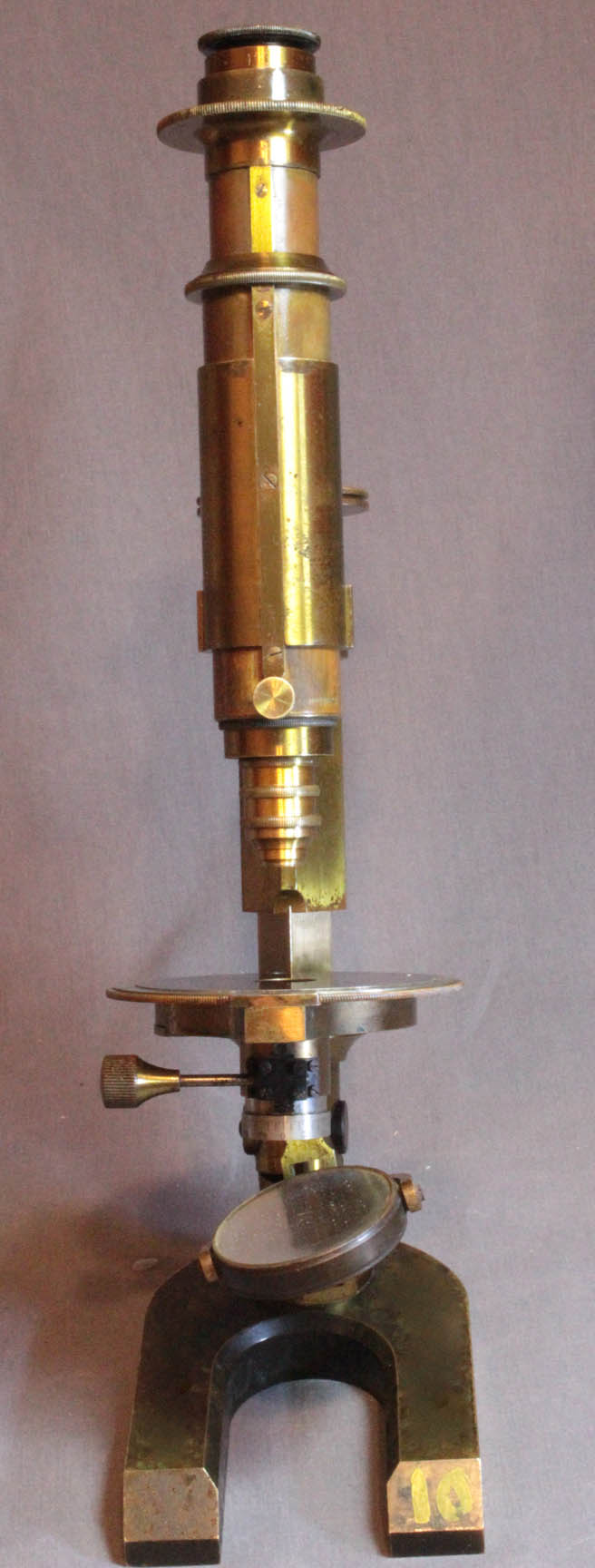
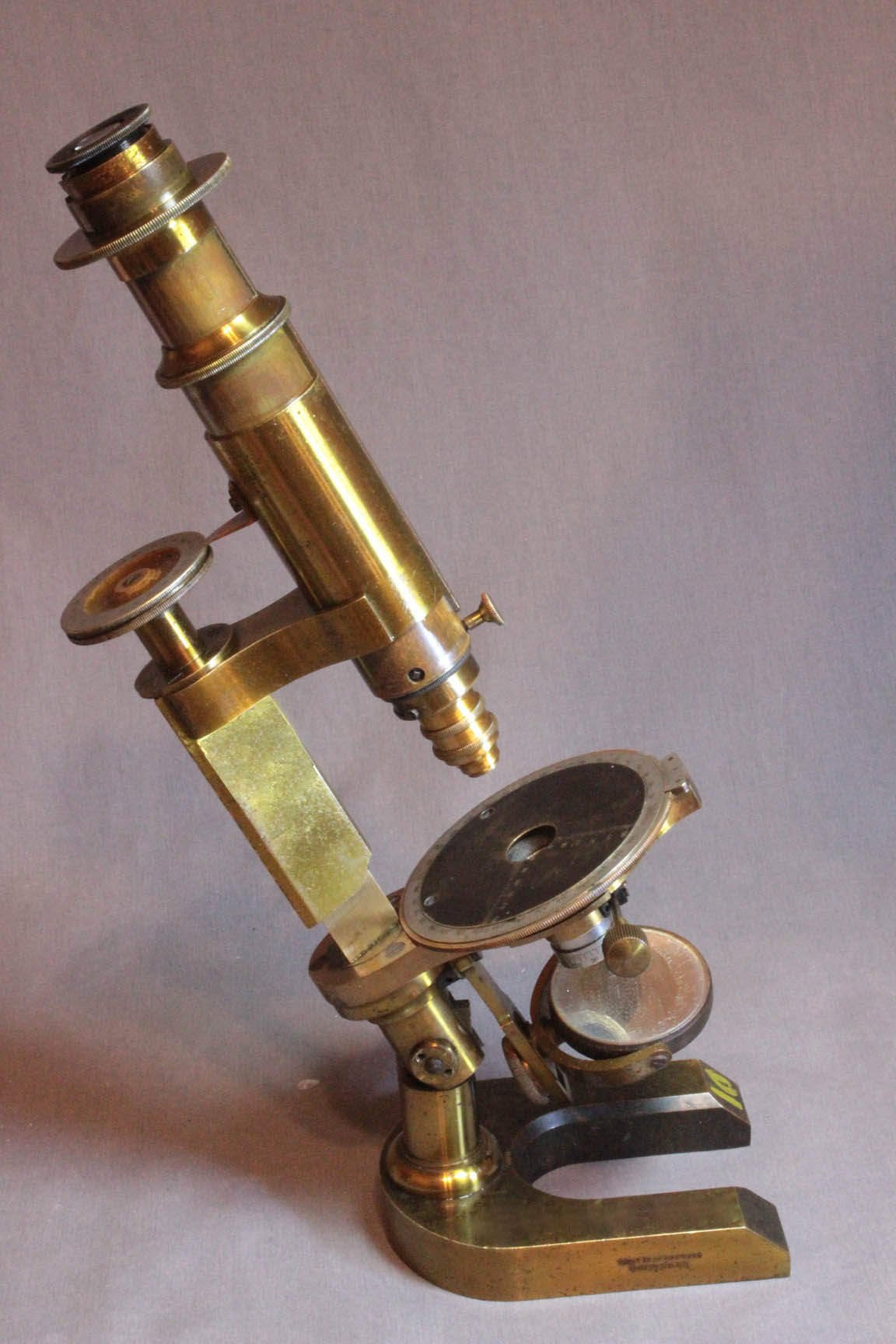
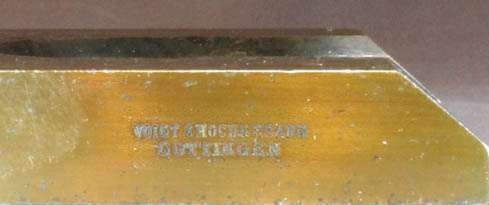 This compound petrographic microscope is signed on the side of the foot:
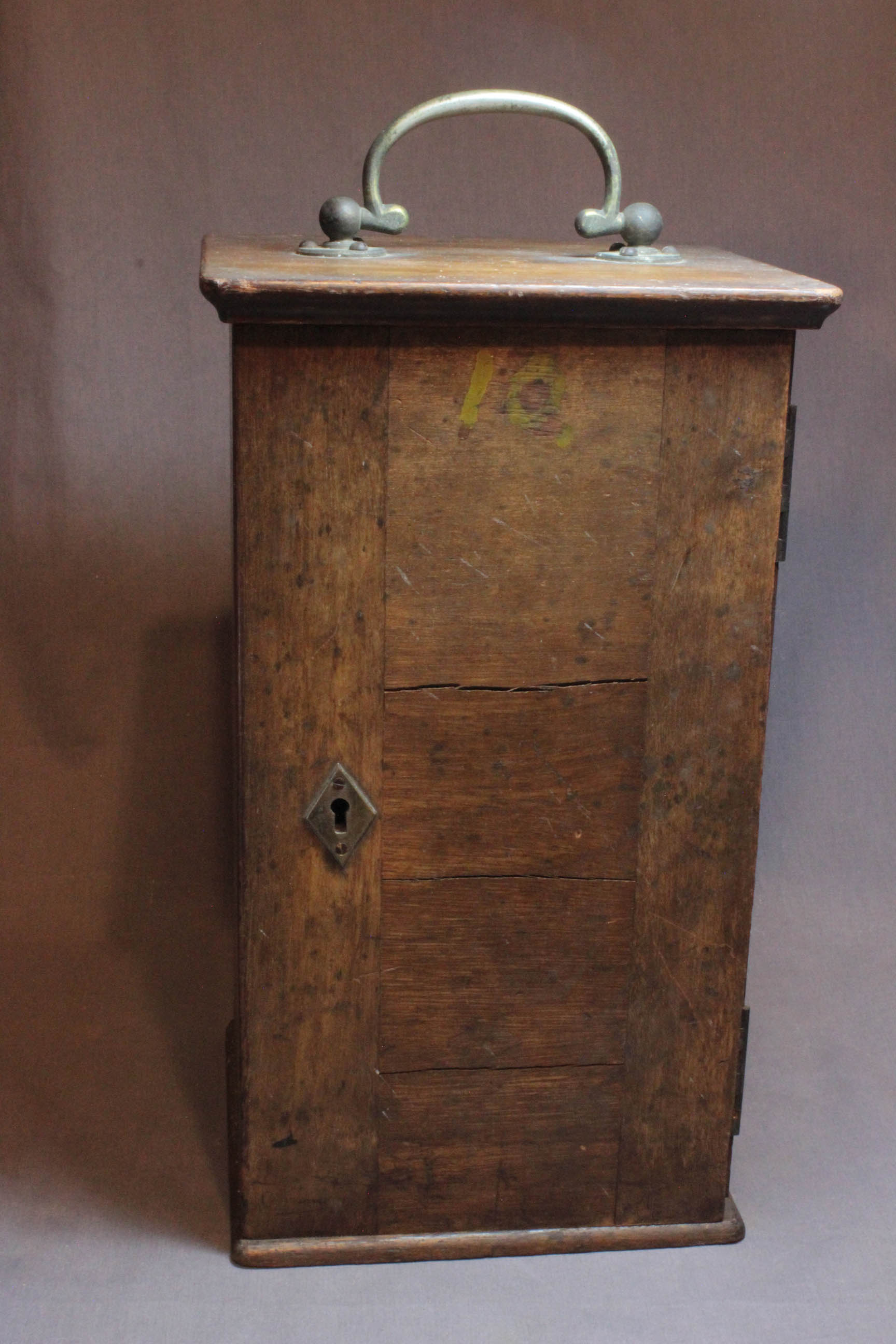
 VOIGT & HOCHGESANG, GÖTTENGEN.The foot of the microscope and the case both have a painted number
10reflecting use in a teaching institution, but the case is not original to the microscope, being a circa 1895 case by Leitz (thanks to Dan Kile for pointing out the maker of the case!)Although the case is not original to the microscope, it is from about the same time period, and its number lends support to the notion that although not original, it was the case used to store the microscope at the teaching institution that this microscope was likely used at. I include it on this web page because of its provenance.
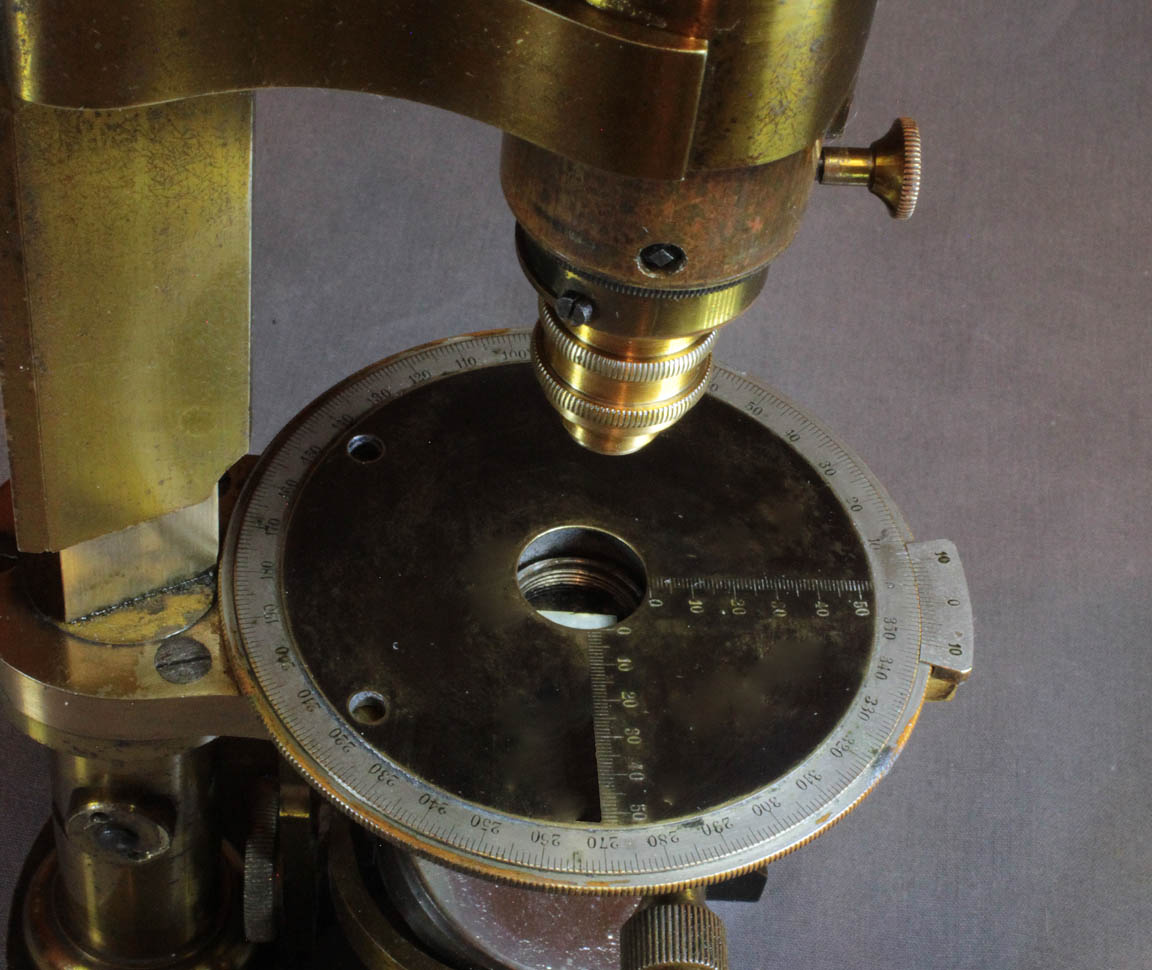 The stage is graduated from 0 to 360 degrees, marked each degree and labeled every ten degrees, but with a Vernier scale enabling readings to fractions of a degree. There are two holes in the stage for stage clips. The central blackened part of the stage is graduated in two directions, oriented 90 degrees from one another, allowing a slide to be relocated to a specific position of interest.
 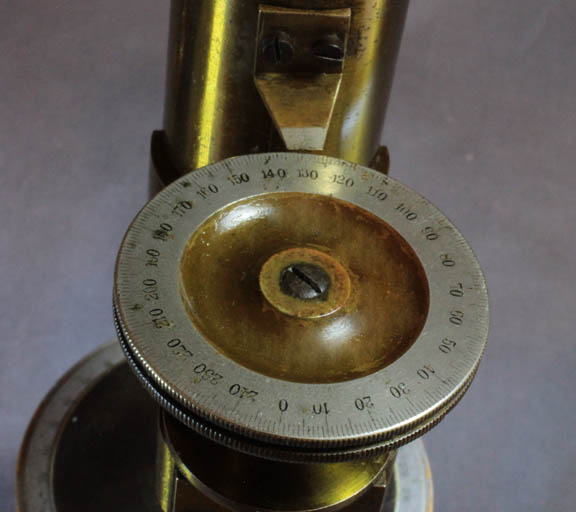 Fine focus is by a finely threaded screw with a brass knob at the top of the continental limb. The fine focus knob also has nickel calbrations on its periphery.
 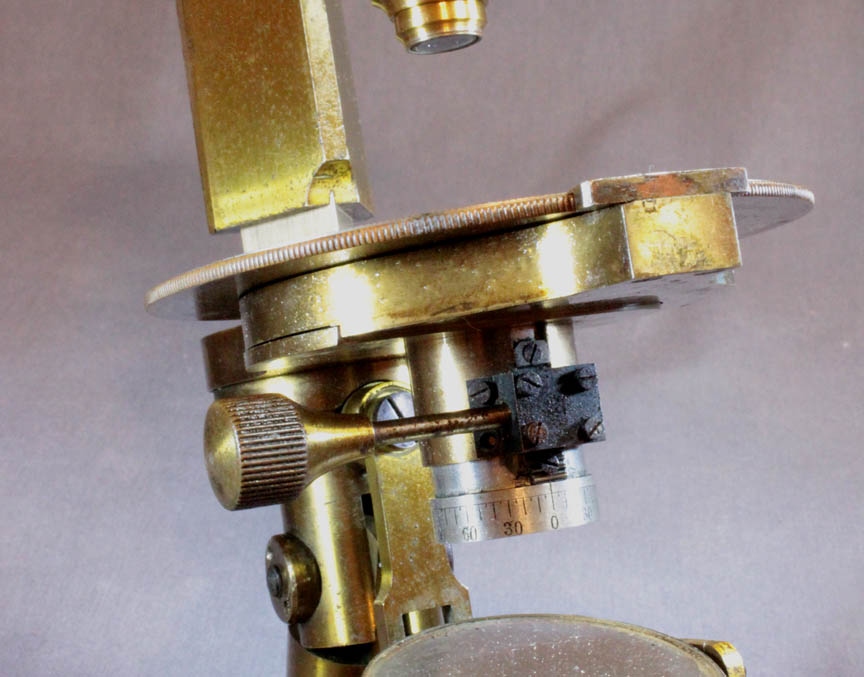 A substage polarizer assembly slides into a dovetail slot in the bottom of the stage. The calcite Nicol prism polarizer is mounted in a nickel cylinder which rotates inside a second nickel cylinder. The inner cylinder, housing the prism is graduated from 0 to 360 degrees, in 5 degree increments, labelled every 20 degrees. The outer cylinder has a short blackened rack attached, allowing rack and pinion focusing for this substage polarizer. The pinion is controlled by a knurled brass knob.
 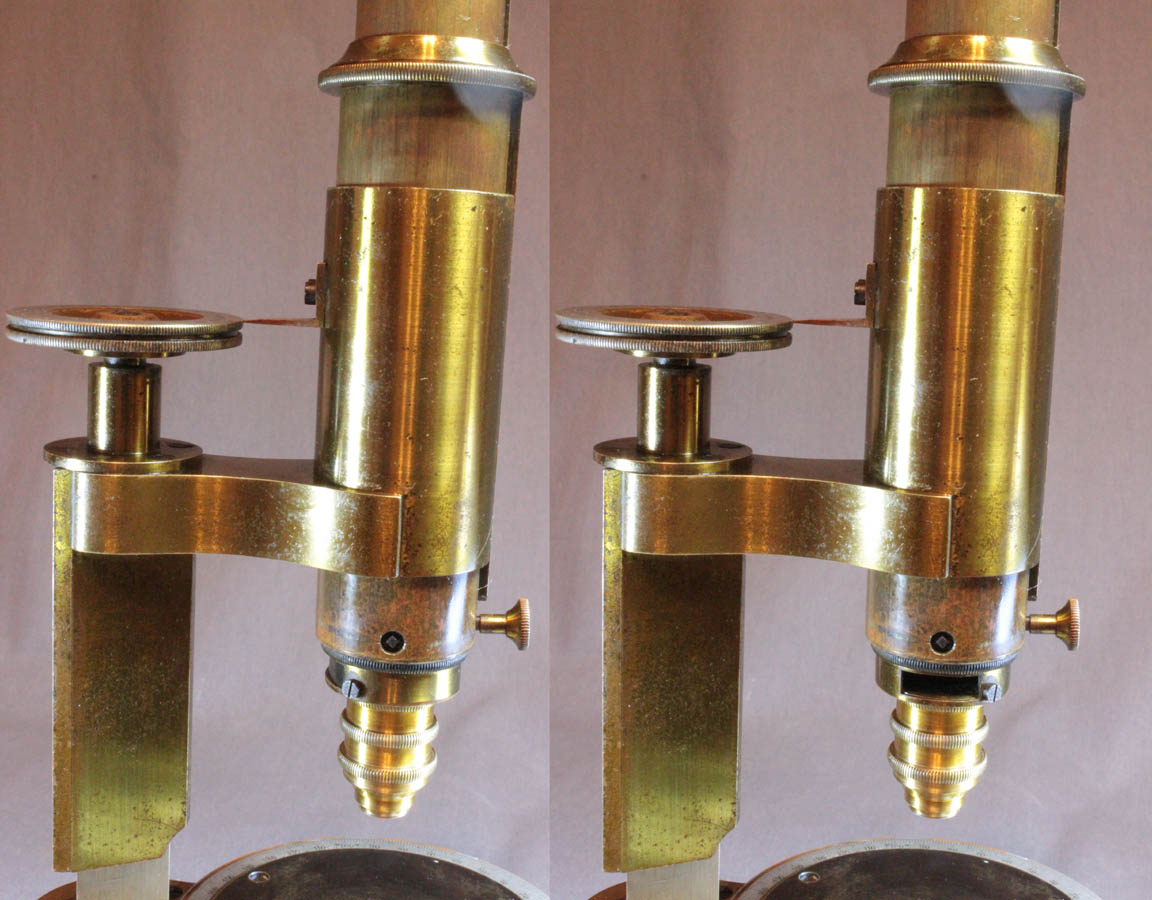 Immediately above the place where the objective screws in to the nosepiece is a slot for the introduction of wave plates. This slot, shown to the left, has a sliding collar to cover it when not in use. Immediately above this slot is the adjustment screw for right-left centering; the knob of this screw is missing. The knob for centering forward and backward is on the front of the tube at the same level.
4but the other elements have no visible numbers. This objective functions well, though the elements are not easily separated from each other.
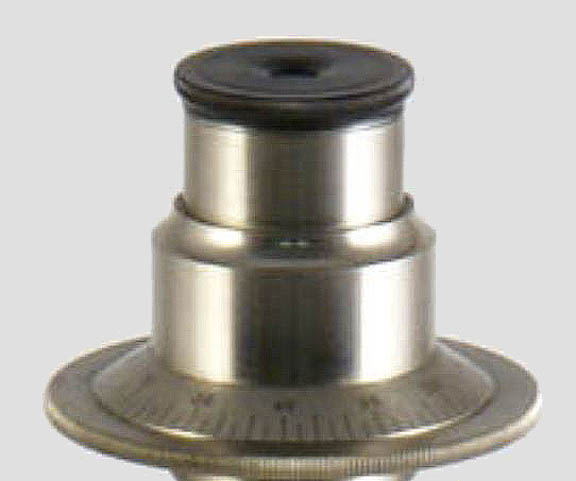 There are no waveplates with this example, and the original over-the-eyepiece analyzer, an example of which from a different microscope is shown to the left, is missing. As is the case with most microscopes by this maker, the serial number is not engraved on the microscope, and may have been engraved on the polarizer. The case that this microscope was stored in is not original and was most likely by Leitz. The case has cracks and is missing about a 1/4 inch part of the door on the side that would have been attached to the hinges. The eyepiece previously had cross hairs, but these are now lost. One of the centering knobs for the nosepiece apparently broke off in the past, the other is present and functions as it should.
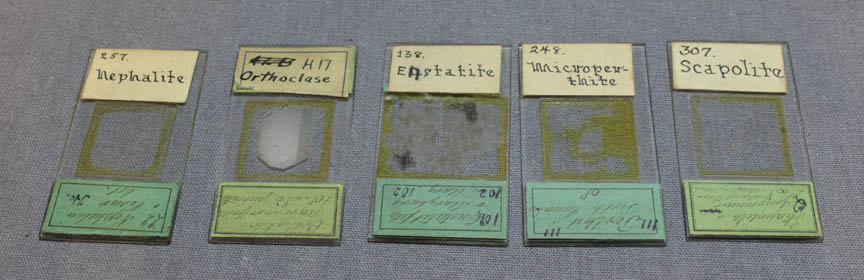 Voigt & Hochgesang were famous for selling petrographic microscopes and especially petrographic thin section slides, some of which are shown to the left.
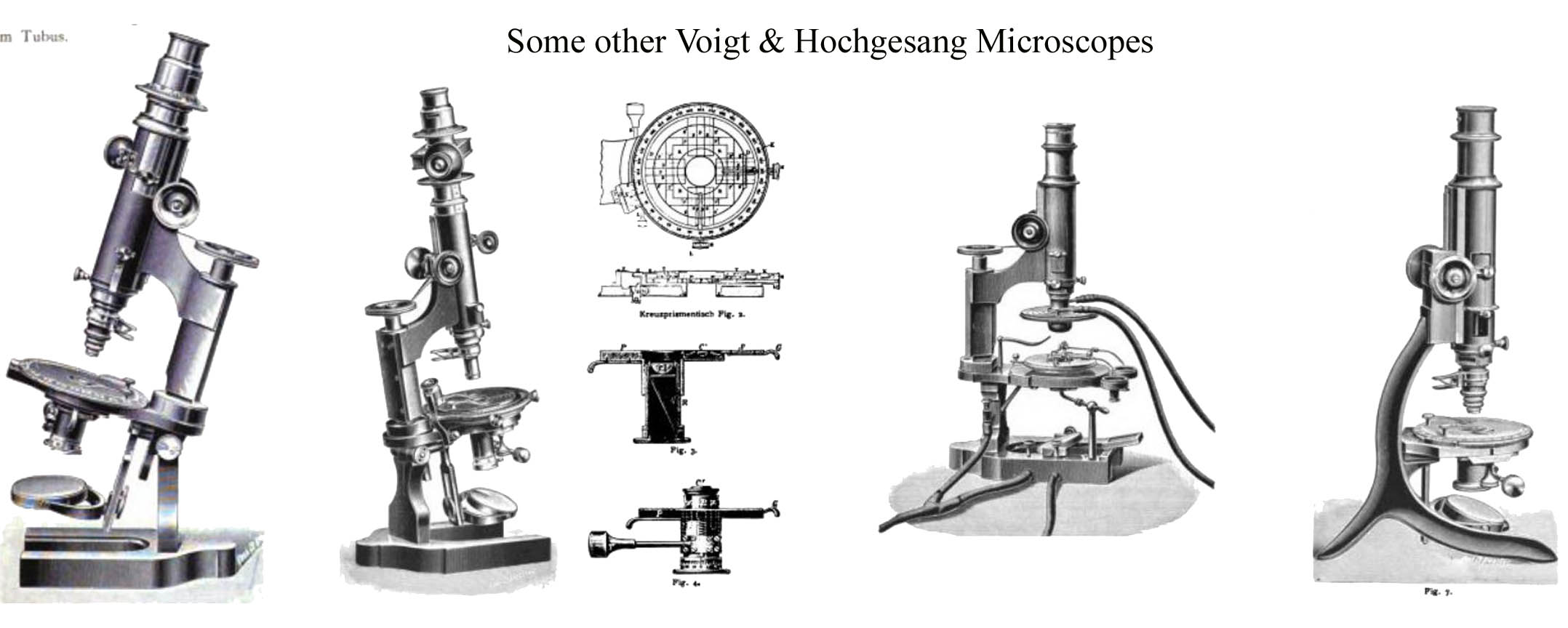
V & H made several different models, some of which, from a 1900 publication*, are shown here:
Voigt & Hochgesang were famous for selling petrographic microscopes and especially petrographic thin section slides, some of which are shown to the left.
V & H made several different models, some of which, from a 1900 publication*, are shown here:
 Their microscope business was apparently absorbed by Steeg & Reuter in 1905 thus this microscope might be earlier than 1905. It is notable though, that their petrographic microscopes are still pictured in a book on petrography published in 1912. V & H continued to make slides until 1915. Petrographic microscopes of this firm are very rarely seen today, and their slides are often sought after by collectors.