
DIE ERDKUGEL, Bearbeitetvon, H. Albrecht, Verlag, ERNST SCHOTTE & Co, BERLIN W.35., Magulab 1:163 Mill.
ERNST SCHOTTE & Co, BERLIN W., Geographisch artistische Anstalt
Entworfen u. gezeichnet von H. Albrecht
| DESCRIPTION | HISTORY |
Please Click On Any Picture for a Larger Version

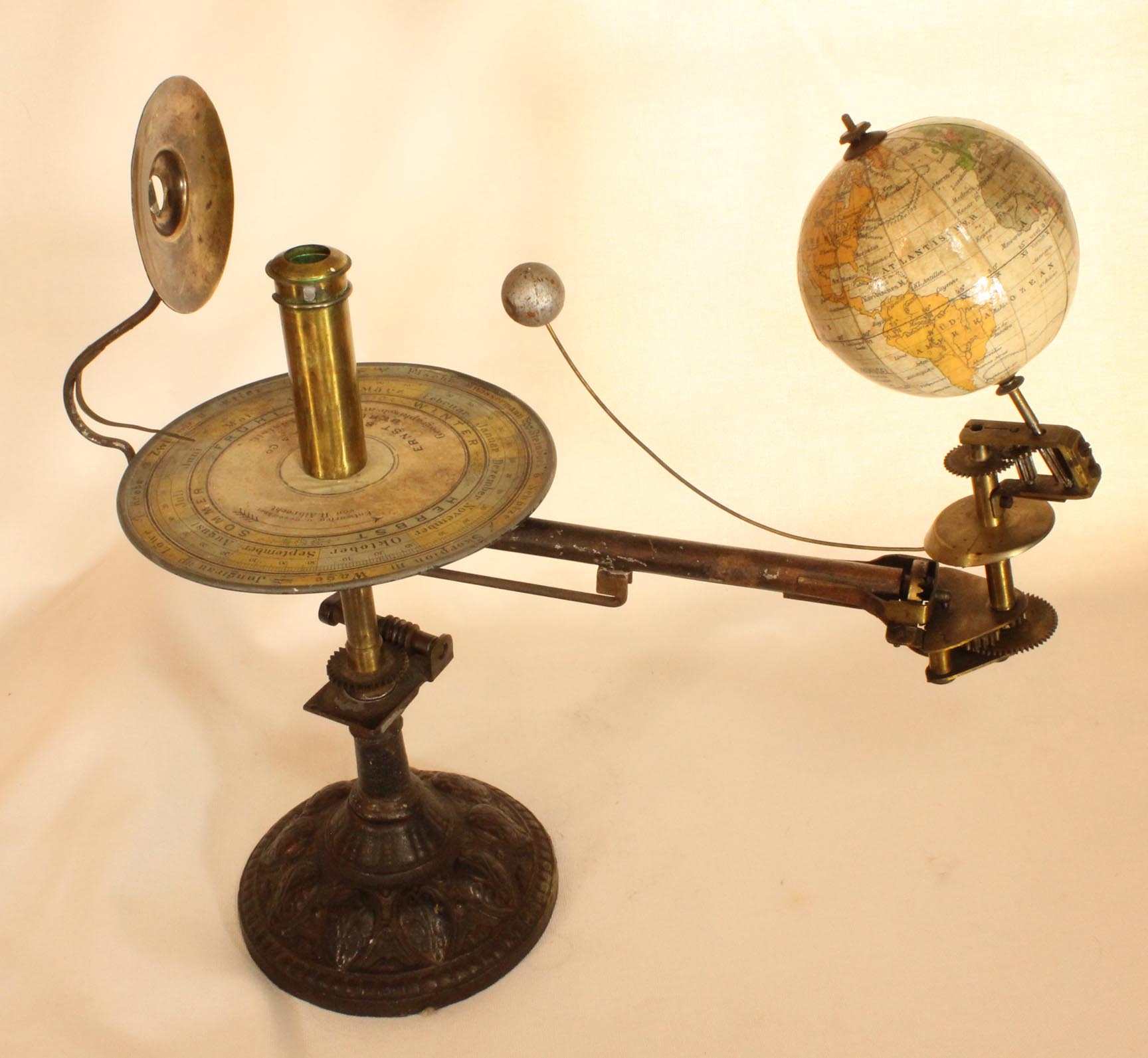

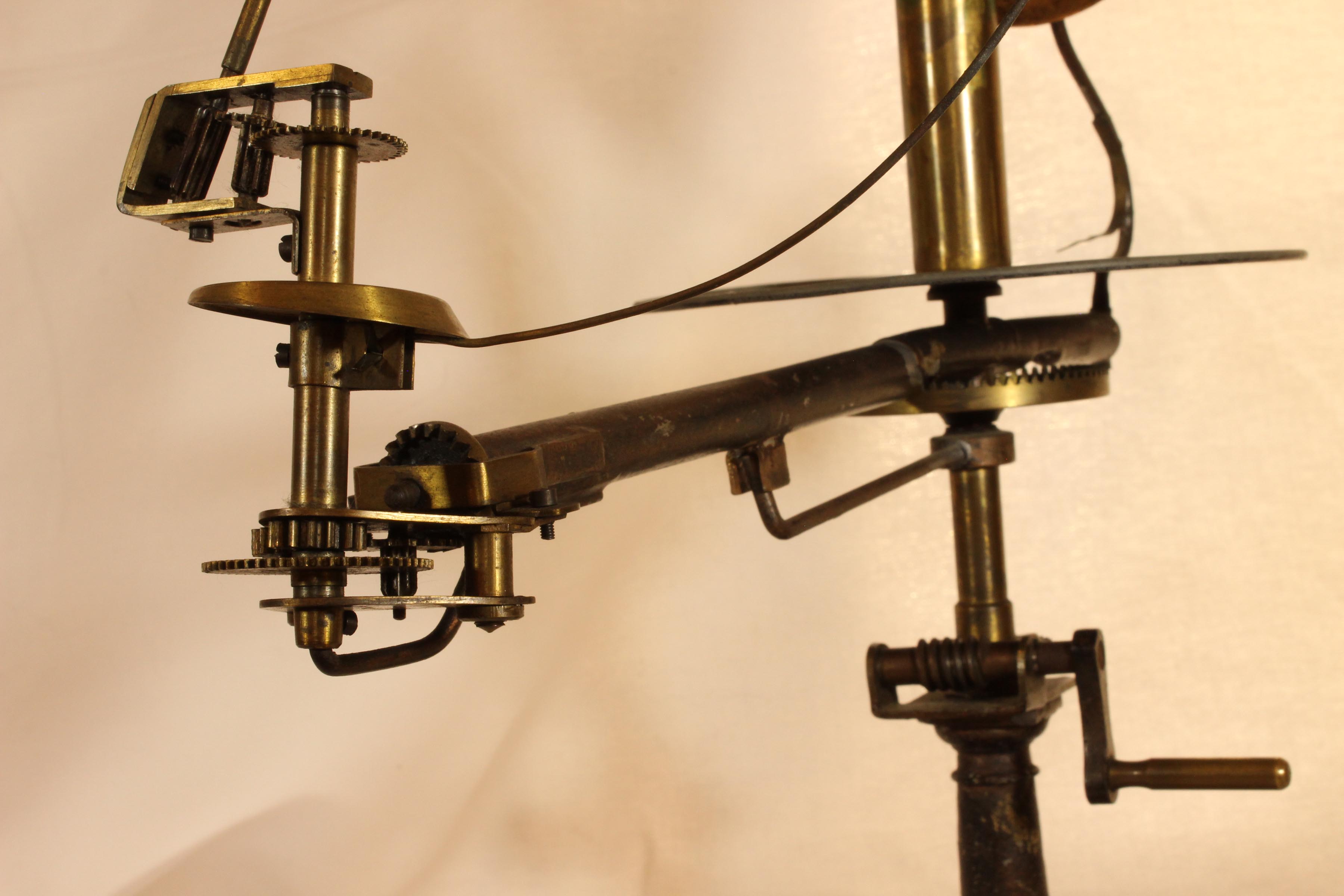
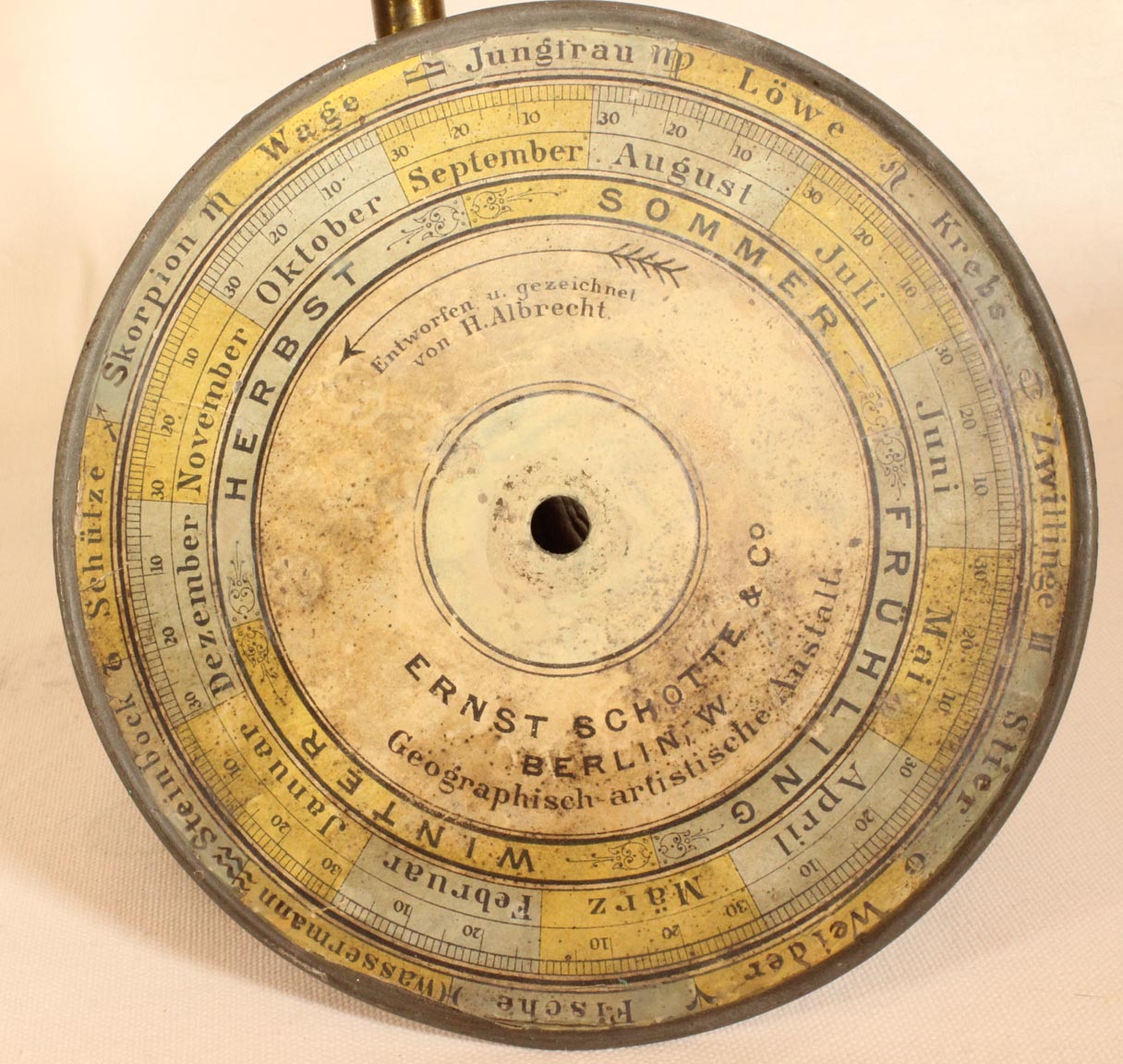
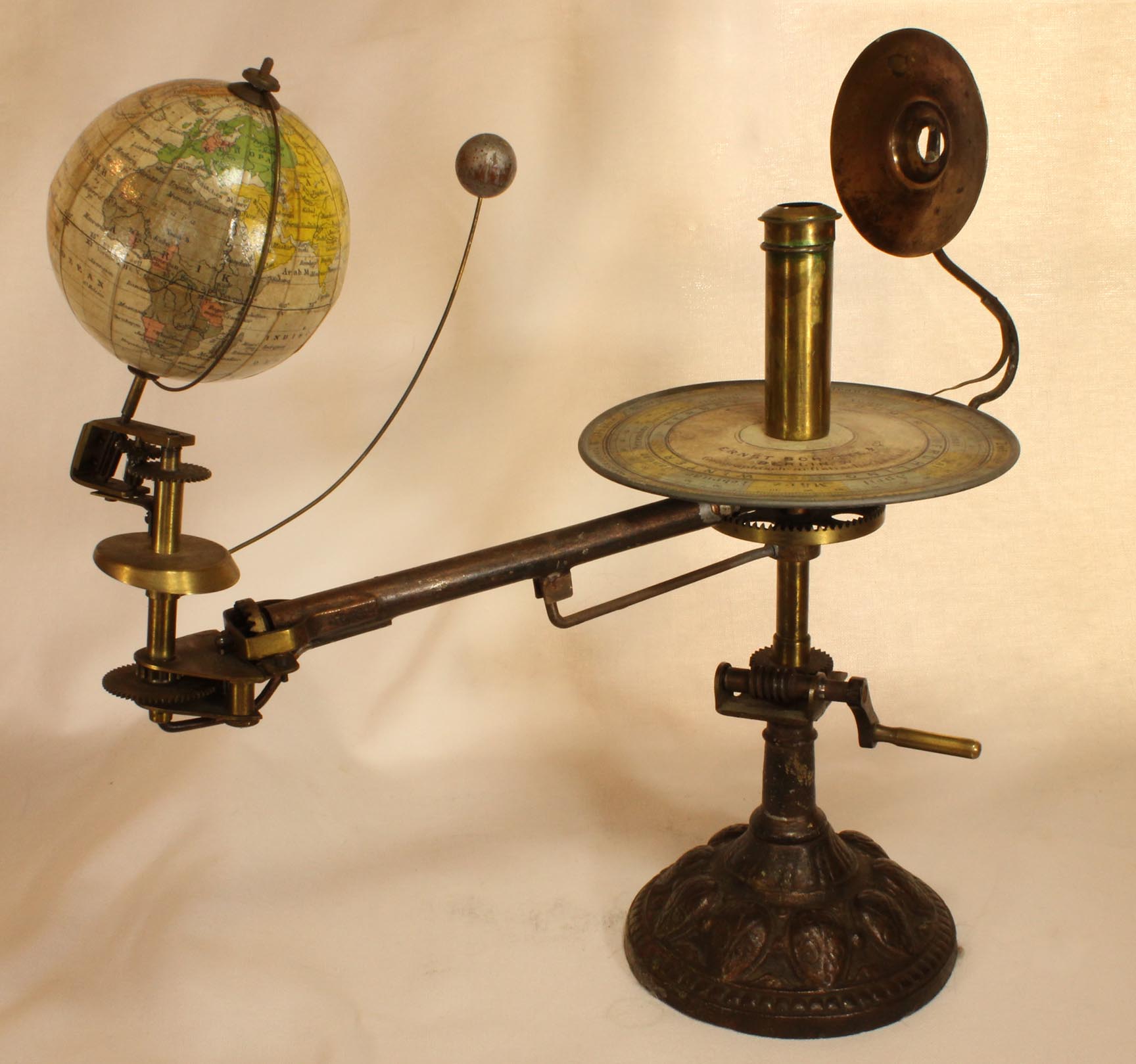
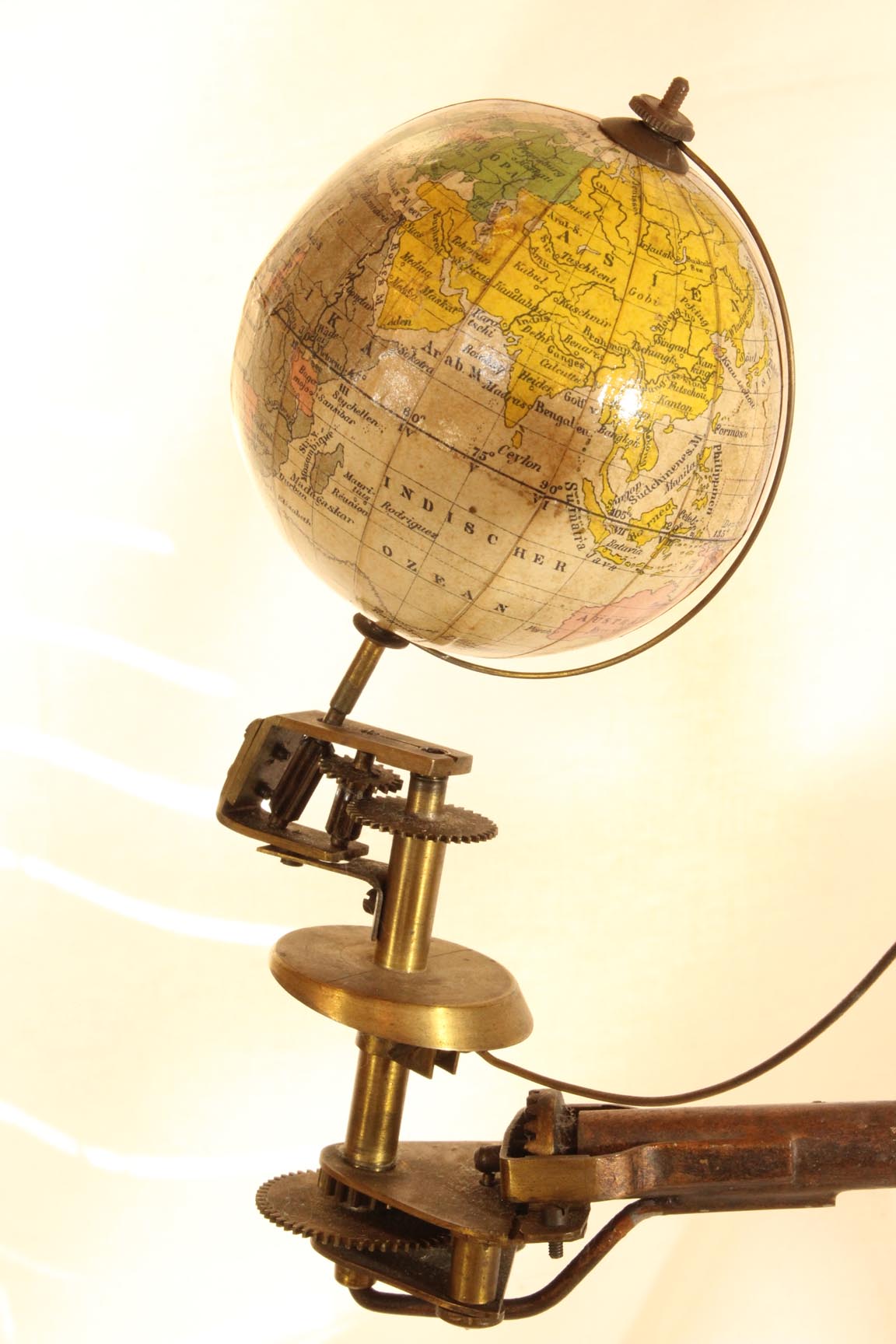


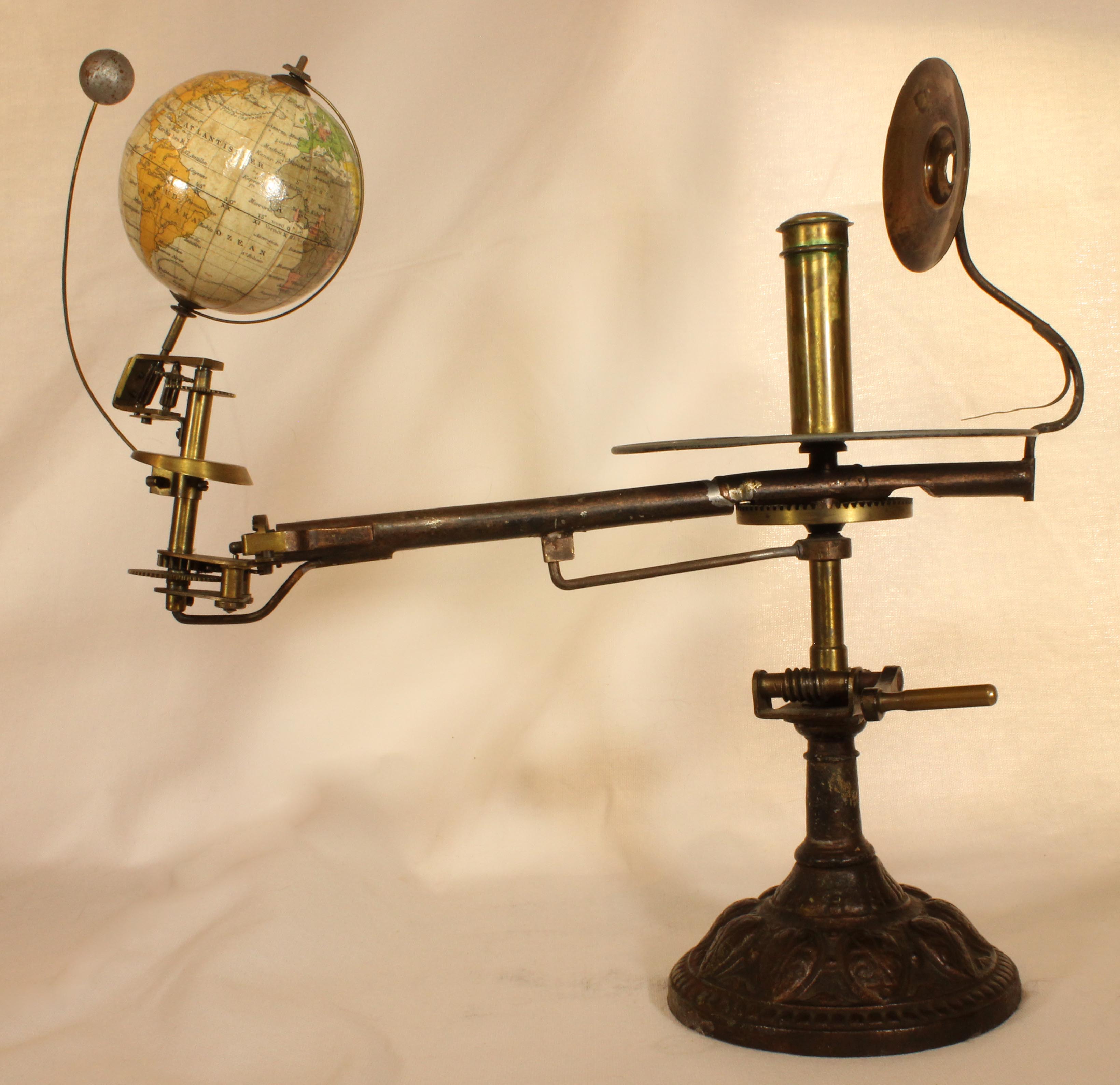 This is a "Tellurium mit Lunarium” (tellurian and lunarium in English) by the firm of Ernst Schotte & Co. of Berlin, Germany, circa 1890’s. This antique planetarium stands about 13 inches high and about 13 inches wide excluding the projection of the moon. The calendar disk is about six inches in diameter. The globe is about three inches in diameter. As the crank is turned, the Earth revolves around the sun (candle) as it rotates on its axis. At the same time, the moon revolves around the earth in its correct angled orbit. A pointer attached to the brass reflector indicates the date. Through the geared mechanism, the northward pointing axis of the earth’s rotation is maintained while it revolves around the sun and the moon revolves around the earth all in the correct ratios. These movements illustrate the reasons for the seasons, eclipses and duration of day and night at different times of the year. There is a spring mechanism inside the candle holder to maintain the height of the flame as the candle burns. The dark and heavy metal base has a three dimensional decoration. Instructions on this instrument appear in the 1903 publication ‘Schottes Tellurium mit Lunarium, Ein Leitfade fur Lehre und Schuler’ by H. Albrecht.
 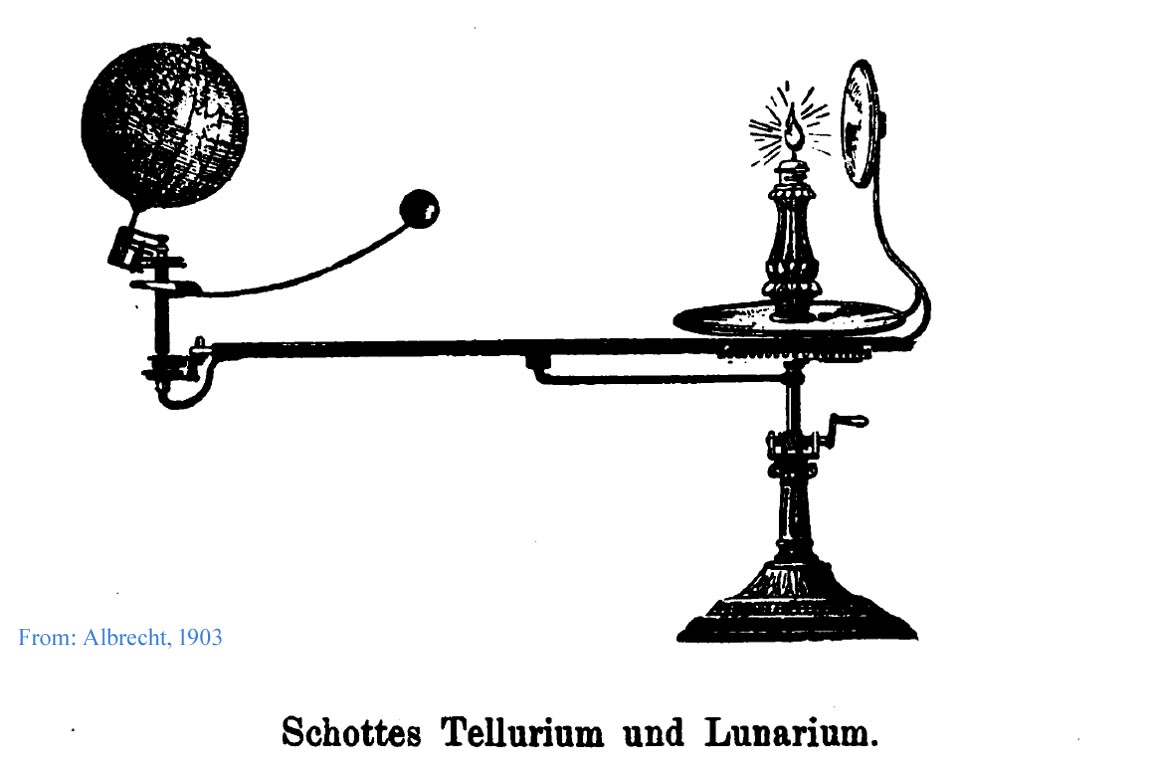 Planetariums have existed for centuries. A particularly famous one was made about 1704 for Charles Boyle, the 4th Earl of Orrery and hence the machine became known as an 'Orrery'. This name however, is properly applied mainly to planetariums illustrating more than one planet revolving around the sun. A device that only illustrates the earth, is called a 'tellurian' and one that illustrates the movements of the moon, a 'lunarium'. Nowadays, the term 'lunarium' is usually not associated with the lunar depiction of a tellurian, but rather a more specialized device. The planetarium on this page was called a 'tellurian and lunarium' by the company that produced it, but today we would simply call it a tellurian. The German word 'tellurium' is presently used in the English language to describe the element Tellurium (Te, atomic number 52), not this machine.