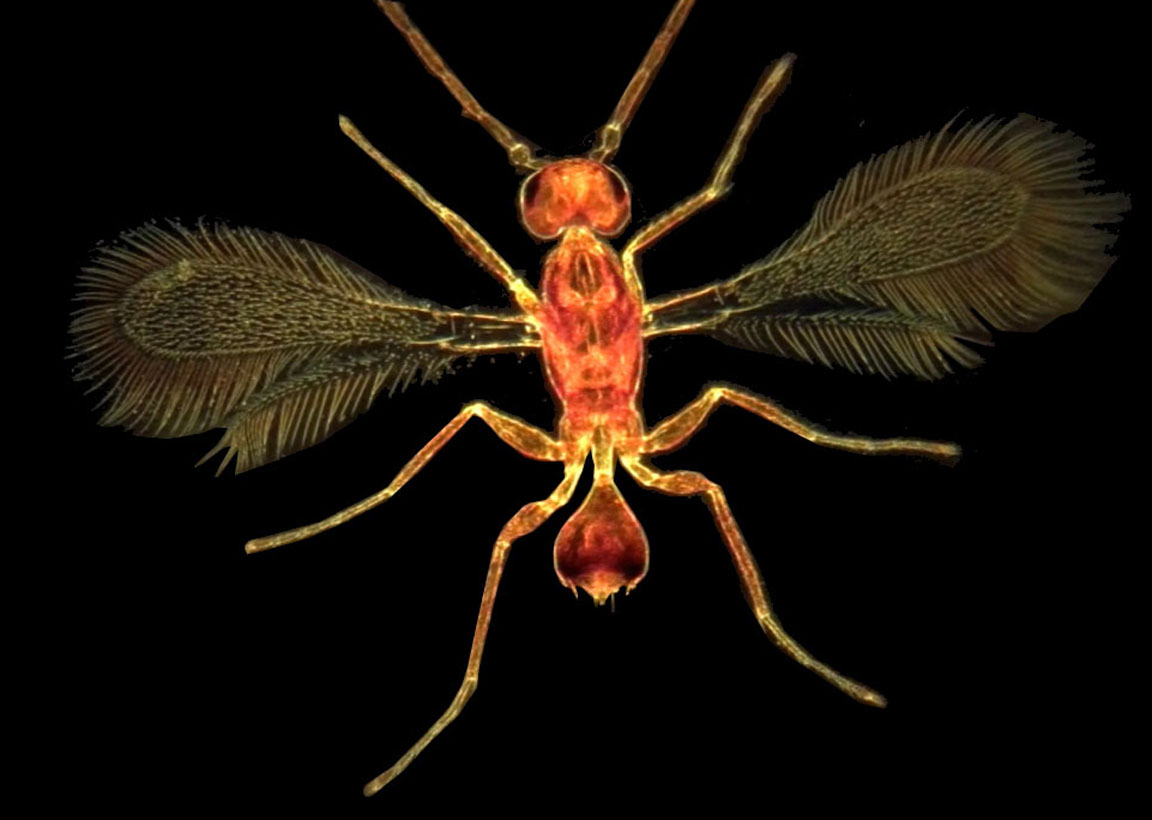
THE FREDERIC ENOCH SLIDES OF FAIRY FLIES (Actually Wasps)
MOUNTER: FREDERIC ENOCH
c. 4th Qtr 19TH C.
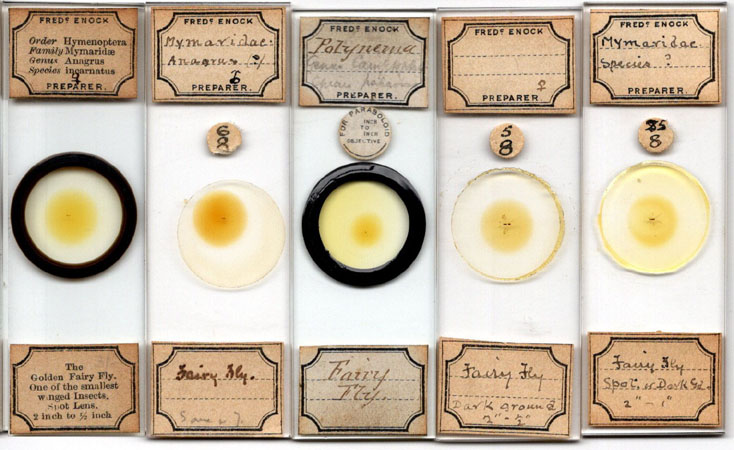
What are commonly called Fairy Flies are actually Fairy Wasps. Interestingly, most people have never seen one, and this is no wonder since they include the tiniest wasps, the tiniest insect and include the smallest flying insect. A look at the slides at their normal size, reveals the width of the smaller fairies are only about 1/10th that of the head of a pin and would not be visible to the naked when flying around. They are delicate little creatures and mounting them while preserving their structure on a slide is a great accomplishment. Frederic Enoch mounted all sorts of insects but specialized in these smallest of all. His mounts are usually of the highest quality, and demand for his mounts made his mounts more expensive than some others not only in his own lifetime, but even today when they command higher prices than other insect slides, especially his Fairy Fly mounts.
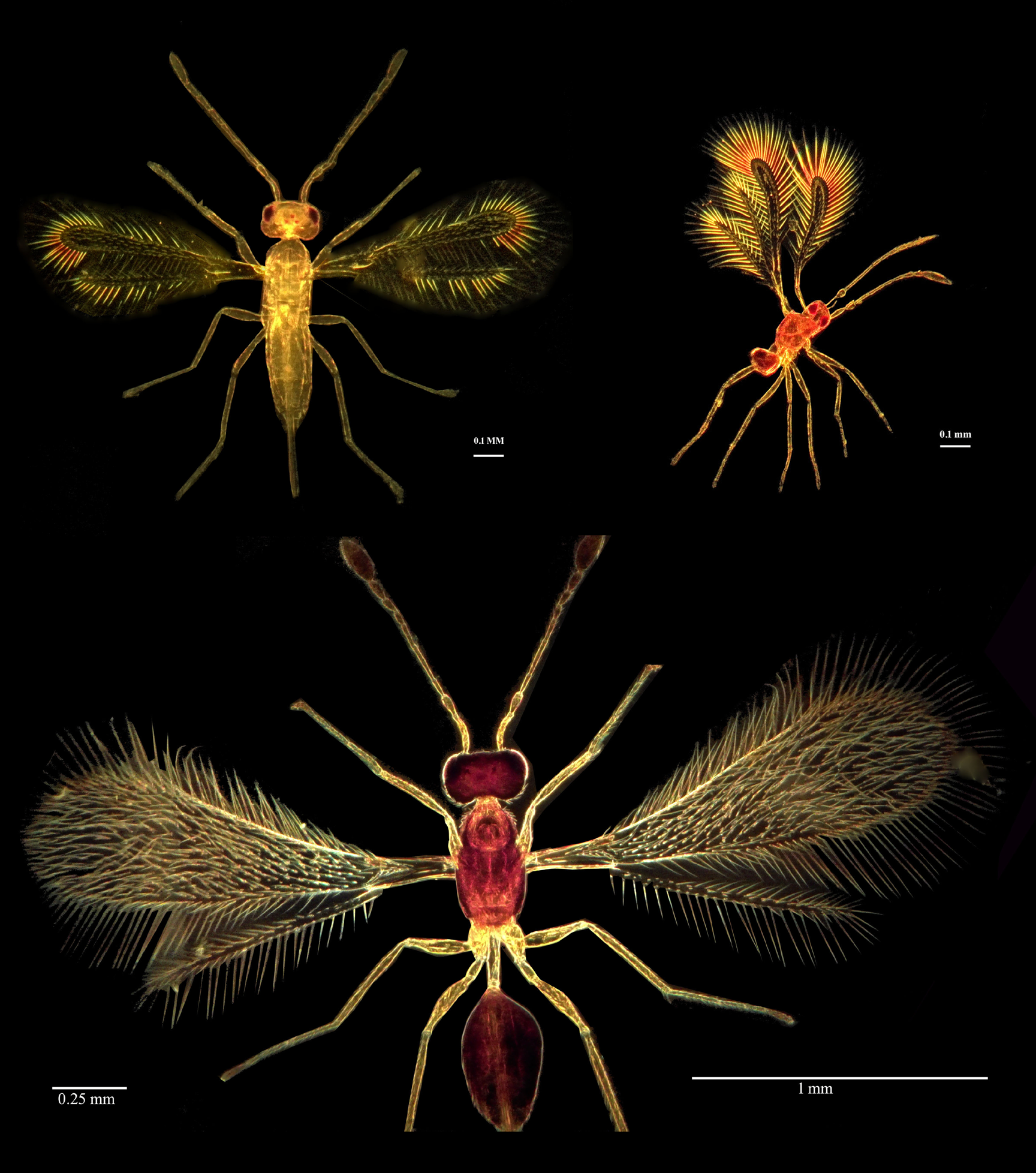
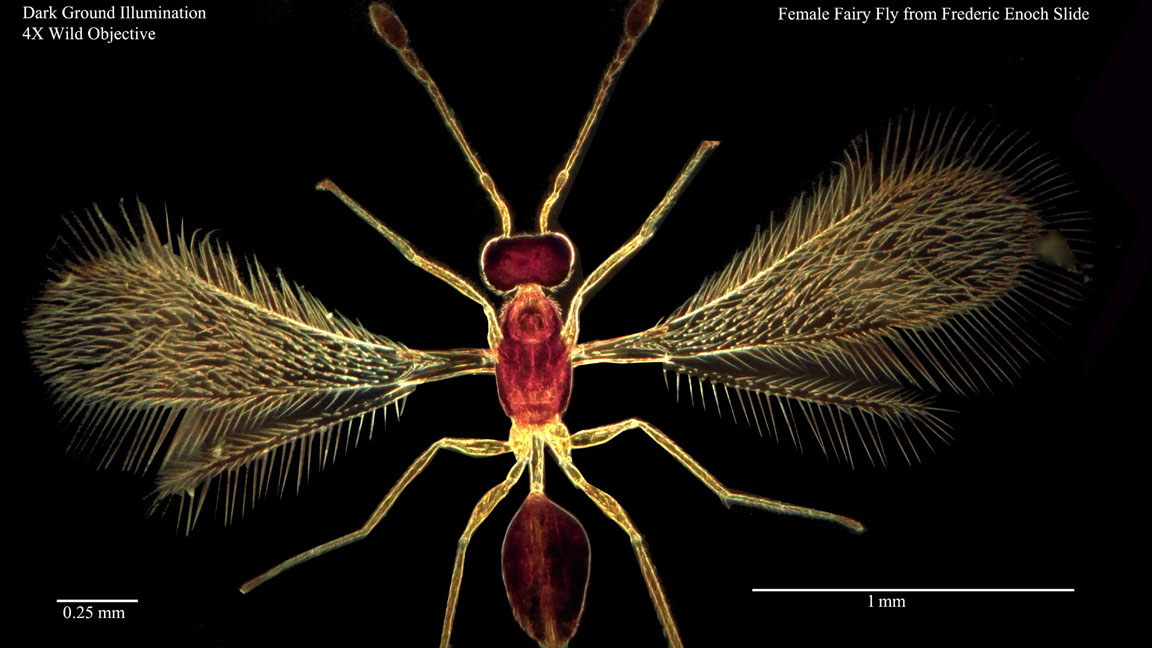
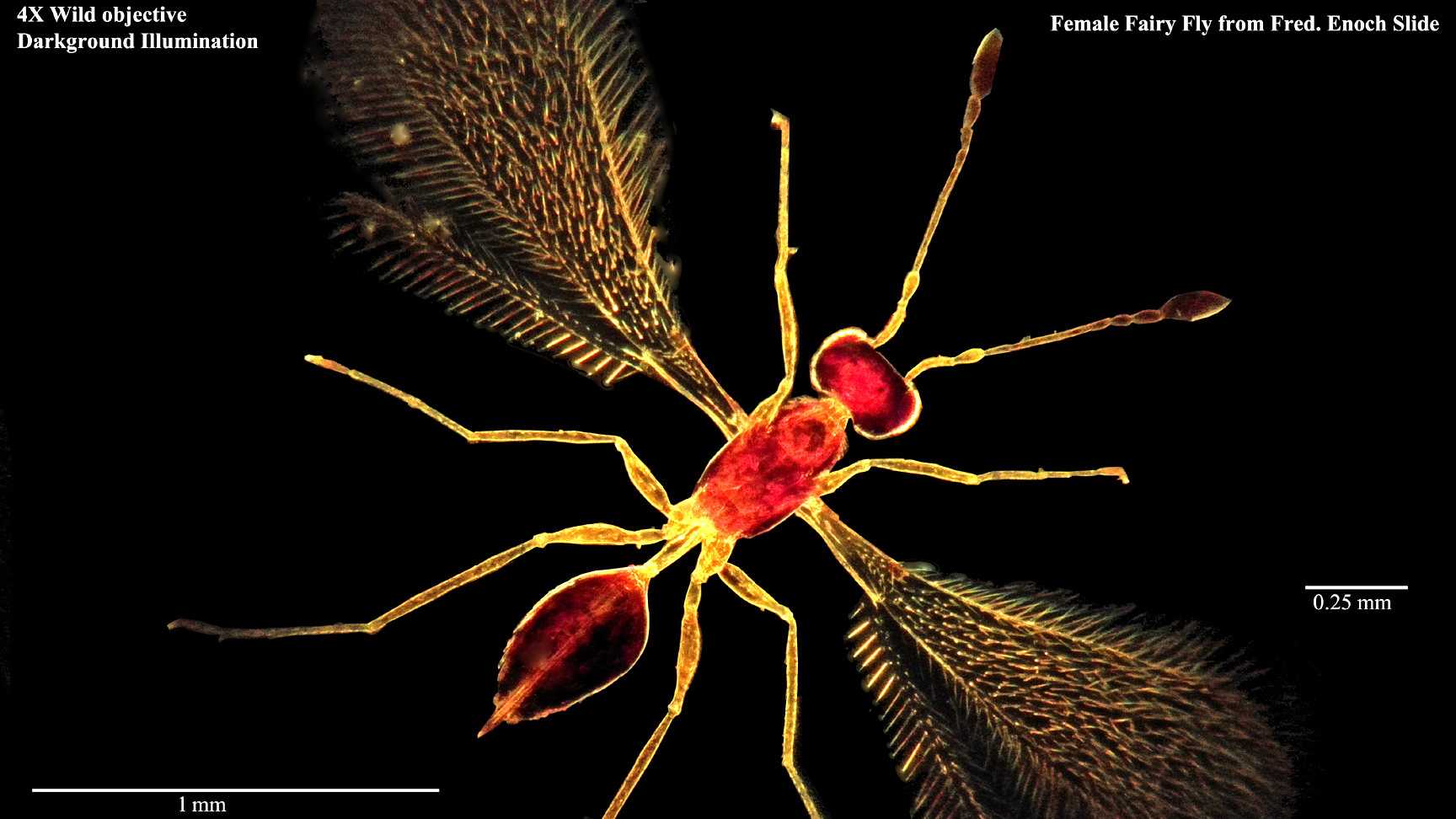
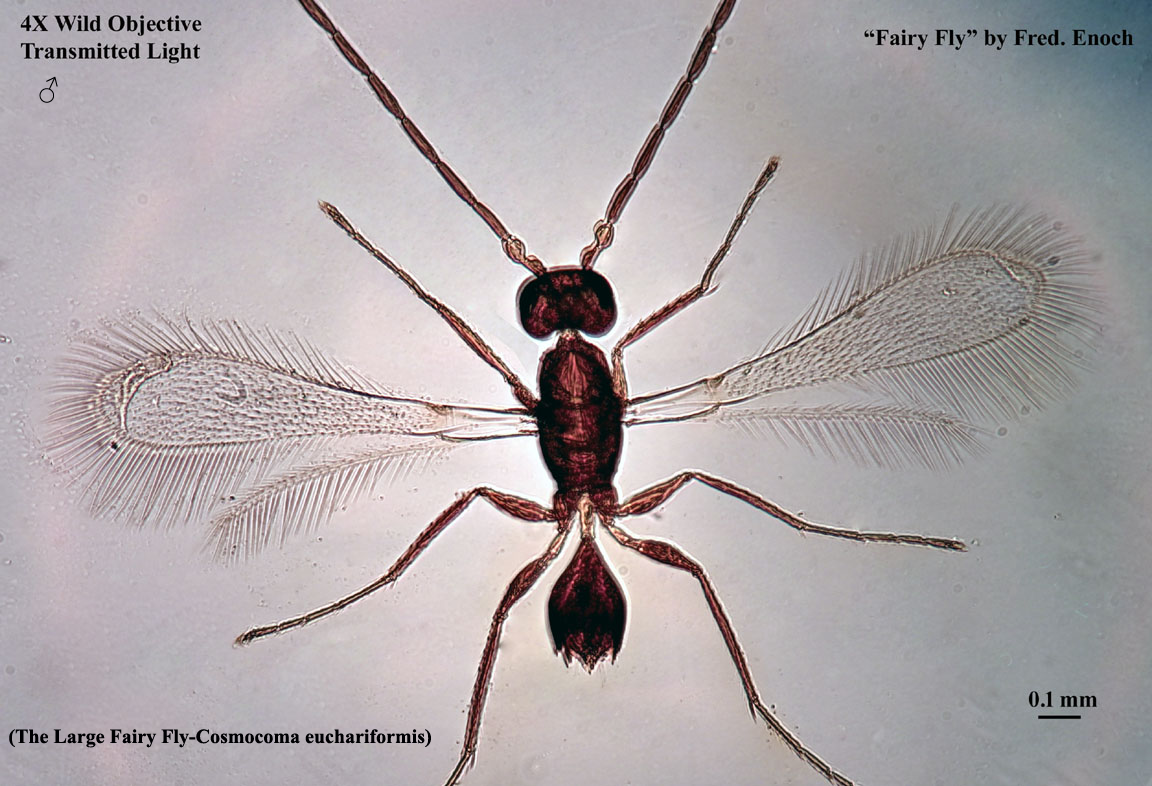
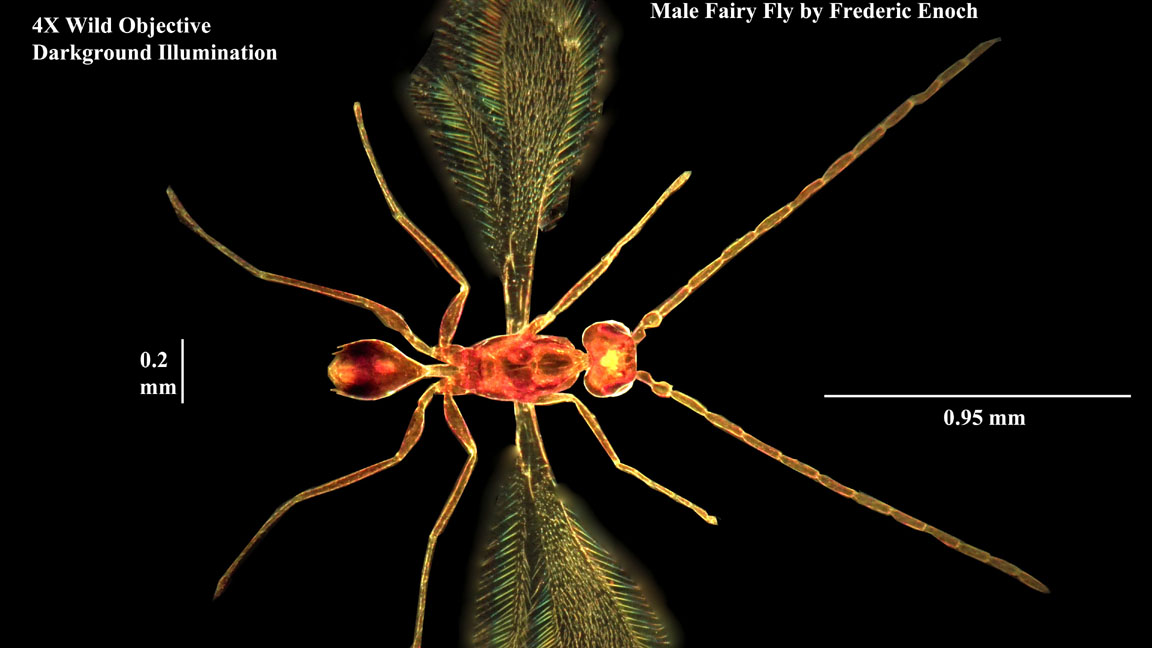
Fairy wasps are present on every continent except Antarctica. They are beneficial to farmers because they destroy other insect larvae by injecting their own eggs into the eggs of larger insects, including many farm pests, killing the host insect larvae. These insects are famous among microscopists because of their beautiful delicate forms, especially their wings. But some, especially males, have no wings, and some have no eyes. They all have a keen sense of smell. The smallest fairy flies, include Kikiki huna, discovered in the year 2000, and the smallest known fairy fly discovered in 1997, Dicopomorpha echmepterygis, both of which are only about 0.15 mm long, about the same as two thicknesses of paper, and a tiny fraction of that wide. There are at least one hundred genera and 1400 different species of these little wasps. The Anagrus and Polynema are among the genera with the most known species. The Anagrus genus is differentiated by the arrangement of hairs on its wing membrane, and the length of the ovipositor. The Polynema are known for their many threads which are long feather-like bristles on the wings. Several species of these wasps are named after Enoch himself. Although wasps, the Fairy Wasp does not have the ability to sting animals (including humans). Its ovipositor is used only for laying eggs. Only females have an ovipositor, and their antennae have bulbus ends. Male antennae are of more uniform thickness without the bulbus ends. Although the Polynema fairy wasps are generally larger than the Anagrus, the range of lengths overlaps. Anagrus: 0.4 to 1 mm (avg about 0.7), Polynema 0.2 to 2 mm in length. The example of the Cosmocarus (Now Gonatocerus) euchariformis shown here is about 1 1/4 mm in length. Some "giant" fairy flies can reach 5.4 mm in length.
Fairy wasps should not be confused with the equally interesting fairy beetles including Trichopteryx atomaria as found on this site, and the smallest known beetle, Scydosella musawasensis, discovered in 1999 which is only 0.325 mm in length.
A Dentist, who was an amateur who collected fairy flies, and apparently mounted them, was Sidney Charles Scarsdale Brown and
his story makes interesting reading.
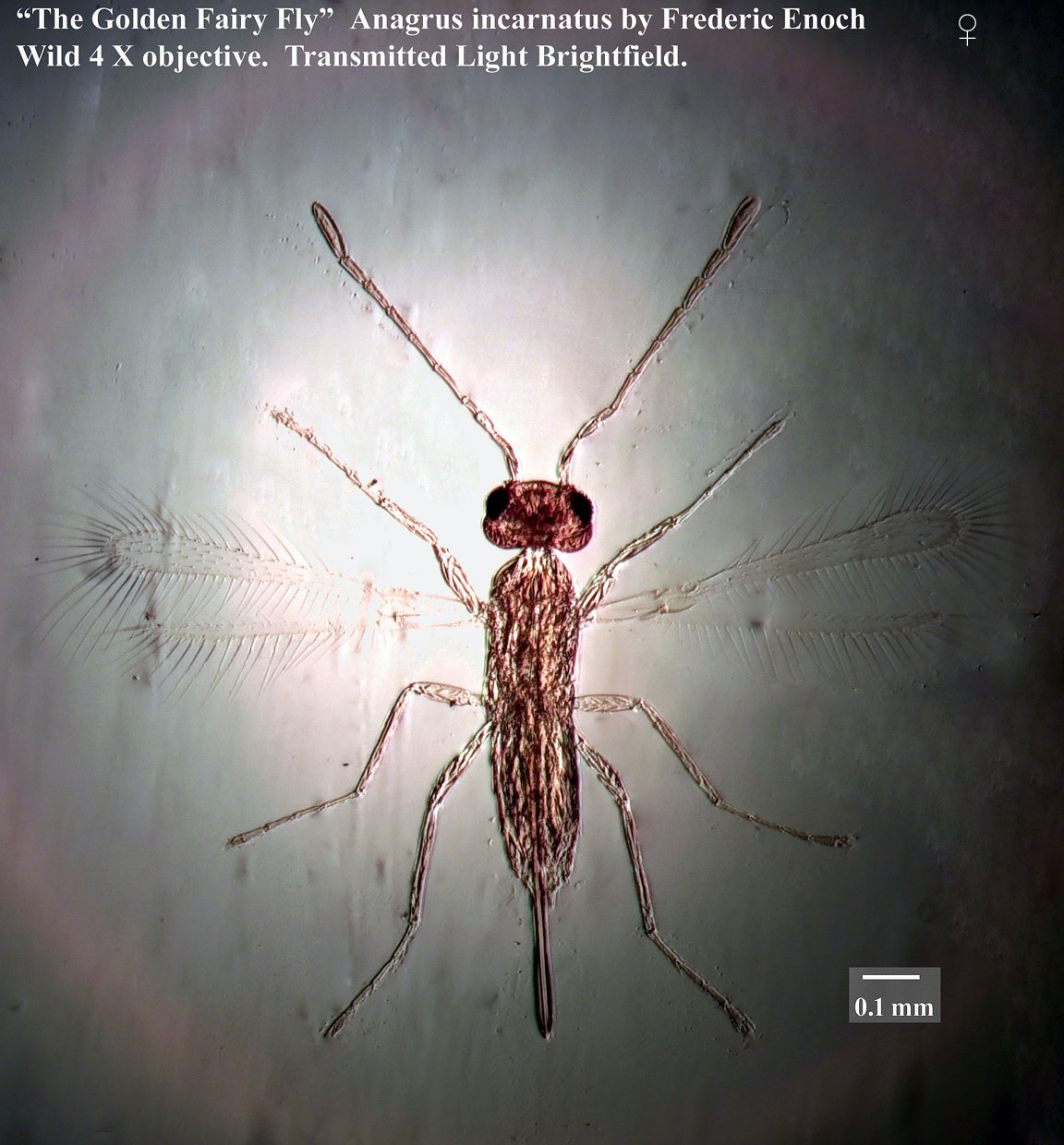
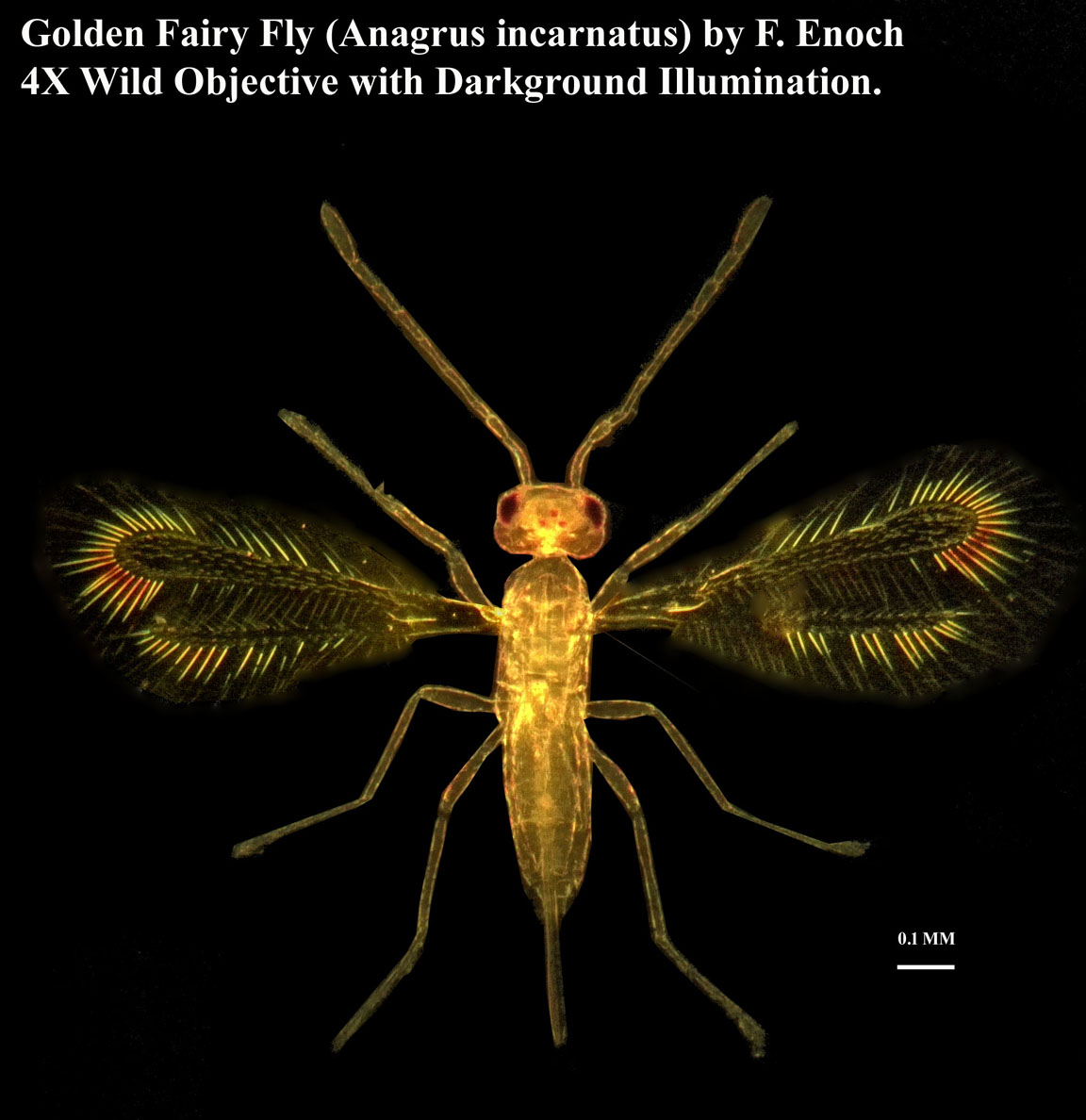
THE GOLDEN FAIRY FLY (Anagrus incarnatus-female:
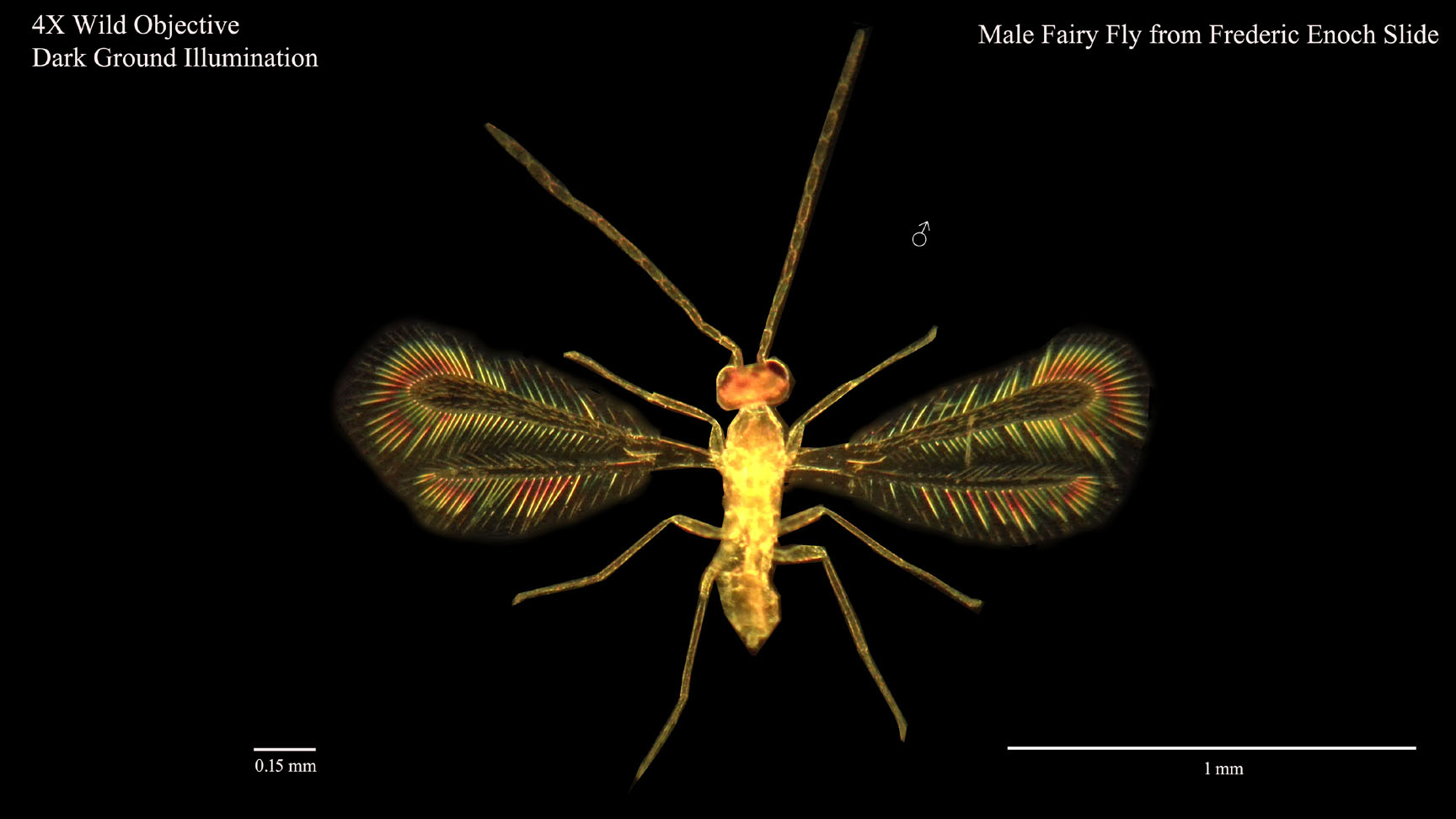
THE GOLDEN FAIRY FLY (Anagrus incarnatus-male):
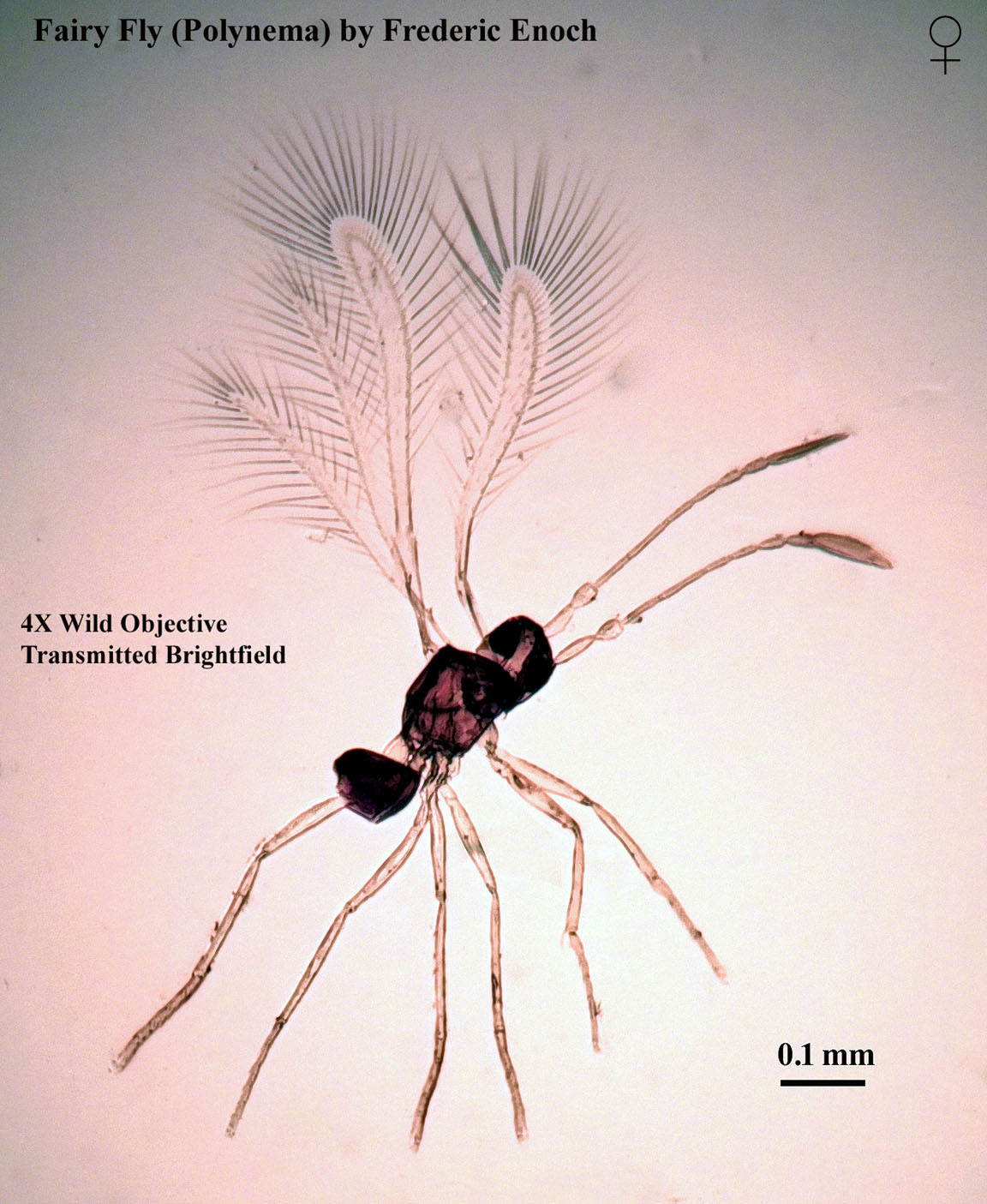
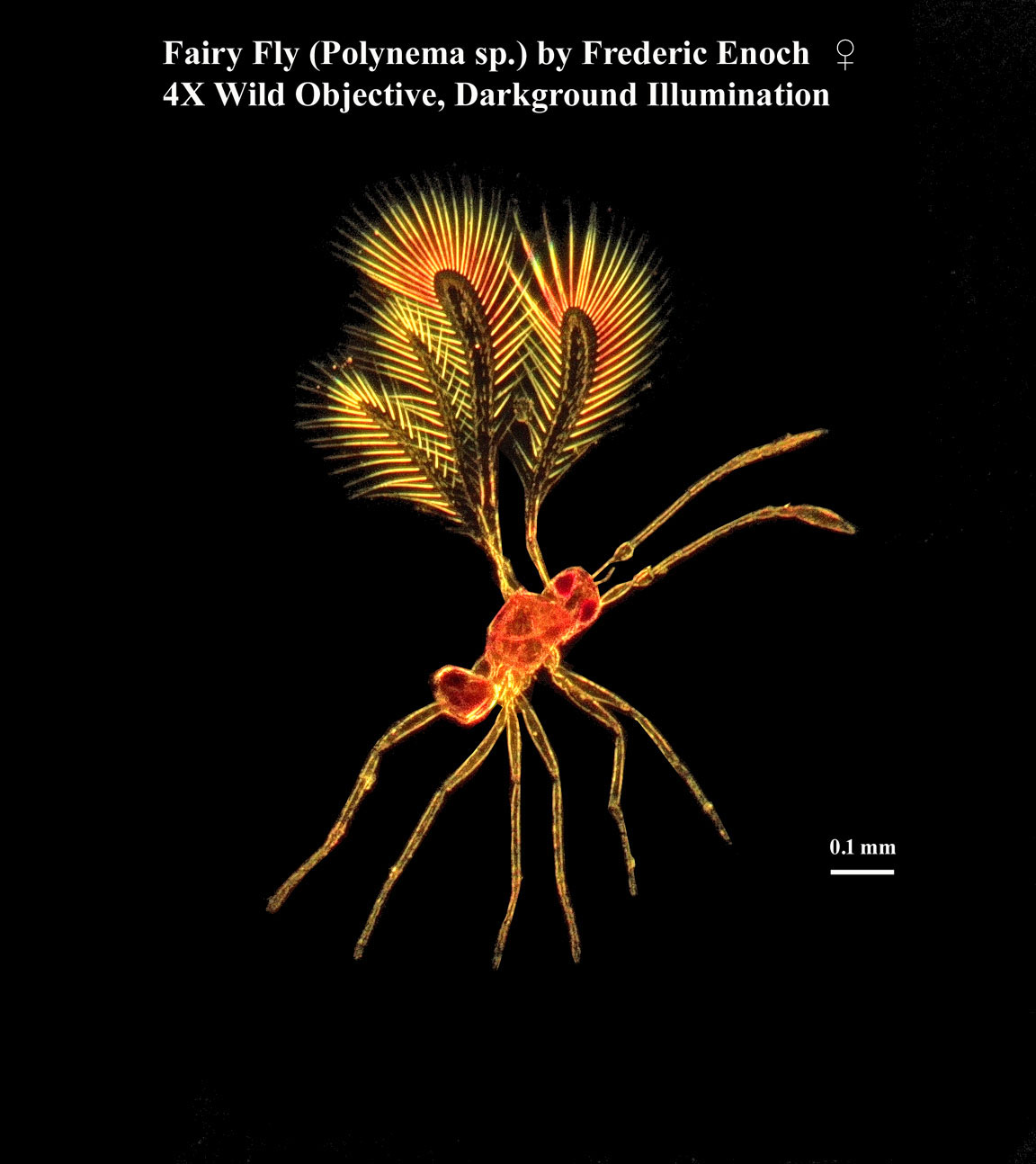
FAIRY FLY (Polynema sp):
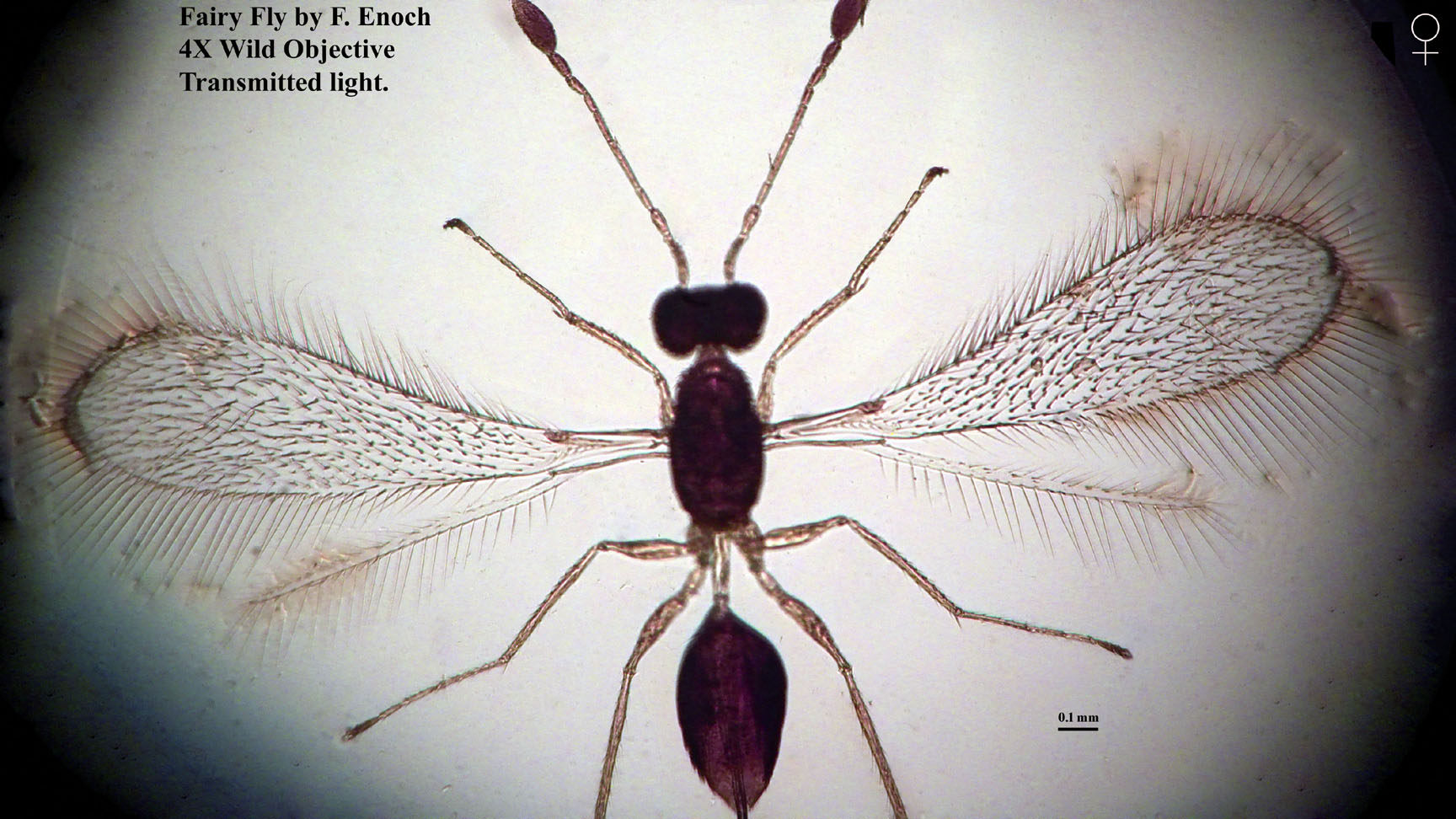
A LARGER FEMALE FAIRY FLY Gonatocerus euchariformis (formerly Cosmocoma euchariformis):
A LARGER MALE FAIRY FLY Gonatocerus euchariformis (formerly Cosmocoma euchariformis):