COMPARISON BRIDGE FOR TWO MICROSCOPES
MAKER: BECK
MODEL:?
c. Mid-20th C.
SIGNED:BECK,LONDON
Author:Barry Sobel
Editor: Joseph Zeligs
DESCRIPTION:
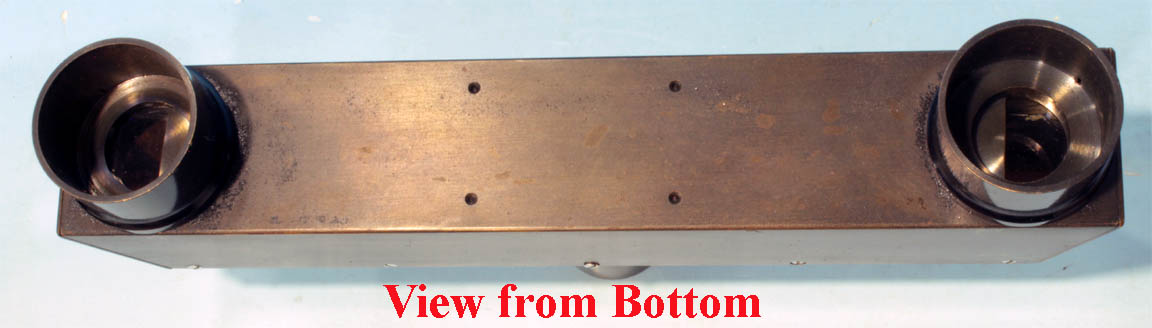
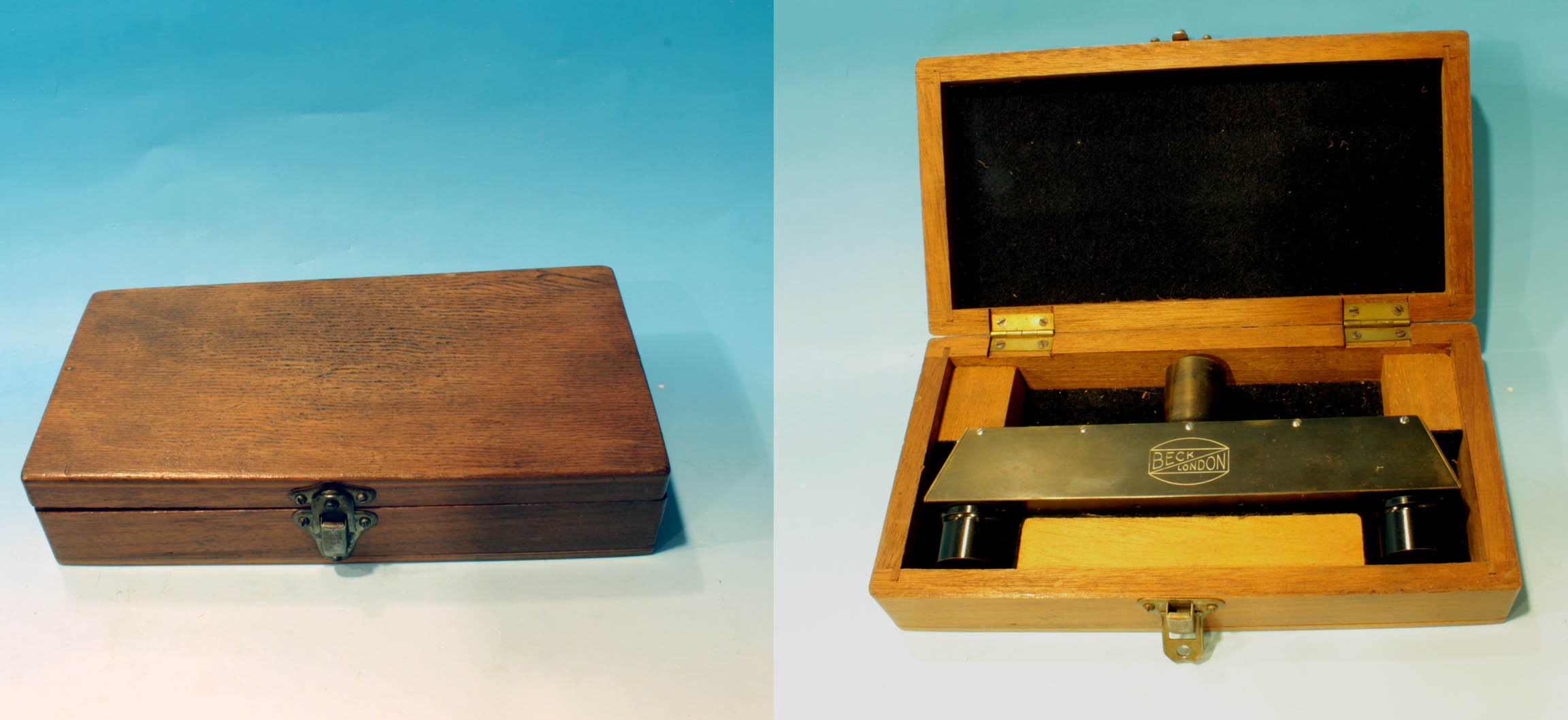
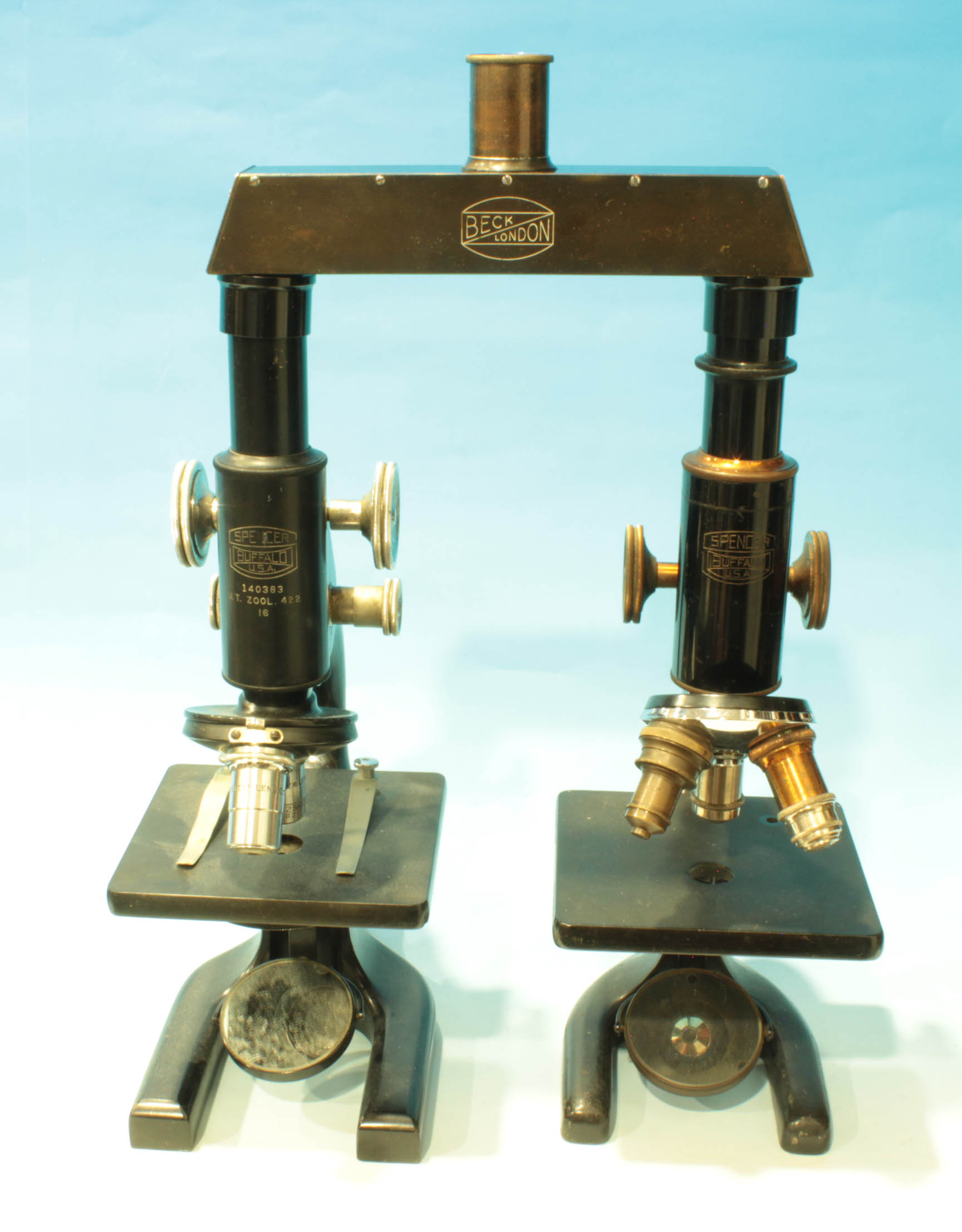
This page illustrates the Beck comparison bridge designed to allow two monocular microscope to be converted into a comparison system.
It accomplishes this with prisms on each end with half of the light blocked out so that each half field is reflected towards the central combining prism projecting the two sides into a single image seen in the eyepiece. Obviously a camera could be attached to the eyepiece port as well.
The device comes in a mahogany box.
CONDITION:
The device is in working condition with no major cosmetic or optical defects.
HISTORY OF COMPARISON MICROSCOPY:
The need to compare two objects is a common need. This is particularly true in the field of criminology where everything from cloth to bullets need to be compared. The best method to be sure one object matches another is to see them side by side. Furthermore, when microscopic details are being compared a comparison microscope is preferred. Comparison microscopes have been available since the earliest years of the 20th century. This was accomplished first with dedicated instruments and later also with an adapter like the one pictured on this page which connects to two monocular microscopes, splitting the image between the two. This avoids the extra expense of a dedicated instrument.
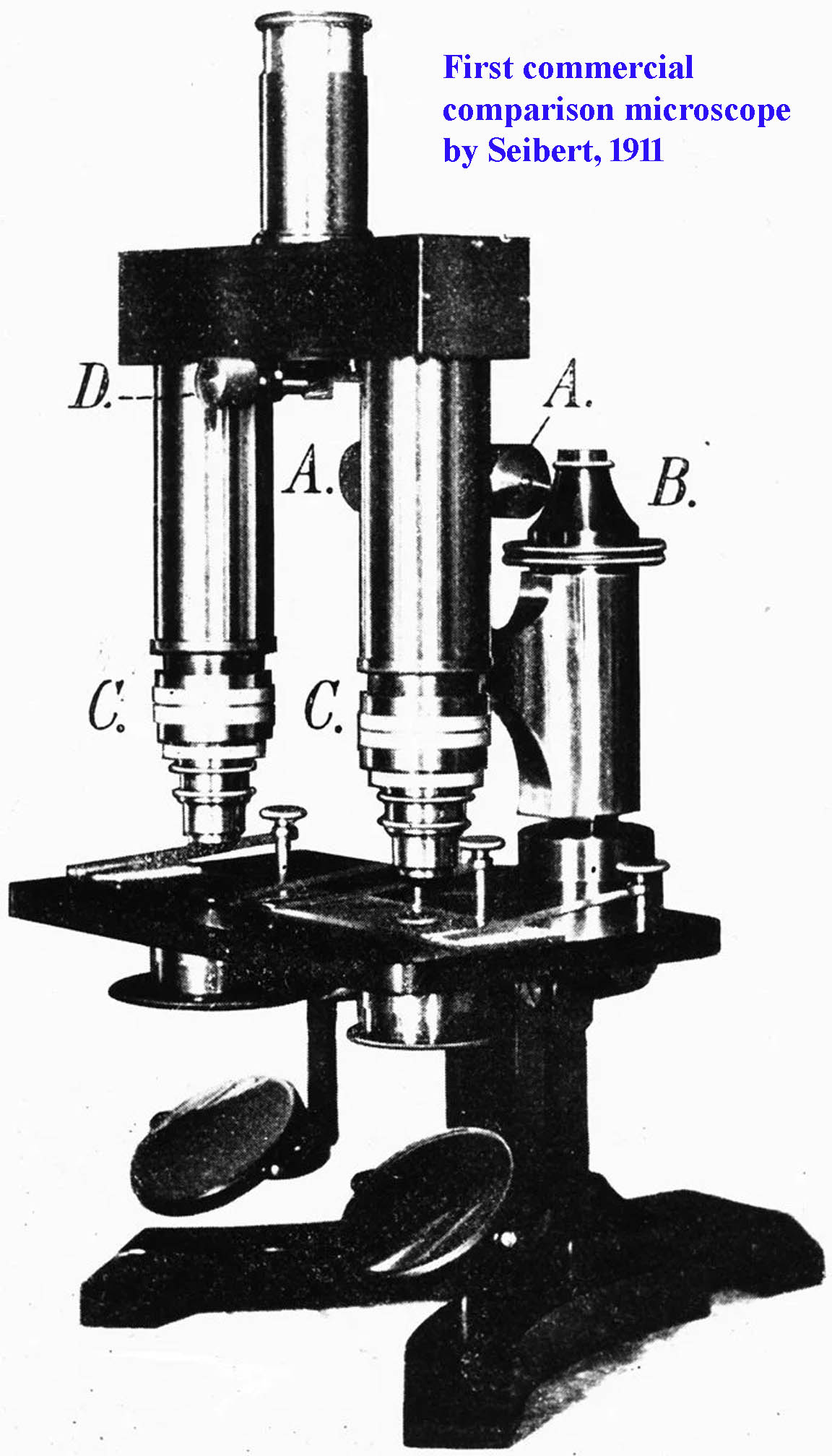 By 1911, Seibert in Germany was producing a dedicated comparison microscope (left) with a dual stage and substage with both main optical tubes focused via a single coarse and fine focus control.
In 1925 Phillip O'Gravell of the Bureau of Forensic Ballistics in the U.S.A. first used a comparison microscope of his own design for bullet identification. Calvin Goddard became famous in 1929 for using a comparison microscope to help prove which guns were used in the famous St Valentine's Day Massacre, again using a purpose-made instrument.
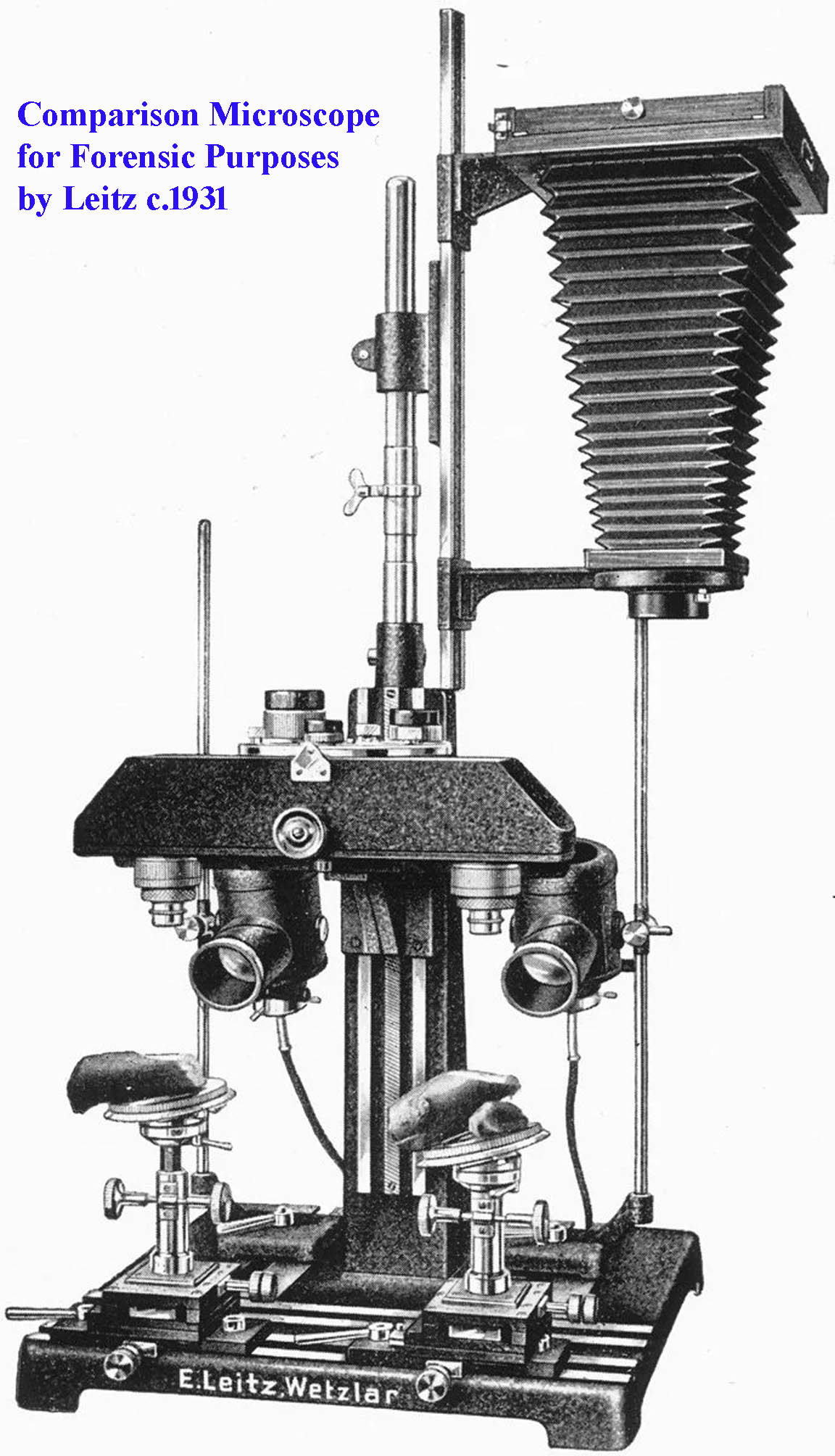
The first commercial microscope marketed specifically for forensic comparisons was the Comparison Microscope for Forensic Purposes
made by Leitz in 1931. It included a swing out bellows camera and tilting and rotating universal stages to make comparison of 3 dimensional objects more convenient.
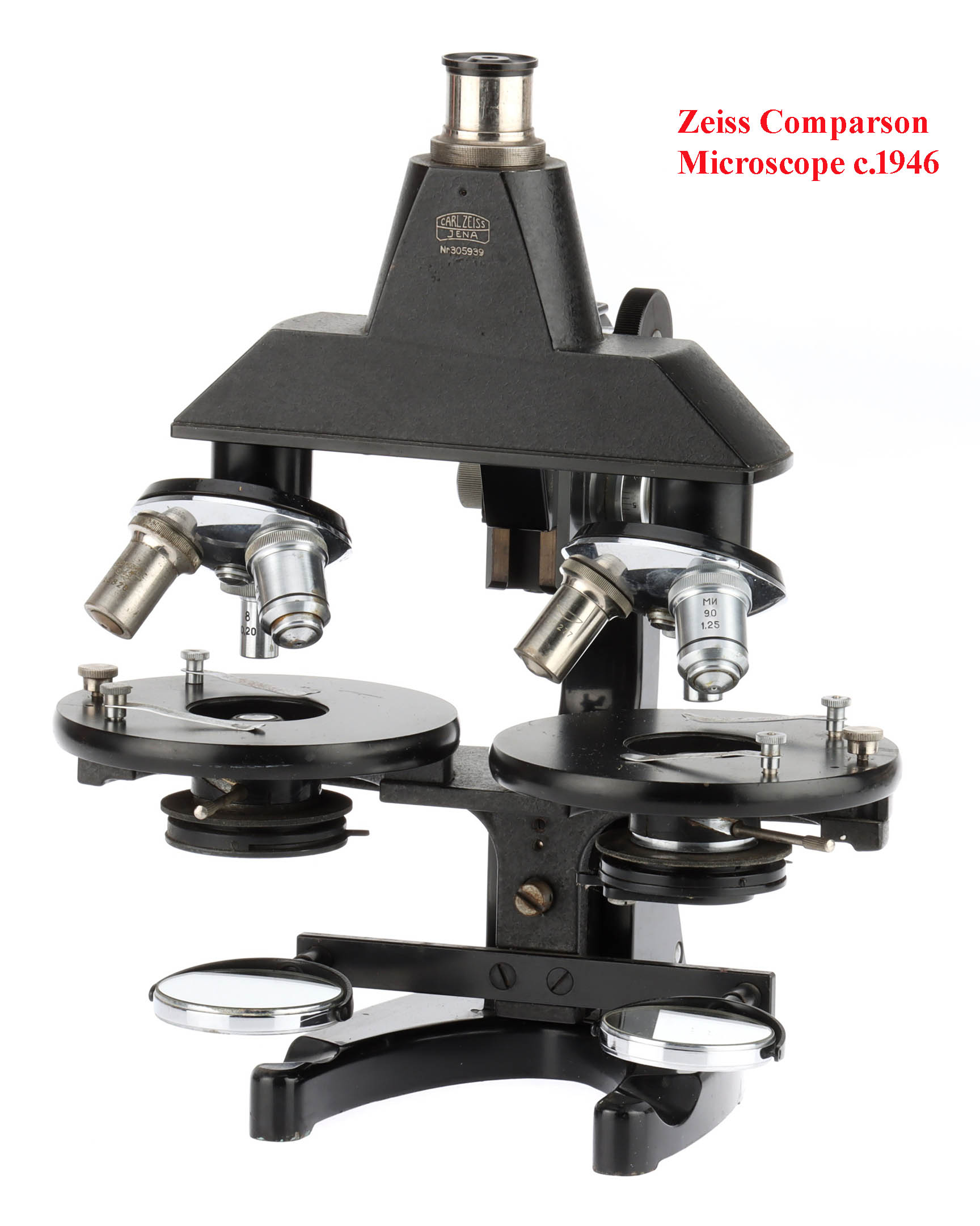
The instrument shown to the left is set up for comparison is suitable in this configuration for things like fibers, but would need special stage adapters for 3-dimensional objects like bullets.
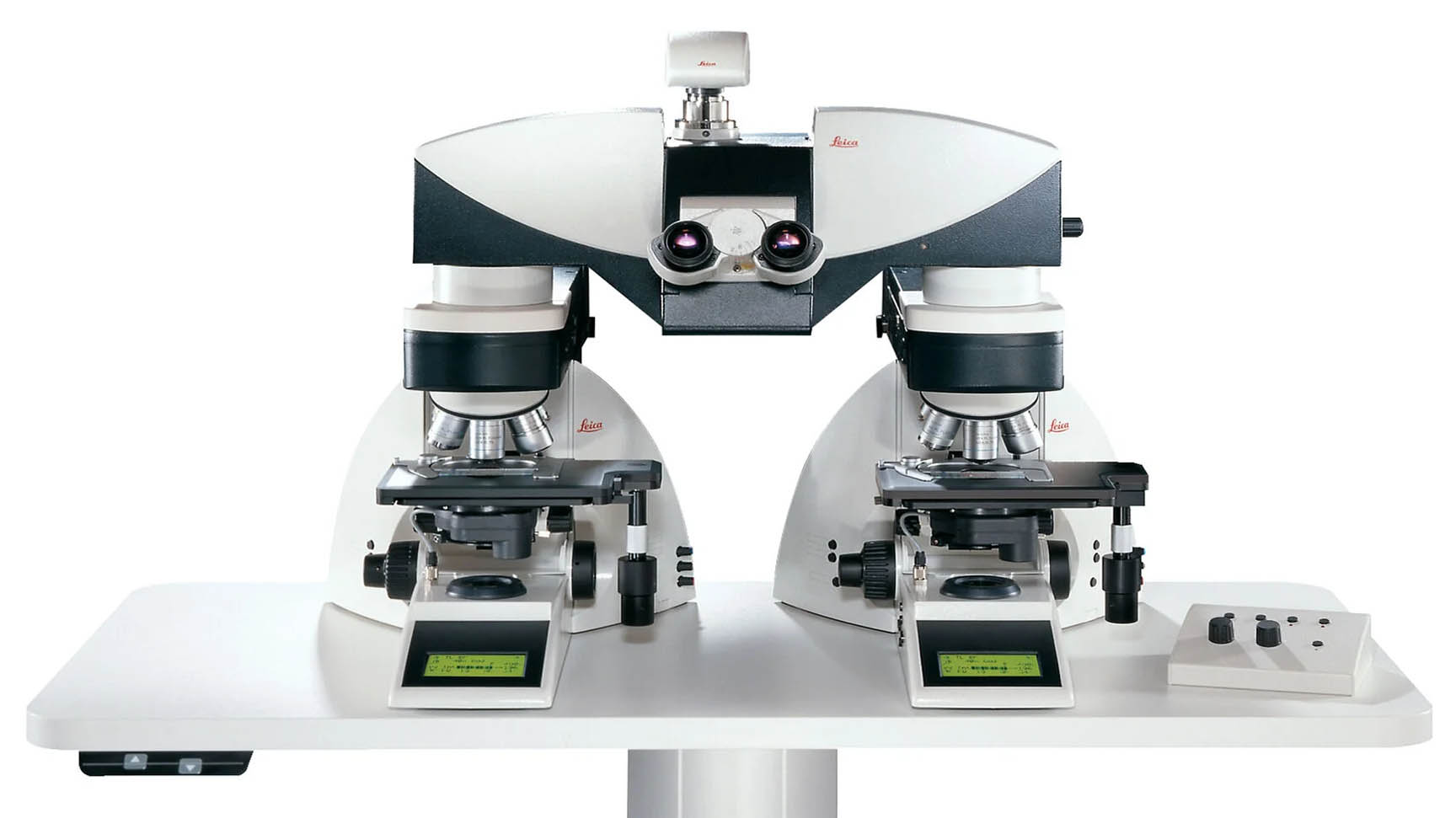
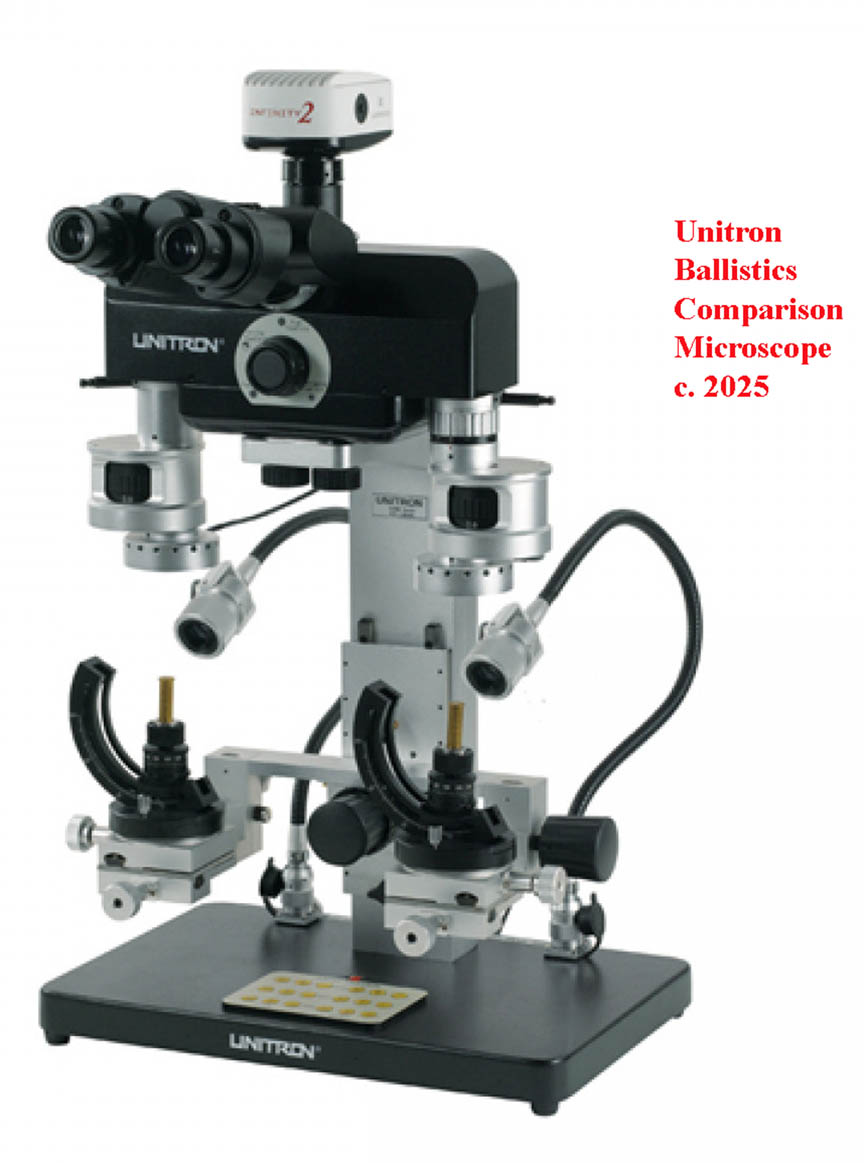
As time went on, various improvments were made, including motorized stages with variable angles, variable forms of illumination, specialized fittings to hold bullets, electronic imaging, and image processing software. Some examples even have integrated computer monitors. Below are shown two modern comparison microscopes. The one on the left is equipped for comparison of flat objects like fibers, the one on the right is a fully equipped ballistics microscope, allowing adjustable rotation, angles, and lighting. Both of these microscopes have digital cameras included.