
Please Click On the Pictures for a Larger Version, where available.
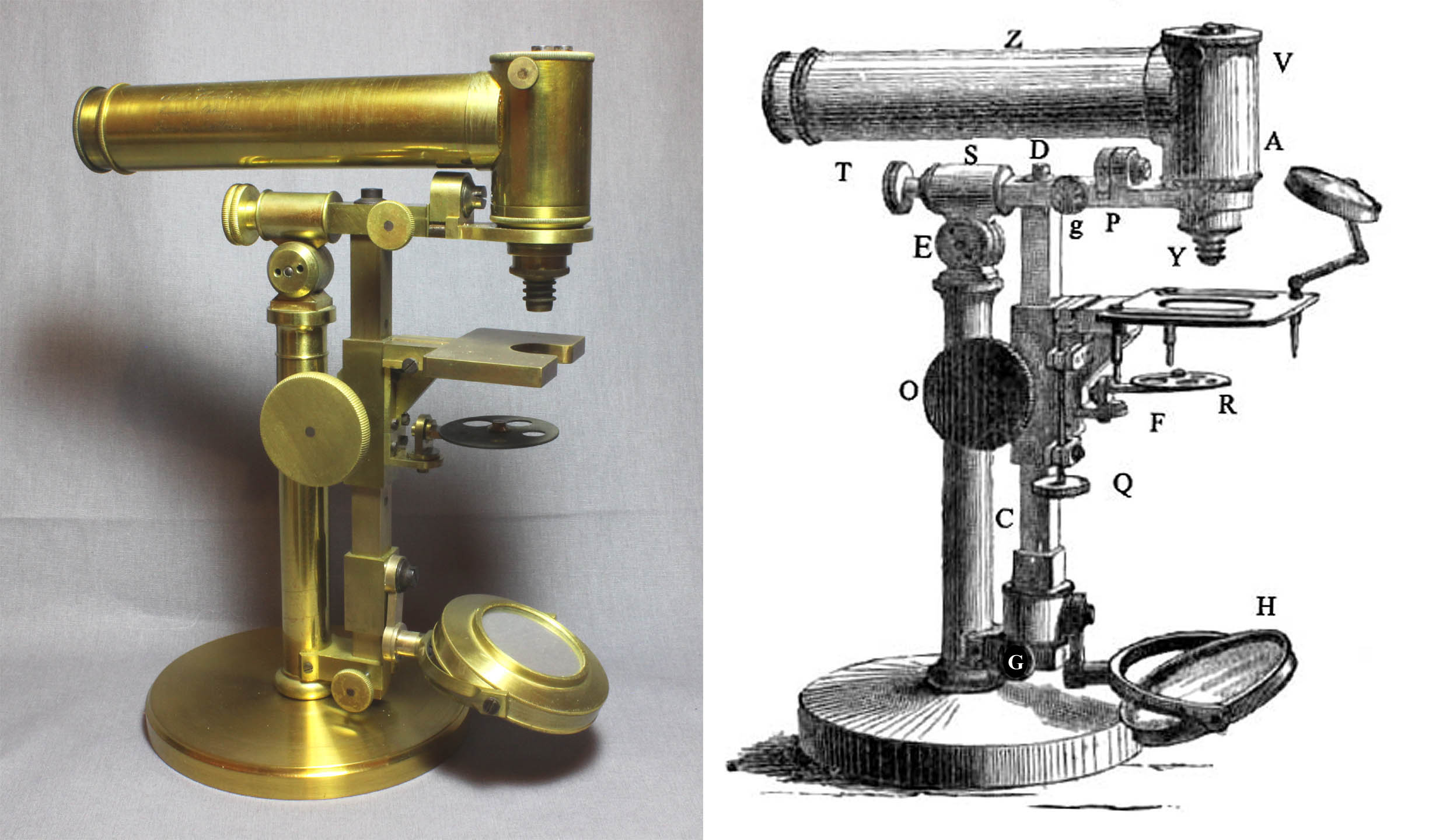
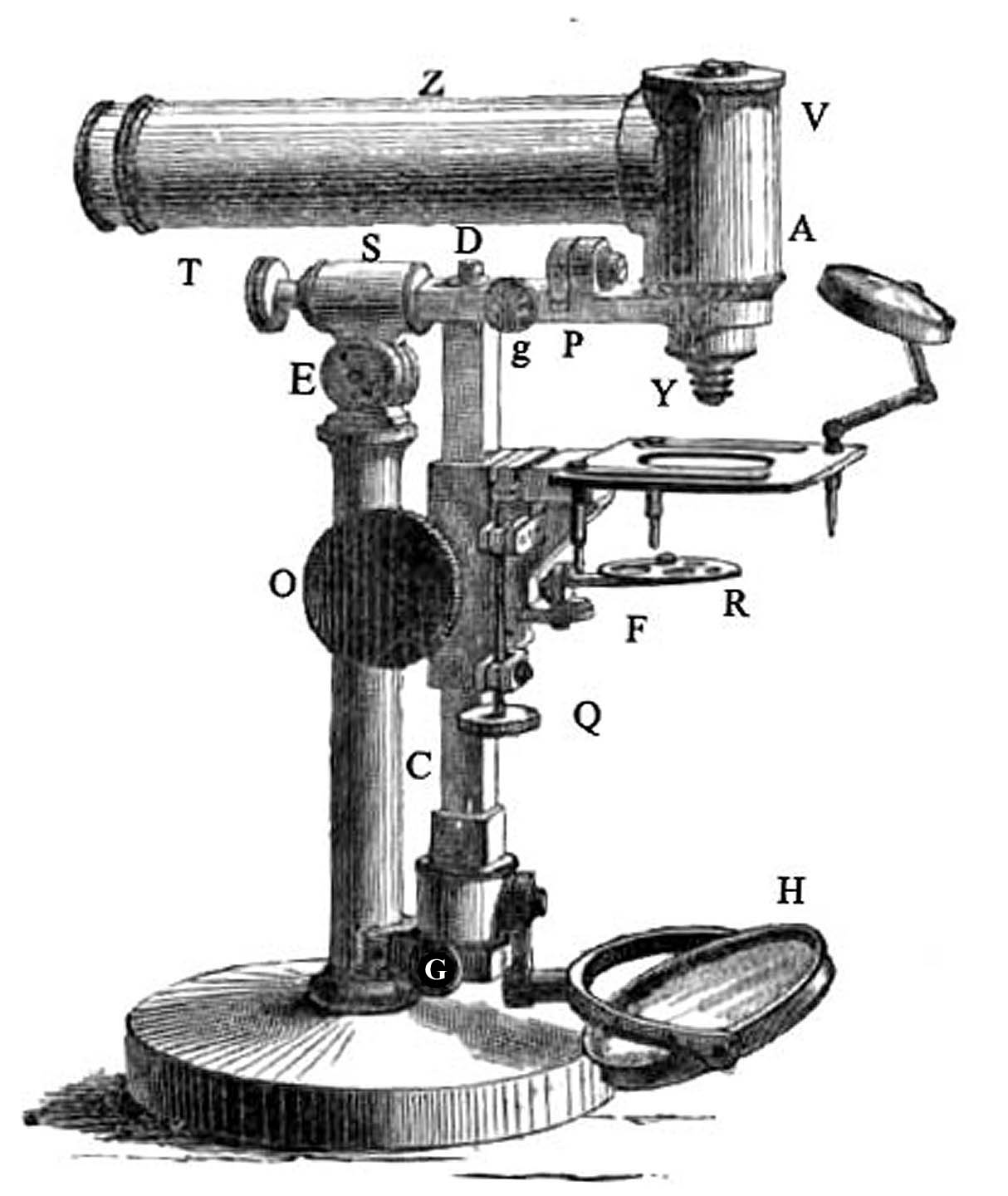
 The piece V, which which encloses the tube A, enables the prism carrier (V), and the body, Z, to be turned around an axis which passes through the objective. A slot in the prism carrier registers against a screw providing a stop in the usual position and at 90 degrees.
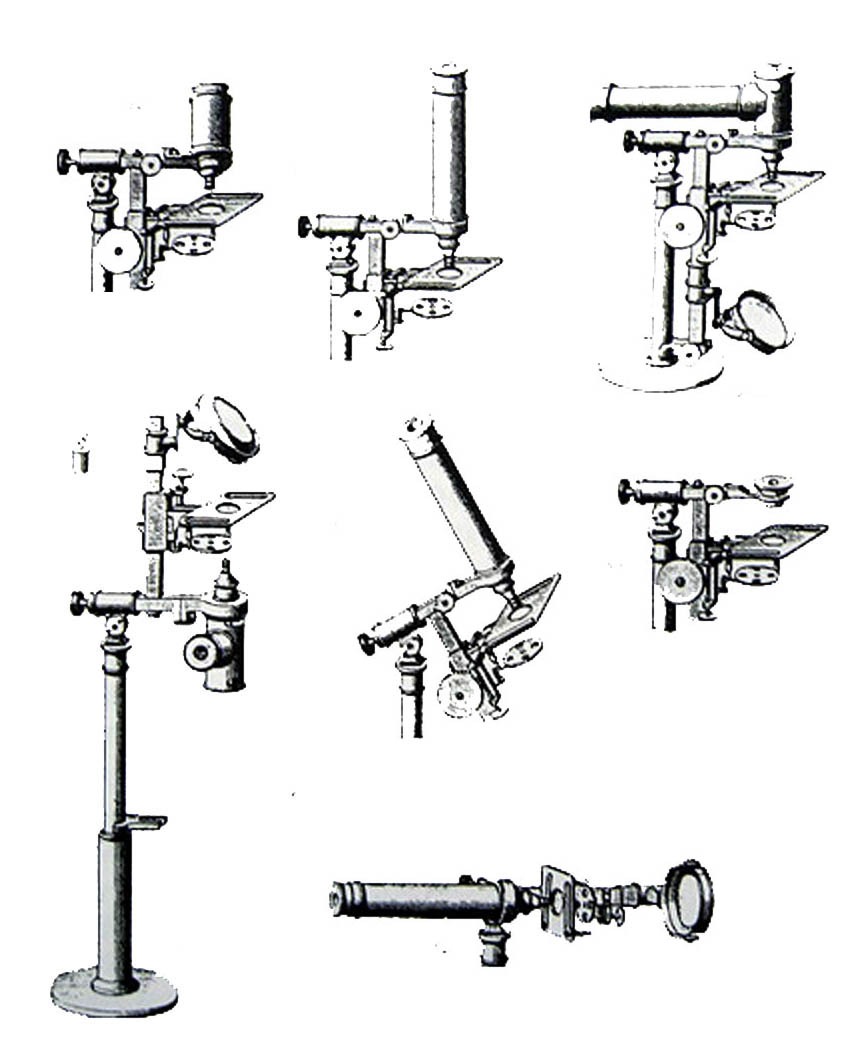
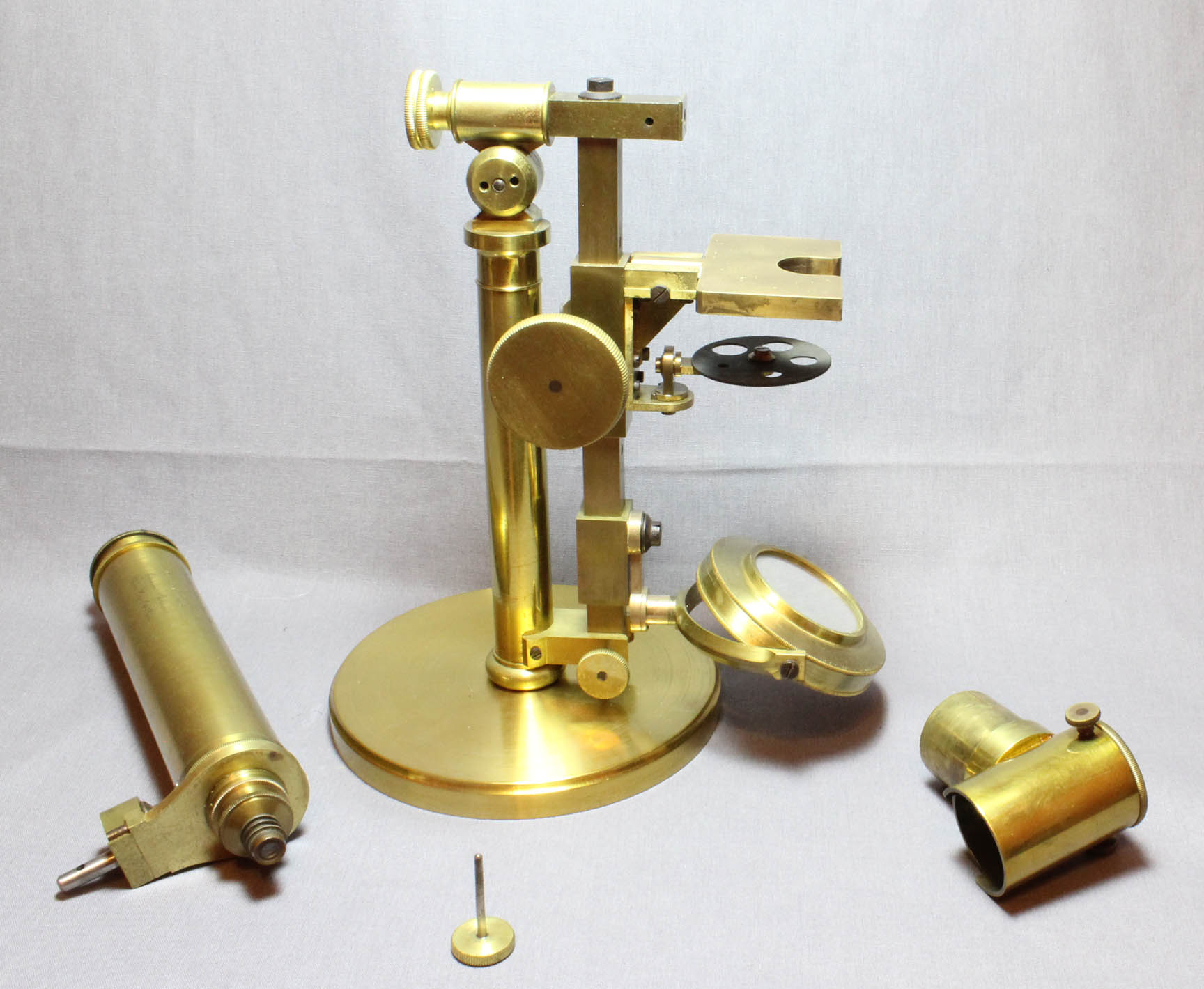 The microscope can be easily converted into a simple microscope by removing the compound body which is fixed to the support PA by means of the knobbed pin g; a ring for the purpose of holding doublets is substituted for it, and also fixed in position by the knobbed pin, g.
 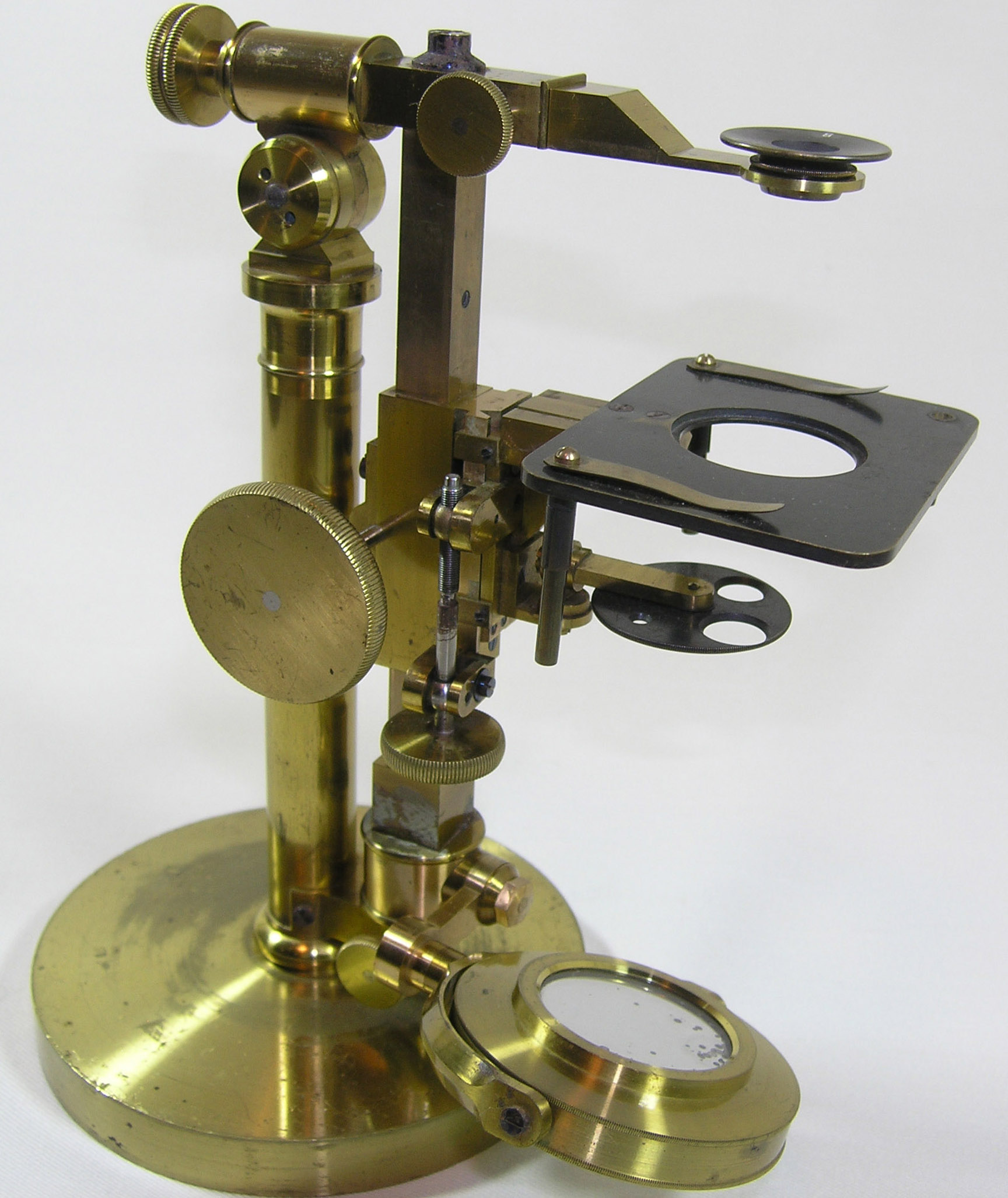 Although the simple lenses are present, the ring support for the simple lenses is not currently with the instrument. To illustrate how this would look, an example from another private collection is shown to the right illustrating the simple microscope configuration.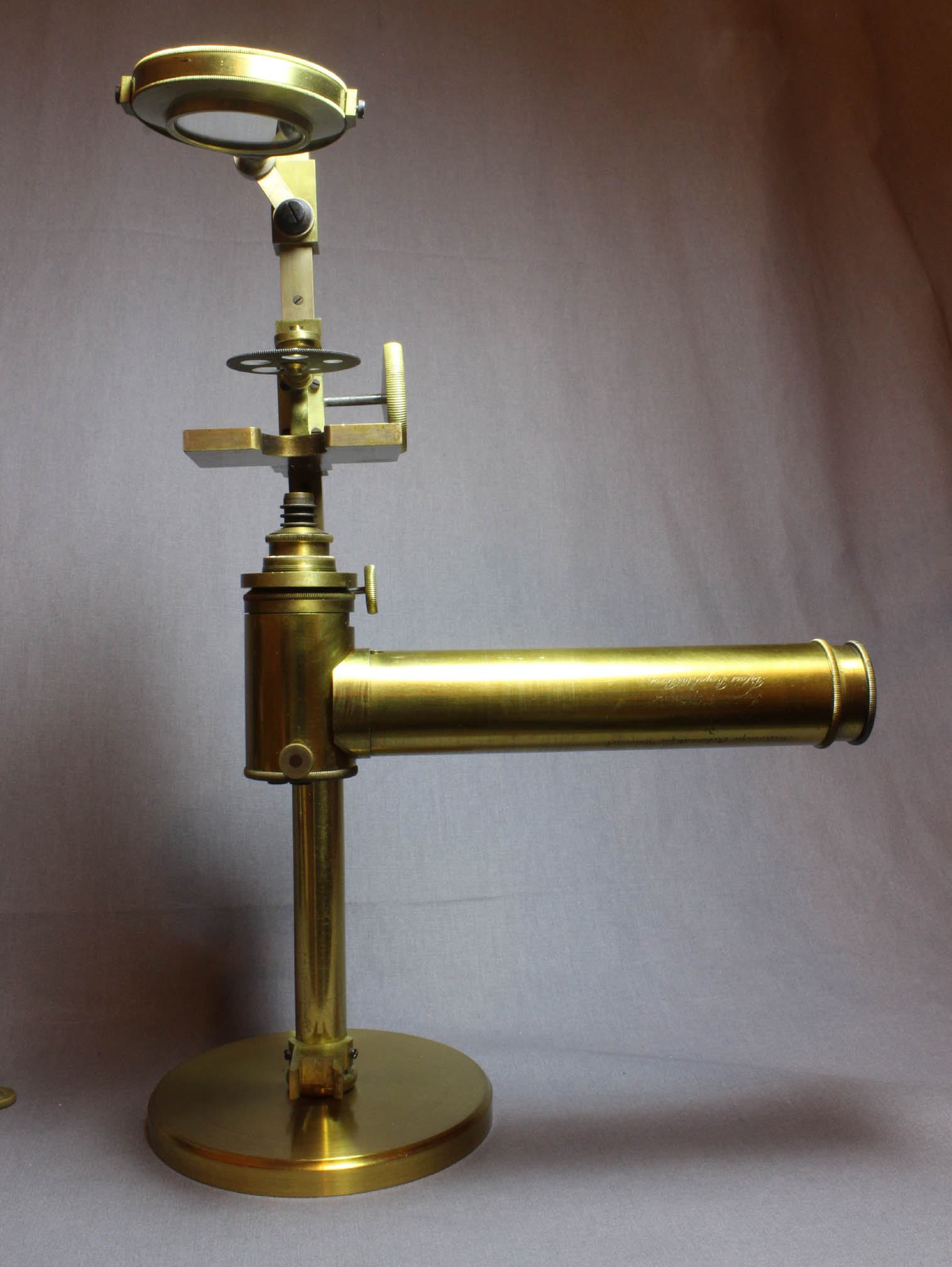
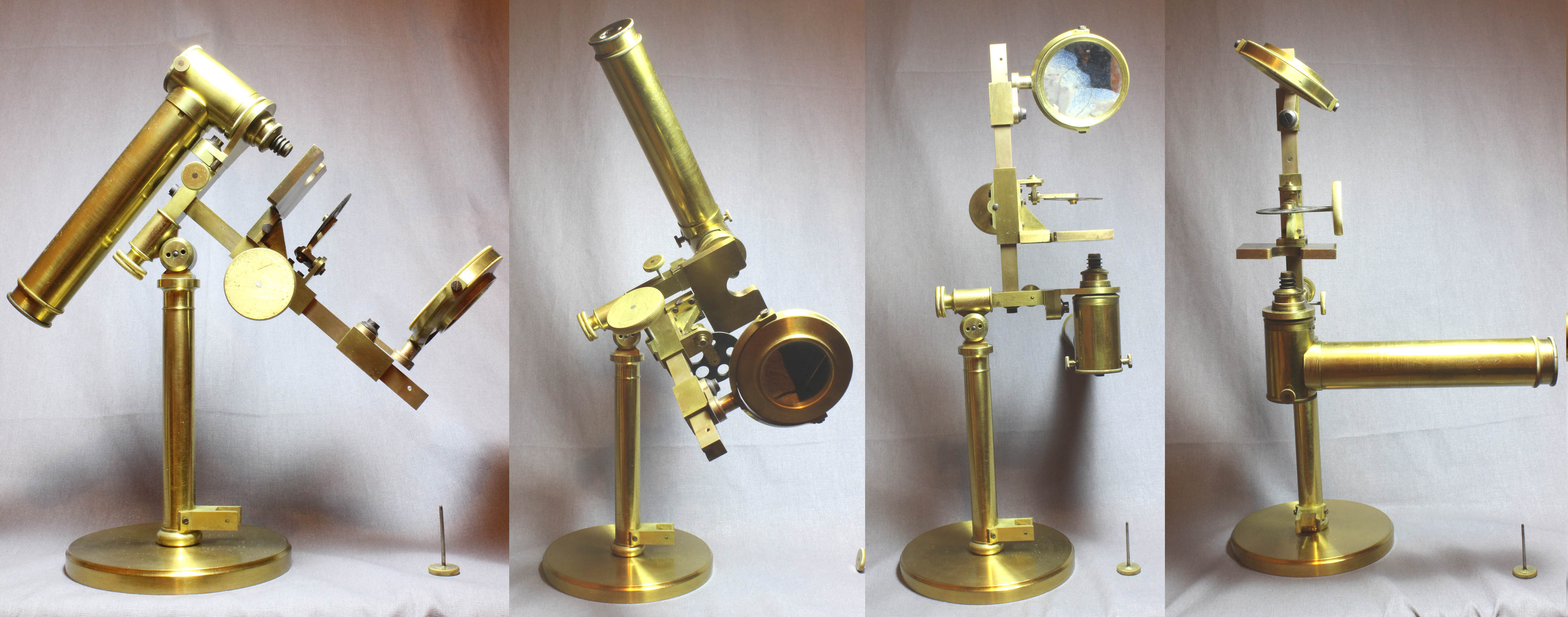
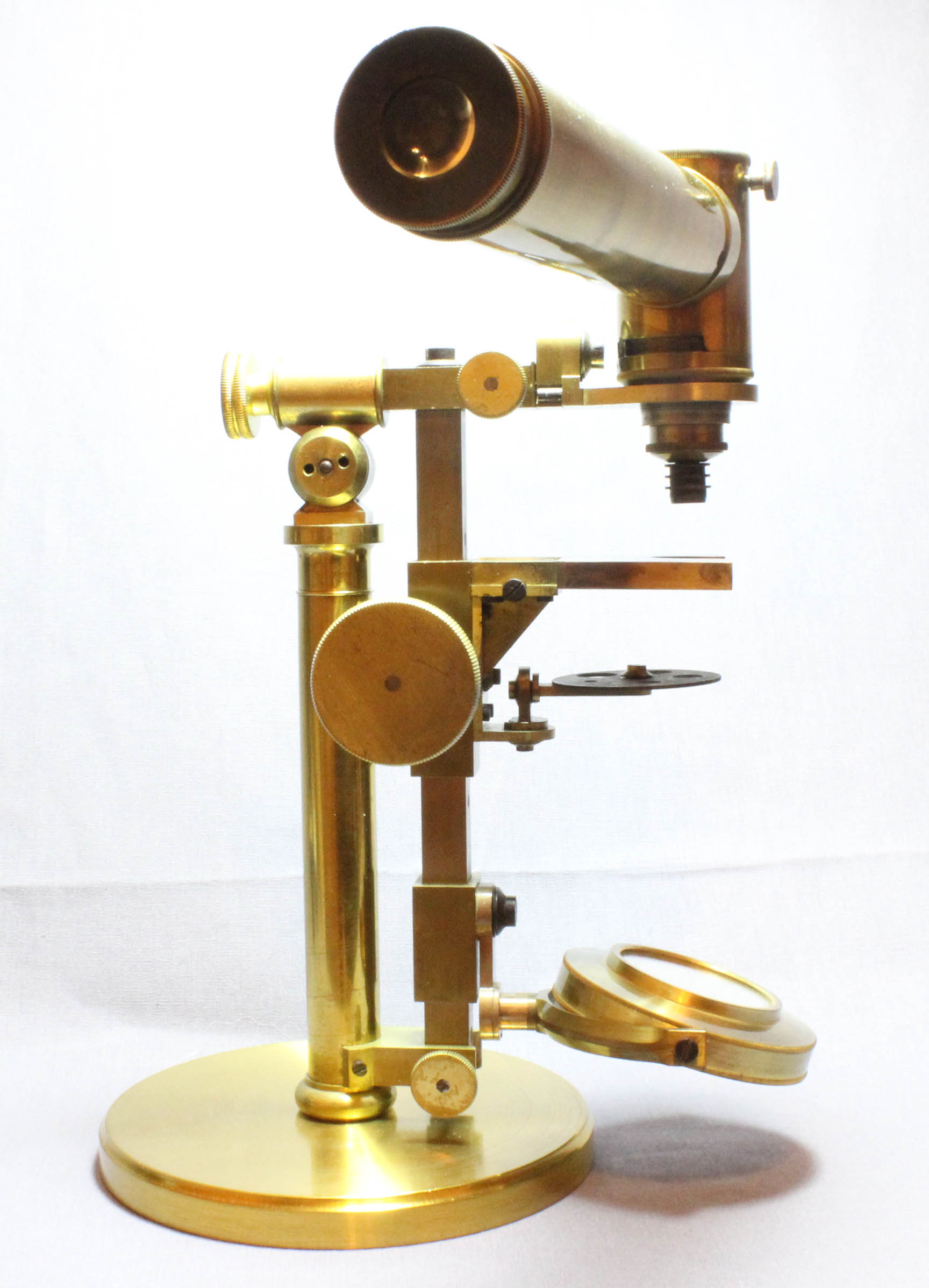
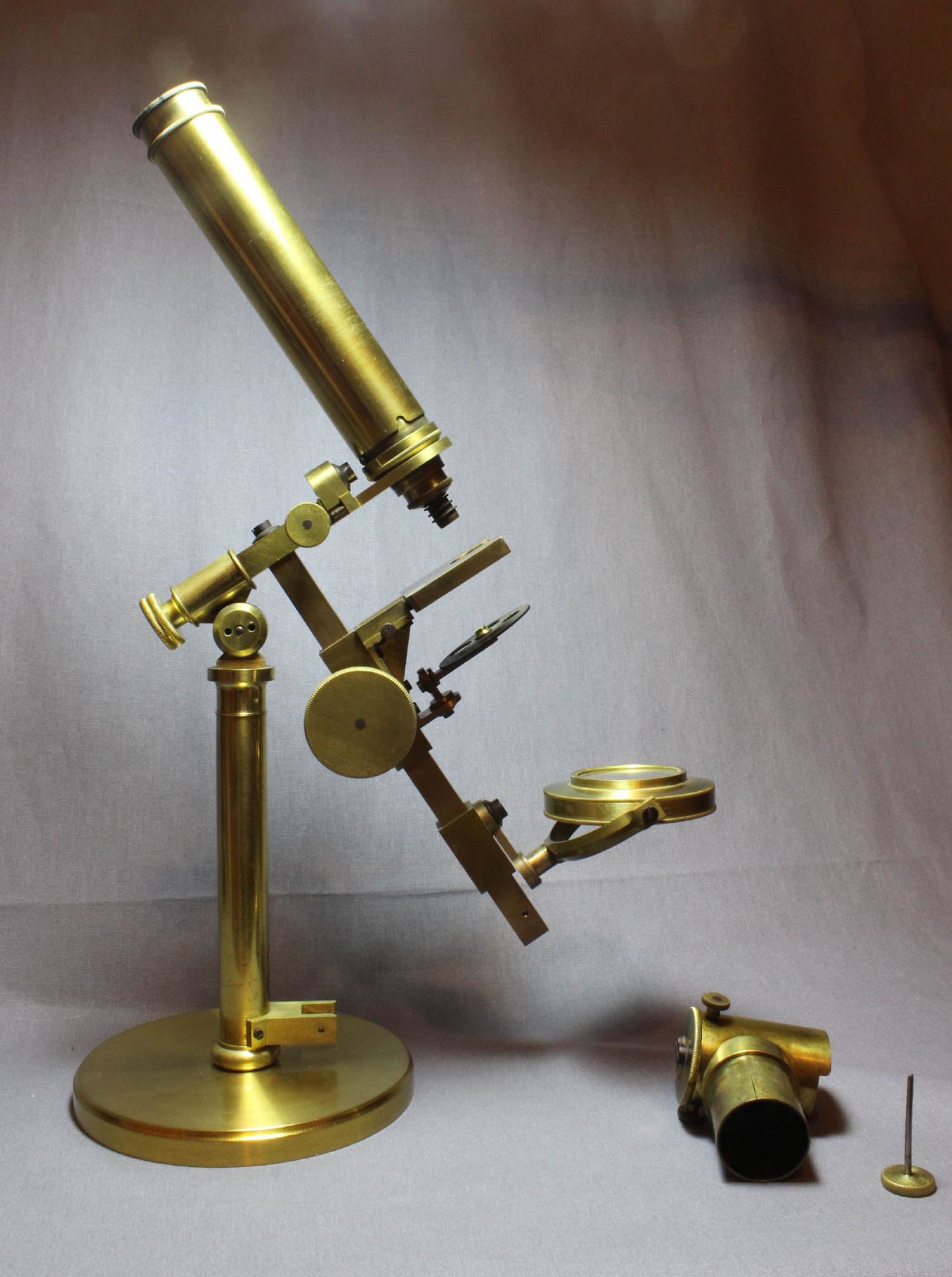 The prism carrier, V in the image to the left, slides into the tubes A and Z, to make a 'horizontal' microscope. To change the microscope to a traditional 'vertical' configuration, first the prism carrier, V, with the body, Z attached, is first removed, and then the prism carrier, V, is separated from the body, Z, and lastly the body tube, Z is pressed on the tube A, and in this manner the instrument becomes a traditional 'vertical' microscope, as shown to the right. In this mode, once the bottom pin, G is removed, the instrument can be inclined to whatever angle is desired via the compass joint, E.
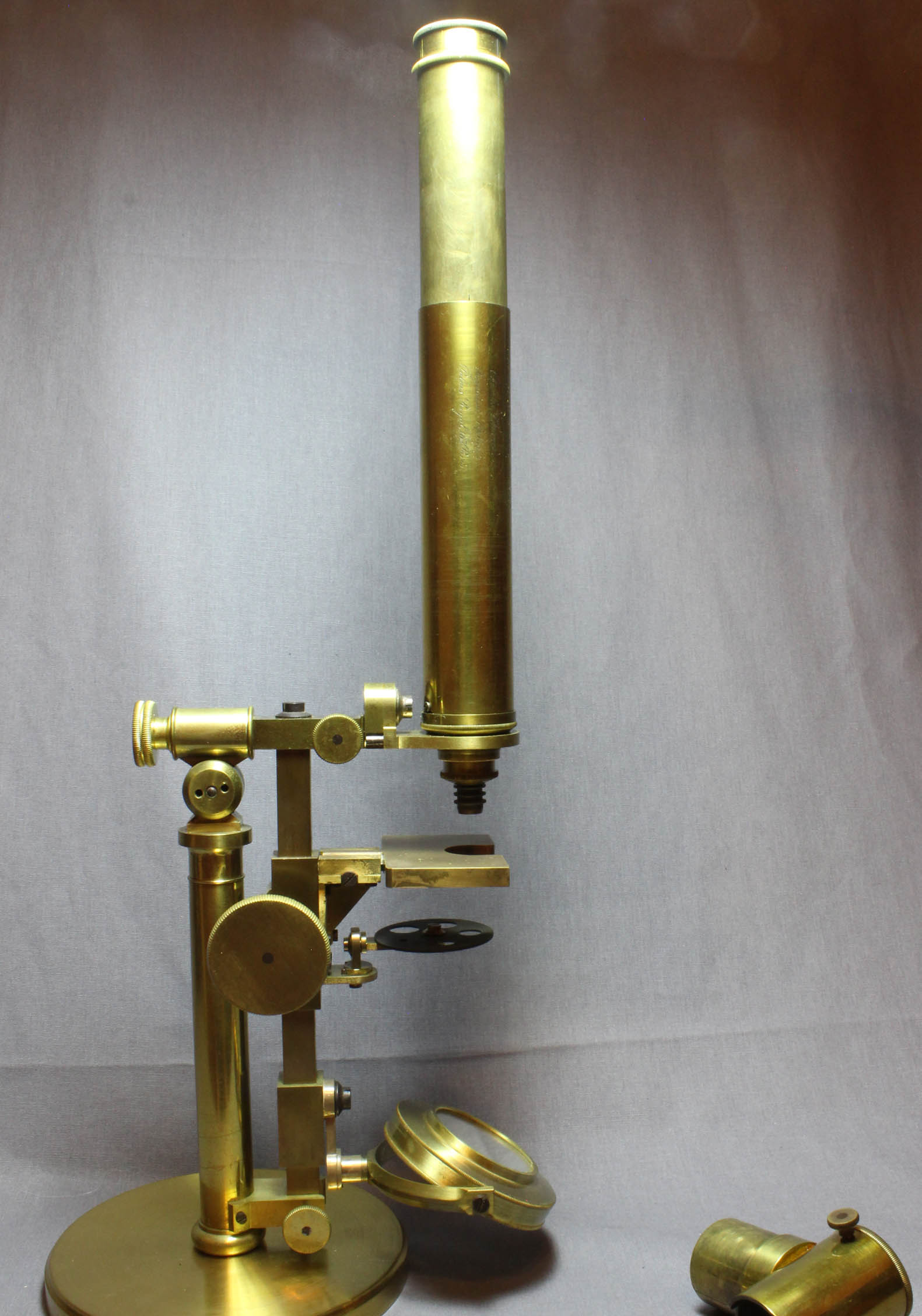
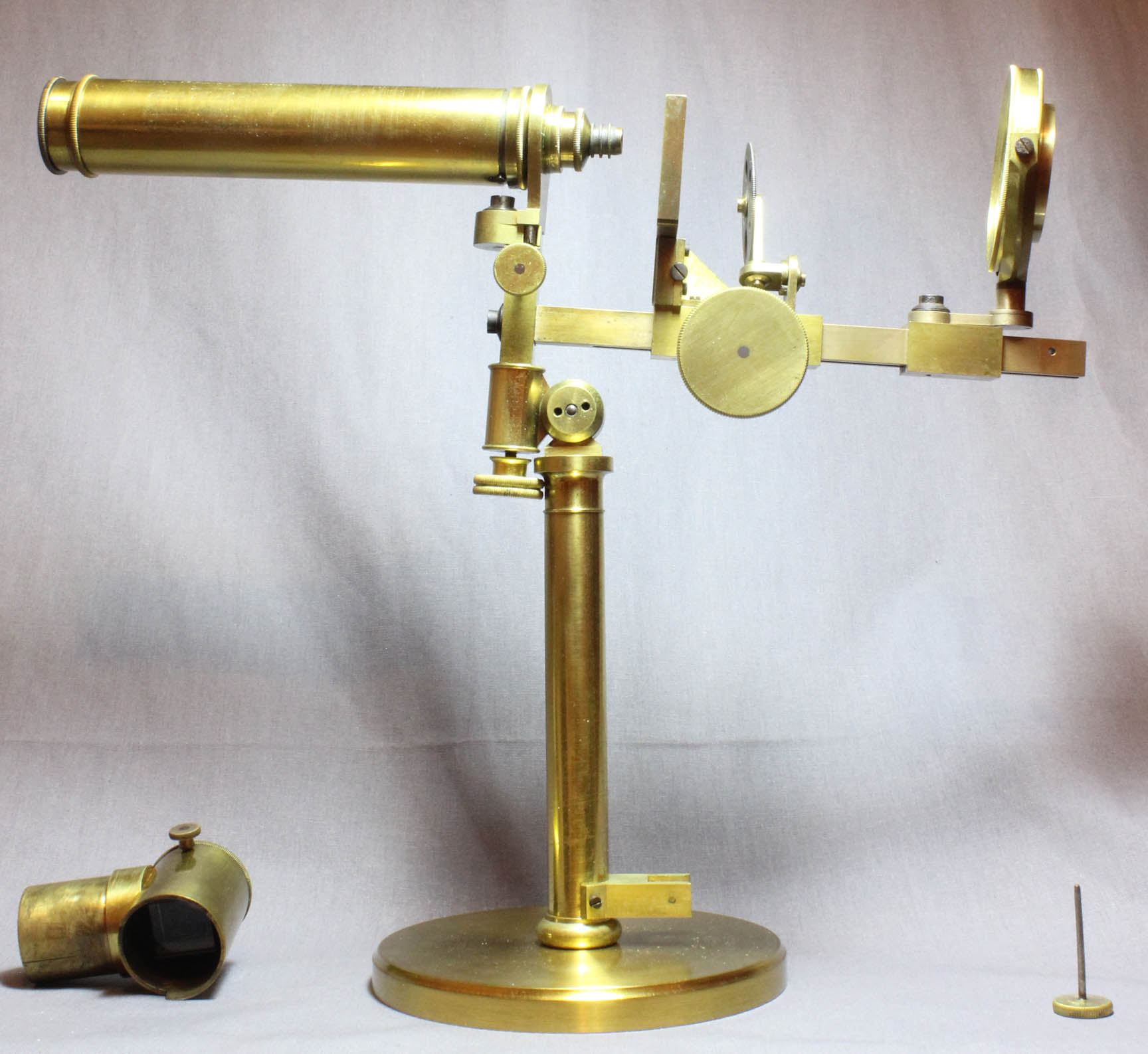 If desired the microscope can be inclined to the horizontal, via the compass joint, E, for use with a stage trough, or for direct lighting. To allow this configuration, it is neccesary to loosen the knob controlling the tension on the collar S (near T), or it will interfere with attaining a perfectly horizontal position.
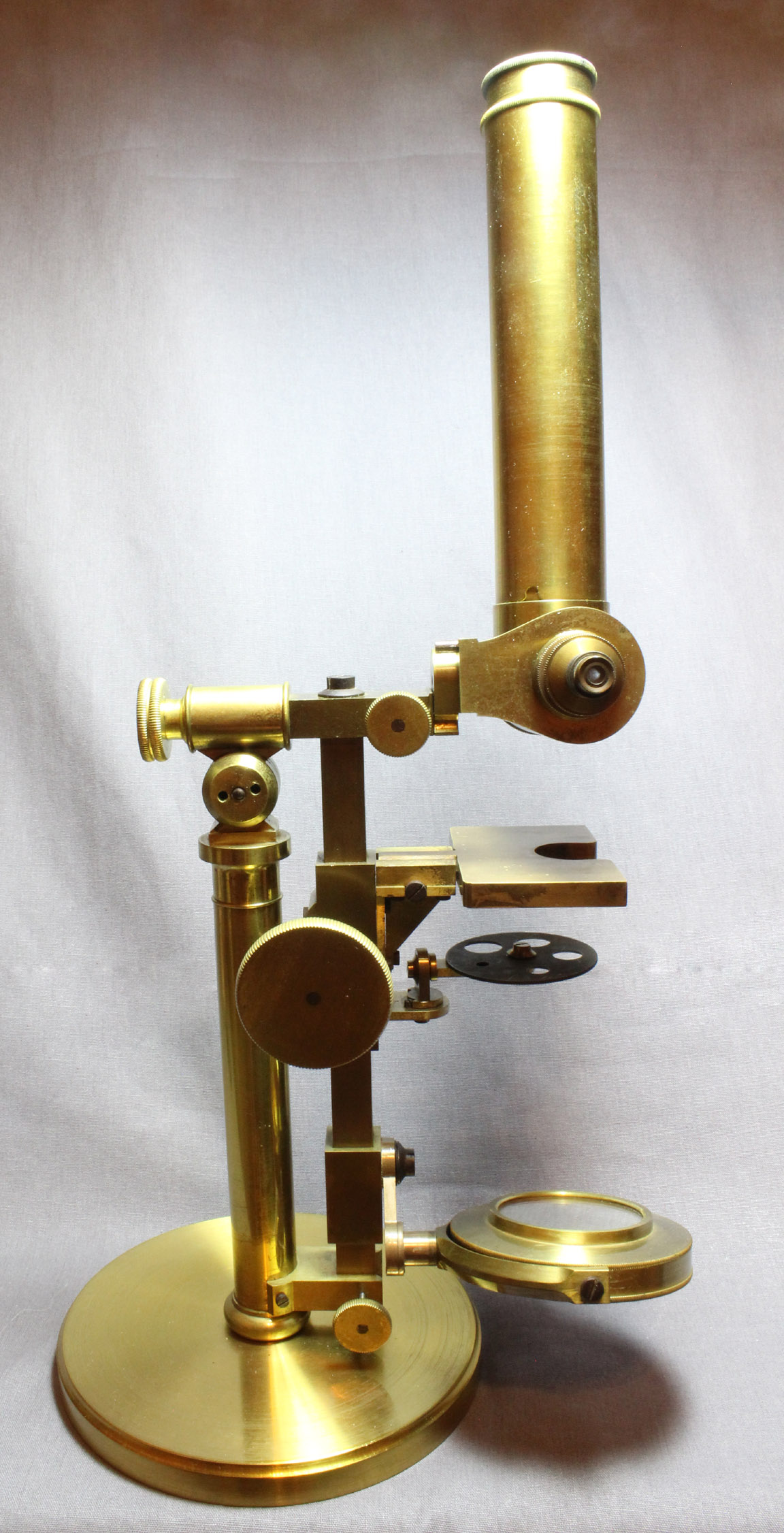 The tube carrying the objective also turns at P, so as to aim the objective to the side, as in an inspection microscope or an aquarium microscope.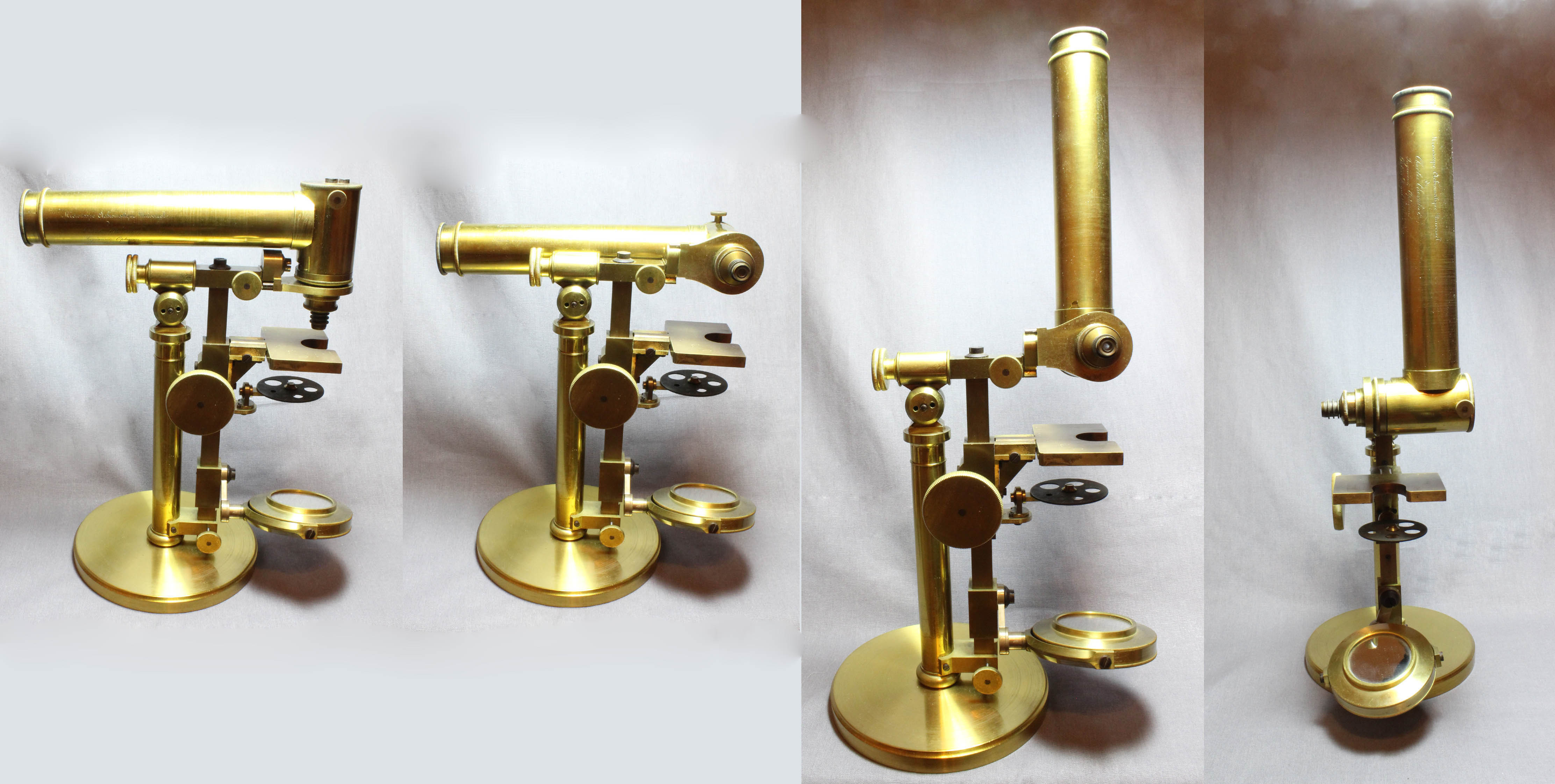
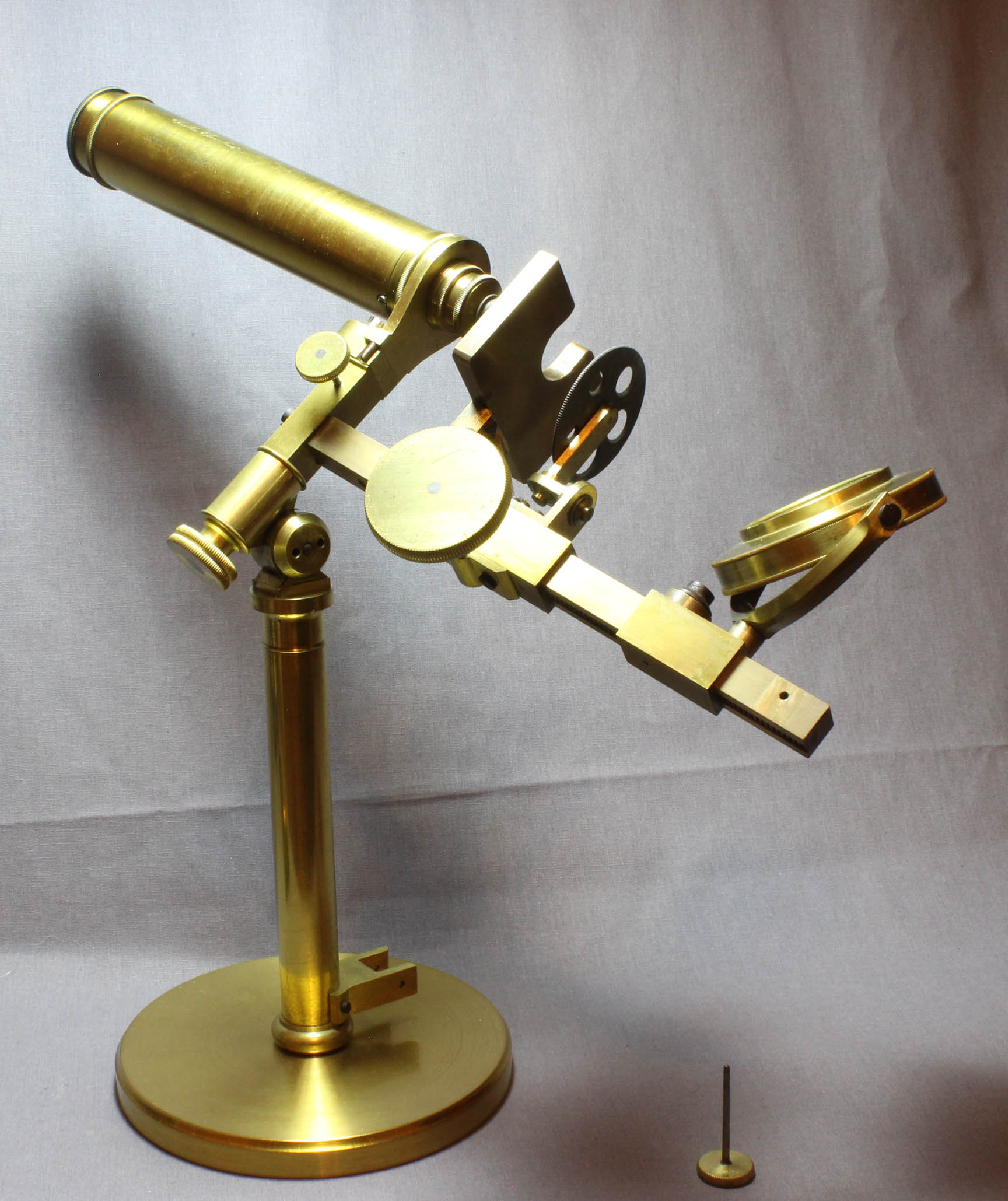 Finally, by means of tilting through the compass joint, E, and rotation in the collar, S, it is easy to see that the microscope may be placed in every desired position.